In our retirement we are have decided it is time to leave the bubble of Ithaca, New York and see what America is really about. We invite you to join us as we learn about people, places and the natural history we experience in our travels.
We stopped to see our friends Kevin and Michelle, who now live in Sylvania, Georgia, On our way there from Rock Hill, SC we traveled through almost 200 miles of the rural South. We saw pecan orchards, fallow cotton fields, lots of stands of pine for pulp lumbering and many Baptist churches.
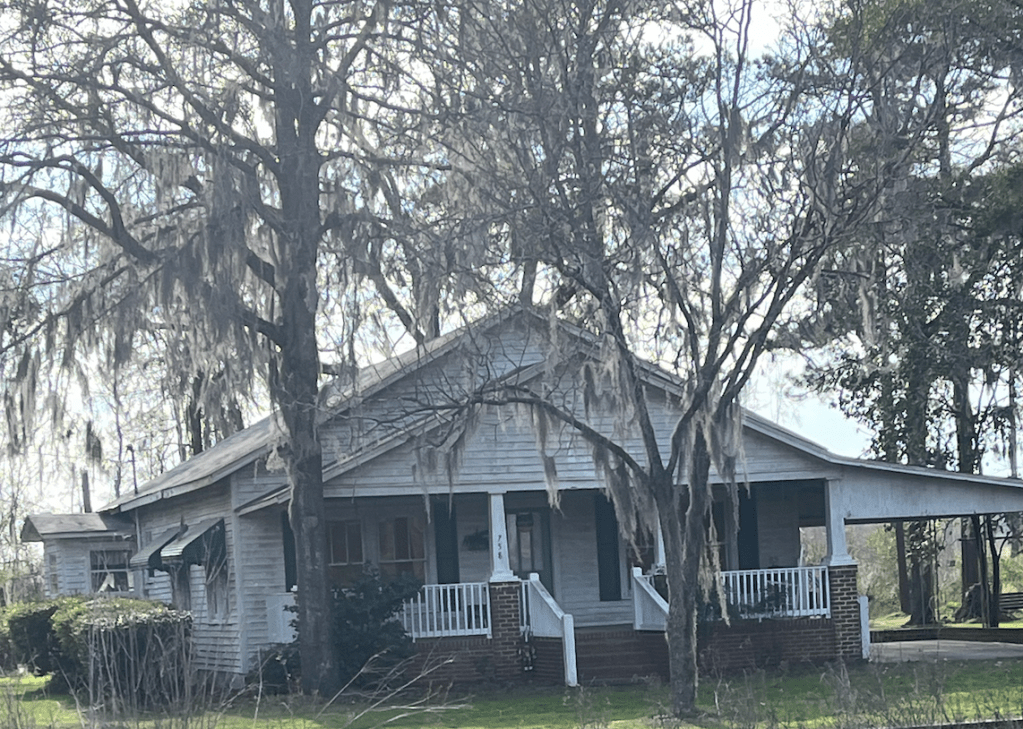
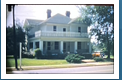
We passed many houses such as this; I find the lines so graceful and welcoming.
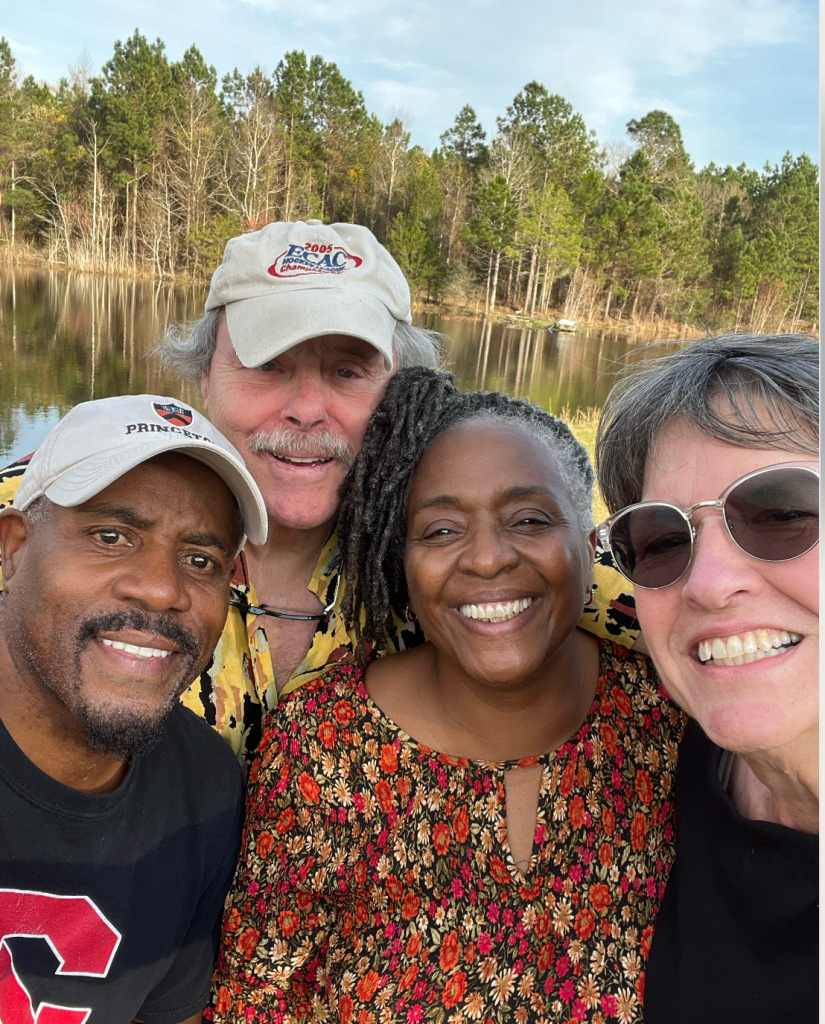
Kevin and Michelle have a beautiful country home that Michelle’s father designed and built. They are in the process of doing some major renovations.
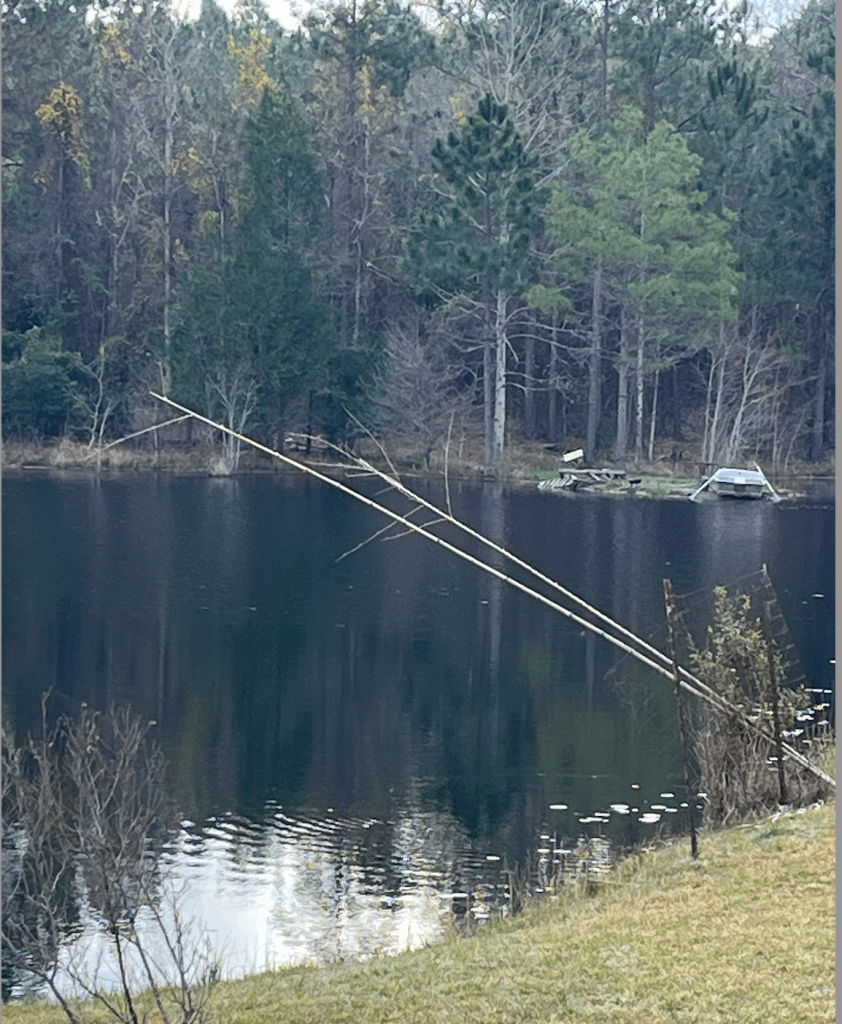
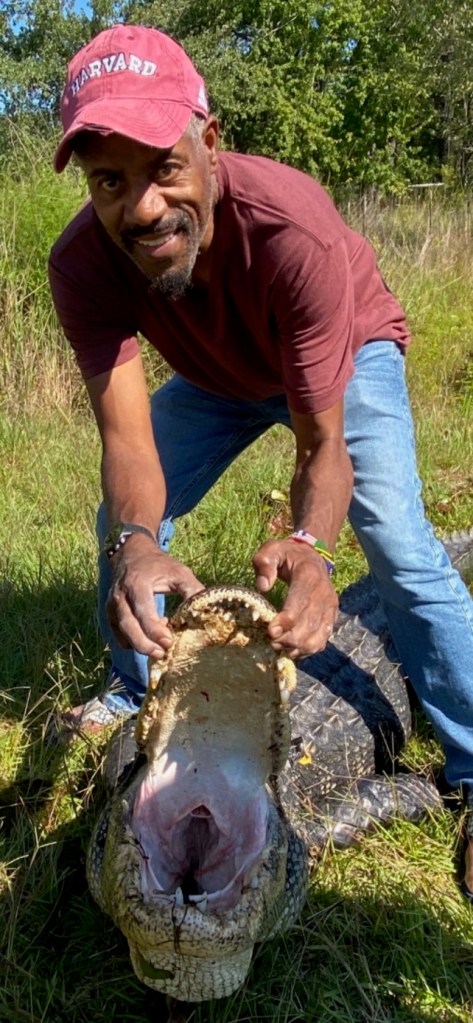
The Thompsons have a lake right outside their back door and yes, there are alligators in that lake! We learned how to catch an alligator: you get a long pole, secure it to the bank and tie a rope on the end to hang just above the water with a big hook on it. Tie a chicken on the end of the rope. Wait. Before long. the alligator will jump out of the water, swallow the chicken and the hook will get caught in its stomach. If it does not die right away, you can shoot it i n the head. You should call the state wild life control people to come out and do this!
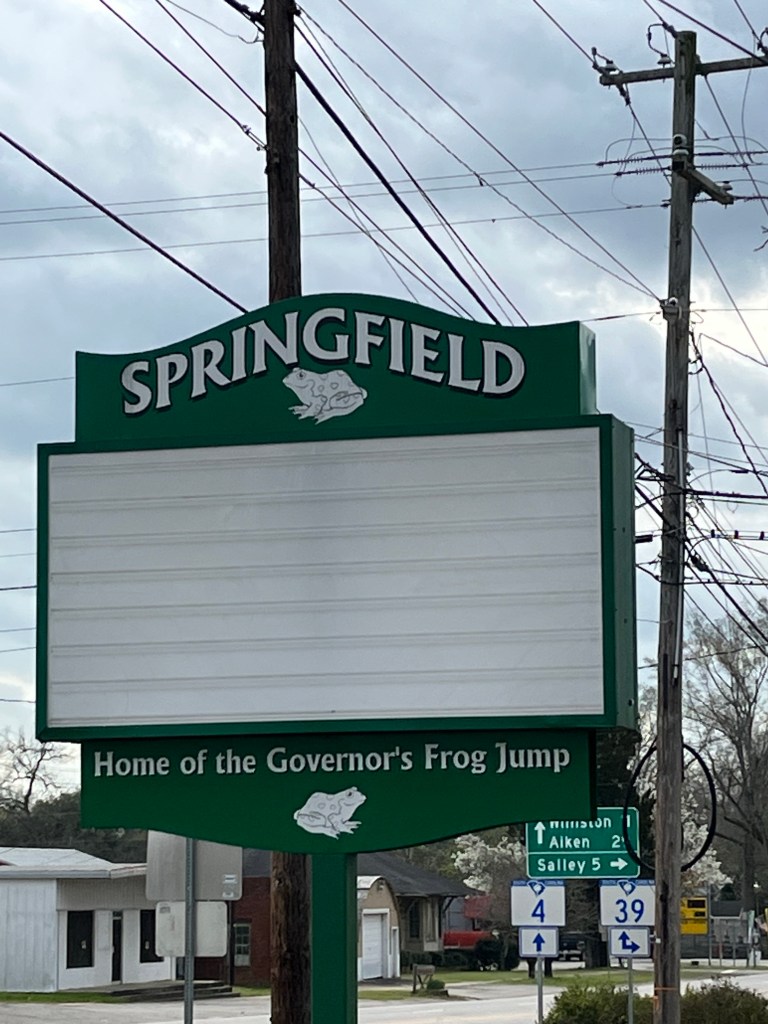
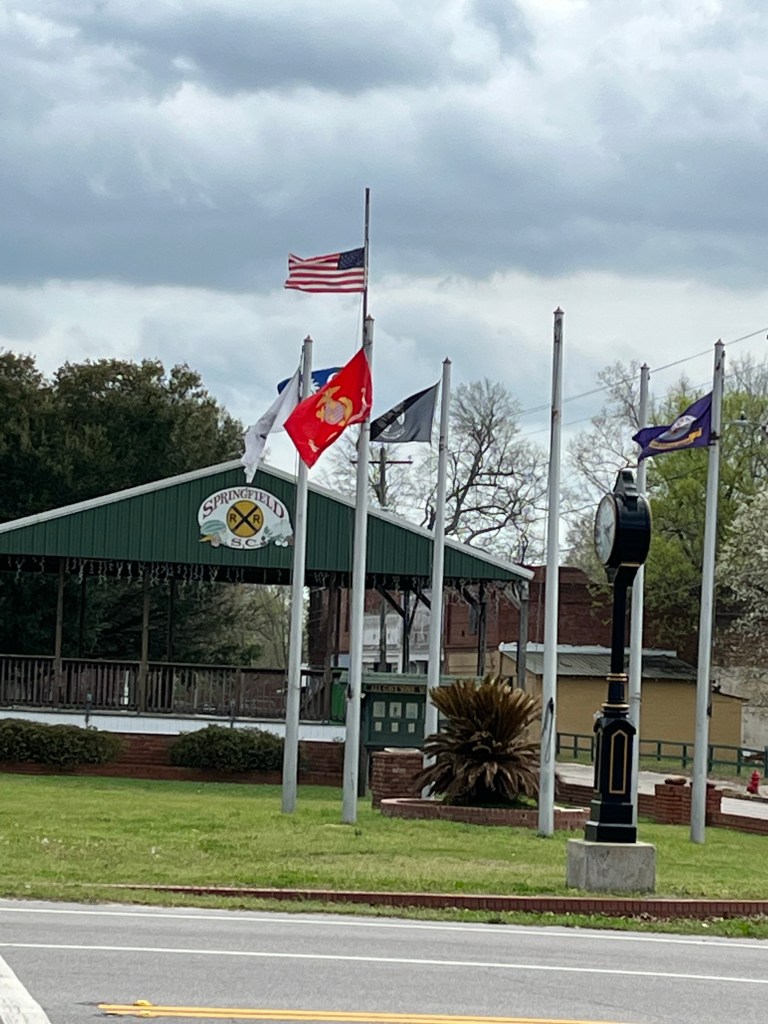
Springfield, SC, population 455, is a sleepy town as evidenced by the sign on the main street and their on-line calendar, which is blank. However, the Governor’s Frog Jumping competition has been happening here on Easter weekend for 50 years!
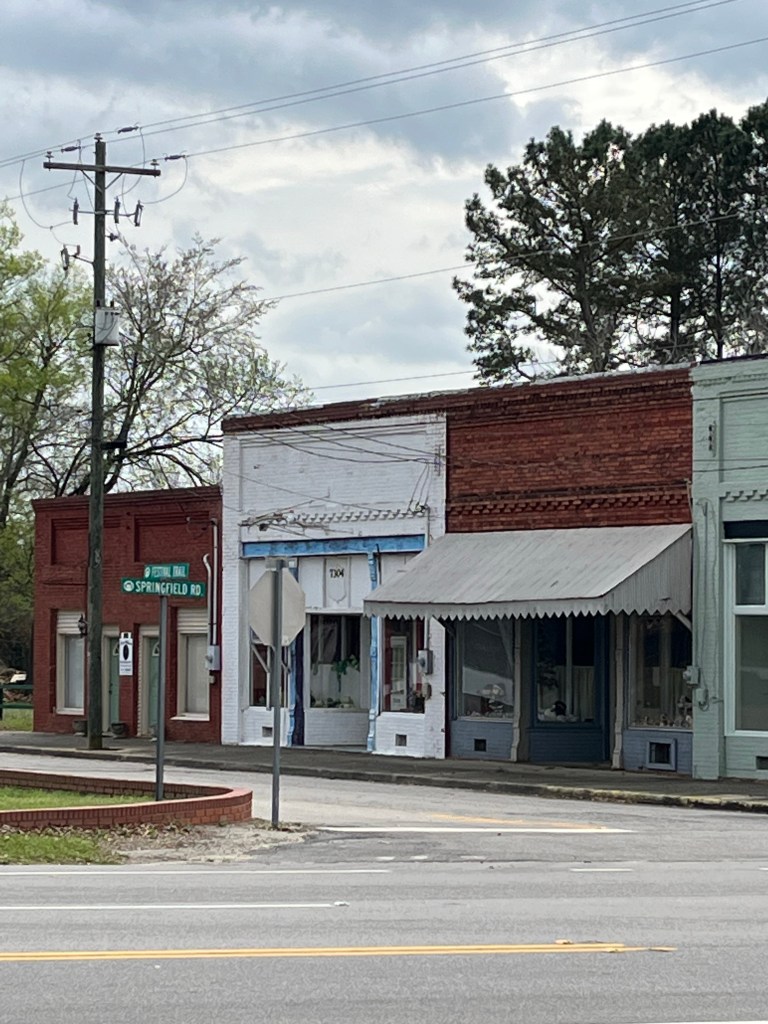
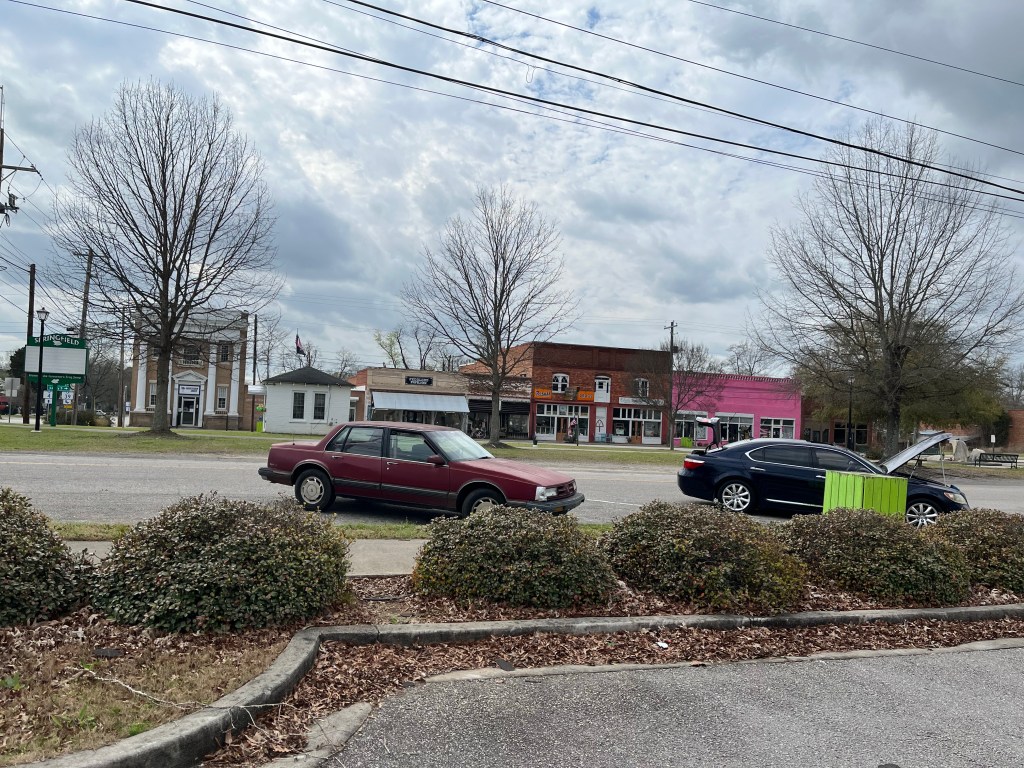
The town has been losing population and many storefronts were abandoned, but even at it’s heyday in 1930, there were only 930 people living here. We saw very little activity here, except at the Dollar General. There is a livestock auction and flea market, venues that are unique for the area. According to their website, Springfield Flea Market, oldest in the state, draws thousands of vendors and customers each Saturday. It made me feel sad to see all of the abandoned houses and run down storefronts, but really who am I to judge? Folks who live here might like it just the way it is. I do know there are many towns in rural America like this in every state. What can happen to help these towns survive?
Today we stopped in Rock Hill, South Carolina, where I was born on Dec 1st, 1955, the day Rosa Parks refused to give up her seat on a bus in Montgomery, Alabama. My parents moved there for my father’s first teaching position at Winthrop College in August of 1954. They hated it here due to Jim Crow laws that were strictly enforced. They were told the rules explicitly and were chastised when they did not follow them.
To give a little background, on May 17, 1954 the Supreme Court ruled unanimously that racial segregation of children in public schools was unconstitutional.
According to an article called The Great White Heist in Yes! magazine, “Even though South Carolina was 40% Black in 1948, statewide, Black schools were worth $12.9 million while white schools were worth $68.4 million. If those white students succeeded in their resource-filled schools, they could go on to one of more than a dozen public institutions of higher learning in South Carolina. However, if the Black graduates wanted to attend a state college, because of state segregation laws there was only one choice—South Carolina State College—the only public Black college in the state. This detail wouldn’t be important except for three important facts about the taxpayers whose money actually funded South Carolina’s whites-only state post-secondary schools and the one historically Black college, post emancipation: 1.) South Carolina taxpayers paid for seven whites-only colleges. 2.) South Carolina taxpayers paid for zero Black colleges. (South Carolina State University was a land-grant college, which meant it was founded with federal money after the Civil War) and 3.) the majority of South Carolina taxpayers were Black.
Black parents in towns all over South Carolina immediately petitioned to desegregate schools. As a response, White Citizens’ Councils and new chapters of the Klu Klux Klan were formed in many towns. Petitioners and NAACP folks were often given 30 days to move away and threatened with violence. On August 27 a newly organized Klan met midway between Summerton and Manning, South Carolina on U.S. 301, where the rally couldn’t be missed. Speaker Bryant Bowles, of the National Association for the Advancement of White People, drew 1,000 in robes. (storiesofstruggle.com).
My parents lived in an apartment in this house, at 326 York Ave. in Rock Hill, South Carolina when I was born. It appears to have been raised to build a strip mall.
I was born at York County Hospital in Rock Hill, which was built in 1940. It actually served both Black and White patients, which was unusual at the time. In many towns, Black folks had to travel many miles to find a hospital that would serve them. My mother, with two babies under two years old and pregnant with a third, hired a Black woman to help her. She was explicitly told she should not sit down and eat lunch with her, give her a ride home or “overpay” her. My mother defied this “advice” and I really don’t know whether it was their choice or not, but my parents moved back to New York State after two years in Rock Hill. I suspect that their refusal to follow Jim Crow laws may have resulted in my father losing his job. I am proud of the courage my parents showed, standing up for what they thought was right, even if they did not put their lives on the line for the cause. My parents have passed now. I find myself once again wishing I asked more questions to know more about their lives, especially their time in the South. There is no one left to ask now.
1955 was several years before the lunch counter sit-ins, Freedom Summer Voter Registration Drive, the formation of the Southern Christian Leadership Conference and other well known civil rights actions. It was the year Emmett Til was killed in Mississippi, which sparked the public outrage that led to the civil rights movement. Stay tuned for other post while we are here.
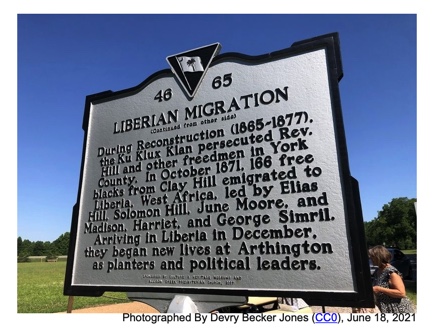
It is nice to see signs of progress amidst the political regression and violence that we see on the news every day. I am inspired by small signs of progress at the local level. This is the first historical marker in South Carolina that mentions the terror and persecution of Black people by the Ku Klux Klan. It also celebrates the liberation migration of Blacks in this town to Liberia.
Historical Marker in York, South Carolina, about 14 miles west of Rock Hill, which was a hotbed of Klan activity.
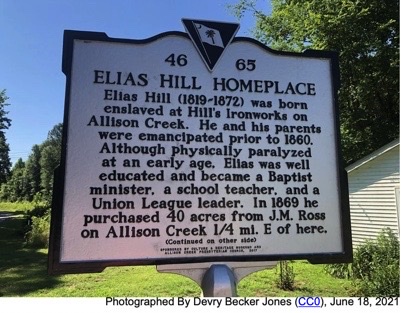
The other side of the plaque tells the story of the leaders of the exodus to Liberia.
Here is a video of decendants of Elias Hill and others in the community celebrating the installation of the plaque. It is interesting to note that in 1871, the same year that the folks emigrated to Liberia, the U.S. Congress passed the Ku Klux KLan Act that authorized the President to intervene in the former rebel states that attempted to deny “any person or any class of persons of the equal protection of the laws, or of equal privileges or immunities under the laws.” To take action against this newly defined federal crime, the President could suspend habeas corpus, deploy the U.S. military, or use “other means, as he may deem necessary.” The Ku Klux Klan were driven out of South Carolina and completely dismantled for a time until it resurfaced toward the beginning of the 20th century. According to Wikipedia, several of the act’s provisions still exist today, the most important of these is 42 U.S.C.§ 1983: Civil action for deprivation of rights. It is the most widely used civil rights enforcement statute, allowing people to sue in civil court over civil rights violations.
The Catawba people lived in South Carolina, North Carolina and parts of Virginia long before European settlers arrived. Their nation headquarters and Catawba Cultural Center are in Rock hill, South Carolina. According to the Catawba Nation website (Catawba.com), they lived in this region on their ancestral lands along the Catawba River for 6,000 years. The Catawba sided with the Patriot settlers when the settlers decided they wanted to be free of England, one of only three “tribes” to do so. The Catawba were fierce warriors and it made a difference for the settlers, but it did not protect the Catawba from Small Pox, which nearly wiped them out.
When many indigenous people in the region were being moved West as part of the Trail of Tears, State of South Carolina decided not to bother with the Catawba, not as thanks for fighting at their side during the Revolutionary War, but because they did not want to spend the money. State officials thought Catawba would go extinct because they were so decimated by Small Pox. They under- estimated the resiliency of the Catawba people.
And the Catawba people are still fighting. After their federal status was removed in 1951, The Catawba people reorganized and fought to regain that status.It took over 20 years to accomplish this, but they achieved it. Again they have proved that they are warriors and they are a strong, resilient people.
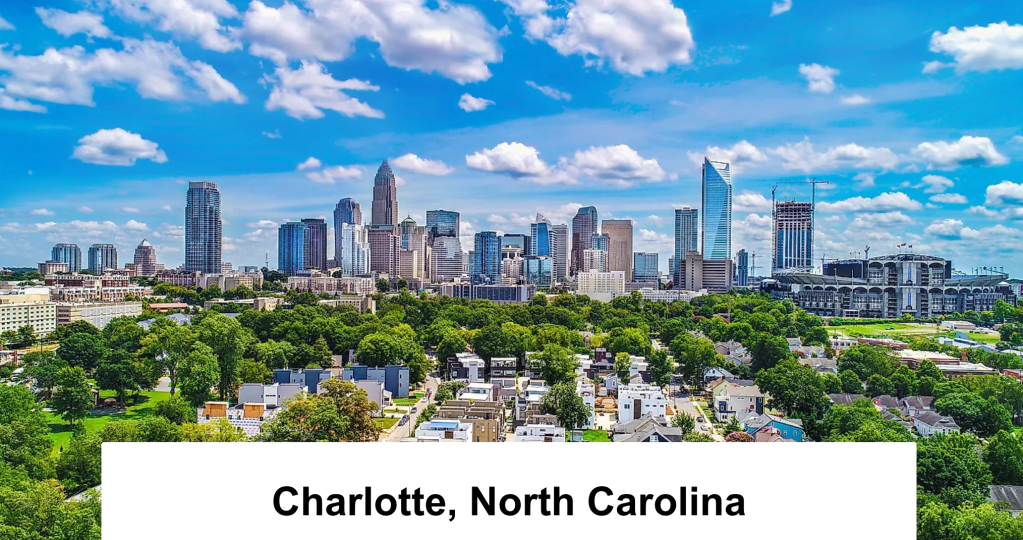
Today we arrived in Charlotte, NC called the “Queen City” because it was named in honor of Charlotte of Mecklenburg-Strelitz, the queen consort of British King George III during the time of the city’s founding. According to Wikipedia, King George III married her because she was a minor German princess with no interest in politics, so she would not meddle in his affairs. She didn’t. She did introduce the Christmas tree to Britain by decorating one for a children’s party. Another reason to admire her according to this video, is she was the first black British monarch, way before Meaghan Markle.
Charlotte, population 879,709 is the largest city in North Carolina and one of the 20 fastest-growing cities in the U.S. The population grew from 500,000 in 2000 to over 900,000 in 2022.
It is not hard to see why people are attracted to Charlotte with its lower-than-average cost of living and warm climate. many parks and city attractions. Of course, with the boom comes gentrification, where many Black residents are being pushed out of neighborhood where that have lived for generations. See my next post on the story of the Brooklyn neighborhood.
After a long drive, we arrived in Charlottesville, VA. Charlottesville or “Cville” as the locals call it, is situated on the ancestral lands of the Monacan People. whose ancestors lived on this land for 10,000 years. Unlike the Powhatans, their neighbors to the East, the Monacans avoided contact with Europeans as much as possible. They gradually moved westward, away from the advancing settlers. Some stayed for several years at Fort Christanna, in Brunswick County, and eventually moved into Pennsylvania and finally to Canada, where they were adopted by the Cayugas (monacannation.com). After a 4 year battle, the Monacan people celebrated the saving of their historic capital of Rassawek in March 2022. They successfully forced an alternative route for the construction of the James River Water Authority (JRWA) pipeline, which would have destroyed Rassawek. It is illustrative for those of us fighting other such battles to look at this example.
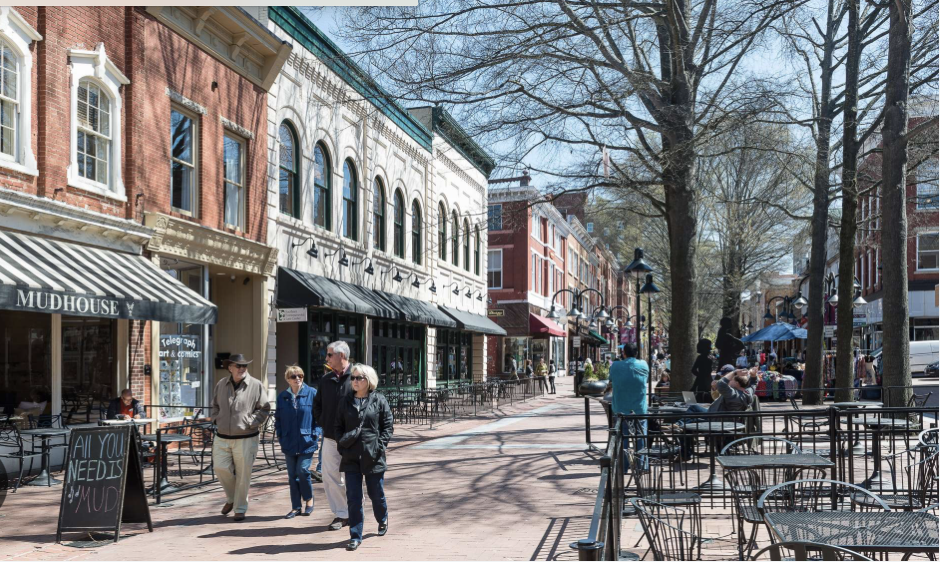
We are staying at the Townsman Hotel on the historic downtown mall, There are a lot of similarities between Charlottesville and Ithaca: they are both college towns with nice outdoor walking malls, although the Charlottesville mall is 8 blocks long and has Ting concert pavilion at the end. Other similarities are: both towns are home to renown universities; they are surrounded by vineyards and both have a housing unaffordability problem. Charlottesville is addressing the problem of homelessness with the Built for Zero strategy being deployed in many communities across the county. Is this approach something that could work in Ithaca?
It was 75 degrees when we got here- un seasonably warm for February 23, when the daytime high is usually in the 40s. People were out in force and it was a treat to eat on a restaurant patio in the walking mall. People were out in force, and I would say Charlottevilles walking mall has a lot more energy than the Commons. And we were surprised to see that Donna the Buffalo are playing here next week.
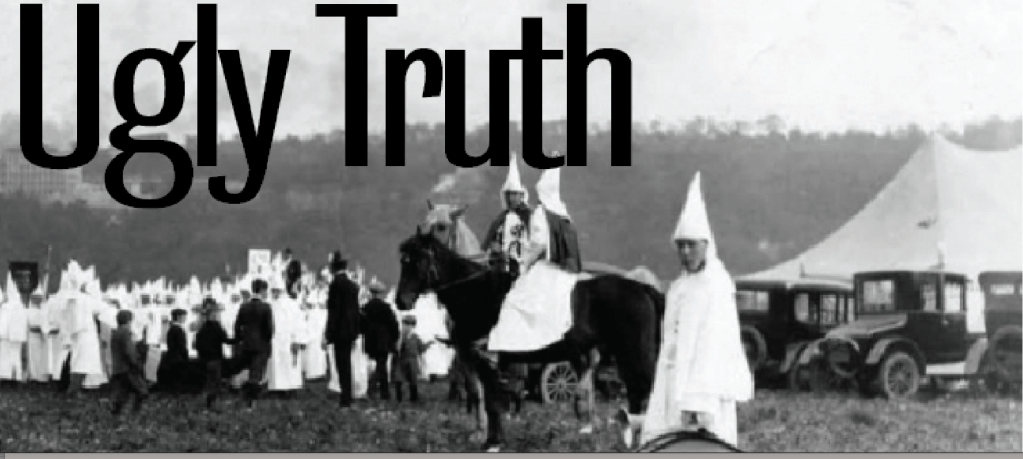
Ithaca and Charlottesville are both liberal bastions in a conservative region. One difference is that Ithaca has not lately been a venue for a national alt right/KKK rally such the Unite the Right rally in Charlottesville that happened in 2017. However, we are not the enlightened safe haven we aspire to be. Ithaca also has had its KKK presence. This article in the Ithaca Times is a good reminder.
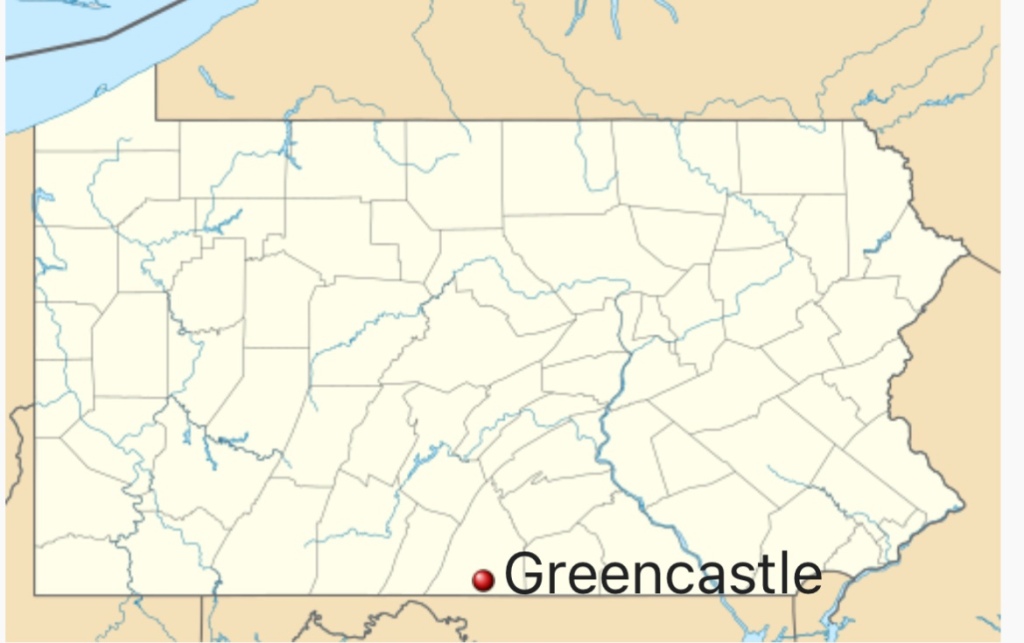
We in stopped Greencastle, Pennsylvanbia (population 4,251), on the Maryland border to stretch our legs and get a snack; we found the Bean and Biscuit cafe that met our needs perfectly. Good food, good coffee, good company. We recommend it if you happen to be traveling on Rt. 81.
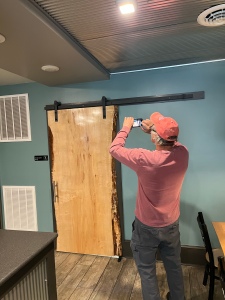
I had a fluffernutter biscuit, which was surprisingly good. John was excited about the door made out of a huge slab of wood. We each have our things…
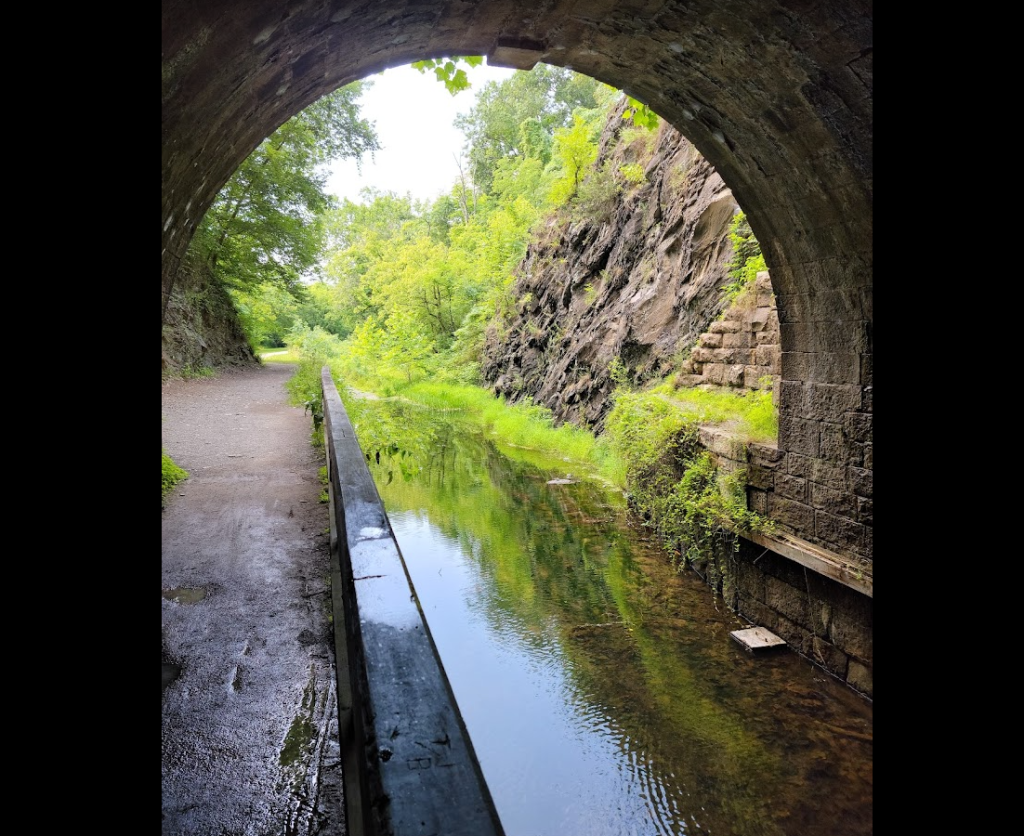
We intended our first stop to be Paw Paw,West Virginia to visit John’s high school friend Reed, and his wife Deborah. We will now save this stop for another trip and head straight to Charlottesville to make up for our delayed trip start. I would like to share what I discovered about this tiny town anyway. Paw Paw, named after the fruit tree that is native to the area, had a population of 410 people in 2020. Paw Paw is known for the Paw Paw tunnel through the mountain, The C&O Canal Company started work on the tunnel in 1836 estimating that it would take 2 years to build; it was built to save them from digging 6 miles of canal on the Potomac River. The canal’s main cargo was coal, brought from Cumberland Maryland and stops along the way to Washington DC. Due to riots, labor strikes by the Irish, English and German workers, fund shortages and difficulty digging through loose shale, the 3,118 ft tunnel through the mountain was not finished until 14 years later. It sounds like it might not have been such a great investment. When the tunnel finally did open, there were often bottlenecks because it was impossible for boats to turn around or pass. Today the hiking trail through the tunnel is maintained by the National Park Service.
Another interesting fact about Paw Paw is that that grammy award winning Texas swing band, Asleep at the Wheel got their start on a farm in Paw Paw. West Virginia.
Stay tuned! Next I will report from Charlottesville.
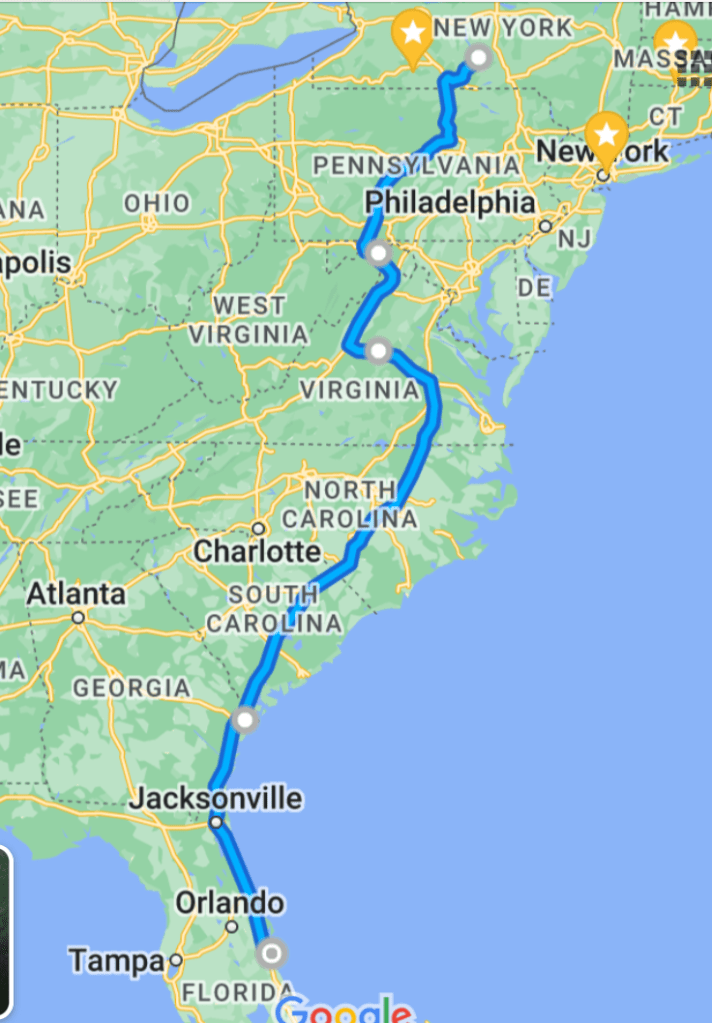
Well it is time to hit the road again for sunny beaches and new sights. We have planned a 3-4 week trip to Florida, taking our time on the way down and back to visit friends and explore new places. We have hit a snag already before we have gotten out of Ithaca. We will be delaying our trip for a couple of days because John came down with covid. Once again I have not gotten it, and am told I would have gotten it already if I was going to get it. Any other “covid virgins” out there? We will probably leave Thursday instead of today and alter our route a bit. I will share what we experience along the way. I am especially interested in learning about innovative ways communities are reconciling with their past and creating an equitable, sustainable future. I will also report on anything else we discover that is funny, beautiful or we find interesting. You are invited to come along.


















 Perspectives on the Road