As much as DeSantis wants to erase Black History in Florida, we are fortunate that he cannot erase all that the internet offers. In 1990, the Florida Legislature created the Study Commission on African American History in Florida “to explore ways to increase public awareness of the contributions of African Americans to the state.” The commission created an in-depth document called the Florida Black HerItage Trail. While the language is somewhat dated, it seems like a pretty good reference. I read this document in addition to an article by the Fort Mose Historical Society and blackpast.org to learn the story of the first free Black community in North America.
The first Underground Railroad in America did not lead from south to north, but north to south. As early as 1687, enslaved people fled bondage from English-controlled South Carolina to seek life as free men and women in Spanish Florida. As Great Britain, France, and Spain competed for control of the New World and its wealth, they all in varying ways, came to rely on African labor to develop their overseas colonial possessions. Exploiting its proximity to plantations in the British colonies in North America and the West Indies, King Charles II of Spain issued the Edict of 1693 which stated that any male slave on an English plantation who escaped to Spanish Florida would be granted freedom provided he joined the militia and became a Catholic. This edict became one of the New World’s earliest emancipation proclamations.
The Spanish established the fortified town of Gracia Real de Santa Teresa de Mose (on St. Augustine’s northernmost border) to accommodate the influx of escaped enslaved people. Fort Mose became the site of the first free black community in what is now the United States. By 1738 there were 100 Black living in Fort Mose; many were skilled workers, blacksmiths, carpenters, cattlemen, boatmen, and farmers. With accompanying women and children, they created a colony of freed people that ultimately attracted other fugitive slaves. Throughout the following decade, the Spanish continued to strengthen Fort Mose to provide an effective defense against English army advances.
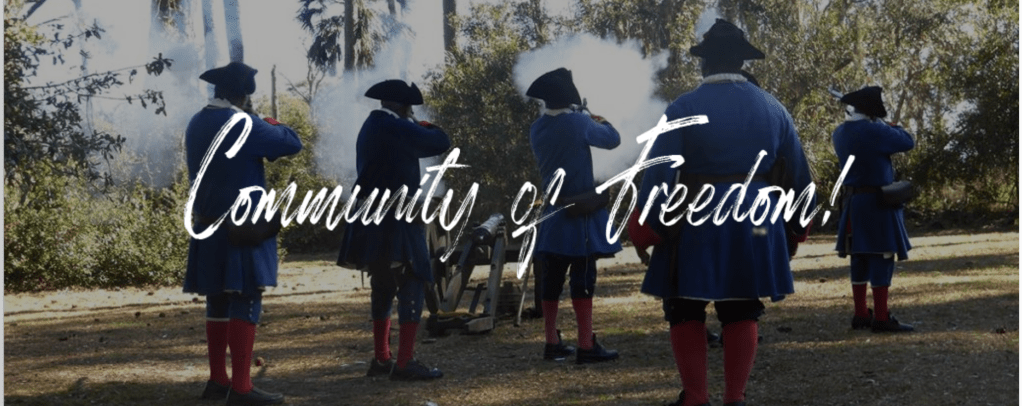
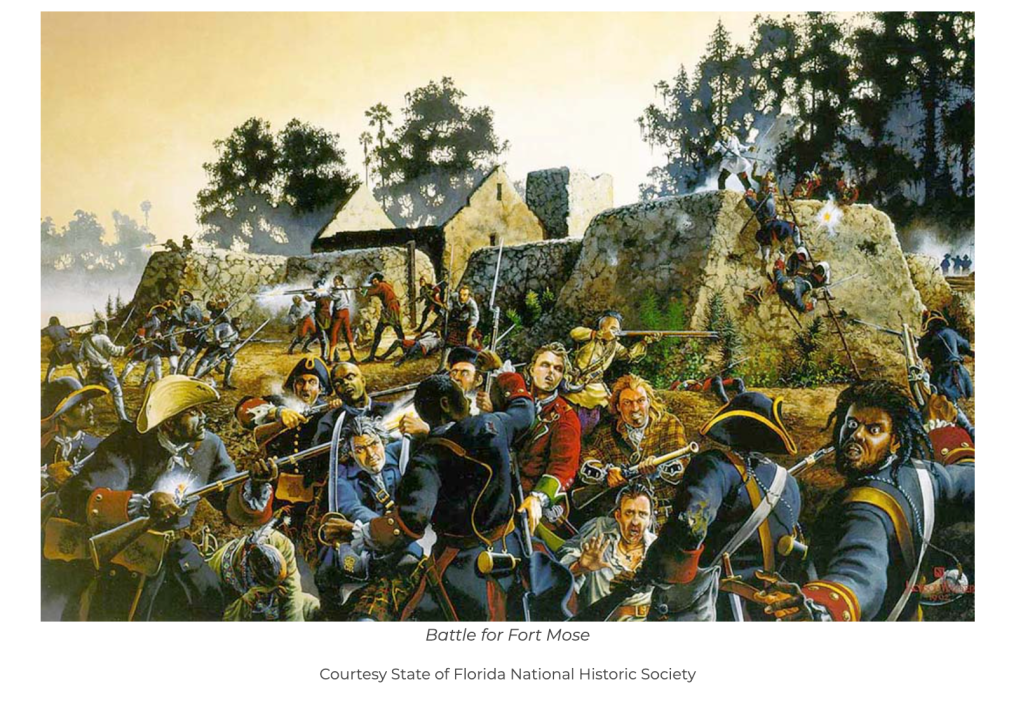
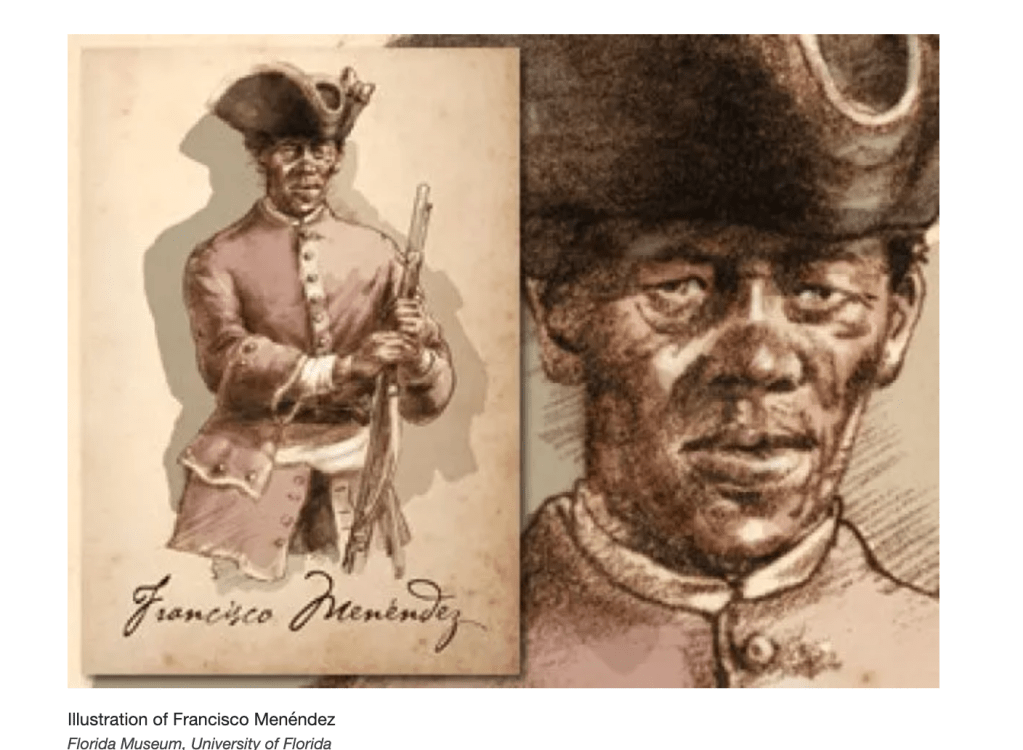
When war broke out in 1740 between England and Spain, the people of St. Augustine and nearby Fort Mose found themselves involved in a conflict that stretched across three continents. The English sent thousands of soldiers and dozens of ships to destroy St. Augustine and bring back any runaways. They set up a blockade and bombarded the town for 27 consecutive days. Hopelessly outnumbered, the diverse population of blacks, Indians and whites pulled together. Fort Mose was one of the first places attacked. Lead by Captain Francisco Menendez, the men of the Fort Mose Militia briefly lost the Fort but eventually recaptured it, repelling the English invasion force.
Nonetheless, England eventually prevailed in the battle over control of North Florida. In 1763, the French and Indian War in the Americas ended with the signing of the Treaty of Paris. The treaty turned the Florida colony over to the English and returned Cuba to the Spanish. The residents of Fort Mose sailed to Cuba with the Spanish, along with a few hundred remaining Indians. But, following England’s loss of its American colonies to the revolutionaries during the American Revolutionary War, Spain regained possession of Florida again in 1783. It had to relinquish La Florida to the newly created United States in 1821. Florida became a slave-holding state. Even as an American slave territory, many blacks continued to find freedom in Florida. While Seminole Indians owned slaves, permitting them to live in separate villages in exchange for one-third of their crops, they also welcomed many escaped, black bondsmen as members of their nation. Some runaway slaves joined the Seminole tribe and made numerous contributions in the doomed effort against the U.S. military during the Second Seminole War (1835-1842).
Over the years, the Fort Mose site was swallowed by marsh, and the important legacy of its community was largely forgotten. Late in the twentieth century, a highly dedicated team of archaeologists, historians, government leaders and committed citizens helped restore Fort Mose to its rightful place of honor. Today, Fort Mose is recognized as a significant local, national and international historic landmark.

 Perspectives on the Road
Wow. Thank you again!
Sent from my iPad
LikeLike