The Summer Sons: Cape Cod Baseball League

On a Cape Cod summer evening, on many a high school baseball field, you can enjoy our national pastime of yore for free. You will find packed bleachers, a small snack shop cooking up burgers and hot dogs, and picnic blankets and beach chairs ringing the area. Local community volunteers run the whole thing- from welcoming folks at the entrance to fundraising to hosting players in their homes. The coach and trainers get a stipend, but other than that, no one gets paid. It is all done for the love of the game.

We witnessed the culmination of the season-ending playoffs of theCape Cod Baseball League between Harwich Mariners and the Bourn Braves. The Mariners won in the rubber match in the three game series. I have been persuaded to write about the Cape Cod League by the avid baseball fans in my midst and I am channeling John here because , as many of you know, I am not much of a baseball fan!

The Cape Cod Baseball League (CCBL or Cape League) is a collegiate summer baseball wooden bat league. One of the nation’s premier collegiate summer leagues, thousands of players have spent a summer on the Cape before later donning a big league uniform. That includes Hall of Famers like Frank Thomas and Jeff Bagwell and former stars like Nomar Garciaparra, Thurman Munson, Barry Zito and Jason Varitek. Current stars- including Aaron Judge, Pete Alonso, Chris Sale and George Springer- all wore jerseys for Cape Cod Summer League.

As early as the 1860s, baseball teams representing various Cape Cod towns and villages were competing against one another. The earliest newspaper account is of an 1867 game in Sandwich between the hometown “Nichols Club” and the visiting Cummaquid team. Though not formalized as a league, the games provided entertainment for residents and summer visitors.

Players in the Cape Cod all live with host families who live on the Cape, becoming members of those families along the way. Hosts often refer to them as their “summer sons”.

“The league has enabled people to come together under the auspices of baseball, and build deep and abiding relationships,” says Boston Globe journalist Christopher Price, author of Baseball by the Beach: A History of America’s National Pastime on Cape Cod. Price’s grandparents met at a Barnstable game in the 1930s. “The game connects generations over time. That’s a legacy that any sport would be proud of.”

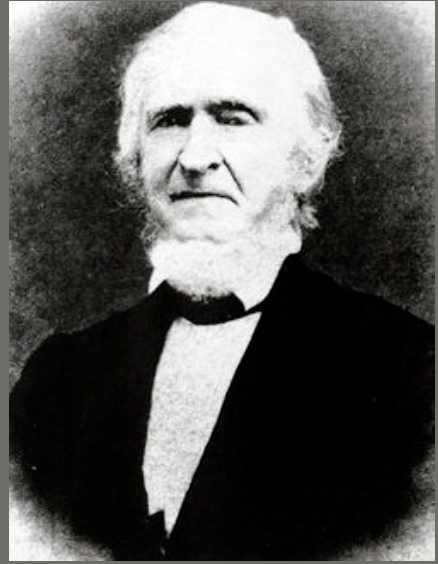
Reverend John Manteith, abolitionist

On this trip I am going to share examples of courage fighting injustice, both current and from for history. I very much need this inspiration to keep fighting the good fight.

Last night, we stopped in Elyria, Ohio, on the Black River six miles from Lake Erie and 20 miles west off Cleveland.

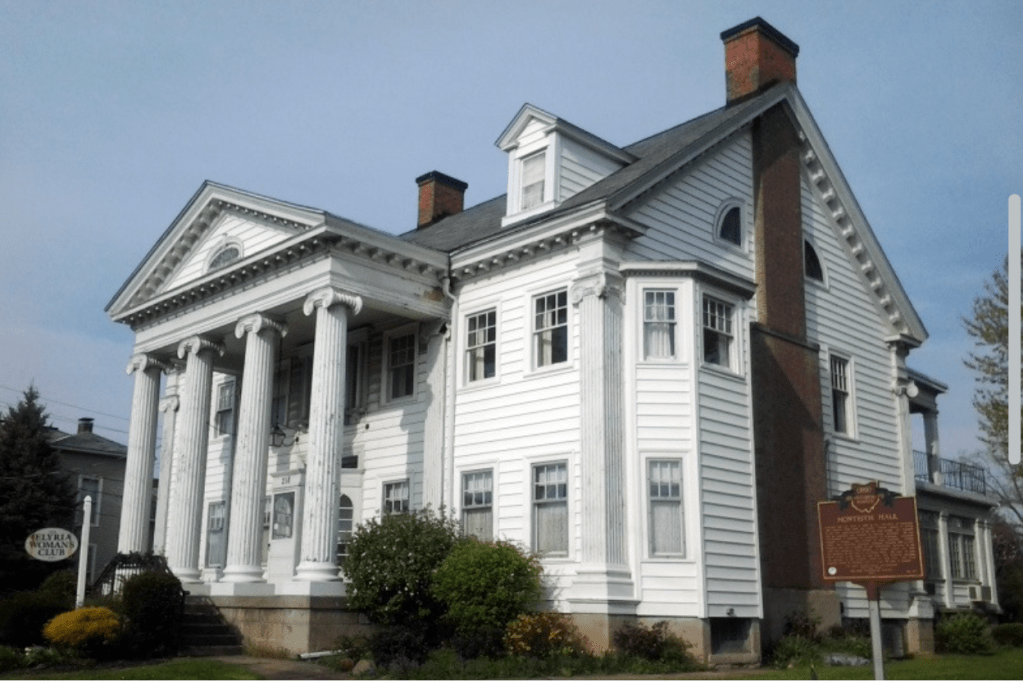
We learned about Reverend John Monteith (1788-1868), who was an abolitionist in Elyria, Ohio who used his home, Monteith Hall, as a “station” on the Underground Railroad. For seven years, his home served as a hiding place for enslaved people escaping to freedom. A tunnel ran from the back of the house to the Black River, which was used to help people escape to the shores of Lake Erie. From there they could board a ship across the lake to Canada and freedom. The home was built in 1835 as a boarding school for girls , which he also gets props for, and a residence for Montheith’s family. He managed the Underground Railroad network on the southern shore of Lake Erie.

Bacon’s Rebellion

We are in Williamsburg, Virginia and yesterday we visited the Jamestown Settlement Museum. We were not sure what to expect in terms of an inclusive historical perspective and were happy to see that they describe the museum”s mission as fostering “an awareness and understanding of the early history, settlement, and development of the United States through the convergence of American Indian, European, and African cultures and the enduring legacies bequeathed to the nation.” It does seem that they are very much attempting to be inclusive in the telling of history. I am wondering how different it is from the presentation of facts 20 years ago?

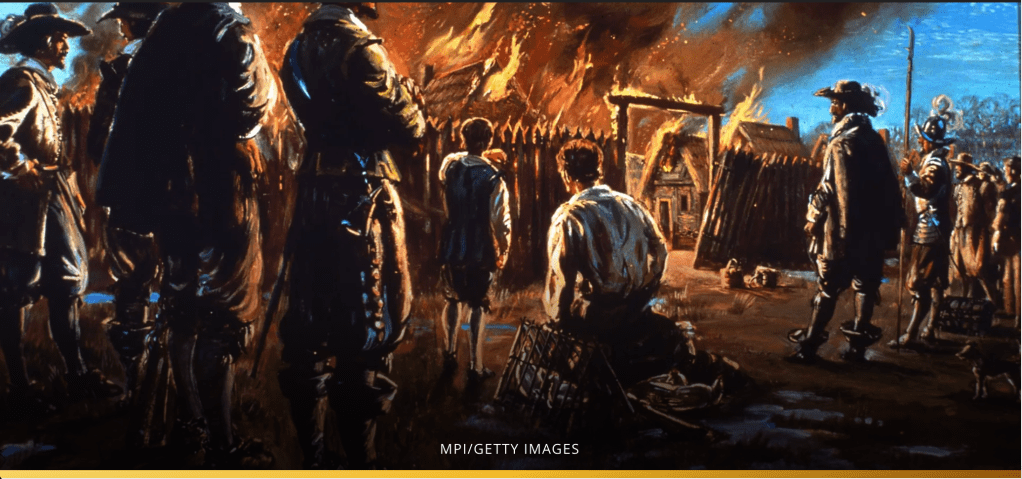
I did not know much about Bacon’s Rebellion, an armed rebellion of settlers against Colonial Governor William Berkeley, Bacon and his armed rebels ransacked their colonial capital, threatened its governor and upended Virginia’s social order. They managed to chase Berkely from Virginia and burned the settlement to the ground. The rebellion failed. Soon Bacon was dead and his militia defeated. The rebellion he led is commonly thought of as the first armed insurrection by American colonists against Britain and their colonial government a hundred years before the American Revolution. (History.com) The alliance between European indentured servants and Africans (a mix of indentured, enslaved, and free Blacks) disturbed the colonial upper class. They responded by hardening the racial caste of slavery in an attempt to divide the two races from subsequent united uprisings with the passage of the Virginia Slave Codes of 1705.[5][2][6]. White indentured servants were subsequently offered 50 acres of land to farm when their servitude ended, giving them considerably more status, while Blacks were subject to lifetime servitude or slavery, which was a very effective way to prevent any future uprisings.

General John Glover and His Integrated Regiment

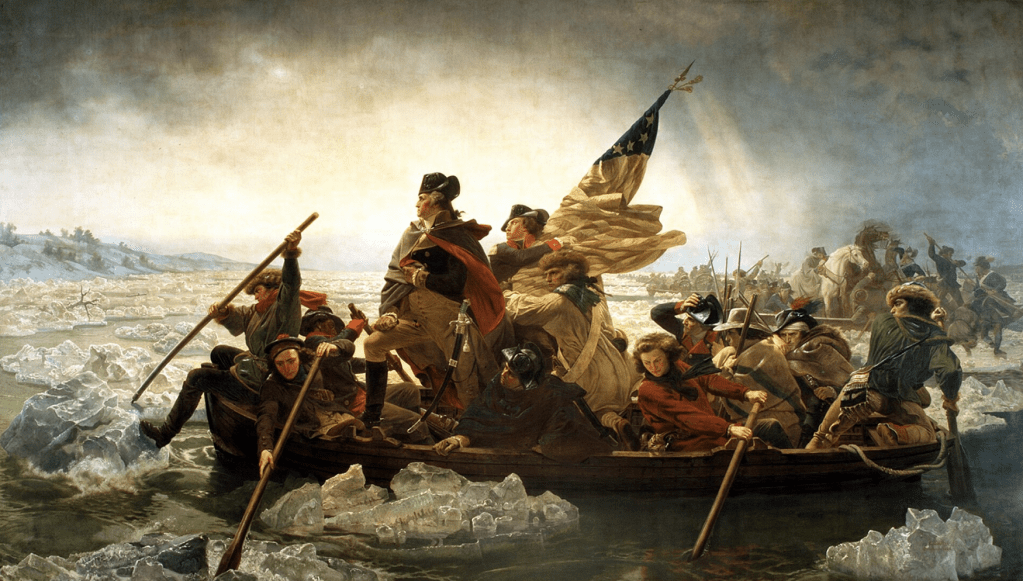
John Glover’s racially integrated regiment rowed George Washington’s troops across the Delaware leading to a victory at the Battle of Trenton

Yesterday we arrived in Williamsburg, Virginia, which is home to both the Jamestown Settlement Museum and Colonial Williamsburg living history museum. We decided to visit the Jamestown Settlement first and were very surprised to see pods of military people all over the place dressed in costume from the Greek Phalanx (500 B.C.E) to the current day Virginia National Guard as part of the 40th annual Military through the Ages event. Being a Quaker and a pacifist, I was not happy to see this taking over the Jamestown Settlement Museum. I have to admit, that I did find elements of it very interesting. There was a pod there representing Black Soldiers of the American Revolution.

We spoke at length with a man from New Jersey (I never got his name) who was representing the 14th Continental Regiment. He was a wealth of information about Black history in general and particularly John Glover’s regiment from Marblehead, Massachusetts.

Glover marched his regiment to join the siege of Boston in June 1775. At Boston, General George Washington chartered Glover’s schooner Hannah to raid British supply vessels, the first of many privateers or warships authorized by Washington. For this reason the Hannah has been occasionally called the first vessel of the Continental Navy or its later successor the United States Navy.[10] (Wikipedia)

The Marblehead militia or “Glover’s Regiment” became the 14th Continental Regiment. John Glover was able to raise a regiment of 500 men composed of both his militia and Marblehead mariners, and termed by Washington as soldiers “bred to the sea.”[11] This regiment became known as the “amphibious regiment” for their vital nautical skills. It was composed almost entirely of seamen, mariners and fishermen.[12] Many of these men of were Native Americans, Jewish, African-Americans, and Spanish forming the first integrated units in the new American military.[2] The regiment’s muster rolls listed one-third of the men as dark complexioned. A Pennsylvania general was shocked by the “number of negroes” treated as equals in Glover’s Regiment.[13] Most of the regiment lived in Marblehead, and came together before the war, fishing in the Grand Banks. At sea, everyone was working towards a common goal, and a person’s background didn’t matter, a philosophy carried over into the regiment.[2] (Wikipedia)
Our Jamestown experience in all was very interesting, although it was disconcerting to see Jamestown Settlement staff in costume intermingled with people walking around in togas, suits of armor, kilts, viking costumes and current day combat gear. I will do another post on what I learned about the Jamestown Settlement itself.

Honoring Untold African American Stories

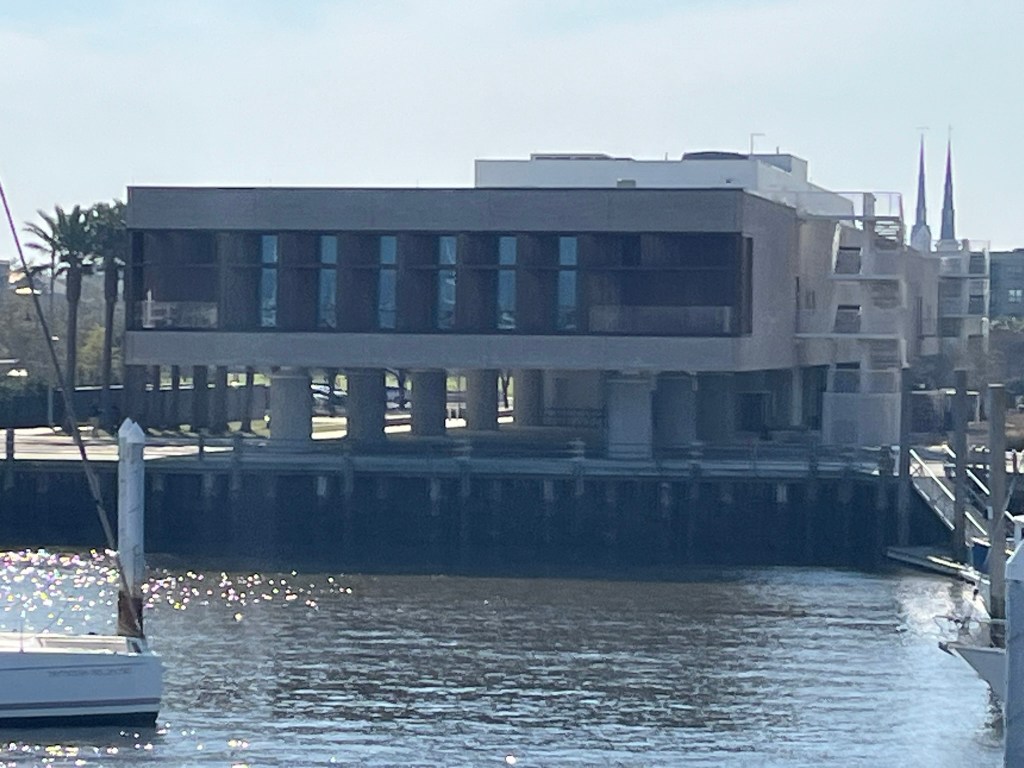
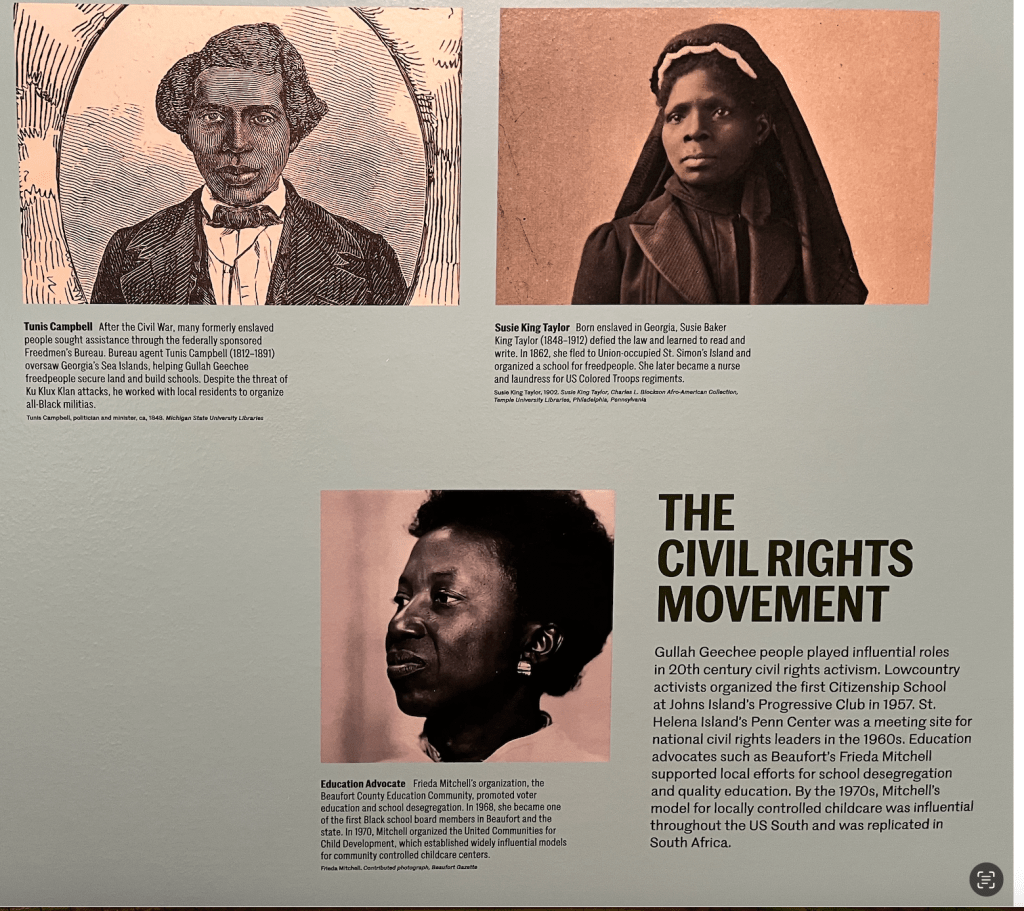
The new International African American Museum in Charleston, South Carolina is definitely worth a visit. Built on Gadsden’s Wharf, where 40% of all American enslaved persons entered the country, the museum has an interesting focus on reconnecting African American families with their history and ancestors through their Center for Family History. Here is a PBS news story about the genealogy research center.

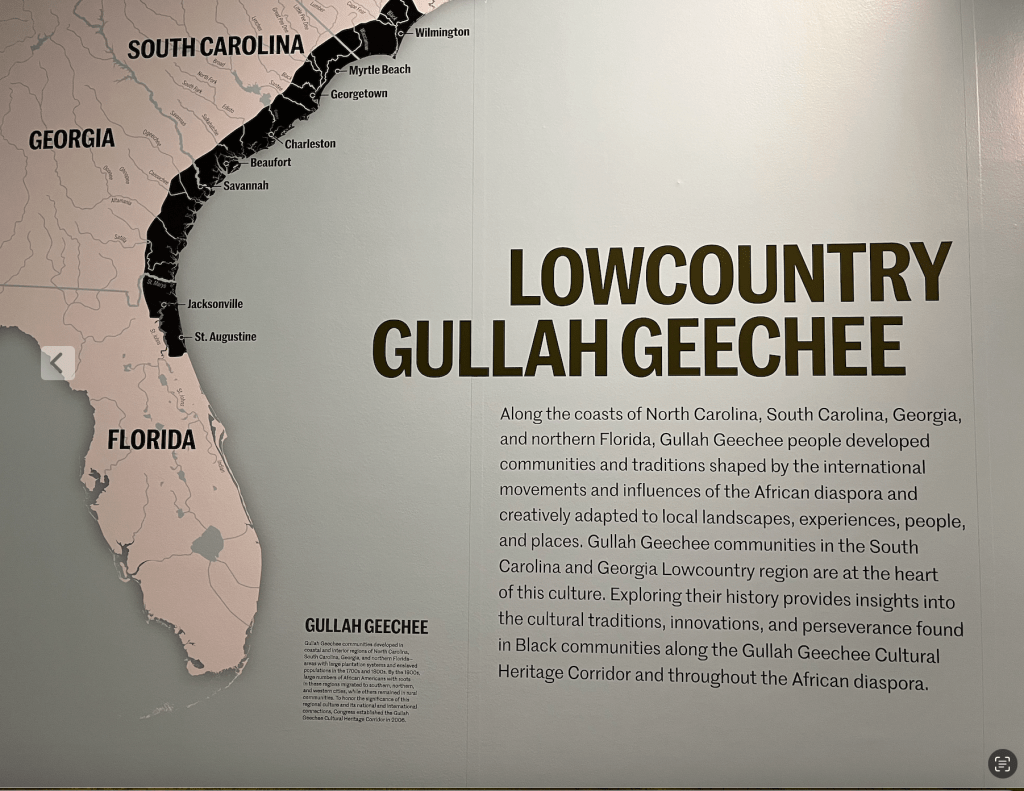
The museum has a large exhibit on the Gullah Geechee of the Carolinas, Florida and Georgia Low Country.

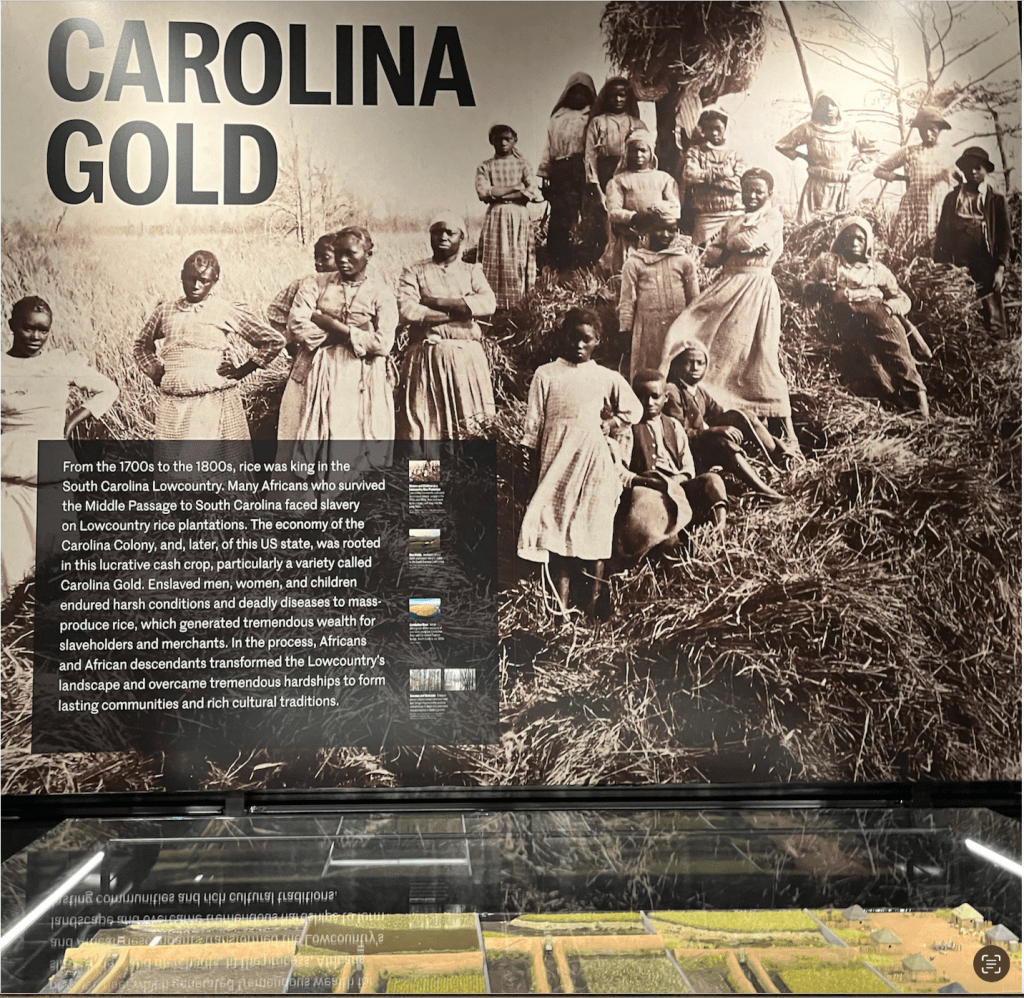
You can also learn about Carolina Gold- the rice industry in South Carolina that was developed by enslaved people who brought the knowledge of rice production from their homeland in Africa..

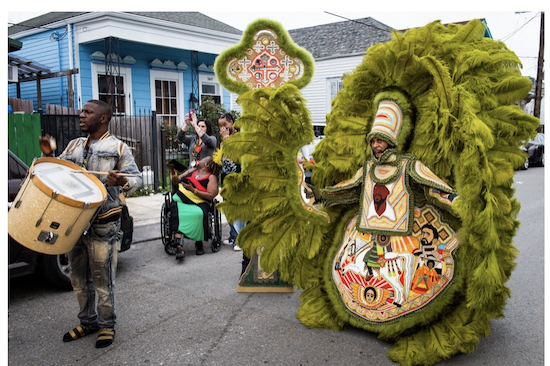
They also had a movie about the Black Indian society for the New Orleans Mardi Gras. Many enslaved people were taken in by the Seminoles and that history is celebrated during Mardi Gras.

As we visit museums on the Civil Rights Trail, we have noticed that the info can get somewhat repetitive. This museum presents information that I have not seen elsewhere. I encourage you to visit!

The First Free Black Community in North America

As much as DeSantis wants to erase Black History in Florida, we are fortunate that he cannot erase all that the internet offers. In 1990, the Florida Legislature created the Study Commission on African American History in Florida “to explore ways to increase public awareness of the contributions of African Americans to the state.” The commission created an in-depth document called the Florida Black HerItage Trail. While the language is somewhat dated, it seems like a pretty good reference. I read this document in addition to an article by the Fort Mose Historical Society and blackpast.org to learn the story of the first free Black community in North America.

The first Underground Railroad in America did not lead from south to north, but north to south. As early as 1687, enslaved people fled bondage from English-controlled South Carolina to seek life as free men and women in Spanish Florida. As Great Britain, France, and Spain competed for control of the New World and its wealth, they all in varying ways, came to rely on African labor to develop their overseas colonial possessions.  Exploiting its proximity to plantations in the British colonies in North America and the West Indies, King Charles II of Spain issued the Edict of 1693 which stated that any male slave on an English plantation who escaped to Spanish Florida would be granted freedom provided he joined the militia and became a Catholic. This edict became one of the New World’s earliest emancipation proclamations.

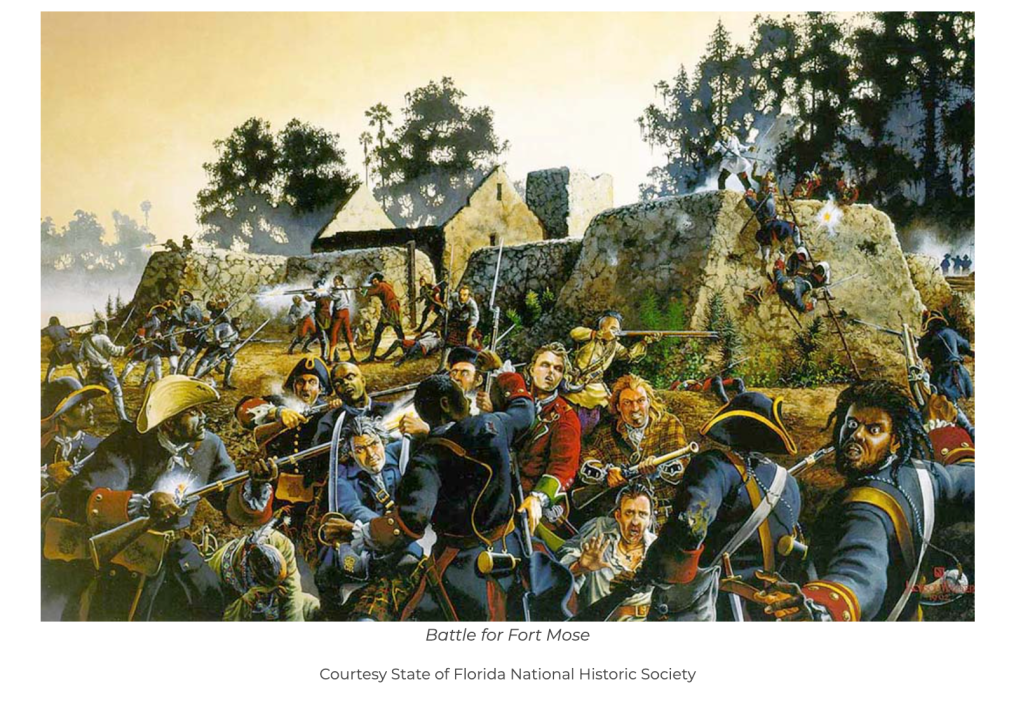
The Spanish established the fortified town of Gracia Real de Santa Teresa de Mose (on St. Augustine’s northernmost border) to accommodate the influx of escaped enslaved people. Fort Mose became the site of the first free black community in what is now the United States. By 1738 there were 100 Black living in Fort Mose; many were skilled workers, blacksmiths, carpenters, cattlemen, boatmen, and farmers.  With accompanying women and children, they created a colony of freed people that ultimately attracted other fugitive slaves. Throughout the following decade, the Spanish continued to strengthen Fort Mose to provide an effective defense against English army advances.

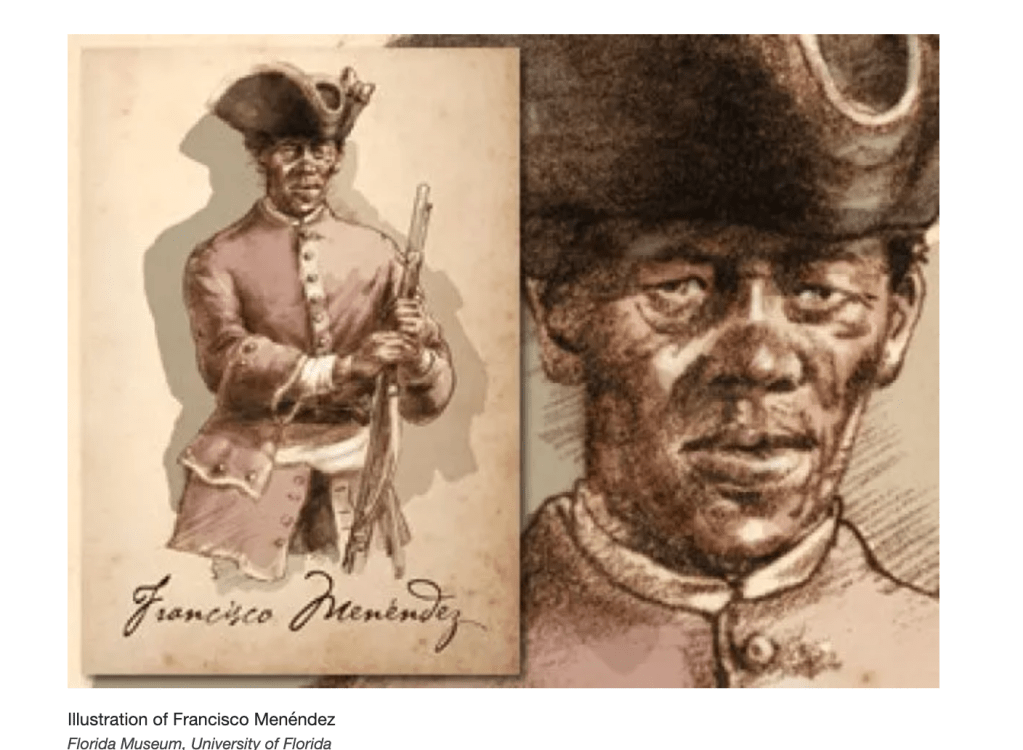
When war broke out in 1740 between England and Spain, the people of St. Augustine and nearby Fort Mose found themselves involved in a conflict that stretched across three continents. The English sent thousands of soldiers and dozens of ships to destroy St. Augustine and bring back any runaways.  They set up a blockade and bombarded the town for 27 consecutive days.  Hopelessly outnumbered, the diverse population of blacks, Indians and whites pulled together.  Fort Mose was one of the first places attacked.  Lead by Captain Francisco Menendez, the men of the Fort Mose Militia briefly lost the Fort but eventually recaptured it, repelling the English invasion force. 

Nonetheless, England eventually prevailed in the battle over control of North Florida. In 1763, the French and Indian War in the Americas ended with the signing of the Treaty of Paris. The treaty turned the Florida colony over to the English and returned Cuba to the Spanish. The residents of Fort Mose sailed to Cuba with the Spanish, along with a few hundred remaining Indians. But, following England’s loss of its American colonies to the revolutionaries during the American Revolutionary War, Spain regained possession of Florida again in 1783. It had to relinquish La Florida to the newly created United States in 1821. Florida became a slave-holding state. Even as an American slave territory, many blacks continued to find freedom in Florida. While Seminole Indians owned slaves, permitting them to live in separate villages in exchange for one-third of their crops, they also welcomed many escaped, black bondsmen as members of their nation. Some runaway slaves joined the Seminole tribe and made numerous contributions in the doomed effort against the U.S. military during the Second Seminole War (1835-1842).

Over the years, the Fort Mose site was swallowed by marsh, and the important legacy of its community was largely forgotten. Late in the twentieth century, a highly dedicated team of archaeologists, historians, government leaders and committed citizens helped restore Fort Mose to its rightful place of honor. Today, Fort Mose is recognized as a significant local, national and international historic landmark.

The Politics of Rage

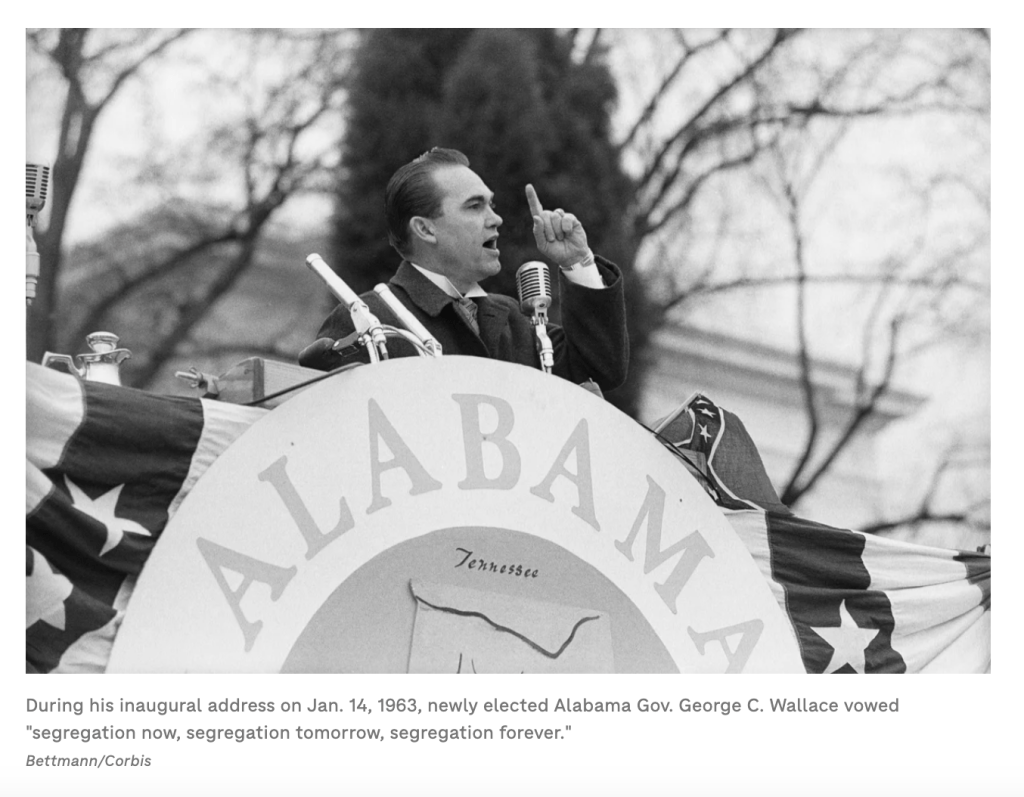
We are in Eufaula, 85 miles south east of Montgomery, in Barbour County, Alabama, still in the deep south on the Georgia border. Eufaula is where Governor George Wallace was born and raised. On January 14, 1963, George Wallace was sworn in as Alabama Governor (in the same spot that Jefferson Davis was sworn in as President of the Confederacy) spewing the infamous lines, “segregation now, segregation tomorrow, and segregation forever!” Wallace made sure to thank the “home folks” of his native Barbour County for giving “an anxious country boy” a chance.

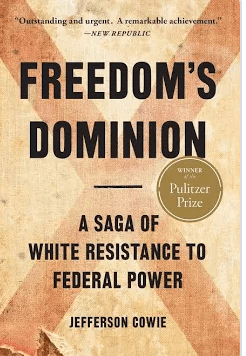
It is here in Barbour County, Alabama that Jefferson Cowie, in his Pulitzer Prize winning book, Freedom’s Dominion: A Saga of White Resistance to Federal Power (2022) chronicles “the unholy union , more than two hundred years strong, between racism and rabid loathing of government” (New York Times Book Review). I have always associated “freedom” with the fight of the oppressed for a better, more just world. Freedom is also a word used by those looking to dominate. This book helped me understand the hatred of white supremacists toward the Federal government that Trump used to enflame his followers to act during the January 6th, 2021 insurrection. I was first alerted to this book because Cowie is scheduled to speak at Ithaca College on Thursday, March 28th, at 5pm in the Park School Auditorium. 

According to the book’s introduction, Freedom’s Dominion is ” a story of rough continuity, recurring conflict, and ideological regeneration across time in one place. In Barbour County, freedom served as an ideological scaffolding that supported most every form of domination discussed in this book- Indian land dispossession and removal, mob political violence, lynching, convict labor, Jim Crow, resistance to school integration, and the fight against voting rights… Those defending racism, land appropriation, and enslavement portrayed themselves, and even understood their own actions, as part of a long history of freedom.”

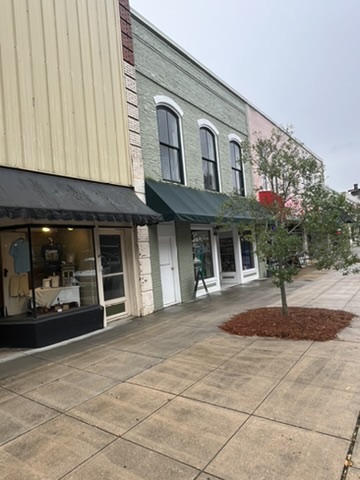
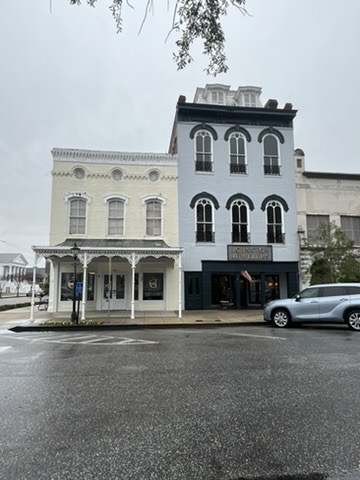
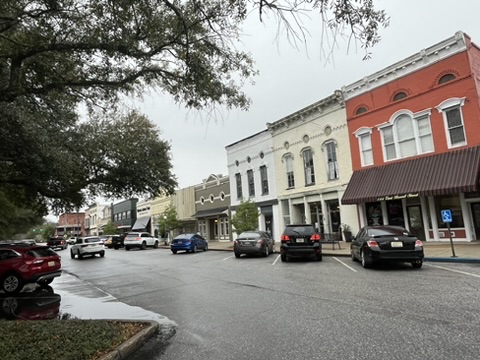
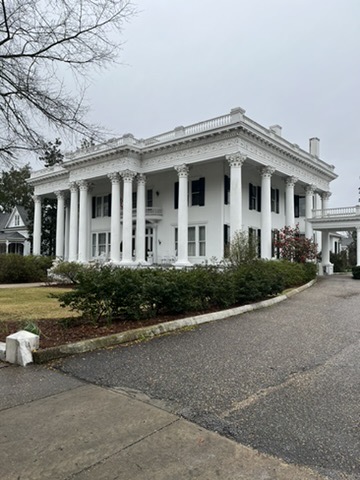
I have to say, since I skimmed this book before I arrives in Eufaula, I expected to find a back water place ravaged by history. This is not at all what we found. Eufaula is home to the second largest historic district in the state, with more than 700 historic and architecturally significant structures. There are quite a number of antebellum mansions and the downtown is quite well preserved and attractive. There is money here. According to the Eufaula Chamber of Commerce pamphlet , when the Union Troops rode in to Eufaula at the end of the Civil War, some town aristocrats wined and dined the Union General, who decided to spare the town and there was no death and destruction for the White gentry as occurred in many other southern towns. Somehow, this just makes the violent, racist history of the town seem worse.

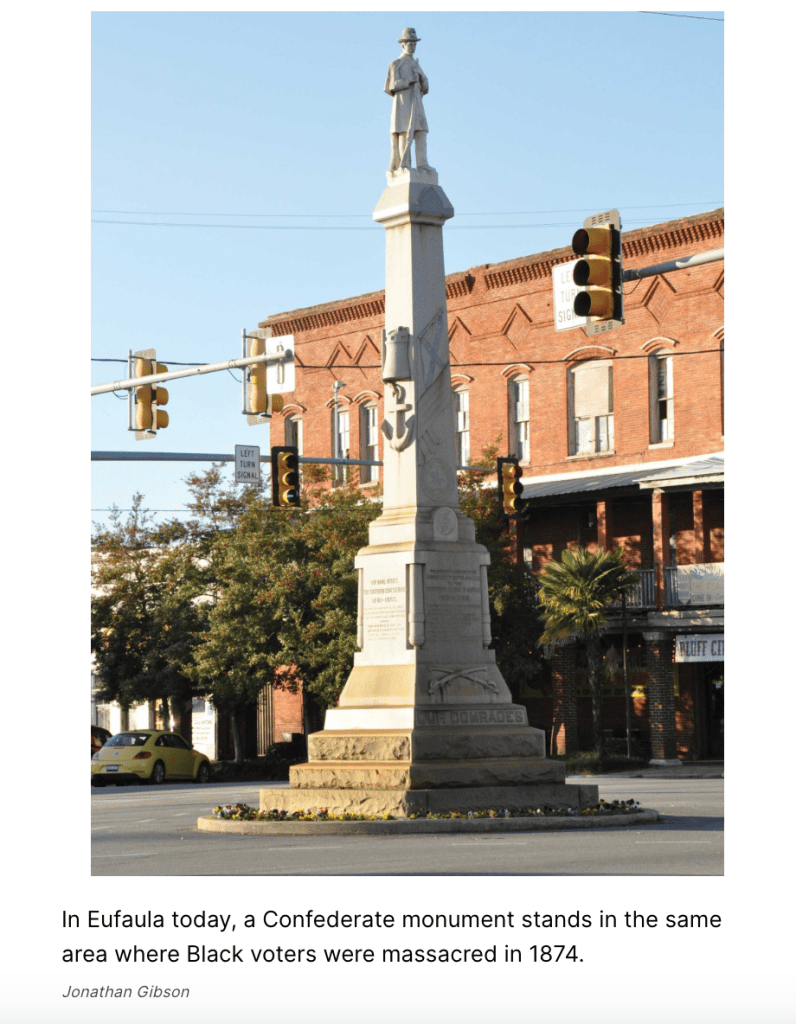
“In downtown Eufaula, the streets where Black voters were shot down for voting more than 140 years ago now host a towering Confederate monument erected by the United Daughters of the Confederacy in 1904. S.H. Dent, a former Confederate soldier who witnessed and possibly helped commit the massacre, spoke at the monument’s unveiling.”

Reconstruction in America: A Truth That Needs Telling, Equal Justice Initiative

Except for the fact that it was spared at the end of the Civil War, and so many grand historic structures remain, Eufaula and Barbour County are not so different than any other southern counties, and I dare say some northern counties, too. This point was driven home when we saw the sheer number of counties that had documented lynchings when we went to the lynching museum in Montgomery.

Montgomery, Alabama: Capitol of Dreams

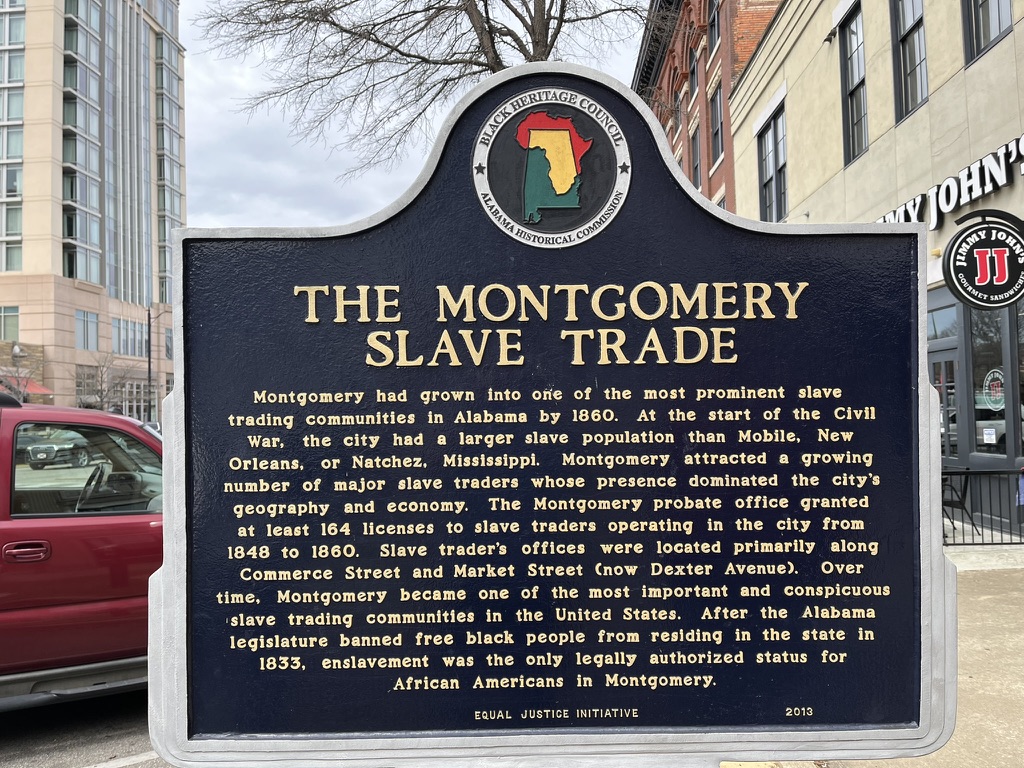
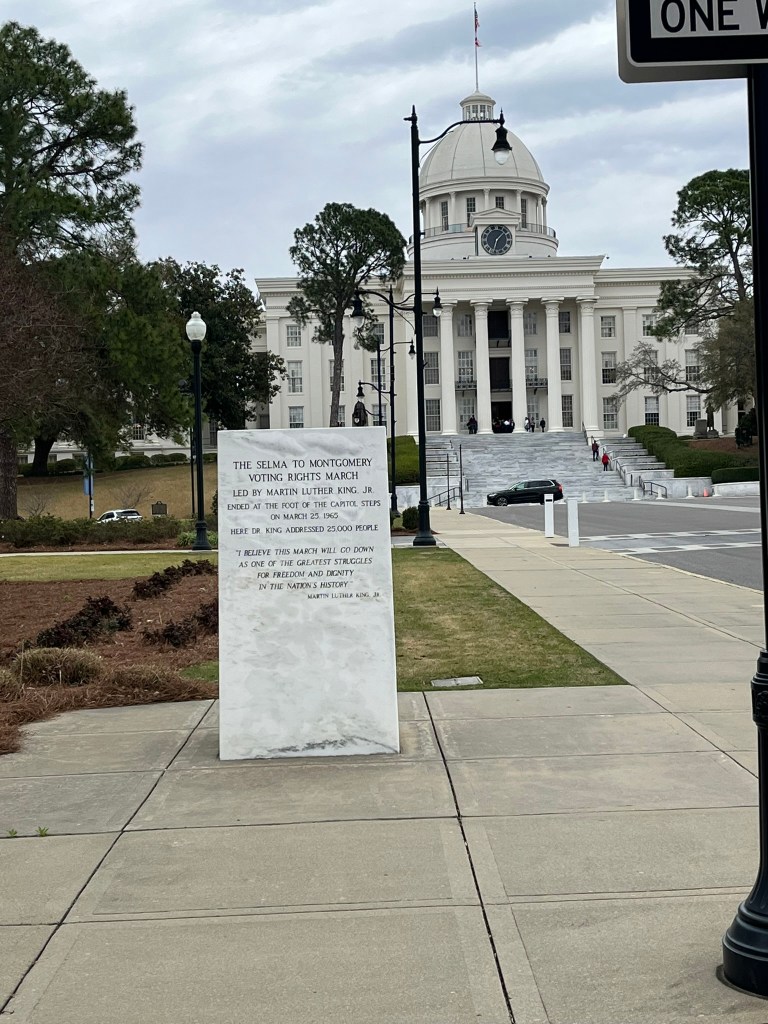
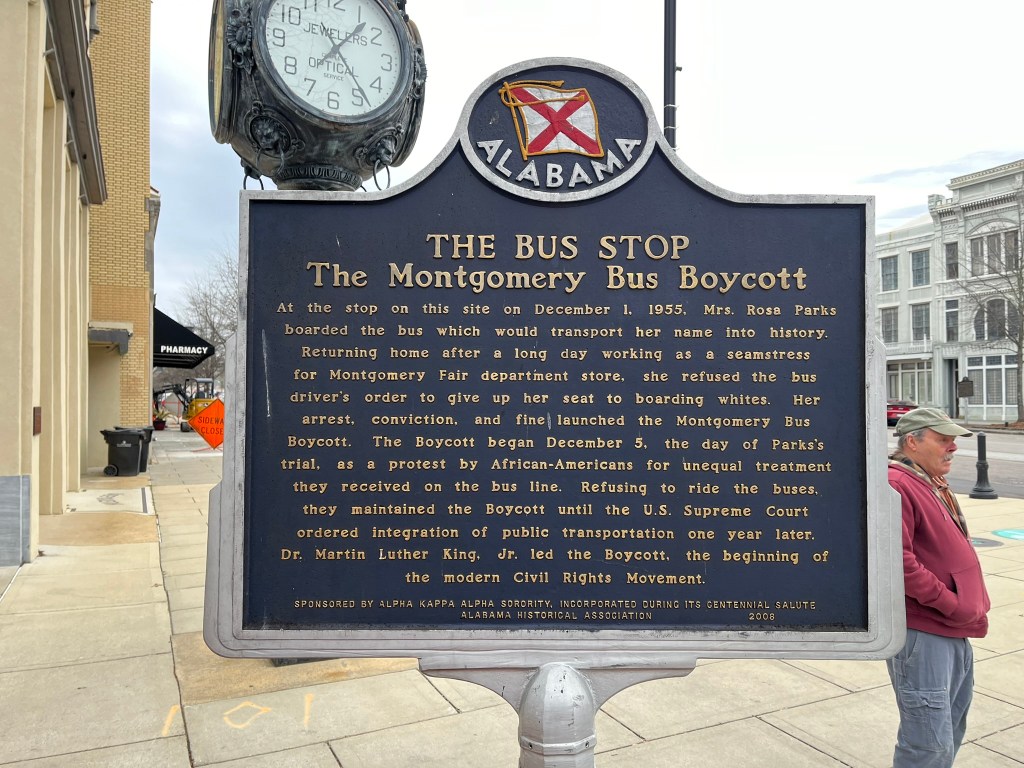
Montgomery, Alabama has to reconcile the fact that it is both the “Cradle of the Confederacy” and the “Birth Place of the Civil Rights Movement”. It raises the question of whose dreams are being fulfilled with it’s nickname “Capitol of Dreams”? To be fair, you can visit The First White House of the Confederacy (two blocks from the Dexter Ave. Baptist Church where Reverend Dr. Martin Luther King, Jr. was pastor), but I have seen no confederate flags in the city. There are plenty of plaques in the city recognizing the large role the city played in the slave trade and also marking civil rights milestones. Montgomery is the home of the Legacy Museum . It seems the city has done a pretty good job of recognizing all aspects of its past, however I did not see any plaques acknowledging what they did to the Creeks, the indigenous people living there when White settlers arrived.

Montgomery is a pretty city with a lot of downtown revitalization happening. It was one of the first cities in the nation to implement SmartCode Zoning, focusing on walkable neighborhoods. Montgomery is a majority Black city (61% of population) and, we were told it has an increasing Korean population due to the large Hyundai plant located there. Once home to the First White House of the Confederacy, Montgomery grew to become the center of the Civil Rights Movement, notably the Montgomery Bus Boycotts.

Birmingham, The Magic City

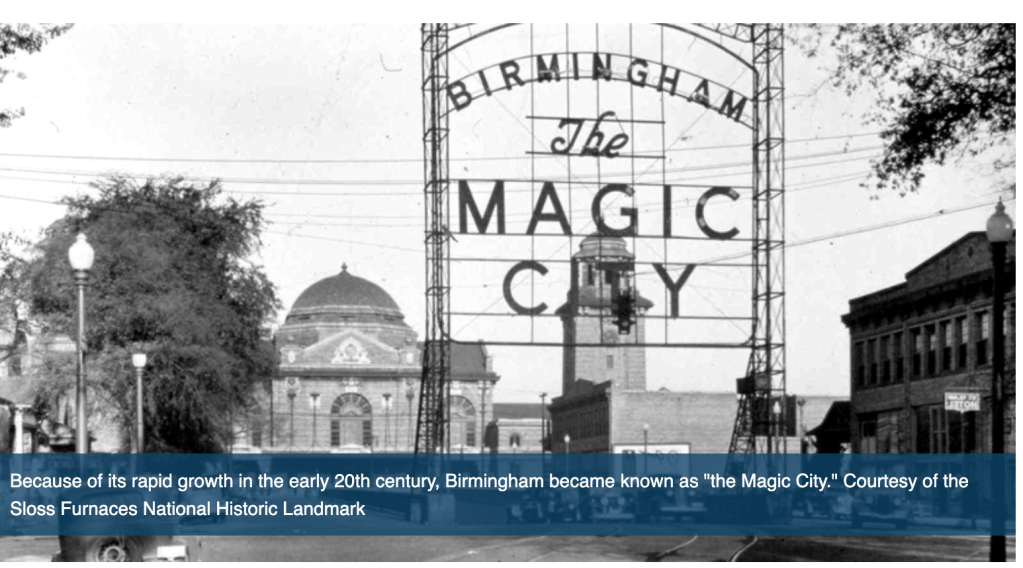
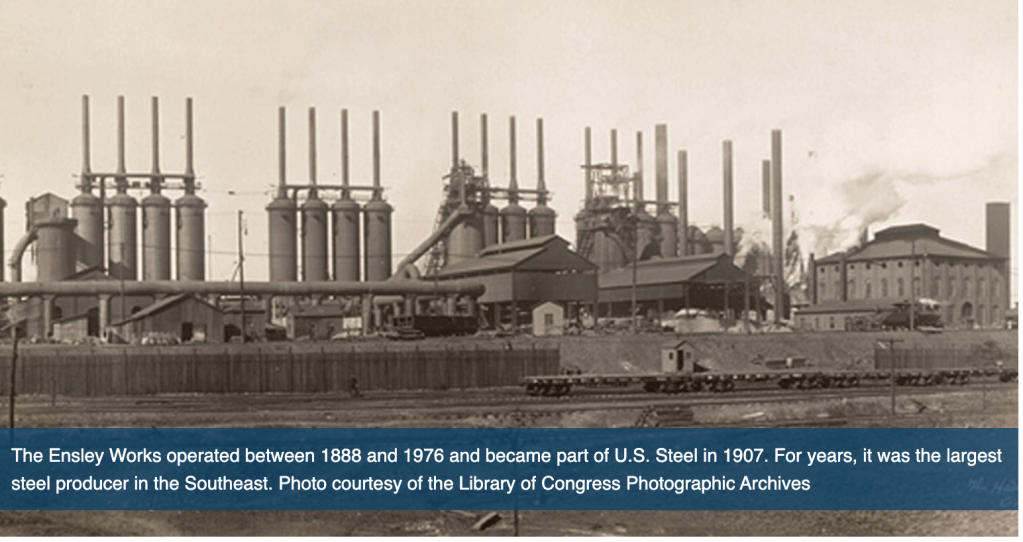
Birmingham, Alabama, founded in 1871 during the post civil war reconstruction period, was called the “magic city” because of its fast pace of growth during the period from 1881 through 1920. The city’s population expanded from 3,000 in 1880 to 260,000 by 1930. Birmingham was built at the crossing of Alabama & Chattanooga and South & North Alabama railroads. It had nearby deposits of iron ore, coal, and limestone  – the three main raw materials used in making steel and iron. Birmingham is the only place in the world where these minerals can be found in significant quantities and in close proximity, so Birmingham was planned from the start as a steel and iron producing industrial city. (Wikipedia).

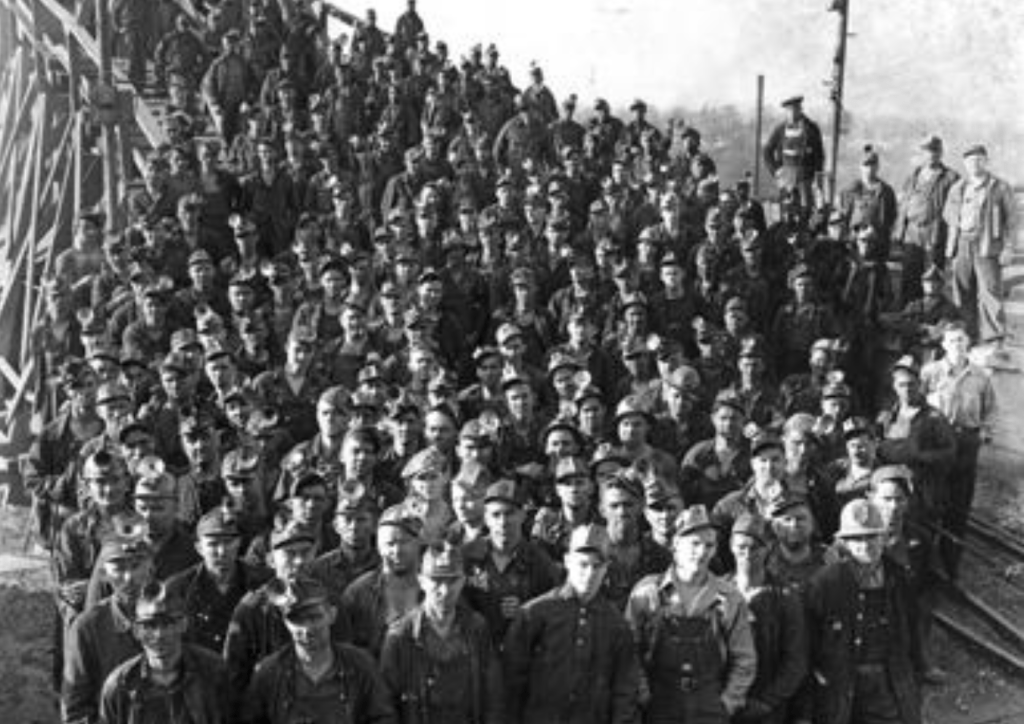
It also had a competitive advantage over northern industrial cities: cheap labor. The availability of a large population of destitute freedmen and impoverished whites in the vicinity of the coalfields offered mine owners an important advantage: workers who were both desperate enough to settle for meager wages and so thoroughly divided along racial lines that they would not organize to protest their predicament or so those in power thought. They did not anticipate the formation of one of the South’s few viable interracial labor unions, District 20 of the United Mine Workers. In 1908, they went on strike for two months, but the strike was crushed by the mine owners when they convinced Alabama Governor Comer to send in the Alabama National Guard.

Coal miners, United Mine Workers District 20, 1908

A nationwide depression in the 1890s caused mining and furnace companies inAlabama to fail. Sloss and Tennessee Coal, Iron and Railroad (TCI) purchased some of these firms and greatly expanded their operations. Sloss reorganized as the Sloss-Sheffield Steel and Iron Company in 1899 and became the second-largest iron manufacturer in the state. Later, outside investors from New York gained control of Sloss and TCI, and Pioneer was absorbed by Ohio-based Republic Iron and Steel Company, leaving Woodward as the only locally owned ironmaking firm. (https://encyclopediaofalabama.org)

The Great Depression that began in 1929 devastated Birmingham’s economy. Production of steel and pig iron shrank to the lowest levels since 1896, and operations at TCI, Republic, Sloss-Sheffield, and Woodward were drastically curtailed. Business leaders fought bitterly against labor reforms enacted under the New Deal, particularly the Fair Labor Standards Act of 1938, which aimed to raise the wages of southern laborers to the level of their northern counterparts. Labor unions won recognition against strong resistance, but unemployment reached unprecedented levels.(https://encyclopediaofalabama.org)

Industrialists soon realized that Alabama’s coal reserves, which remained plentiful, commanded higher prices in foreign markets than coke-fired pig iron, which was becoming uneconomical to produce. In 1970, USP&F’s last active furnace in Birmingham, one of the two that had been remodeled on the site of the original Sloss Furnace Company, shut down for good. In 1980, Jim Walter Corporation closed the huge new furnace that USP&F had erected in North Birmingham in 1956, then dismantled and sold it for scrap. Even Woodward, long the most profitable company in the Birmingham District, was forced out of business in the early 1970s, and only U.S. Steel’s Fairfield plant remained in production.

From its highest population of 340,887 in 1960, the population was down to 200,733 in 2020, a loss of about 41 percent. White flight to the suburbs after the city was integrated in the late 1960’s contributed to the population decline. Today most of the metropolitan area lies outside the city itself. Other businesses and industries such as bankingtelecommunications, transportation, electrical power transmission, medical care, college education, and insurance have diversified the Birmingham economy. Mining in the Birmingham area is no longer a major industry with the exception of coal mining.

The Economic Boom and Bust in Coal Country

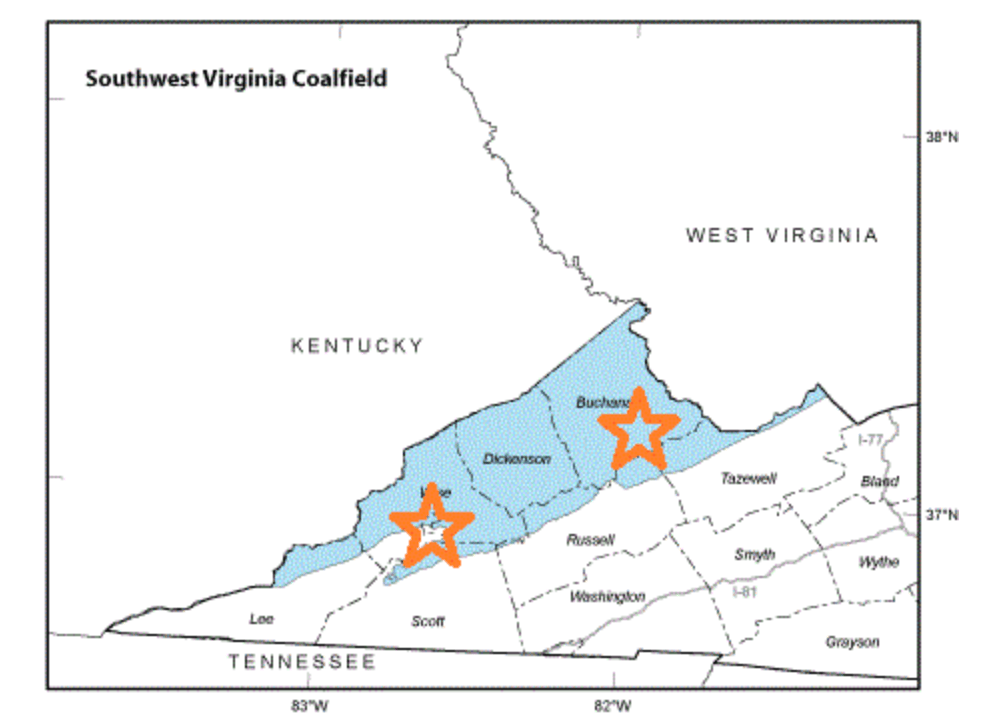
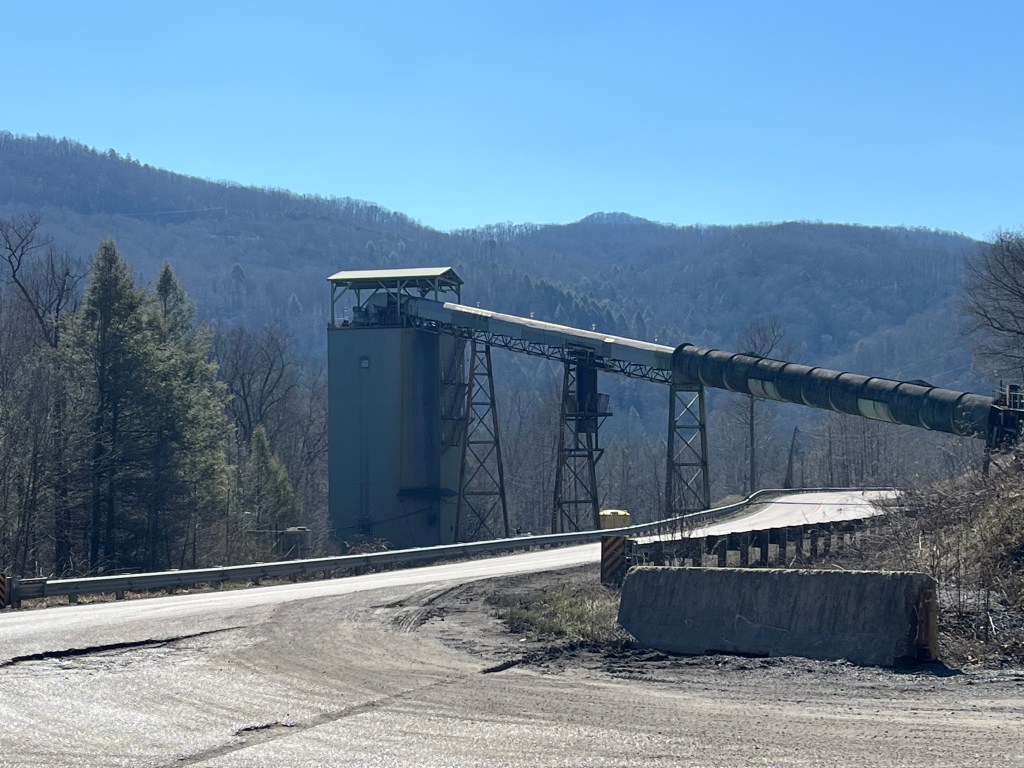
We are now in the heart of coal country in southern Virginia near the Kentucky border. Almost all of the small towns carved out of the steep mountains are decreasing in population and struggling to replace coal as an economic engine for the community. The large coal companies have left for places like Colorado, leaving small outfits like the one above.

In the 1880s, coal deposits became the dominant resource utilized in the area. Immigration trends and economic conditions across the country attracted many people to the area for work, including African Americans and Irish, Polish, Italian, and Hungarian immigrants. In the 1970s, the change in regulations and the OPEC oil embargo drove up the price of coal and created a boom for the coal economy in the region. New mines were opened and existing mines expanded. The boom lasted until 1983, when coal prices declined, mines were opened in western states in the U.S and mining technology reduced the demand for coal miners.The boom turned into a bust. (https://www.jstor.org/stable/3590402) As our country attempts to deal with climate change, regulations have been put in place to reduce greenhouse gas emissions and protect public health. And coal is being replaced by lower-cost natural gas and renewable energy sources.

So what are these communities to do? They are isolated, with no population centers close by to attract new business customers or commute to new jobs. There are still jobs in the lumber industry, confirmed by all of the log trucks we passed on the mountain roads, although this industry is in decline as well. And they do have another major rural employer in Wise County, the prison industry. Virginia’s two highest security “super max” state prisons are located in Wise County: Red Onion State Prison, opened in 1998, and Wallens Ridge State Prison, opened in 1999.[3](Wikepedia). According to a local former miner we spoke with, many former coal miners have become prison guards. But this is not keeping the towns thriving. There are many boarded up stores and signs of decline.

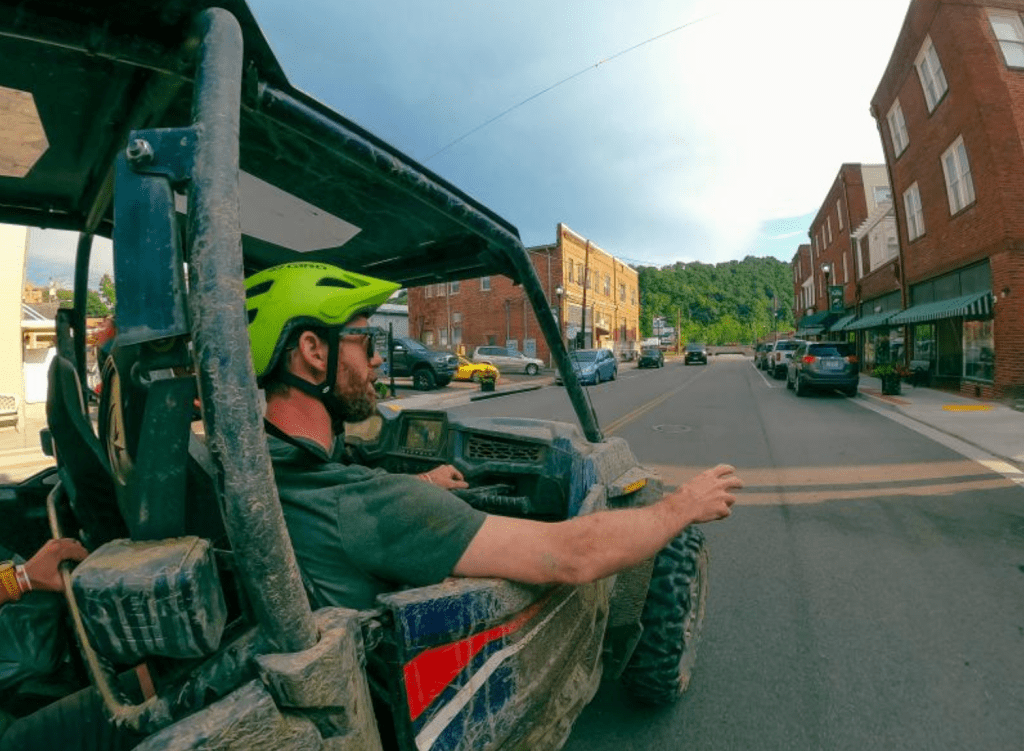
Many of the towns are trying to attract outdoor adventure tourists. A big attraction now is atv trailing that takes advantage of the steep mountain trails; we saw that in several towns they allow atvs on the town streets. It is not at all clear that many of these towns will make a come back, although not for lack of effort. We met Jim, a lawyer in Williamson, WV, who was working hard on bringing the arts and other tourist attractions to Williamson. It is clear there is a great deal of effort expended to recreate these tiny towns.

Blog at WordPress.com.

Up ↑