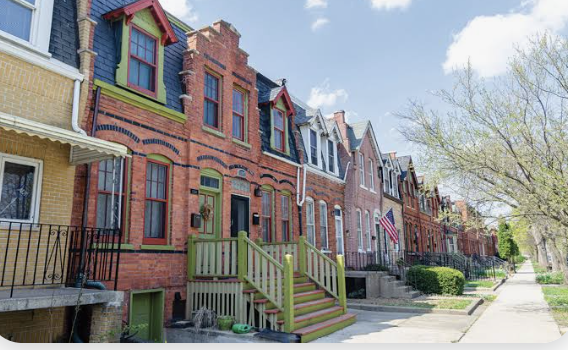
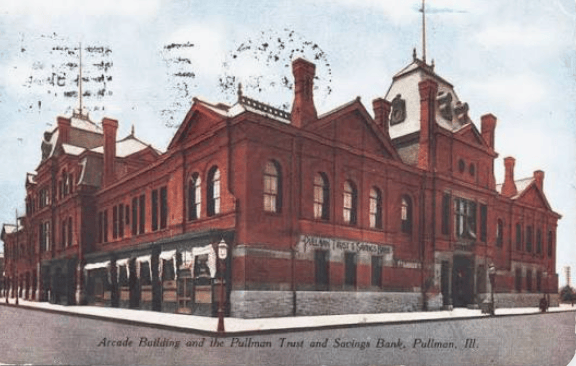
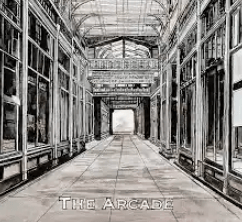
On our way into Chicago we stopped by Pullman National Historical Park on Chicago’s South Side. It was the first model, planned industrial community in the United States, built in the 1880s by George Pullman for employees of his railroad company, the Pullman Place Car Company. The row houses were comfortable by standards of the day, with indoor plumbing, gas, and sewers, but Pullman was quite paternalistic toward his workers. establishing behavioral standards they had to meet to live there, such as no alcohol. The Arcade building, was built to be the social and commercial heart of the community. It contained stores, YMCA, barbershops, professional offices, a bank, a post office, a library and a 1,000 seat theater. It was a complete company town and Pullman controlled all aspects of workers’ lives.
According to the National Park Service, the town of Pullman was ethnically diverse, with fewer than half of the residents in 1885 being native-born Americans. Many were English, Dutch, German, Irish, and Scandinavian. Though the Pullman Company employed Black men and women to work as porters and maids, the town had very few , if any, Black residents. “The company itself actually had no restriction on race [when it came to] who would live in the town of Pullman,” said Sue Bennett, assistant superintendent of the Pullman National Monument. “But let’s face it: There were societal limitations based on race.” It is interesting to note that today, the Pullman neighborhood is equal part Black, Latino and White residents. (Chicago Sun-Times)
Following the Panic of 1893, the demand for sleeping cars was greatly reduced. Pullman laid off hundreds of workers and switched many more to pay-per-piece work; wages were reduced by 25-30%. He did not, however, reduce the rent charged in his company town or lower charges for food or gas, causing hardship for workers.Workers responded by striking.(Wikipedia)
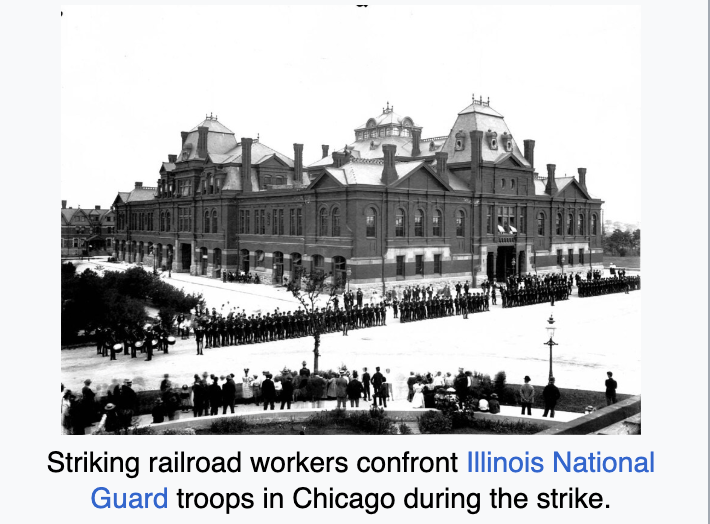
The Pullman Strike was initiated in 1894, and it lasted for 2 months, When company management fired grievance delegates, workers walked out and joined the American Railway Union (ARU) led by Eugene V. Debs, launching a sympathy boycott of all trains using Pullman cars. The boycott spread to 27 states, involving up to 250,000 workers and effectively halted midwestern and national rail traffic, eventually leading to intervention by the US government and military. President Grover Cleveland ordered the Army to stop the strikers from obstructing trains. Strike leader Eugene V. Debs was arrested and convicted of conspiracy and violation of a court order and sentenced to six months in prison. The boycott collapsed and the ARU was effectively destroyed. In an attempt to reconcile with angry American workers, President Cleveland signed legislation making Labor Day a federal holiday.
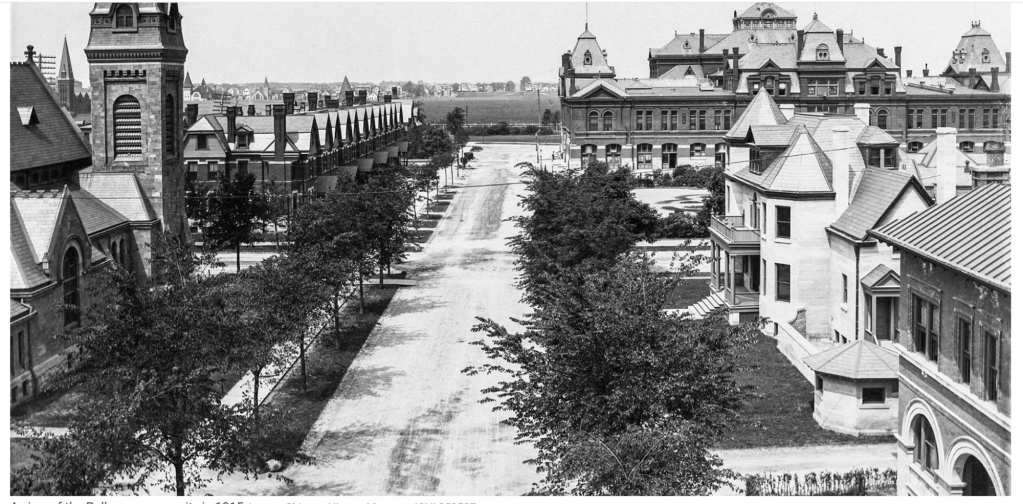
Two years after Pullman’s 1897 death, the town of Pullman was annexed to Chicago after the Illinois Supreme Court ordered the company to give up ownership of the town, arguing that the company’s charter stipulated it was only for manufacturing, and owning the town operated outside of that charter.
Historic Pullman is now a national model for community revitalization. You can read more about it here.

