In our retirement we are have decided it is time to leave the bubble of Ithaca, New York and see what America is really about. We invite you to join us as we learn about people, places and the natural history we experience in our travels.
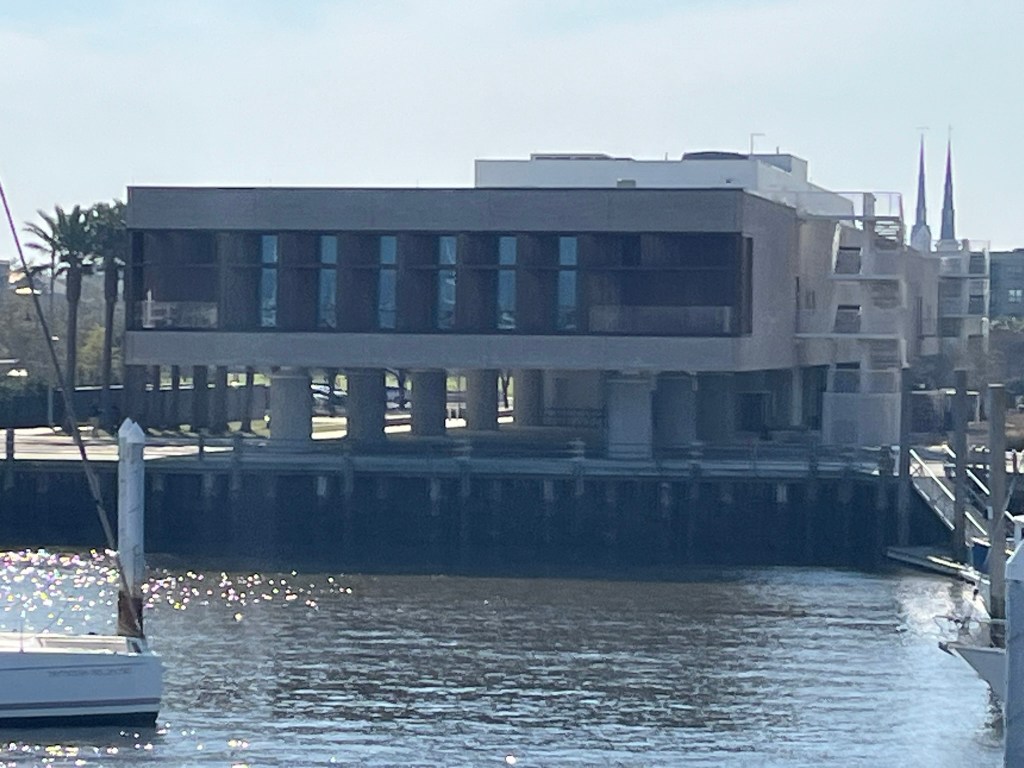
The new International African American Museum in Charleston, South Carolina is definitely worth a visit. Built on Gadsden’s Wharf, where 40% of all American enslaved persons entered the country, the museum has an interesting focus on reconnecting African American families with their history and ancestors through their Center for Family History. Here is a PBS news story about the genealogy research center.
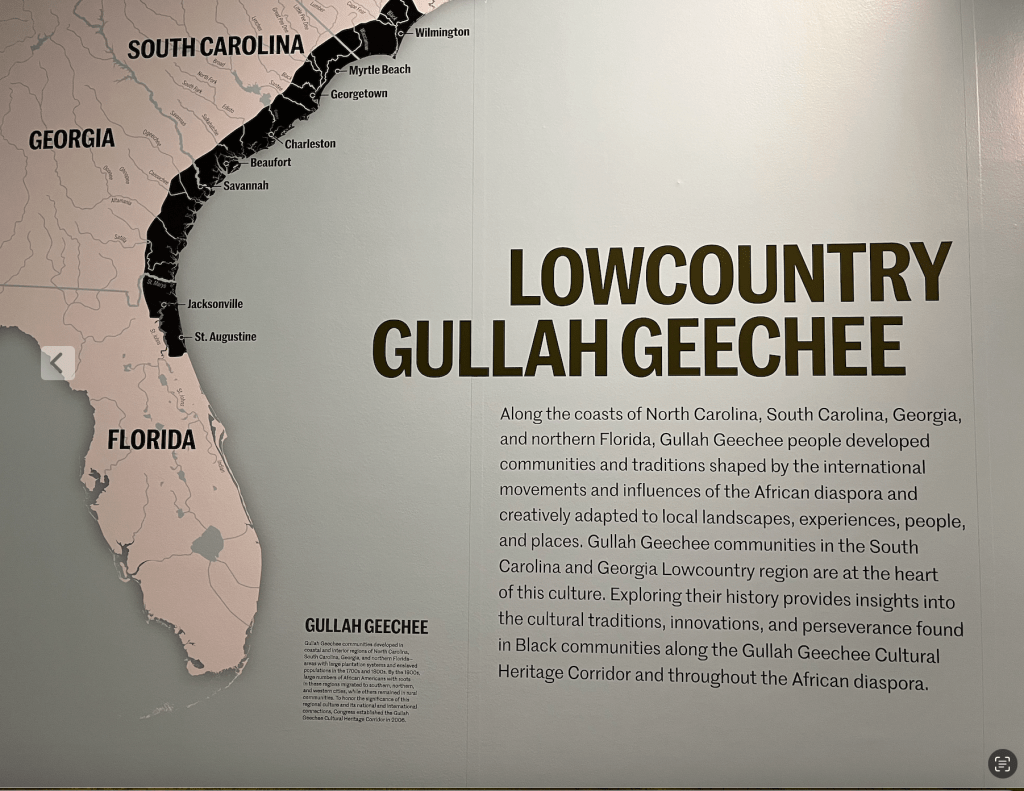
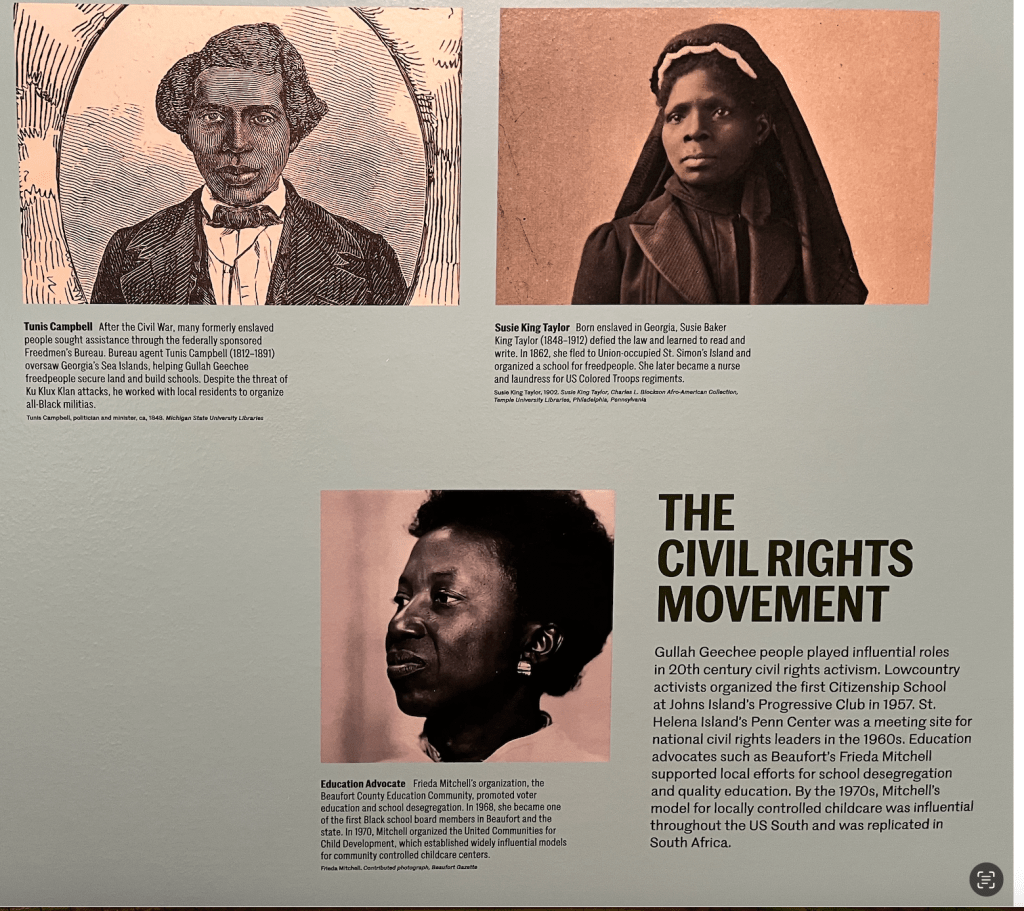
The museum has a large exhibit on the Gullah Geechee of the Carolinas, Florida and Georgia Low Country.
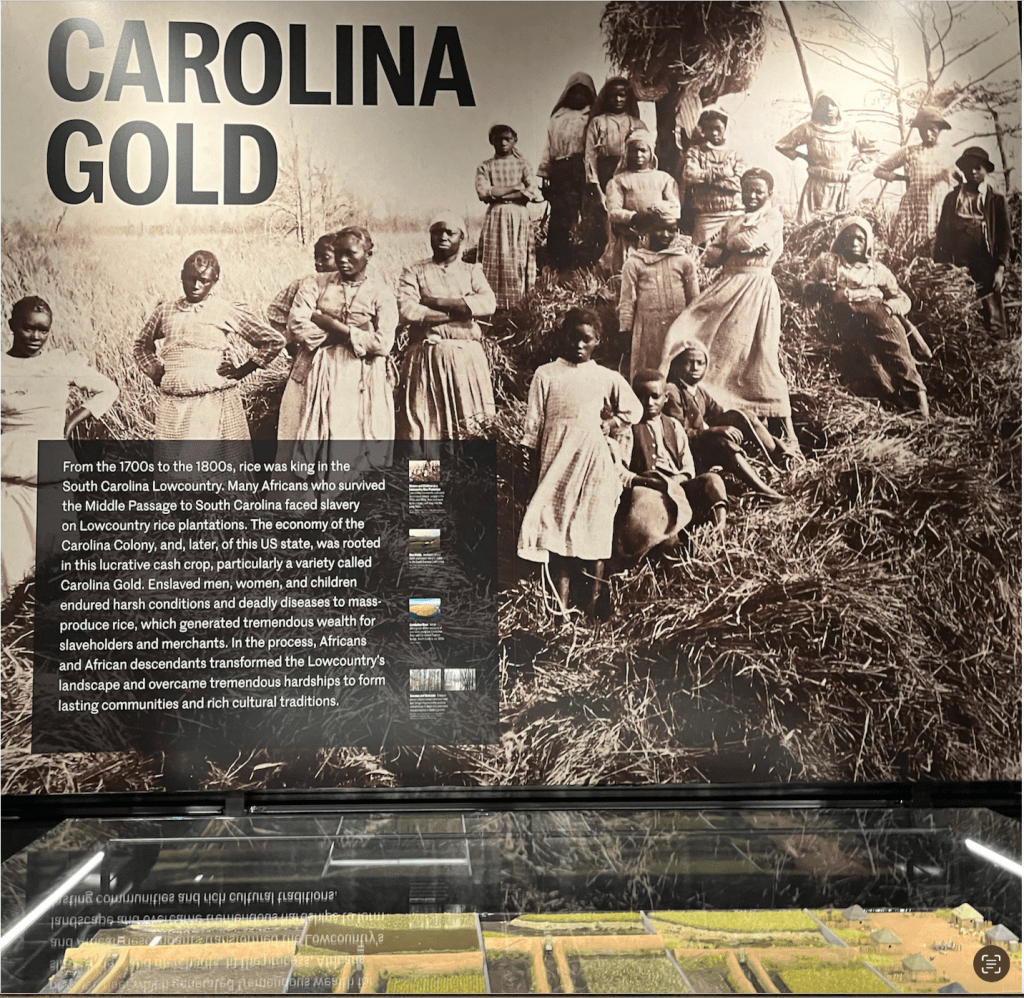
You can also learn about Carolina Gold- the rice industry in South Carolina that was developed by enslaved people who brought the knowledge of rice production from their homeland in Africa..
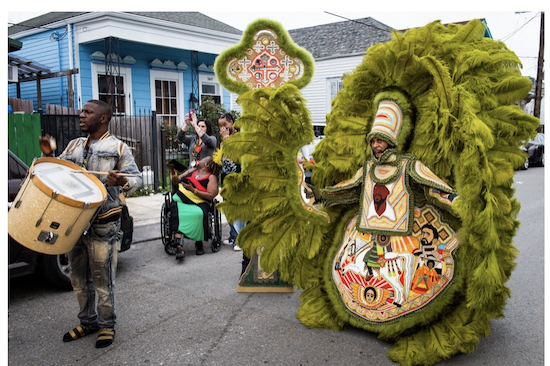
They also had a movie about the Black Indian society for the New Orleans Mardi Gras. Many enslaved people were taken in by the Seminoles and that history is celebrated during Mardi Gras.
As we visit museums on the Civil Rights Trail, we have noticed that the info can get somewhat repetitive. This museum presents information that I have not seen elsewhere. I encourage you to visit!
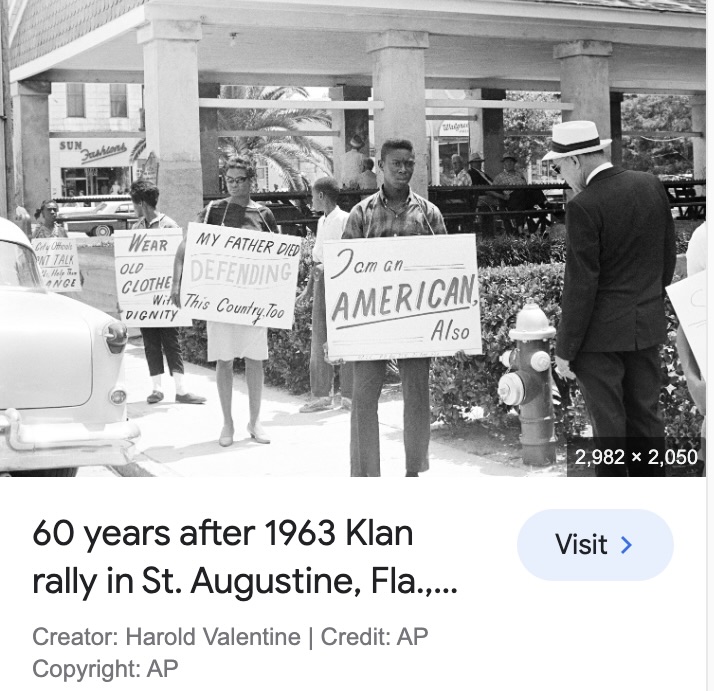
This is our first visit to St. Augustine, Florida and one thing is immediately evident that sets it a part from most other Southern cities and towns we have visited- there are very few Black people here. The Black population in St. Augustine was 4.9% in 2023, compared to many Southern cities that are majority Black. We wondered why this was true and found out that in 1965, the population was 40% Black, which peaked our interest further, especially since St. Augustine hosted the first free Black community in the land.
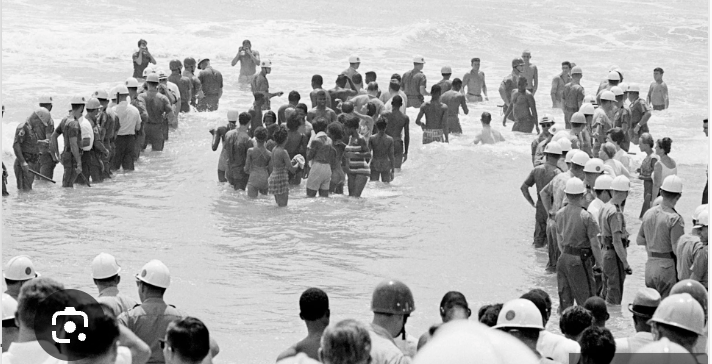
St. Augustine “Foot Soldiers” protesting segregated beaches
An article in Harper’s magazine article written in 1965 by Larry Goodwin, entitled “Anarchy in St. Augustine” details the violence that happened here during the civil rights movement. Bull Conner had nothing on the White community leaders in St. Augustine. Trigger warning: there is liberal use of “N****r” in the article, but I recommend a read in spite of this. Goodwin states that St. Augustine “is perhaps the most bitterly divided community on the North American continent. Massive hostility exists not only between the races, but also within the white population”.
Holstead (Hoss) Manucy, klan-oriented leader of a group that townspeople call “Manucy’s Raiders.” His numerous, well-organized tribe roams the beaches by day and the plaza by night, and is officially known as the Ancient City Hunting Club and less officially as the “Gun Club.” Local sheriff Davis named Mauncy and several of his men as “honorary special deputies”.
Reverend Andrew Young of the Southern Christian Leadership Conference staff summed up the dismay of the Negro leadership at the unique group of recently appointed “volunteer special deputies” in St. Augustine: “It’s one thing to oppose the klan. . . . But when you have one man, wearing civilian clothes, beating you while another, wearing a badge, stands waiting to arrest you when the first one gets tired, well, that makes you think. St. Augustine is really worse than Birmingham. It’s the worst I’ve ever seen.”
The violence in St. Augustine drew in many of the nationally known civil rights leaders- Dr. Martin Luther King, Jr., Ralph Abernathy, Fred Shuttlesworth and others. As demonstrations reached their peak in St. Augustine, the Civil Rights Act of 1964 was being filibustered in congress. The images of segregation and violence coming out of the city helped to end the stalemate and get the legislation passed.
As much as DeSantis wants to erase Black History in Florida, we are fortunate that he cannot erase all that the internet offers. In 1990, the Florida Legislature created the Study Commission on African American History in Florida “to explore ways to increase public awareness of the contributions of African Americans to the state.” The commission created an in-depth document called the Florida Black HerItage Trail. While the language is somewhat dated, it seems like a pretty good reference. I read this document in addition to an article by the Fort Mose Historical Society and blackpast.org to learn the story of the first free Black community in North America.
The first Underground Railroad in America did not lead from south to north, but north to south. As early as 1687, enslaved people fled bondage from English-controlled South Carolina to seek life as free men and women in Spanish Florida. As Great Britain, France, and Spain competed for control of the New World and its wealth, they all in varying ways, came to rely on African labor to develop their overseas colonial possessions. Exploiting its proximity to plantations in the British colonies in North America and the West Indies, King Charles II of Spain issued the Edict of 1693 which stated that any male slave on an English plantation who escaped to Spanish Florida would be granted freedom provided he joined the militia and became a Catholic. This edict became one of the New World’s earliest emancipation proclamations.
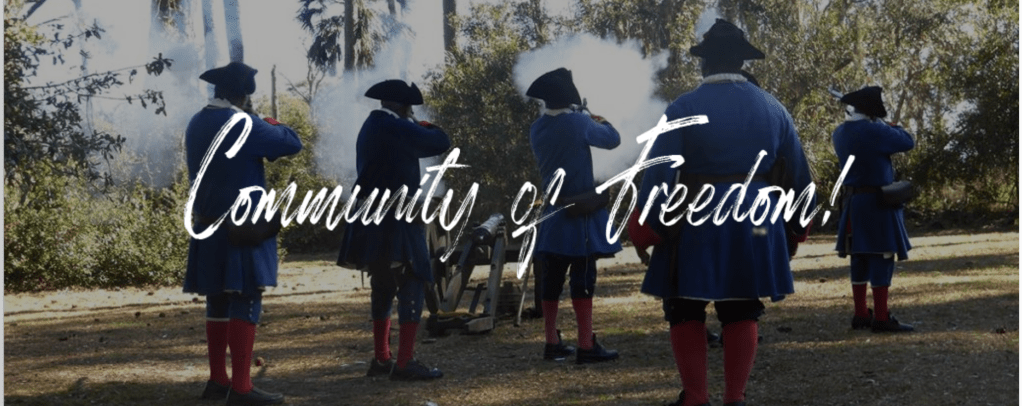
The Spanish established the fortified town of Gracia Real de Santa Teresa de Mose (on St. Augustine’s northernmost border) to accommodate the influx of escaped enslaved people. Fort Mose became the site of the first free black community in what is now the United States. By 1738 there were 100 Black living in Fort Mose; many were skilled workers, blacksmiths, carpenters, cattlemen, boatmen, and farmers. With accompanying women and children, they created a colony of freed people that ultimately attracted other fugitive slaves. Throughout the following decade, the Spanish continued to strengthen Fort Mose to provide an effective defense against English army advances.
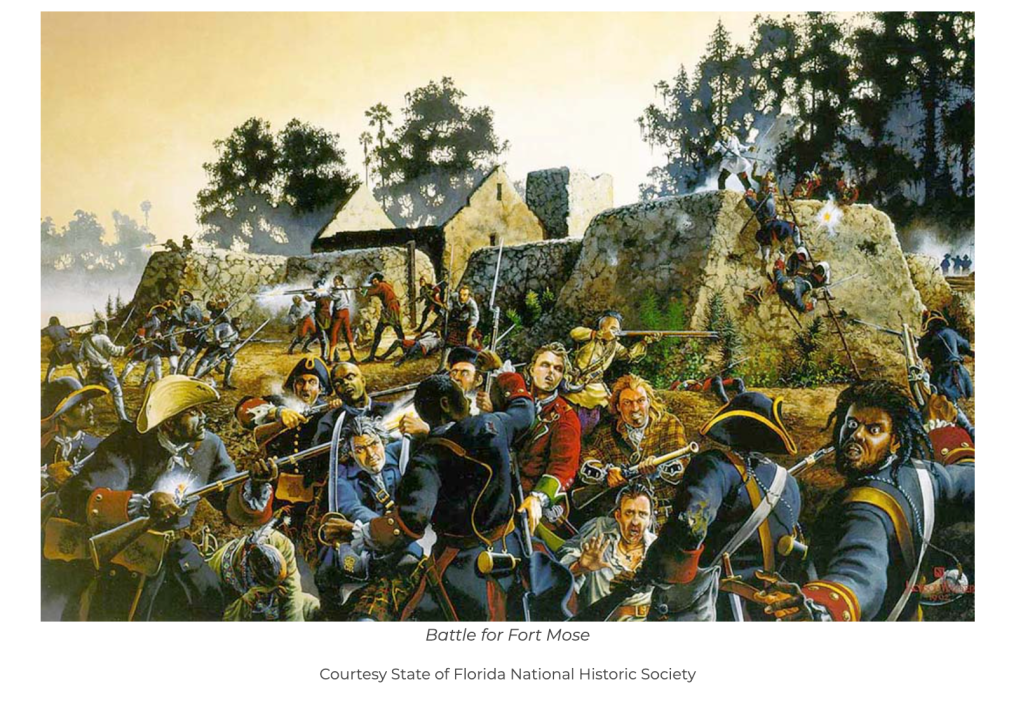
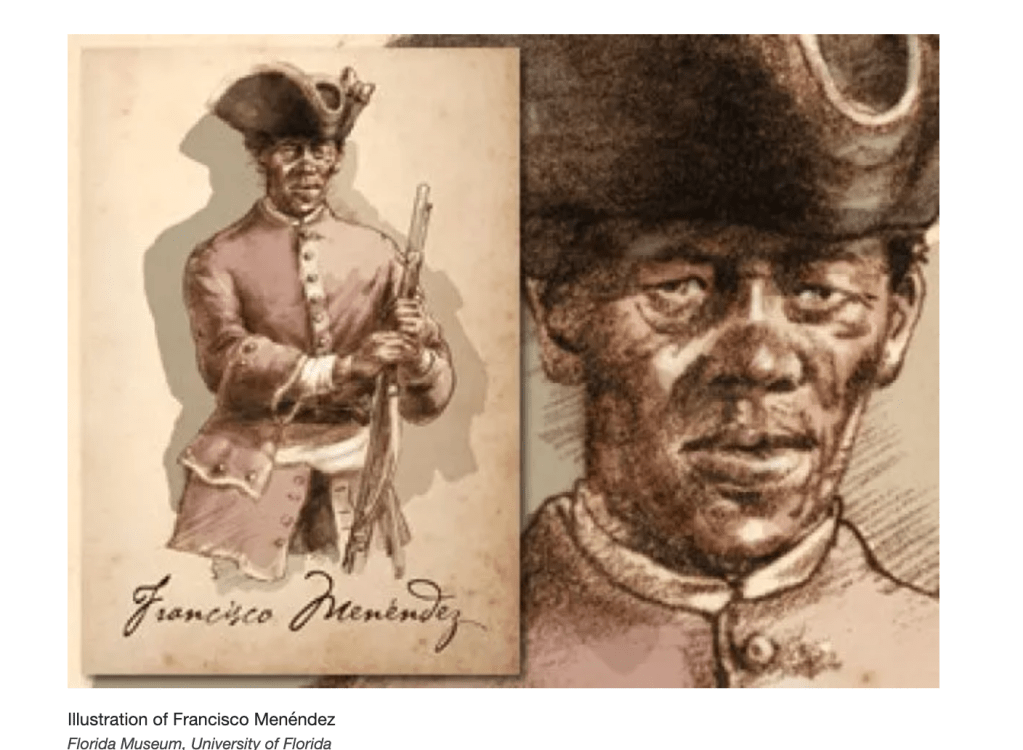
When war broke out in 1740 between England and Spain, the people of St. Augustine and nearby Fort Mose found themselves involved in a conflict that stretched across three continents. The English sent thousands of soldiers and dozens of ships to destroy St. Augustine and bring back any runaways. They set up a blockade and bombarded the town for 27 consecutive days. Hopelessly outnumbered, the diverse population of blacks, Indians and whites pulled together. Fort Mose was one of the first places attacked. Lead by Captain Francisco Menendez, the men of the Fort Mose Militia briefly lost the Fort but eventually recaptured it, repelling the English invasion force.
Nonetheless, England eventually prevailed in the battle over control of North Florida. In 1763, the French and Indian War in the Americas ended with the signing of the Treaty of Paris. The treaty turned the Florida colony over to the English and returned Cuba to the Spanish. The residents of Fort Mose sailed to Cuba with the Spanish, along with a few hundred remaining Indians. But, following England’s loss of its American colonies to the revolutionaries during the American Revolutionary War, Spain regained possession of Florida again in 1783. It had to relinquish La Florida to the newly created United States in 1821. Florida became a slave-holding state. Even as an American slave territory, many blacks continued to find freedom in Florida. While Seminole Indians owned slaves, permitting them to live in separate villages in exchange for one-third of their crops, they also welcomed many escaped, black bondsmen as members of their nation. Some runaway slaves joined the Seminole tribe and made numerous contributions in the doomed effort against the U.S. military during the Second Seminole War (1835-1842).
Over the years, the Fort Mose site was swallowed by marsh, and the important legacy of its community was largely forgotten. Late in the twentieth century, a highly dedicated team of archaeologists, historians, government leaders and committed citizens helped restore Fort Mose to its rightful place of honor. Today, Fort Mose is recognized as a significant local, national and international historic landmark.
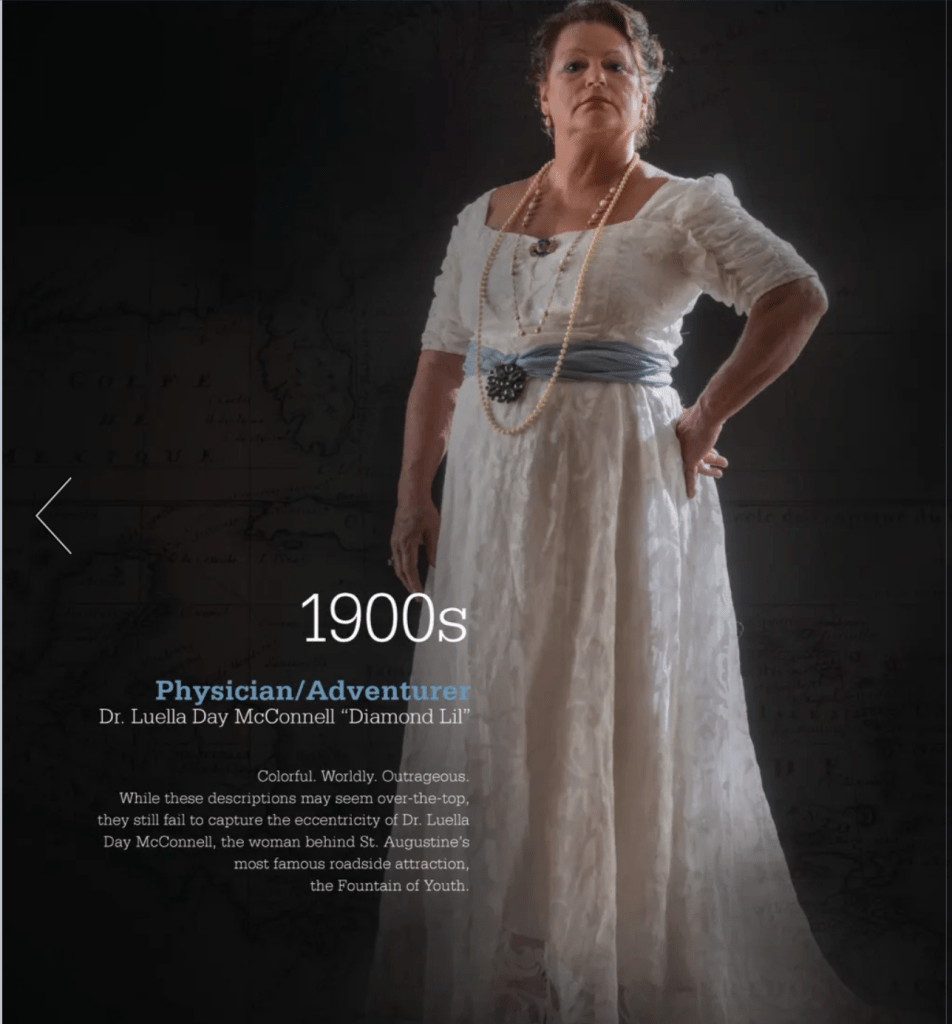
We are in St. Augustine, Florida- the oldest continuously inhabited European-established settlement in the United States. In honor of Womens’ History Month, I would like to tell you about Diamond Lil- an adventurer, entrepreneur, physician and rebel.
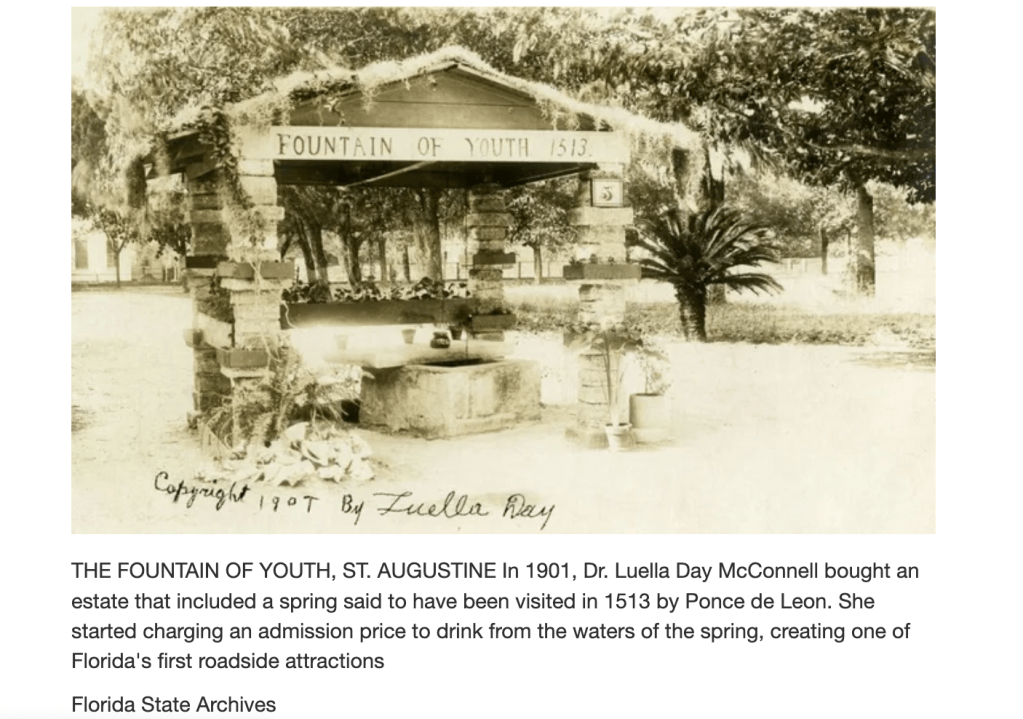
Dr. Luella Day MacConnell ((1870-1927), was by all accounts, quite a character. Born in Baltimore, she became a practicing physician in Chicago. She developed “gold Fever” and moved to Dawson (in the Yukon Territory) and made her fortune in 1898. In about 1901, “Diamond Lil”, as she was known, arrived in St. Augustine. She bought land adjacent to the Matanzas Inlet north of the Mission de Nombre de Dios and created the Fountain of Youth tourist attraction. Until her death in 1927, in St. Augustine, she fabricated stories to amuse and appall the city’s residents.
The lack of confederate flags as we crossed the Mason-Dixon line was very noticeable to us. We have probably only seen 2 or 3 confederate flags while driving the rural roads and cities in the south through Virginia, Georgia, Alabama and Florida. I have seen that many in my hometown of Enfield, New York.
We did see many more American flags than in the past, which I was fine with until I realized that for some people, the confederate flag is now subsumed within the American Flag. I saw a lot of American flags with Trump flags and yard signs. I imagined that in the past that might have been a confederate flag. I will say that up North there are also American flags with Black Lives Matter and Pride flags. It is not clear what the American flag really stands for to the person flying it unless they give some other clues. For me, flying the American Flag and saying the Pledge of Allegiance has been performative, without a lot of meaning. As a nation we truely need to address what “liberty and justice for all” really means and embrace healing change. Only then can we stand unified “as one nation” and “indivisible”.
I listened to a podcast on NPR from 2020 that said: “We heard a lot from people who shared this worry the U.S. flag has been weaponized, deliberately redefined as a more conservative symbol owned by some Americans more than others.” It went on to quote, Ben Eagleson, a mechanic from Onley, Illinois: “We had a Black Lives Matter rally in our town and there were a lot of people driving by with American flags on the back of their pickup trucks as a counter-protest,” “It was like those of us supporting Black Lives Matter were somehow un-American or something.” Eagleson, who is white, said he took his American flag down for a time, but it’s flying again now on a pole outside him home. “I’d let something that had always been for me a positive symbol take on a negative meaning and I guess I just decided to reclaim it,” he said. Food for thought…
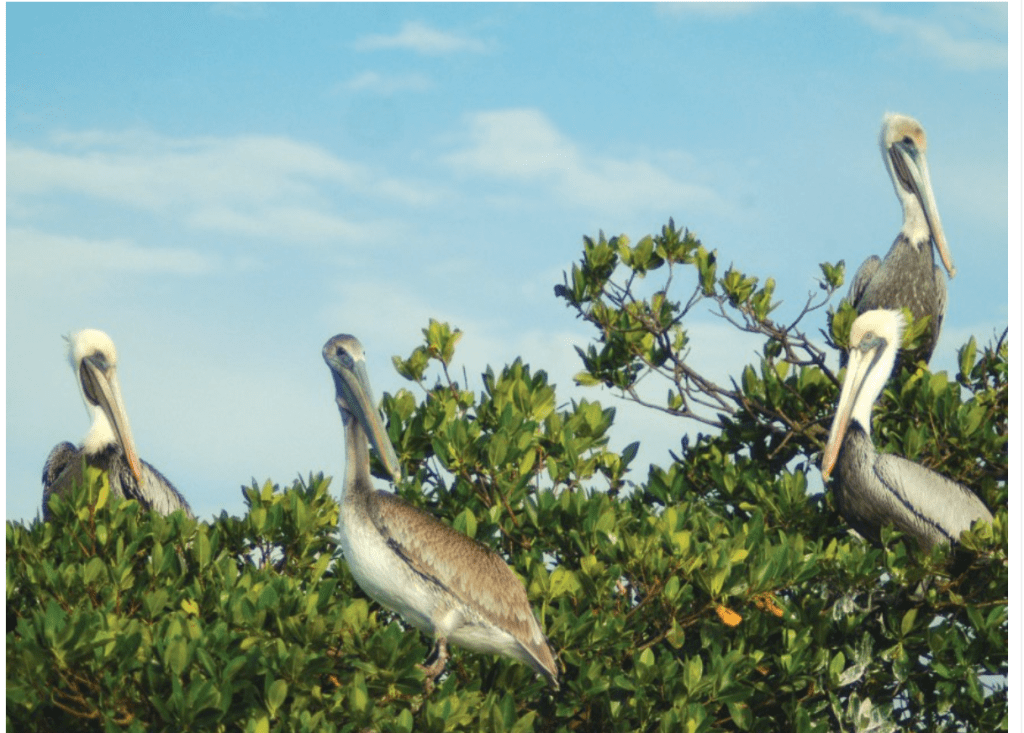
We went kayaking yesterday among the mangrove islands in the Indian River Lagoon. The islands are a favorite nesting spot for the Brown Pelican. I think if I were a bird, I might be a Brown Pelican. I can relate to their extreme clumsiness. Unlike other more graceful water birds, Pelican make a clumsy splash landing in the water as they dive head first for fish. I have read that they also sometimes crash land in their flimsy stick nests in the mangroves that often need to be rebuilt.
Click here to see a video of a Brown Pelican splash landing.
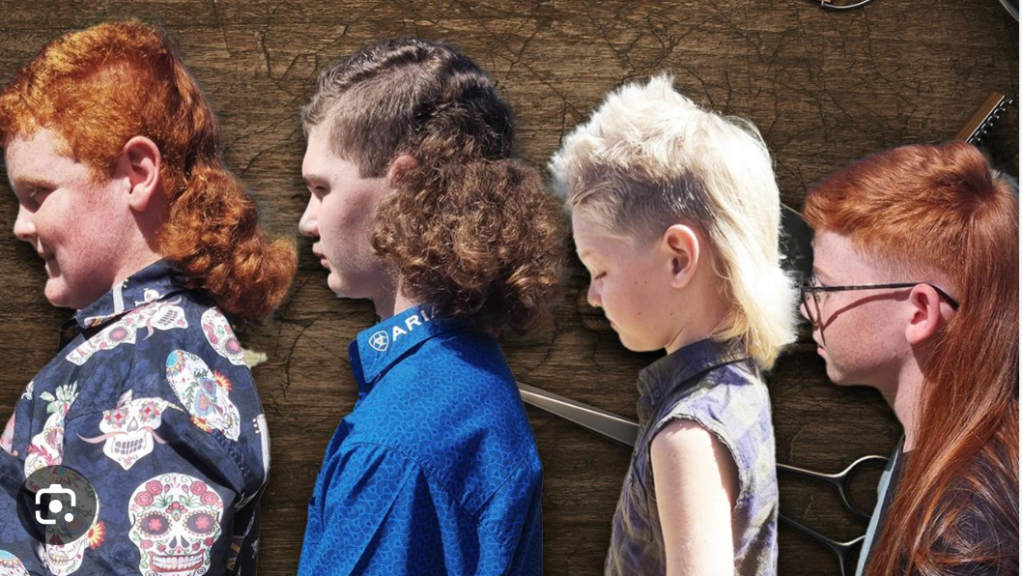
I was really looking forward to the Mullet Run that people talk about here in Florida, but it turns out it was not what I thought. Besides the iconic haircut of the 1980’s (turns out it is back in style) mullet are fish. I bet you knew that….
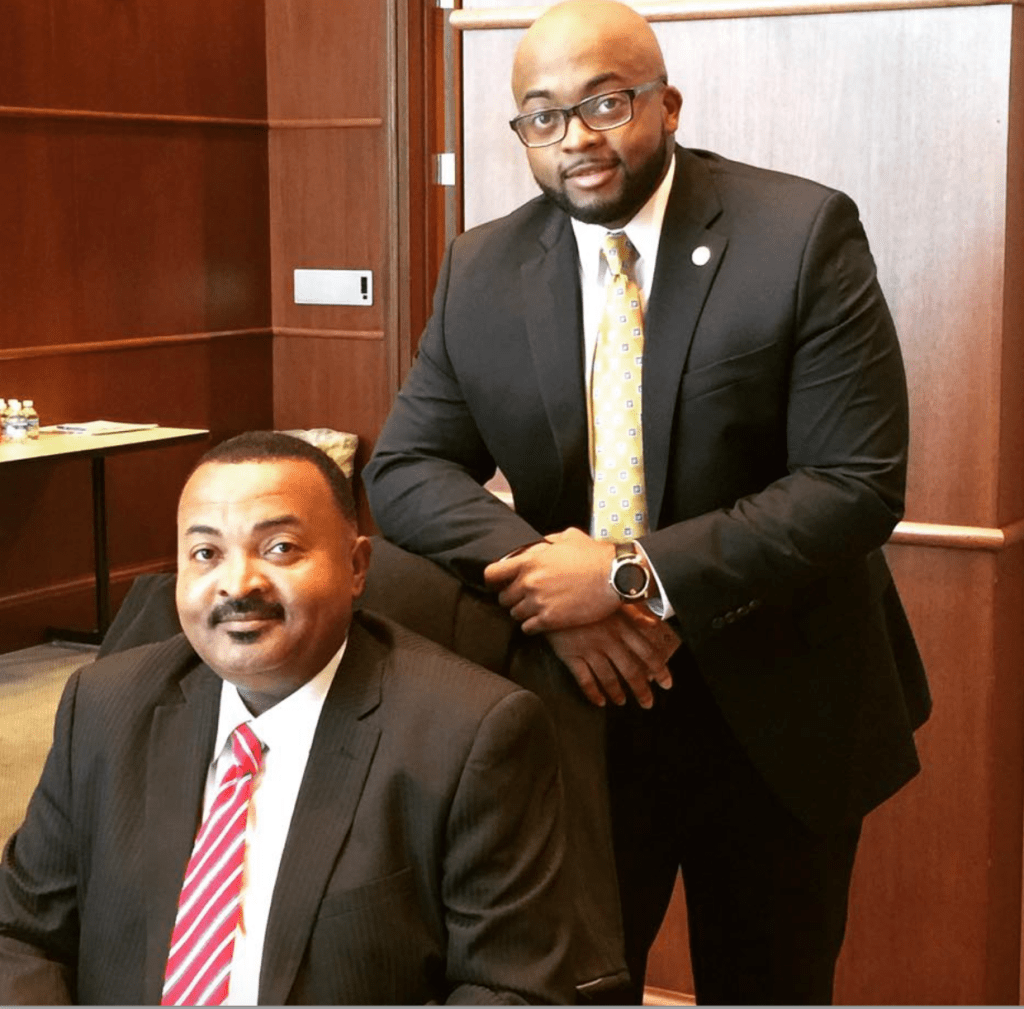
In a Montgomery, Alabama coffee shop, we ran into Greg Griffin, Jr. who is running for Circuit Court Judge. We had quite a long conversation with him and are inspired with how he returned to the south to fight for change. His father, Greg Griffin, Sr. is also a Circuit Court Judge. Here is an article about the both of them. I wish I lived in Montgomery so I could vote for him. Here is his campaign site if you care to make a donation.
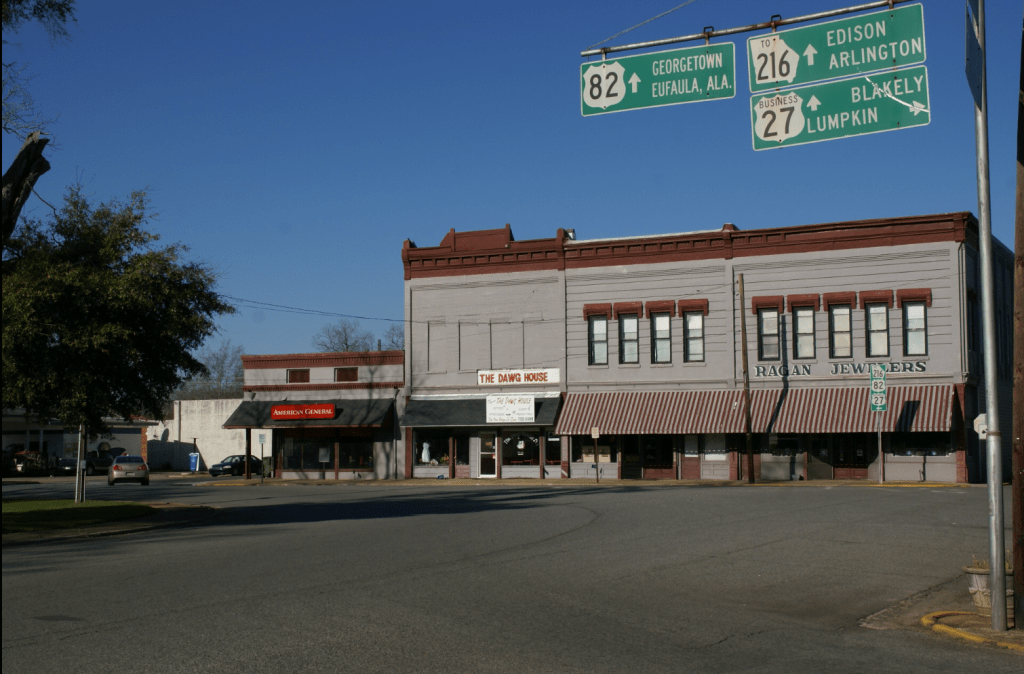
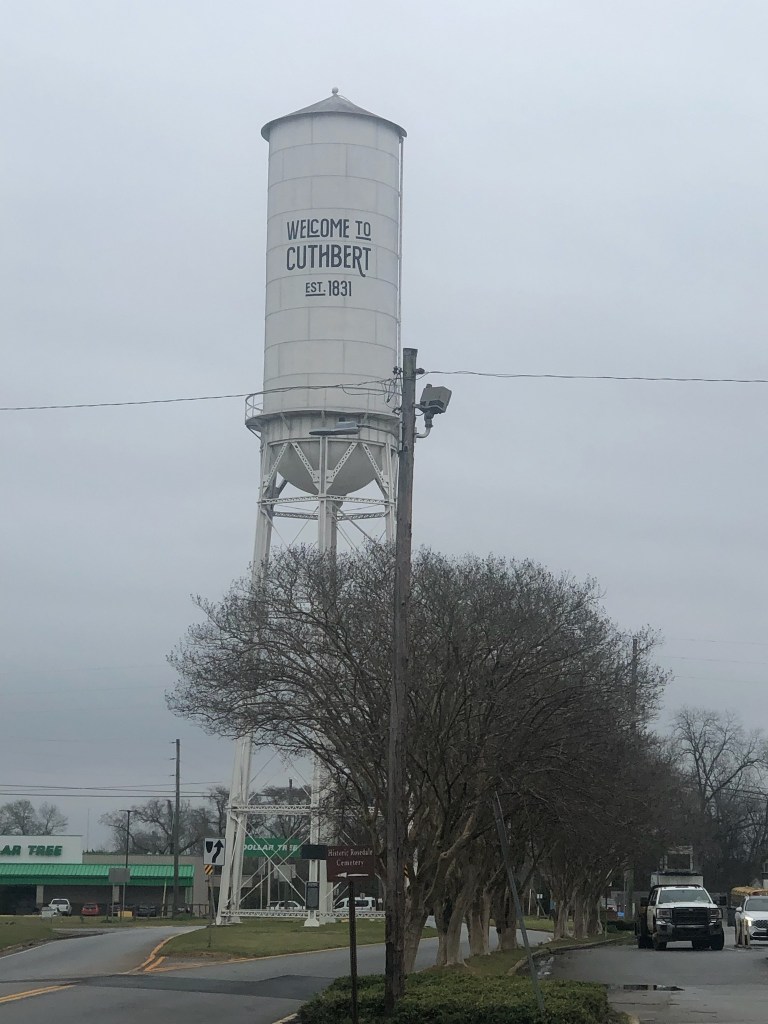
We enjoyed driving less traveled roads through Georgia today. We stopped for gas in Cuthbert, Georgia (population 3,143), on the Jefferson Davis Highway. It is 100 miles from the gulf coast, 100 miles from the closest city (Montgomery, Al) and not near, it seems, anything at all. The City of Cuthbert, incorporated in 1831, is the county seat of Randolph County, which has a total population of 6,287 people. Most of the buildings, built on Cuthbert town square around 1890, are still there. One surprising thing about Cuthbert is that there are no obvious chain restaurants or motels, except for the ever present Dollar General. Is there a rural town in America that does not have a Dollar General?
According to Wikipedia, the county was developed for cotton plantations, the major commodity crop, and the rural area had a high proportion of enslaved Black workers. Today the Cuthbert population is still 80% Black. The main occupation now is food production as there is a large chicken processing plant owned by Tyson in Cuthbert. Poultry is now the largest sector of Georgia’s agricultural production since the Georgia cotton industry was decimated by the Boll Weevil. The insect first swept into GA in 1915 in dust clouds from the west. By the early 1920s, it had destroyed over 60 % of Georgia’s cotton crops.(New Georgia Encyclopedia)
The Cuthbert Water Tower, erected in 1895, has the distinction of being the only water tower in the middle of a federal highway. It is located in the middle of US Highway 82 (Jefferson Davis Highway) and defines the skyline of Cuthbert. For many years, people believed those who drank water from the tower would either stay or return to Cuthbert.
Cuthbert is the birthplace of boxer Larry Holmes, NFL player Rosey Grier and jazz and swing musician Fletcher Henderson Jr. (1897-1952). Another famous person who grew up in Cuthbert heard of is Winfred Rembert, a Black artist who used hand-tools and shoe dye on leather canvases. During a civil rights march in the 1960s, Rembert was arrested without being charged. He spent seven years on a chain gang and survived a lynching.You can watch a short documentary film about Rembert called All Me: The Life and Times of Winfred Rembert. His memoir, Chasing Me to My Grave: An Artist’s Memoir of the Jim Crow South, was published posthumously in September 2021 and won the 2022 Pulitzer Prize for Biography.
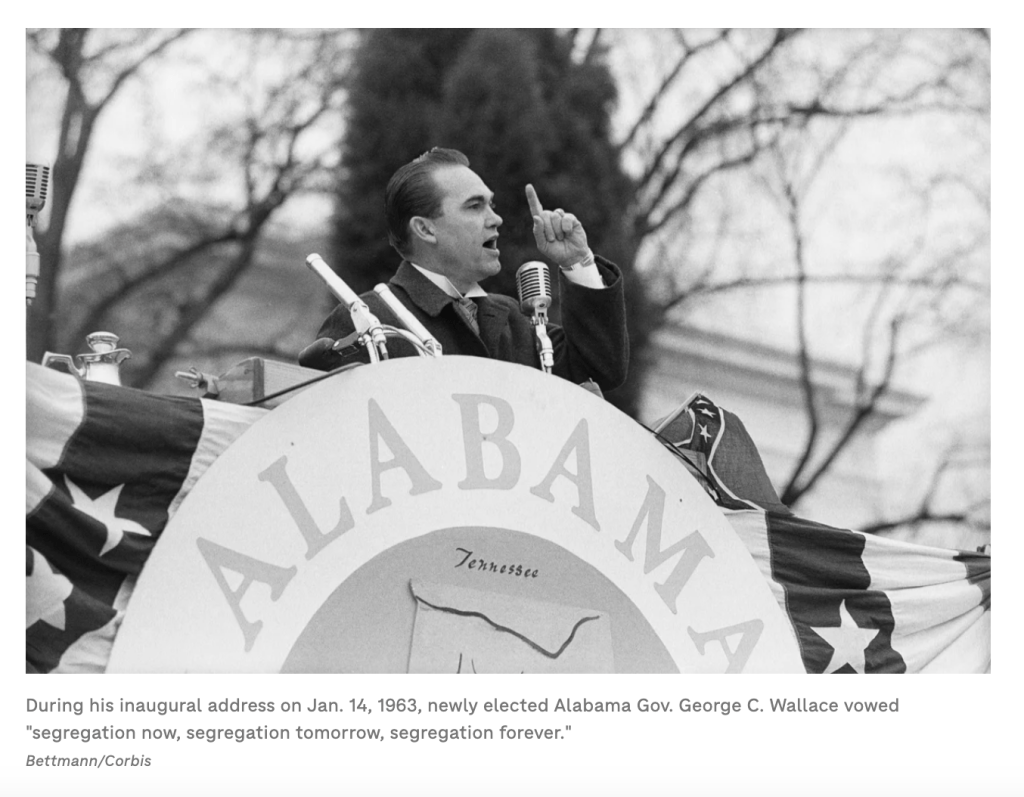
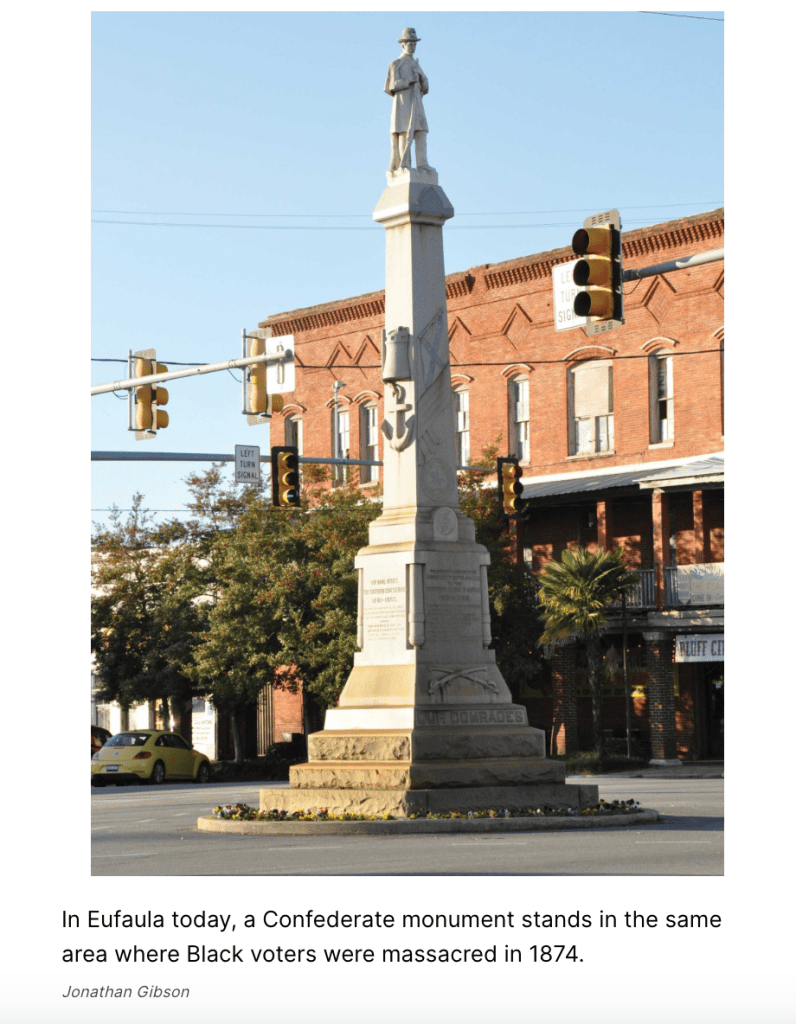
We are in Eufaula, 85 miles south east of Montgomery, in Barbour County, Alabama, still in the deep south on the Georgia border. Eufaula is where Governor George Wallace was born and raised. On January 14, 1963, George Wallace was sworn in as Alabama Governor (in the same spot that Jefferson Davis was sworn in as President of the Confederacy) spewing the infamous lines, “segregation now, segregation tomorrow, and segregation forever!” Wallace made sure to thank the “home folks” of his native Barbour County for giving “an anxious country boy” a chance.
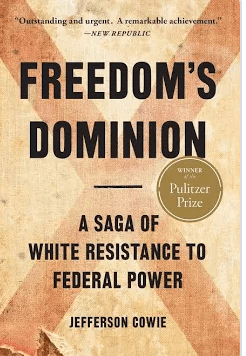
It is here in Barbour County, Alabama that Jefferson Cowie, in his Pulitzer Prize winning book, Freedom’s Dominion: A Saga of White Resistance to Federal Power (2022) chronicles “the unholy union , more than two hundred years strong, between racism and rabid loathing of government” (New York Times Book Review). I have always associated “freedom” with the fight of the oppressed for a better, more just world. Freedom is also a word used by those looking to dominate. This book helped me understand the hatred of white supremacists toward the Federal government that Trump used to enflame his followers to act during the January 6th, 2021 insurrection. I was first alerted to this book because Cowie is scheduled to speak at Ithaca College on Thursday, March 28th, at 5pm in the Park School Auditorium.
According to the book’s introduction, Freedom’s Dominion is ” a story of rough continuity, recurring conflict, and ideological regeneration across time in one place. In Barbour County, freedom served as an ideological scaffolding that supported most every form of domination discussed in this book- Indian land dispossession and removal, mob political violence, lynching, convict labor, Jim Crow, resistance to school integration, and the fight against voting rights… Those defending racism, land appropriation, and enslavement portrayed themselves, and even understood their own actions, as part of a long history of freedom.”
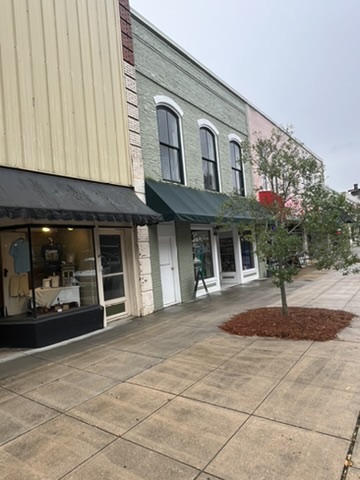
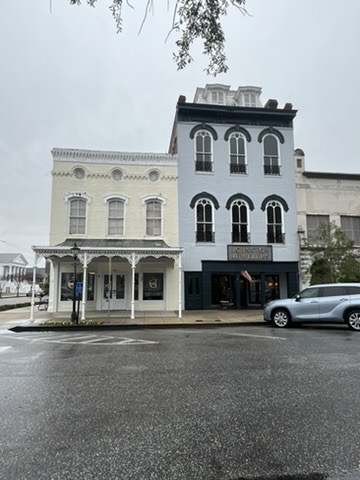
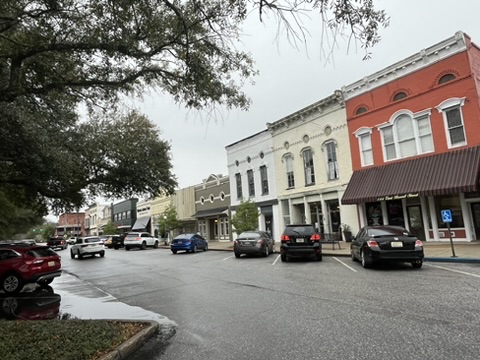
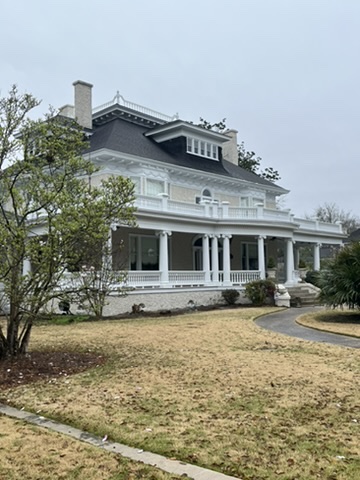
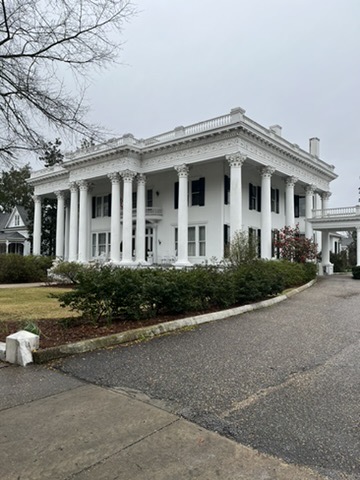
I have to say, since I skimmed this book before I arrives in Eufaula, I expected to find a back water place ravaged by history. This is not at all what we found. Eufaula is home to the second largest historic district in the state, with more than 700 historic and architecturally significant structures. There are quite a number of antebellum mansions and the downtown is quite well preserved and attractive. There is money here. According to the Eufaula Chamber of Commerce pamphlet , when the Union Troops rode in to Eufaula at the end of the Civil War, some town aristocrats wined and dined the Union General, who decided to spare the town and there was no death and destruction for the White gentry as occurred in many other southern towns. Somehow, this just makes the violent, racist history of the town seem worse.
Reconstruction in America: A Truth That Needs Telling, Equal Justice Initiative
Except for the fact that it was spared at the end of the Civil War, and so many grand historic structures remain, Eufaula and Barbour County are not so different than any other southern counties, and I dare say some northern counties, too. This point was driven home when we saw the sheer number of counties that had documented lynchings when we went to the lynching museum in Montgomery.












 Perspectives on the Road