In our retirement we are have decided it is time to leave the bubble of Ithaca, New York and see what America is really about. We invite you to join us as we learn about people, places and the natural history we experience in our travels.
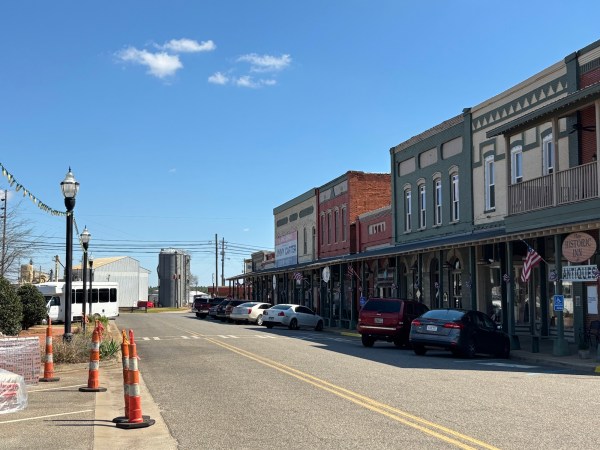
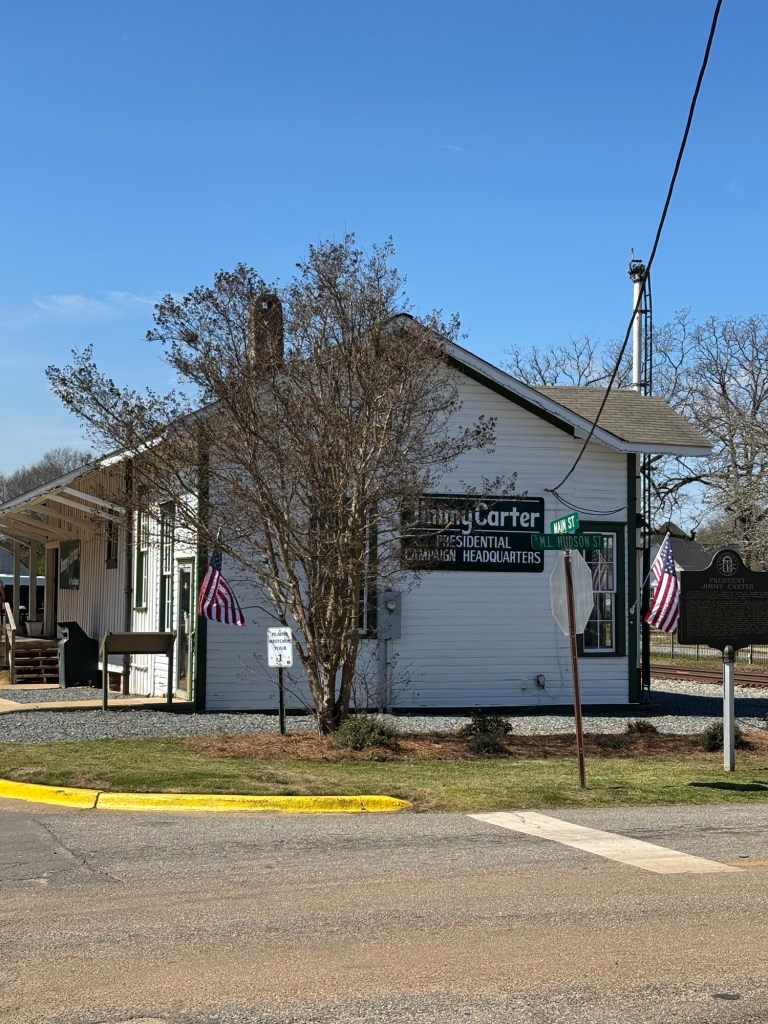
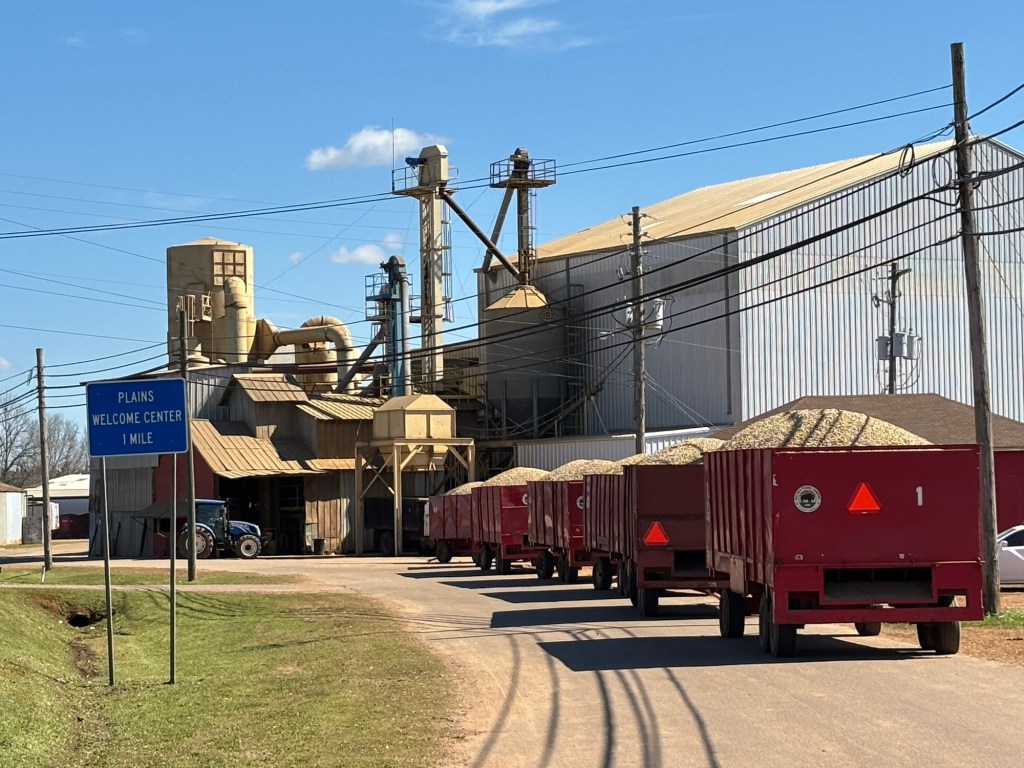
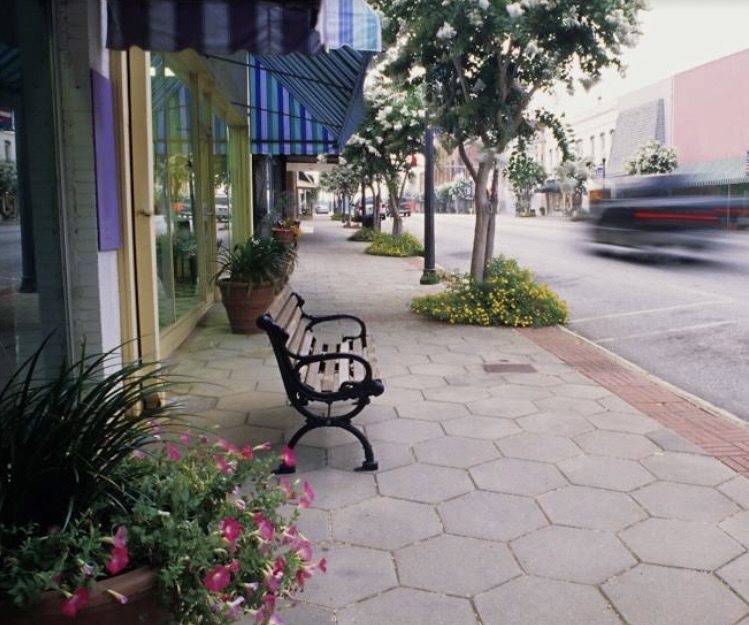
Yesterday we went to Plains, Georgia hometown of President Jimmy Carter. This tiny town, population 573, was where Jimmy Carter and his wife Rosaylnn were born, lived most of their lives, died and are buried. I gained some understanding of how this man developed such strong moral character. I think I am happy that he did not live to see what is happening now to our country, which would cause him great pain. The above photo is the one block that is downtown Plains. Down the street in the background is a peanut processing plant and in the other direction is the tiny train depot that Jimmy Carter used as his presidential campaign headquarters.
The Carter campaign chose this tiny, rustic train depot as national campaign headquarters in Plains because it was the only available building with a bathroom. Peanut processing plant in downtown Plains, Georgia.
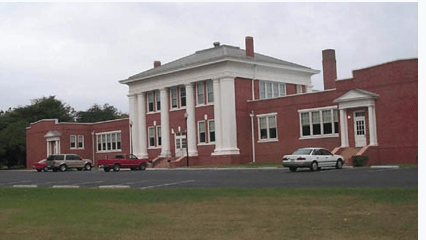
The Jimmy Carter National Historical Park consists of Carter’s boyhood home and farm. The old high school is now the visitor center.The house the Carters lived in most recently and the grave sites on the property will be part of the National Park as well.
The Plains High School now serves as the Jimmy Carter National Historical Park Visitor Center and zMuseum. Jimmy and Rosalynn both graduated from this school.
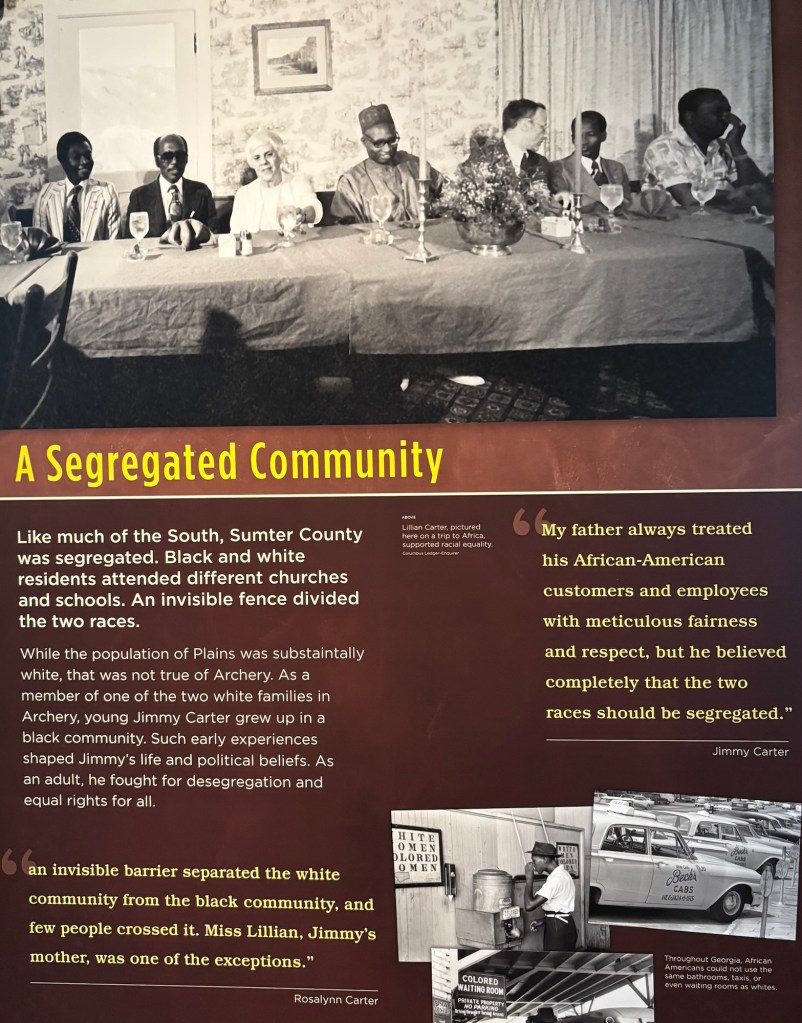
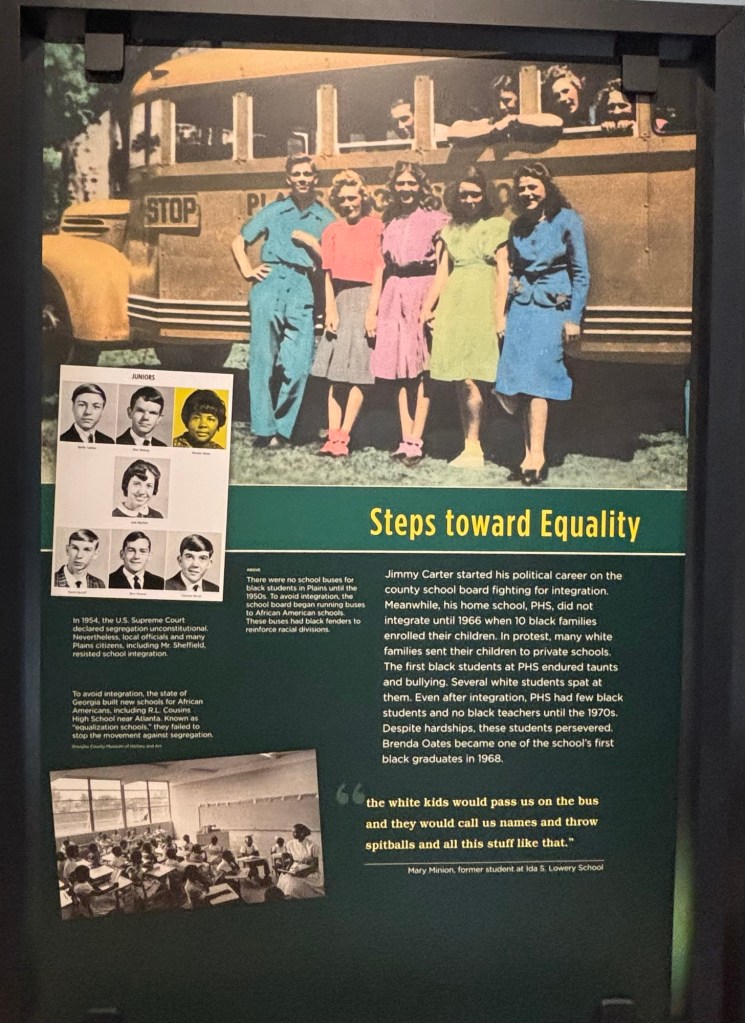
Jimmy graduated from this school in 1941. It was called the high school but served white students from grade 1-11. There was no 12th grade. In 1941 schools were racially segregated. I believe Sumter County has always been a majority Black county, so the majority of children had to attend far inferior schools. Jimmy Carter served on the Sumter County School Board after Brown vs the Board of Education supreme court case that desegregated schools. He had to tackle the question of school consolidation and desegregation. It took him a while to decide to attack desegregation head-on. Once he did, it gave him valuable lessons that made him a much better Governor and President. Here is an interesting “ Study of Segregation, Politics, and Public Education in Sumter County, Georgia, 1930s-1970s” if you would like more information.
Jimmy Carter National Historical Park DisplayJimmy Carter National Historical Park Display
Two days ago we arrived in Americus, GA, a pretty little town (population: 15,703) just nine miles from Plains, GA, the home town of our 37th President Jimmy Carter.
We met the former Americus Mayor Bill McGowan and his wife, while stopping in for lunch at the Buffalo Cafe in Plains. They were very friendly and very humble- he had lots to say about his downtown hotdog joint and his kids but he did not mention that he was elected in 2016 to the Georgia House of Representatives as a Democrat. In fact, he managed to flip the House Blue with his win.
We learned that a favorite hotdog topping is a coleslaw and chili combo. Next time we are in Americus at lunchtime we will have to give it a try!
Here are some interesting facts about Americus. I suggest you click on the inks for some very interesting stories:
Habitat for Humanity was founded in Americus and the international headquarters is there.
Charles A. Lindbergh bought his first airplane and made his first solo flight there during a two-week stay in May 1923.
Souther Field (now Jimmy Carter Regional Airfield) was used for British Royal Air Force pilot training (1941–1942) as well as US pilot training before ending the war as a German prisoner of war camp
Shoeless Joe Jackson served as the field manager for the local baseball team after his banishment from professional baseball
Koinonia Farm, an interracial Christian community, was organized near Americus in 1942 by Clarence Jordan. Its interracial nature occasioned much opposition from local residents.
The Leesburg Stockade incident occurred in 1963 when a group of African-American girls, aged 12 to 15, were arrested in Americus after trying to buy movie tickets at a theatre’s whites-only window as a form of civil protest.
You can read more about the Americus Movement, a lesser known part of the civil rights movement here.
Just five miles away from Clarkston, GA, the most diverse square mile in America (see my last post), is Stone Mountain, “the largest shrine to white supremacy in the history of the world” according to Richard Rose, President of the Atlanta chapter of the National Association for the Advancement of Colored People (NAACP). Stone Mountain is the Mount Rushmore of the Confederacy, only bigger. Robert E. Lee is as tall as a nine-story building. Jefferson Davis’ nose is the size of a sofa.
Here is the ugly history of Stone Mountain according to the Southern Poverty Law Center:
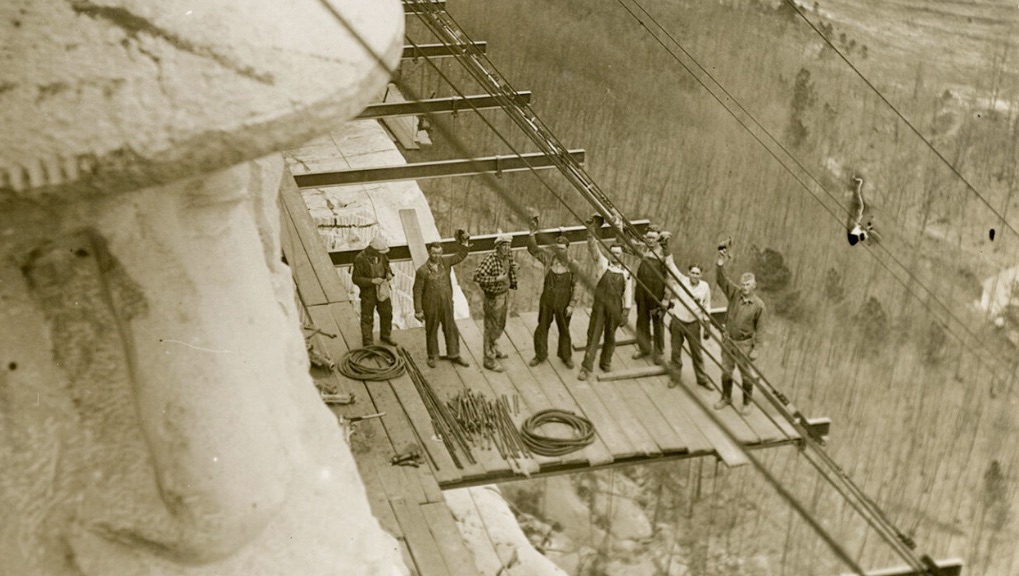
“The nearly 60-year effort it took to create this monument, from its first fundraising campaign in 1915 to finishing touches in 1972, makes quite the compelling story. Historical photos show stonecutters dangling from cables and perched on swings halfway down the mountain’s 825-foot face. Carving these figures into the mountainside took courage, strength and skill. But there’s an odious side to the story.
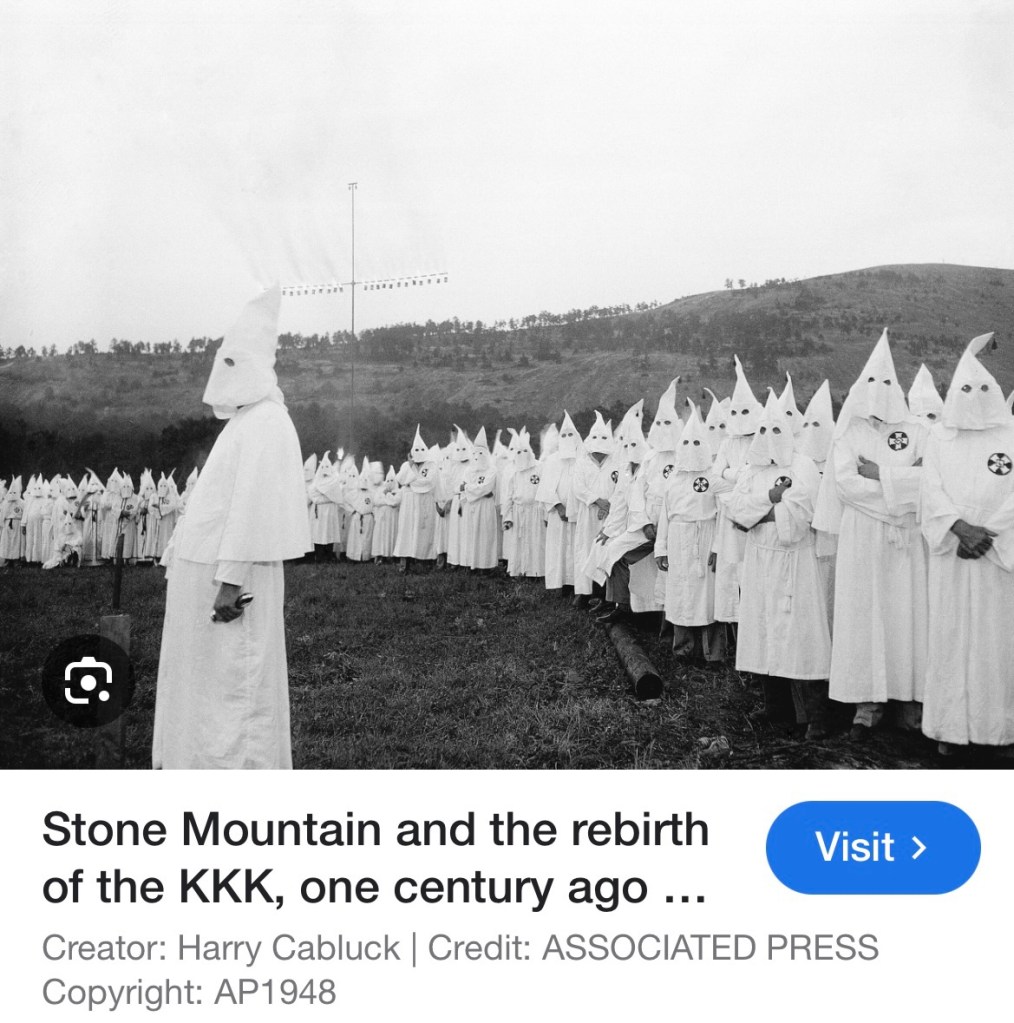
In 1915, the second coming of the Ku Klux Klan occurred atop Stone Mountain. Klan money helped fund the monument. And the first of its three head sculptors was a Klansman, as was the owner of the mountain, Samuel Venable, whose family bought it in 1887 to run a quarry. Venable granted the Klan rights to hold meetings there in perpetuity. And for decades it did.
Two events sparked the revival of the Klan, which swept the South during Reconstruction before fizzling in the 1870s.
Fueled by anti-Semitism, the first was the lynching of Leo Frank, a Cornell graduate and Jewish superintendent of an Atlanta factory, who was convicted in a shoddy trial of the murder of a 13-year-old Christian girl. After Frank’s death sentence was commuted to life, an armed mob snatched him from prison while guards did nothing to stop it. The men drove Frank to the girl’s hometown and hung him from an oak tree. (Decades later a witness came forward and, in 1986, the Georgia Board of Parole granted Frank a posthumous pardon.)
Leo Frank
The other provocation was the Atlanta debut of D.W. Griffith’s Birth of a Nation, a silent film portraying African Americans as savages and sex fiends who defiled white women, while glorifying the KKK as saviors galloping to the rescue.
On Thanksgiving night, William J. Simmons led a group of 15, including some members of the Frank lynching mob, to the summit of Stone Mountain, where they set up a flag-draped altar, opened a Bible and burned a 16-foot cross in an initiation ceremony described in Atlanta’s Stone Mountain: A Multicultural History, by Paul Stephen Hudson and Lora Pond Mirza.
The resurrected KKK targeted primarily blacks, but also Jews, Catholics and foreigners among others.
Although the idea of carving a monument into Stone Mountain had floated about for years, Civil War widow Helen Plane made it her mission. As a charter member of the United Daughters of the Confederacy, champions of the “Lost Cause” version of the Civil War, she had both the passion and the sway. Once Gutzon Borglum was chosen as the sculptor in 1915, she wrote him with a design suggestion.
“I feel it is due to the Klan which saved us from Negro dominations and carpetbag rule, that it be immortalized on Stone Mountain. Why not represent a small group of them in their nightly uniform approaching in the distance?”
Due to funding challenges and World War I, the jackhammers, drills and explosives didn’t descend upon the mountain until 1923. Borglum had grandiose visions of carving an army of Confederates in addition to the three leaders, as many as 1,000 figures sweeping across the mountain. But after a year’s work, all he’d completed was Lee’s head.
Project managers fired him and later pressed charges when he destroyed his models. Borglum fled the state and went on to carve Mount Rushmore in the Black Hills of South Dakota on sacred Lakota land.
Augustus Lukeman took over, but slammed into the deadline before finishing. In 1916, Venable had granted a 12-year lease to complete the carving, and time was up. The project sat mothballed for the next 36 years.
The Supreme Court’s Brown v. Board of Education integration decision and rise of the Civil Rights Movement jump-started interest in completing the carving. In 1958, under Georgia’s segregationist governor, Marvin Griffin, the state created the Stone Mountain Memorial Association and purchased the dome and surrounding land to create a memorial park.
Carving resumed July 1964 with its third head sculptor, Walter Kirtland Hancock. Eight years later it was finished.
The state’s purchase of Stone Mountain voided Venable’s agreement with the Klan, but that hasn’t stopped sympathizers and other white supremacists from making pilgrimages to their sacred ground of hate. And, it’s hard to ignore the timing of the park’s official grand opening on April 14, 1965 — 100 years to the day that President Abraham Lincoln was shot.”
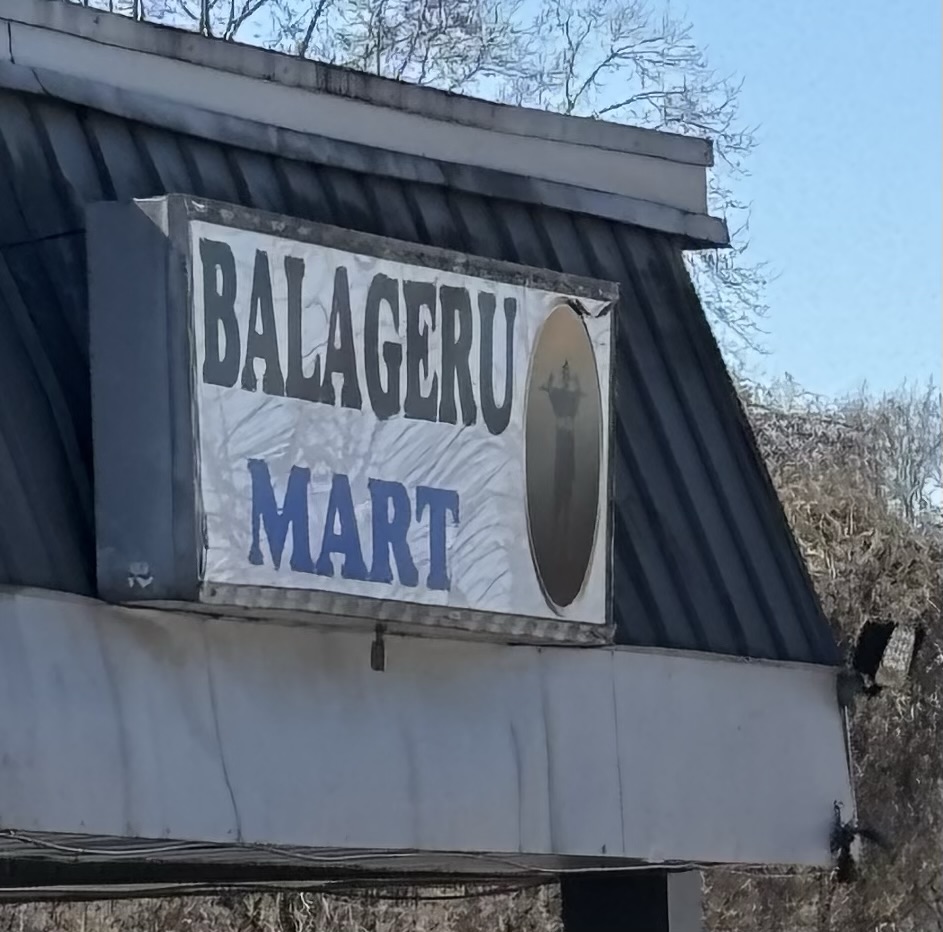
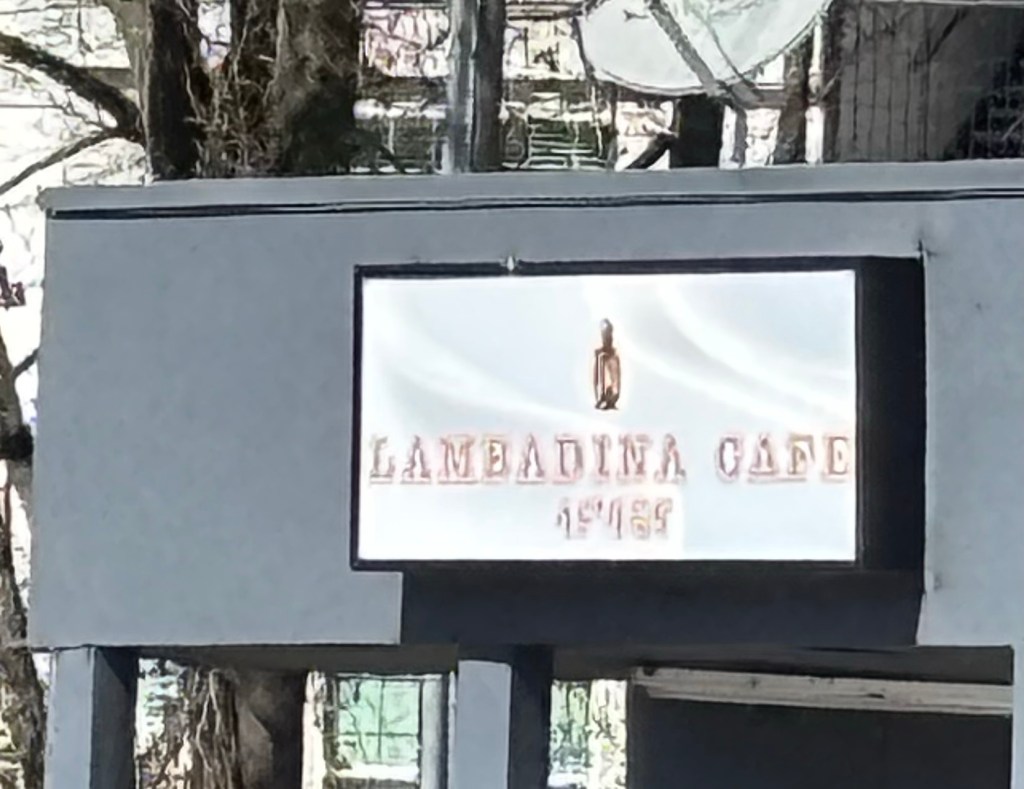
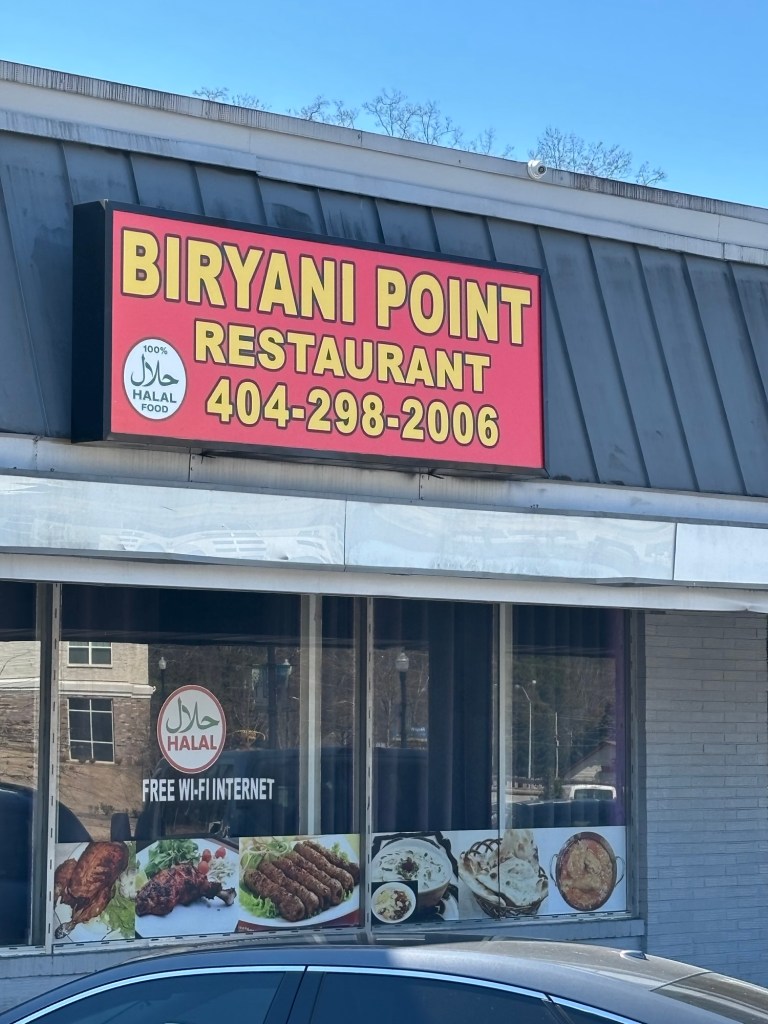
Today we stopped in Clarston, GA for lunch on our way to Americus, Ga. We had some very good Ethiopian food.
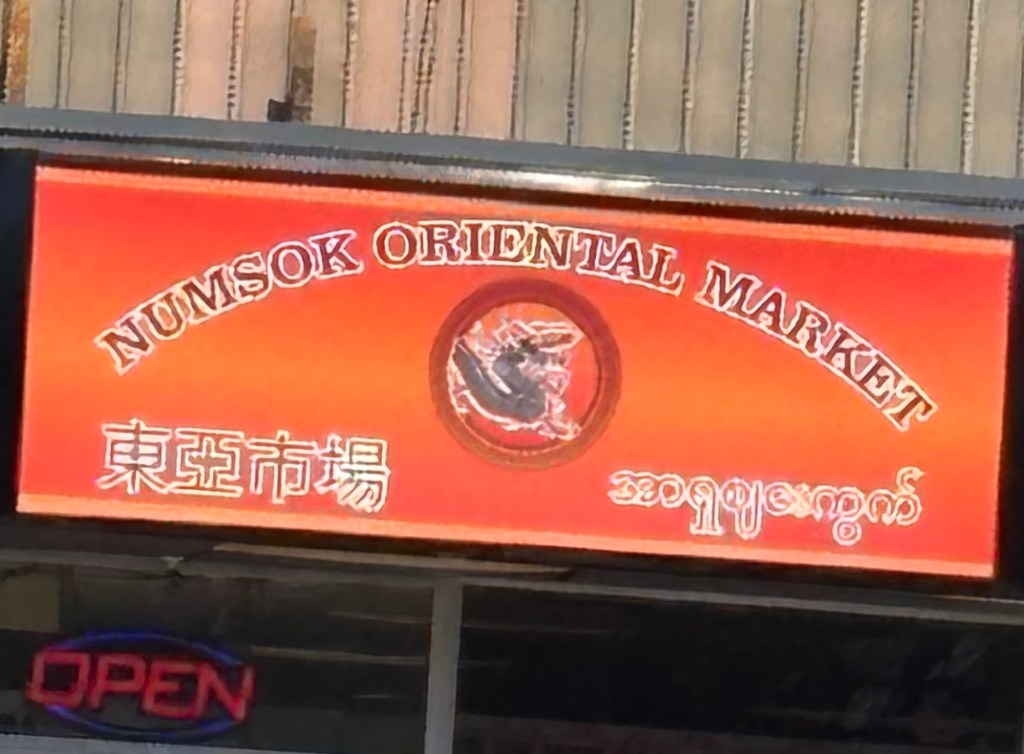
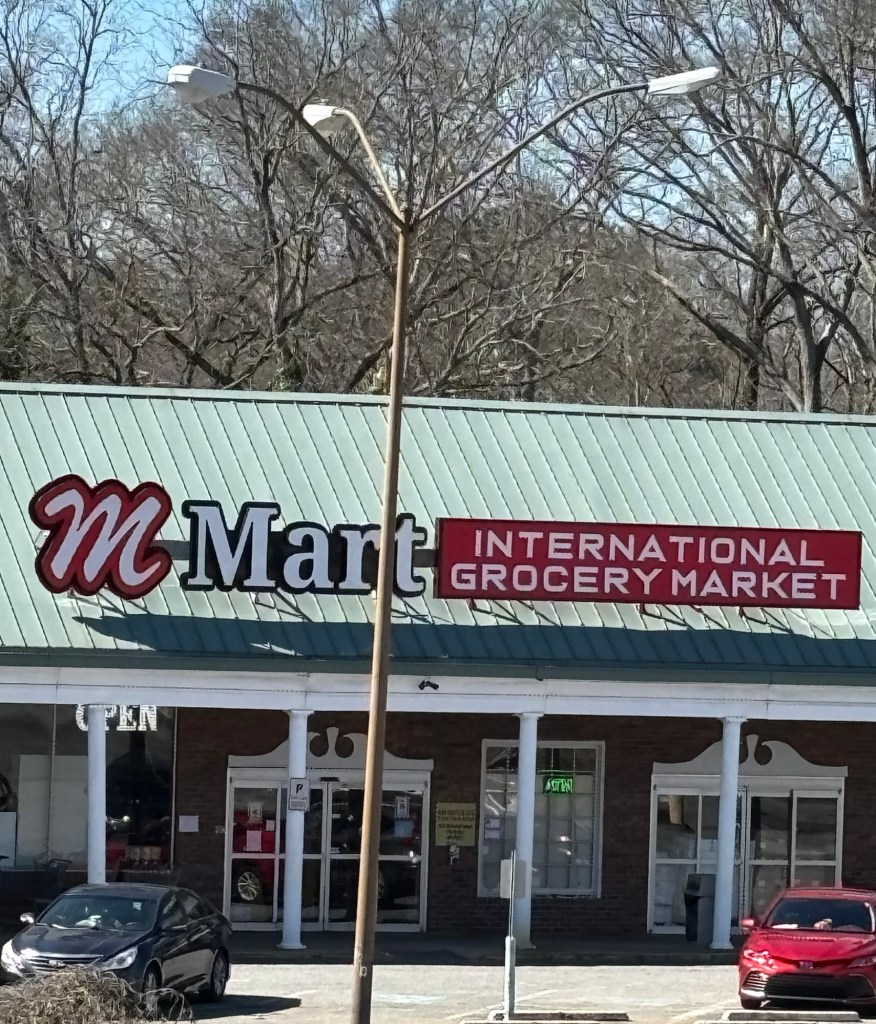
All of these businesses were in one strip mall.
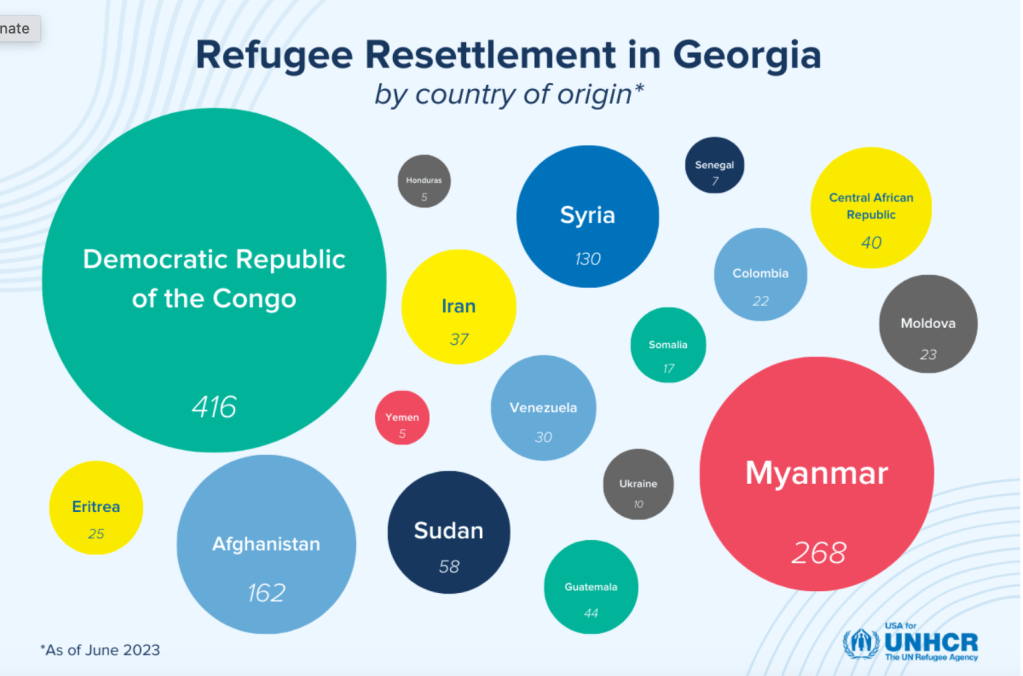
Known as the “Ellis Island of the South”, Clarkston, GA is a small town east of Atlanta that has been a refugee resettlement area for almost 50 years. For immigrants from countries like Ethiopia, Bhutan, Somalia, and Vietnam, Clarkston, Georgia, has been their first American home. The town has become the most ethnically diverse square mile in America, doubling in size in ten years with a 2020 population of 14,756 (2020 Census).
According to Wikipedia, Georgia is among states that has received the highest number of refugees for resettlement, and has resettled more than 37,000 refugees since 1993. Clarkston receives a large portion of these refugees, but arrivals have gradually declined yearly since 2016. In 2016, then Georgia Governor Nathan Deal issued and then reneged on an executive order attempting to cease influx of Syrian refugees into the state. Additionally, as of 2019 federal funding for refugee programs has decreased and executive orders have been issued that allow states increased authority to limit resettlement, which has resulted in the downsizing of several Georgia resettlement organizations
Trump’s immigration crackdown began taking shape immediately when he took office. For immigrants already in Georgia, the orders will result in significantly increased risk of deportation.
The Trump administration has also halted new refugee admissions. But some refugee-agency leaders say Trump’s “stop work” order goes a step further, and is affecting refugees in the U.S., who rely on federal funds for housing, food and support during their first three months in the country. This foreign assistance was stopped before the Trump administration tried to pause all federal grants and loans.
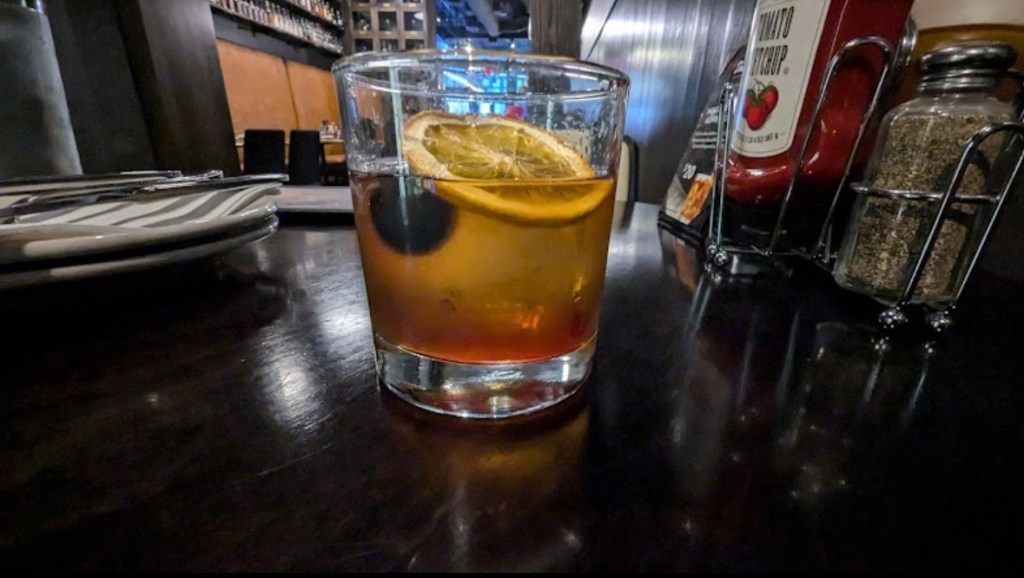
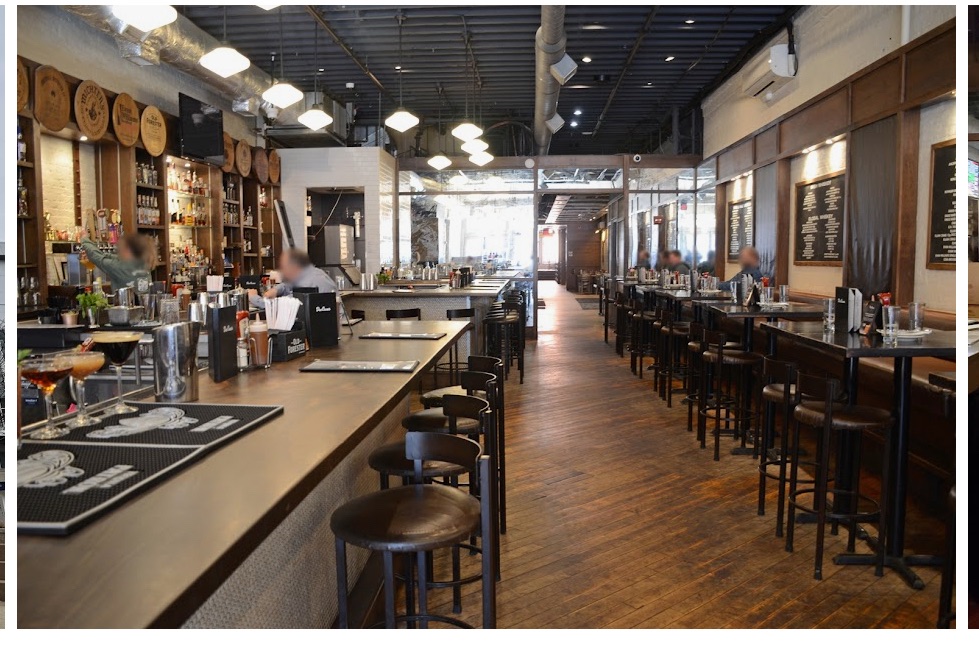
We arrived in Louisville yesterday and are having dinner tonight in Doc Crows on Whiskey Row. I don’t usually do restaurant reviews on this blog, but if you find yourself in Louisville you gotta check it out.
The southern slow smoked roasted chicken with bourbon honey is to die for. Also Fern’s Derby Pie, a chocolate walnut pie (a Louisville tradition) is outrageous.
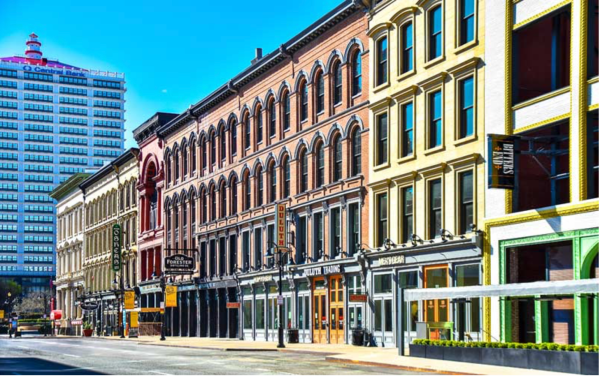
Doc Crows is on Whiskey Row, that was home to some of Louisville’s most booming businesses. Revivalist and Chicago School-style buildings, many with cast-iron storefronts, were built between 1852 and 1905 on Main Street, which was the major trade center for whiskey dealers, blending houses, barrel warehouses and bottling plants. It is now a popular destination for whiskey named bars, restaurantsand shops.
Doc Crows pays homage to the father of bourbon, Dr. James C. Crow, who paved the way for Kentucky bourbon to be born. By utilizing corn & local sweet limestone filtered water, Dr. Crow was able to establish a method of creating bourbon that took the nation by storm. It is now a product of Jim Beam Distilling.
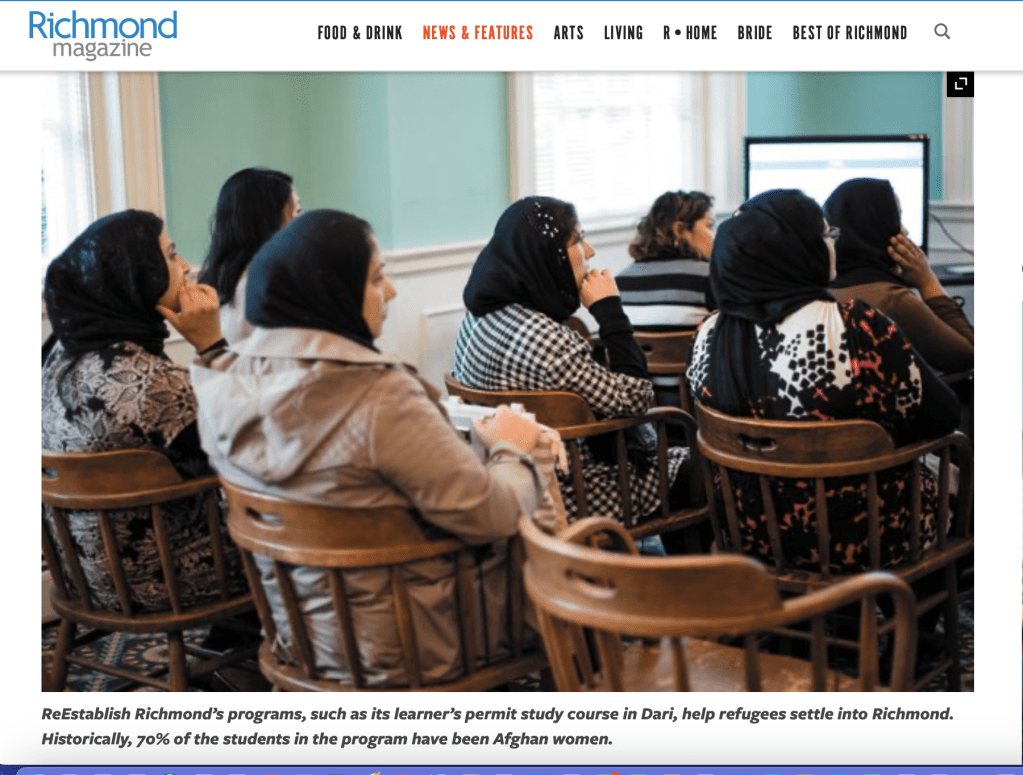
When the history is written of the Afghan diaspora at the end of America’s longest war, the Richmond region will have its own story to tell.
The first group of 221 Afghan Special Immigrant Visa holders (SIVs) and their families arrived on July 30, 2021 at Dulles International Airport after a daylong flight from Kabul, Afghanistan. From there, they were bused to Fort Gregg-Adams (formerly known as Fort Lee) south of Richmond to complete their processing for entry into the country before being resettled. Thousands of other SIVs arrived in subsequent weeks under a program the Biden administration has called Operation Allies Refuge.
These Afghan citizens (SIVs) worked to support the U.S. armed forces as interpreters, drivers and in other capacities during America’s 20-year war in Afghanistan. When the U.S. withdrew troops, SIVs and their families were among the first to be evacuated, as they faced deadly reprisals from the Taliban for cooperating with Americans.
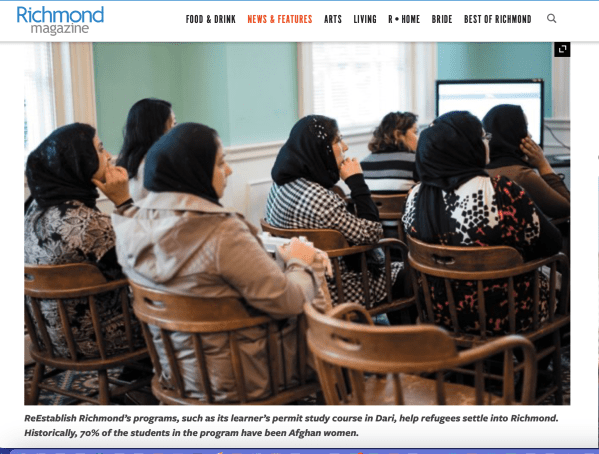
Richmond, Virginia has welcomed over 3,500 refugees from Afghanistan in the last five years.Virginia has the second largest Afghan community in the United States, with over 23,000 Afghans living in the state. Stands to reason because three of the eight military bases used by Dept of Defense to initially house SIV applicants and other vulnerable Afghans are in Virginia- Marine Corps Base Quantico, Fort Pickett and Fort Gregg-Adams. After they finished processing at the port of entry, U.S. citizens, lawful permanent residents, and SIV holders departed the airport, while SIV applicants and other vulnerable Afghan allies who were granted humanitarian parole were provided transportation to U.S. military facilities where they received a full medical screening and a variety of services before moving onto their next destination.
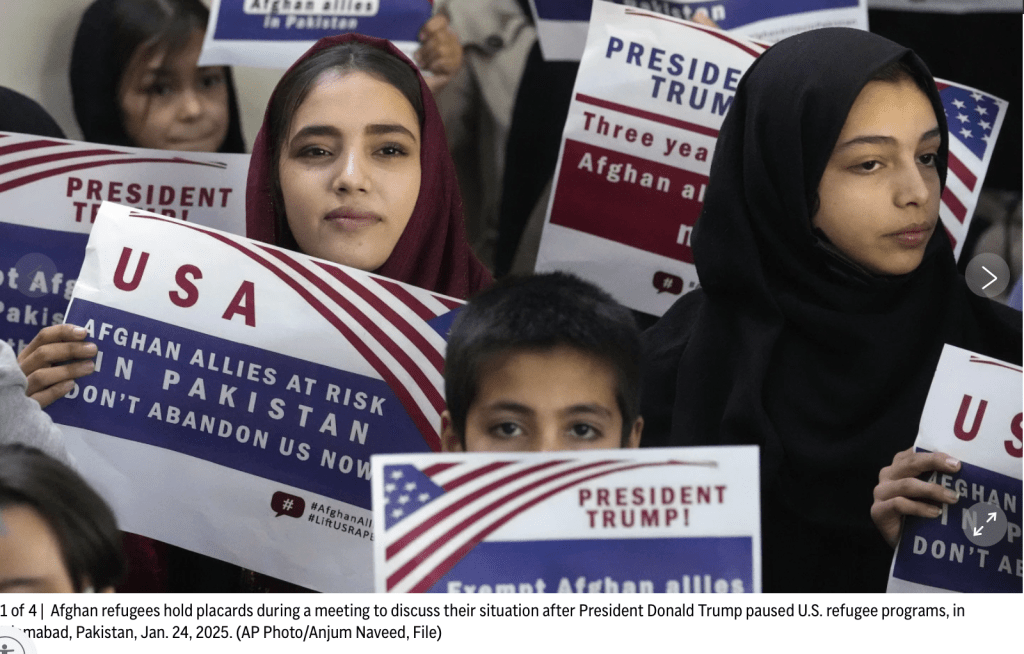
On August 29, 2021, President Biden directed the Department of Homeland Security (DHS) to lead and coordinate ongoing efforts across the federal government to support vulnerable Afghans, including those who worked alongside us in Afghanistan for the past two decades, as they safely resettle in the United States. Tens of thousands of recently arrived refugees are now losing support for basic necessities like food and rent after a Trump administration order suspended federal funding for resettlement agencies.s.
There is widespread confusion as agency leaders seek greater clarity from the government. The most pressing question is how they will continue supporting refugees already under their care in the United States.
The suspension of federal funding “paralyzes the program,” said Krish O’Mara Vignarajah, president and CEO of Global Refuge, the national Lutheran refugee resettlement agency. At least 26,494 refugees and recipients of Special Immigrant Visas are affected, and almost certainly more, according to an analysis of government statistics.
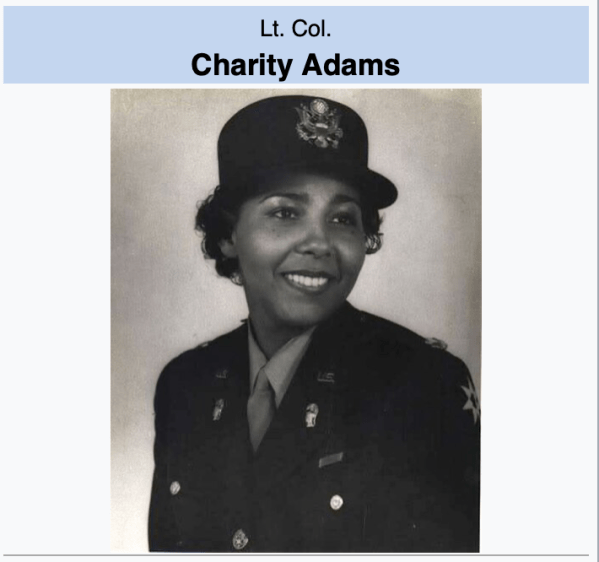
We are in Richmond, Virginia near Fort Gregg-Adams, formerly known as Fort Lee. On 27 April 2023 the name of Fort Lee was changed to Fort Gregg-Adams after two African American officers Lt. Gen. Arthur J. Gregg and Lt. Col. Charity Adams.The name change was part of an effort to rename military assets associated with the Confederacy. Fort Gregg-Adams is the first base named for African Americans. Charity Adams is a very inspirational person. I recommend watching the 2024 movie, “The Six Triple Eight” on Netflix about Lt. Col Charity Adam’s acomplishments.
Charity Adams was born on December 5, 1918, in Kittrell, North Carolina, and grew up in Columbia, South Carolina. She graduated from Booker T. Washington High School as valedictorian and from Wilberforce University in Ohio in 1938, majoring in math and physics. After graduation, she returned to Columbia, where she taught mathematics at the local high school while studying part-time for a M.A. degree in psychology at the Ohio State University, receiving her master’s degree in 1946.
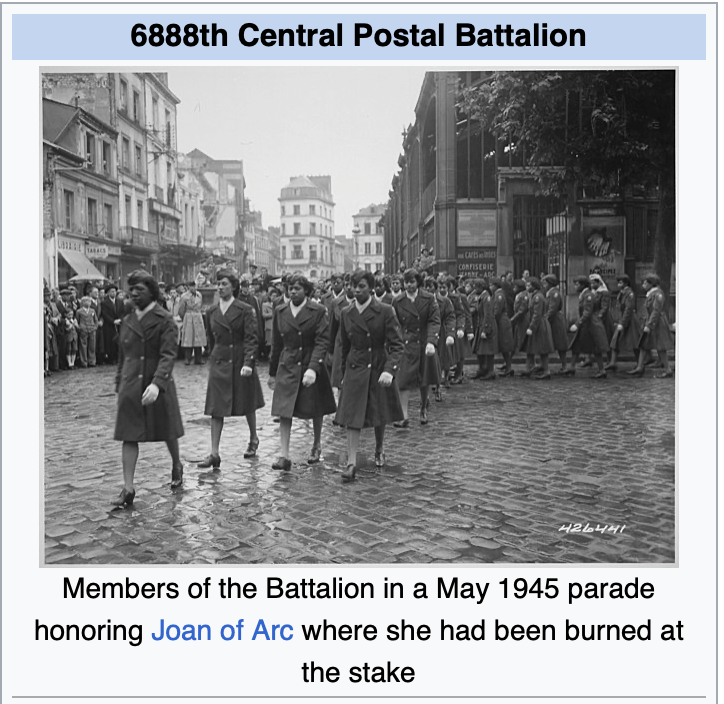
Adams enlisted in the U.S. Army’s Women’s Army Auxiliary Corps (WAAC) in July 1942. She was the first African-American woman to be an officer in the WAAC and was the commanding officer of the 6888th Central Postal Directory Battalion, which was made up of African-American women serving overseas during World War II.. The 6888 was stationed first in Edgbaston, a suburb of Birmingham, England. Three months later they were moved to Rouen, France and then to Paris. They were responsible for the delivery of millions of pieces of mail to soldiers during World War II. Wikipedia
Mail written to the troops would be sent overseas to Europe and processed by a postal battalion, but by 1945 multiple warehouses in Birmingham, England contained mail for soldiers that had not been distributed. The backlog would take six months to process. At the time, there were about 7 million American soldiers and government workers in Europe. Service members were frustrated about not receiving their letters.
In the waning months of World War II, the 855 women of color who comprised the 6888th Central Postal Directory Battalion — 824 enlisted Soldiers and 31 officers — completed a time-sensitive mission in the European Theater of Operations. Army leadership believed their success would be key to boosting morale amongst the 7 million war-weary American service members, U.S. Government personnel, and Red Cross workers stationed throughout Europe in 1945. The mission? To label, sort, and clear millions of pieces of mail — including letters, photographs, and gifts — that had been stockpiled and left languishing in warehouses for months, even years. One general predicted it would take six months to process the massive backlog of undelivered mail, yet the battalion, nicknamed “Six Triple Eight,” managed to do it in just three. (National Museum of the U.S. Army)
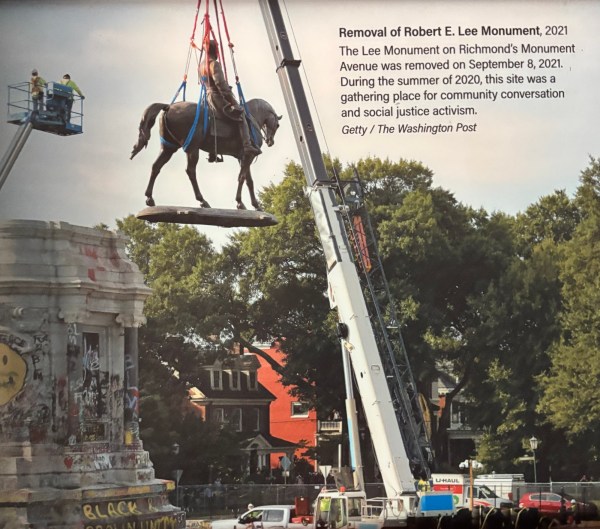
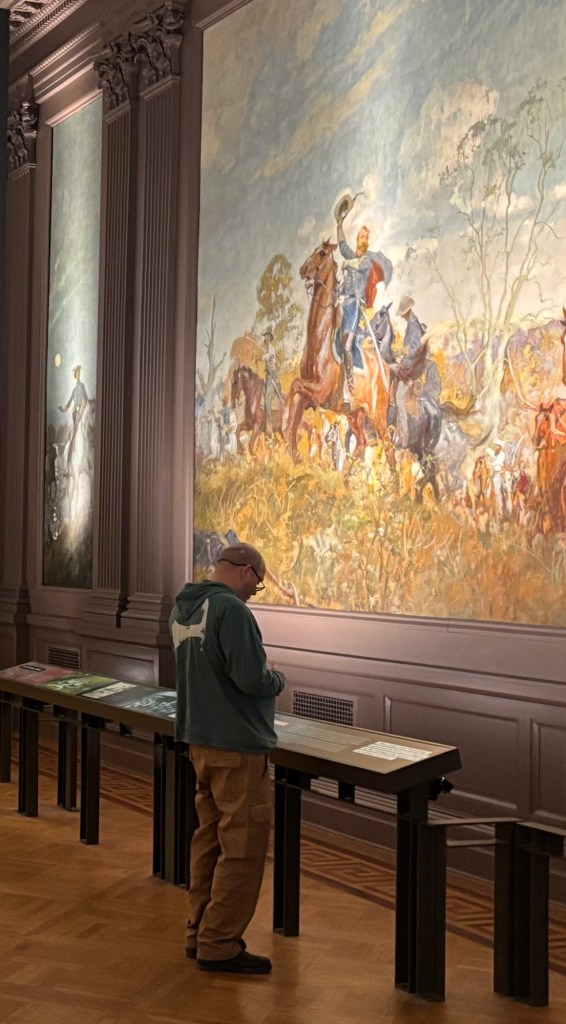
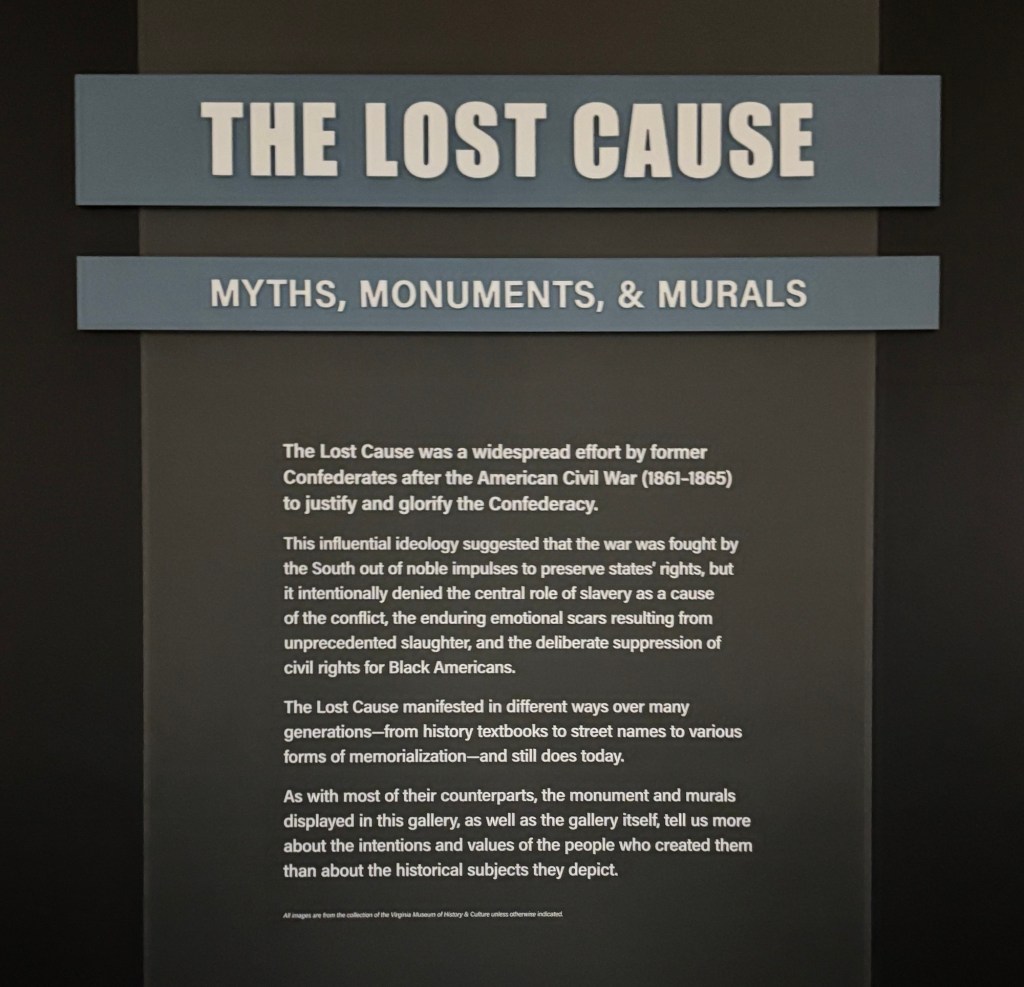
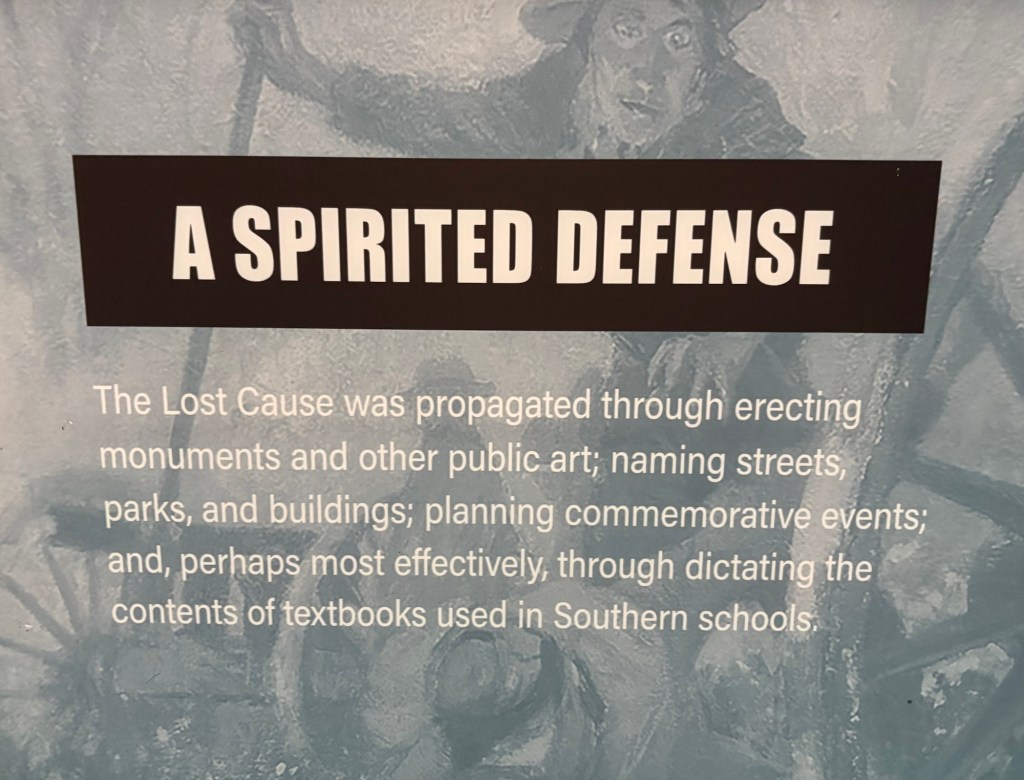
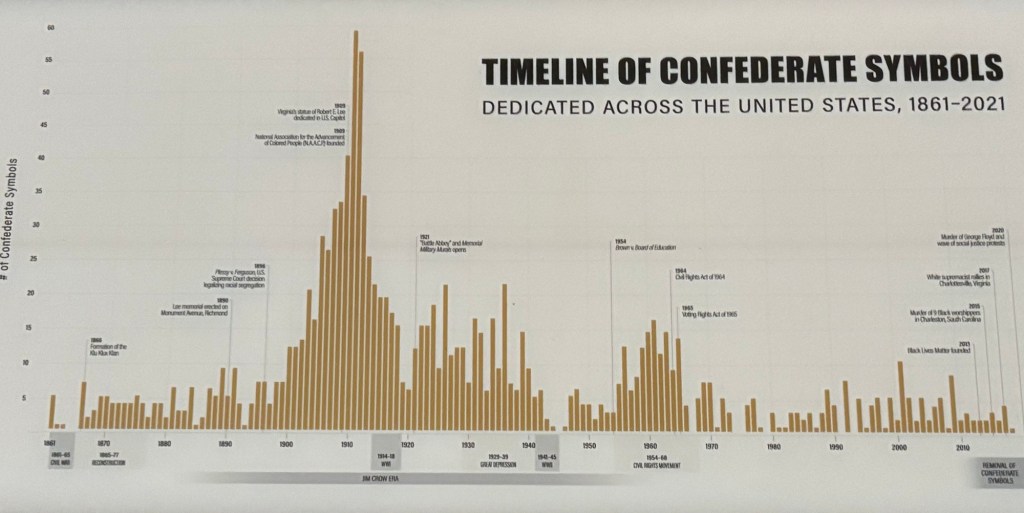
On Wednesday we visited the Virginia Museum of History and Culture (VMHC) in Richmond. I I had very mixed feelings when I saw the VMHC had a Lost Cause room. However, I do think it is important not to forget history lest we repeat it. I believe it was truthfully done, the murals, statue and other artifacts on display with plaques telling the truth and dispelling myths.
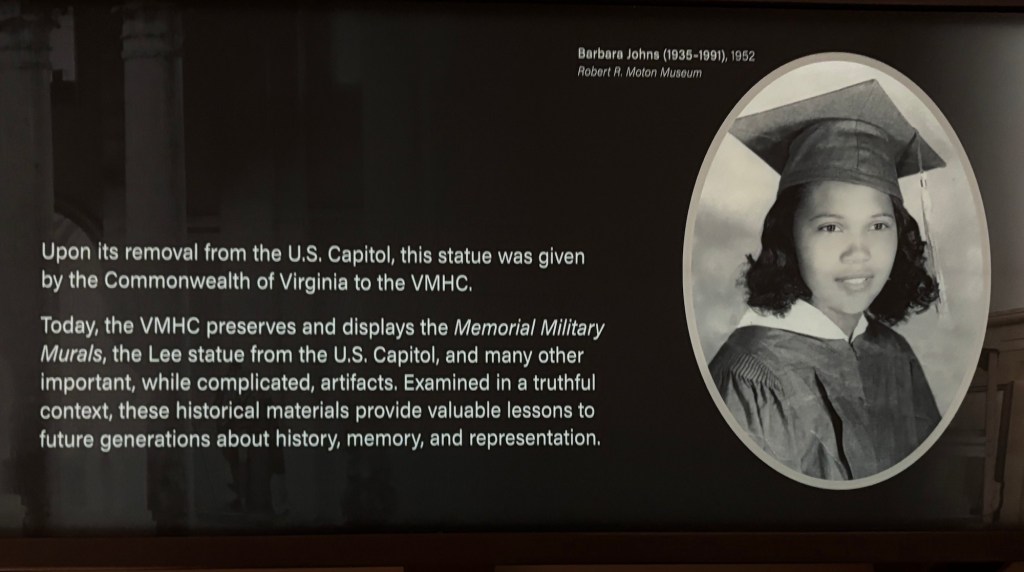
I learned that in 2020, the Virginia General Assembly voted to remove Robert E. Lee from the U.S. Capitol and replace him with a state of Civil Rights Activist Barbara Johns (later Powell). At age 16, this Virginian led a student protest of inferior conditions in her Black high school that ultimately culminated in Brown v. Board of Education (1954).the landmark U.S. Supreme Court decision declaring segregation unconstitutional.
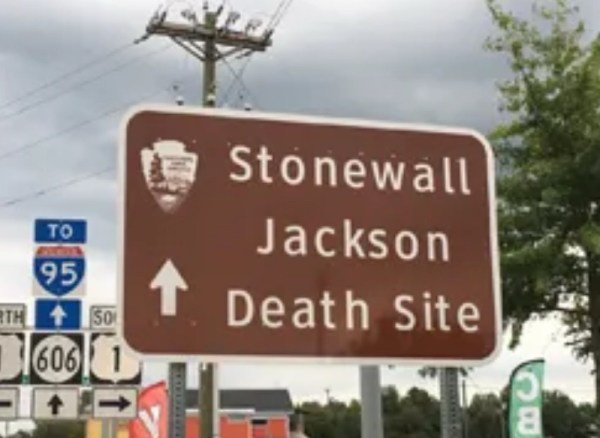
We saw this sign along I95 on the way to Richmond, VA., “Stonewall Jackson Death Site”. Seems like peculiar wording and got us wondering how Stonewall Jackson did die. Did he die in battle during the Civil War? Apparently, he was accidentally fired upon by his own troops, the 18th North Carolina Infantry Regiment, while reconnoitering with members of his staff. He lost his left arm to amputation. Weakened by his wounds, he died of pneumonia eight days later. Jackson’s death proved a severe setback for the Confederacy
Another interesting story (I can’t attest to the truth of it) is that Union Troops dug up his arm during the Battle of the Wilderness in 1864. Another story suggests that U.S. Marines visiting the area in 1921 also dug up and reburied the arm. While these stories are difficult to substantiate, they confirm that Jackson’s arm has become a point of curiosity over time. In 1998, archaeologists working for the National Park Service investigated the area but did not find a specific burial site.
Not sure why there is such interest in Stonewall Jackson’s arm. Maybe we will have to visit this national park site to find out more.
Yesterday we arrived in Silver Spring, Md, a suburb of Washington, DC. to visit friends. They love Silver Spring for its diversity and proximity to Washington DC. They live very near Rock Creek Park, an 1,754 acre national park that stretches from Silver Spring into Washington DC. Matt, who works for the State Dept., has an 11 mile bike ride in to work.
Rock Creek Park
In 2024, Fortune magazine rated Silver Spring, Md as number one on its list of the 50 best places to live for families in the United States,“Silver Spring’s top ranking as a family-friendly home speaks volumes about the quality of life we offer,” said Montgomery County Executive Marc Elrich. Elrich highlighted aspects of Silver Spring- the Recreation and Aquatic Center, Silver Spring Jazz Festival, the Silver Spring Blues Festival, numerous international festivals, robust public transportation and diversity. Silver Spring residents echoed many of Elrich’s comments–it’s close enough to Washington, D.C., to enjoy the city, while having its own amenities, tight-knit community and excellent schools. (Bethesdamagazine.com)
And it is true that Silver Spring ( and the whole of Montgomery County) could not be more diverse. According to the 2020 census (and our observation) Silver Spring is, in fact, a very diverse community. Thirty three percent are White (non-Hispanic), 28% are Black, 28% identified as Hispanic and 7% were Asian. Prior to the arrival of Europeans, present-day Silver Spring was inhabited by variousIndigenous people for approximately 10,000 years, including the Piscataway, an Algonquian-speaking people. Now the Native American population in Silver Spring is less than 1%.
Thirty-six percent of the 81,000 residents were born outside of the United States, which is higher than the national average of 13.9%. Most of the foreign born hail from El Salvador, Ethiopia, India, and China.
One of the reasons that Silver Spring is so ethnically diverse is the presence of the International Rescue Committee, that works in 40 countries worldwide and 28 cities in the U.S. to help people affected by humanitarian crisis to survive, recover and rebuild their lives. (IRS website).
With discussions on racial and ethnic equality taking center stage in recent years, WalletHub analyzed America’s current cultural makeup. This study compared over 500 of the largest U.S. cities across three key indicators of ethnic diversity, focusing on factors such as residents’ ethnicity and race, language usage, and birthplace. Gaithersburg, Germantown, and Silver Spring, all in Montgomery County, MD are in the top five of WalletHub’s “Most Diverse Cities 2024”.
“People who live in ethnically diverse cities have the opportunity to experience new cultures, languages, foods and viewpoints, allowing them to learn more about the world,” WalletHub analyst Cassandra Happe said. “People who grow up in diverse cities also are less likely to develop prejudiced views of people who are different from them. In addition, cities benefit from the unique skill sets that people of different cultures and national origins bring to the table.”
My impression is that Silver Spring is truely a good place to live. We are looking forward to going back for a visit.












 Perspectives on the Road