
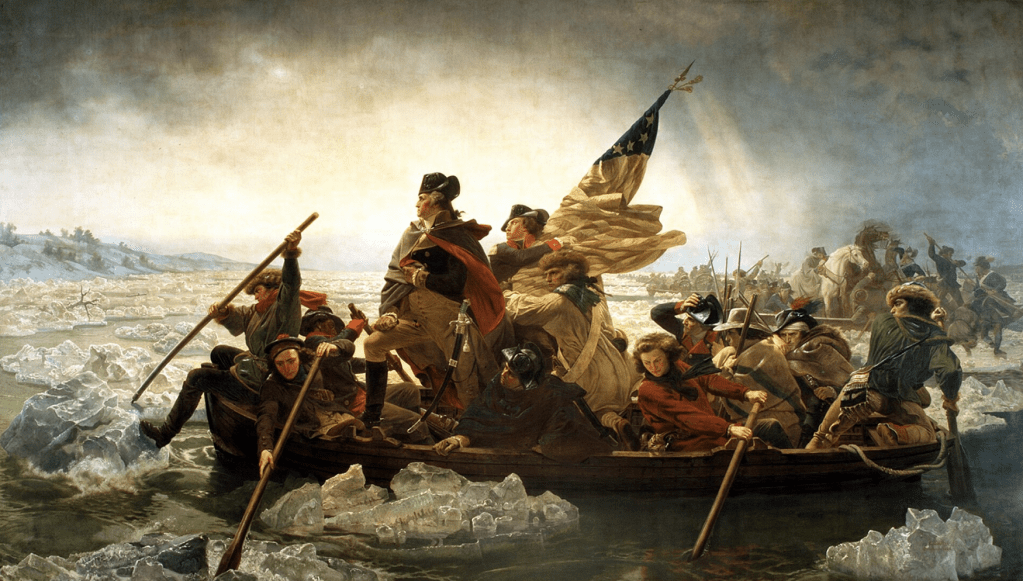
Yesterday we arrived in Williamsburg, Virginia, which is home to both the Jamestown Settlement Museum and Colonial Williamsburg living history museum. We decided to visit the Jamestown Settlement first and were very surprised to see pods of military people all over the place dressed in costume from the Greek Phalanx (500 B.C.E) to the current day Virginia National Guard as part of the 40th annual Military through the Ages event. Being a Quaker and a pacifist, I was not happy to see this taking over the Jamestown Settlement Museum. I have to admit, that I did find elements of it very interesting. There was a pod there representing Black Soldiers of the American Revolution.

We spoke at length with a man from New Jersey (I never got his name) who was representing the 14th Continental Regiment. He was a wealth of information about Black history in general and particularly John Glover’s regiment from Marblehead, Massachusetts.
Glover marched his regiment to join the siege of Boston in June 1775. At Boston, General George Washington chartered Glover’s schooner Hannah to raid British supply vessels, the first of many privateers or warships authorized by Washington. For this reason the Hannah has been occasionally called the first vessel of the Continental Navy or its later successor the United States Navy.[10] (Wikipedia)
The Marblehead militia or “Glover’s Regiment” became the 14th Continental Regiment. John Glover was able to raise a regiment of 500 men composed of both his militia and Marblehead mariners, and termed by Washington as soldiers “bred to the sea.”[11] This regiment became known as the “amphibious regiment” for their vital nautical skills. It was composed almost entirely of seamen, mariners and fishermen.[12] Many of these men of were Native Americans, Jewish, African-Americans, and Spanish forming the first integrated units in the new American military.[2] The regiment’s muster rolls listed one-third of the men as dark complexioned. A Pennsylvania general was shocked by the “number of negroes” treated as equals in Glover’s Regiment.[13] Most of the regiment lived in Marblehead, and came together before the war, fishing in the Grand Banks. At sea, everyone was working towards a common goal, and a person’s background didn’t matter, a philosophy carried over into the regiment.[2] (Wikipedia)
Our Jamestown experience in all was very interesting, although it was disconcerting to see Jamestown Settlement staff in costume intermingled with people walking around in togas, suits of armor, kilts, viking costumes and current day combat gear. I will do another post on what I learned about the Jamestown Settlement itself.
 Perspectives on the Road
Leave a comment