
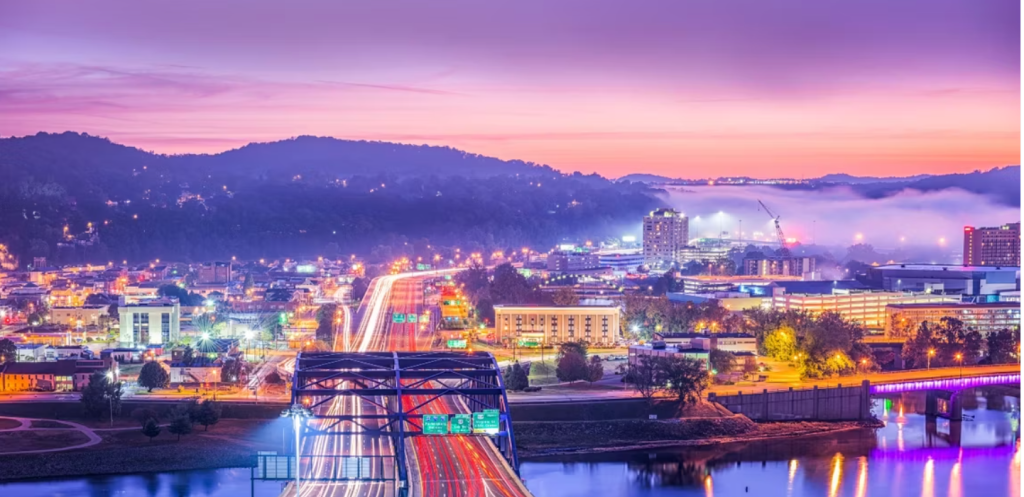
After traveling on one lane mountain roads through isolated West Virginia for most of the day, we spent the night in Charleston, West Virginia, a surprisingly large city, with 210,605 residents in the larger metropolitan area. It is now the capital of West Virginia, which once was part of Virginia. I found the West Virginia’s beginnings to be surprising and interesting. Once again I am reminded that we can and should learn from history in this time of political turmoil.
Political divisions between the eastern agricultural Virginia and mountainous western Virginia were present from the beginning of the revolutionary period. The Virginia Constitution of 1776 hampered western political participation by placing property-holding qualifications on voters and officeholders and allowing for disproportionate eastern political representation. Confronted with a tax code that benefited slaveholders and large landowners and eastern reluctance to dedicate taxes for western internal improvements, western Virginians clamored for reform from the beginning. This set the stage for the creation of a separate state.
The development of western Virginia industries (iron, coal, salt, and oil) that largely relied on free labor emerged in sharp contrast to eastern Virginia’s slave-based commercial agricultural economy. By the early 19th century, salt brines were discovered along the Kanawha River, and the first salt well was drilled in 1806.[13] This created a prosperous time and great economic growth for the area. By 1808, 1,250 pounds of salt were being produced a day, and the Farmers’ Repository newspaper began publication.[14] An area adjacent to Charleston, Kanawha Salines (now Malden) would become the top salt producer in the world. Later, coal became central to economic prosperity in the city and the surrounding area. The emergence of an economically motivated western antislavery ideology threatened relations between the eastern and western Virginians. (encyclopediavirginia.org).
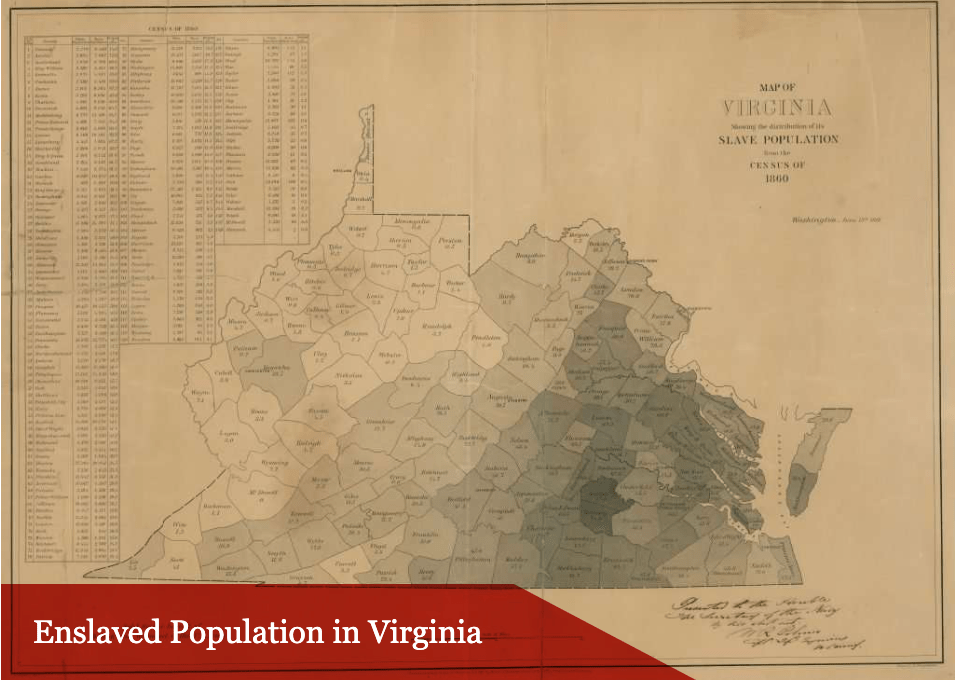
The 1860 election of Abraham Lincoln as U.S. president resulted in the secession of seven Southern states and on February 13, 1861, Governor John Letcher opened Virginia’s own secession convention. During the convention, Lincoln’s inaugural address, the attack on Fort Sumter in Charleston, South Carolina (April 12 and 13), and Lincoln’s call for 75,000 volunteers led to the passage of the Ordinance of Secession on April 17, 1861. Nearly two-thirds of the votes against secession came from northwestern Virginia. Virginian Southern Unionists, who aimed to repeal the Ordinance of Secession that Virginia made during the American Civil War, won their fight to succeed from Virginia and remain part of the Union when West Virginia was admitted as a U.S. State on June 20, 1863 (https://encyclopediavirginia.org)
John S. Carlile, an Unconditional Unionist at the Richmond Secession Convention stated, “For several days before the Convention passed the Ordinance of Secession, it was absolutely besieged; members were threatened with being hung to the lamp posts; their lives were jeopardized; the mob was marching up and down the streets, and surrounding the Capitol, and everything was terror and dismay.”[5]
Carlile continued to impeach the legitimacy of Virginia’s referendum on secession. “Immediately upon the passage of the Ordinance of Secession, in every county, as far as I can learn, a systematic reign of terror was inaugurated.” Throughout the state, “irresponsible persons assembled, under the name of ‘committees of safety’, who [told Union men] that they must leave the State… All Union men were admonished that they would be prosecuted for treason.” Carlile then described the days leading up to the referendum: ” Before the day of election arrived we see the troops from South Carolina, Georgia and other Southern States, placed all over the eastern and southern parts of the States running up into the valley, and in some parts of Western Virginia. In those parts of the State freedom of election was completely suppressed, and men who dared to vote against secession done it at the hazard of their lives. Thus, sir, you see the concert by which secession has been inaugurated and carried out in Virginia; and we see that same spirit that reigned in it from the beginning… TREASON…”[5]
On June 13, 1861 Carlile introduced to the Wheeling Convention “A Declaration of the People of Virginia.” The document declared that under the Virginia Declaration of Rights, any substantial change in the form of state government had to be approved by the people via a referendum. Therefore, the Secession Convention was illegal since it had been convened by the legislature, not a referendum, and all of its acts–including the Ordinance of Secession–were ipso facto void. It also called for a reorganization of the state government, on the grounds that all state officials who had supported the Ordinance of Secession had effectively vacated their offices. On June 19, delegates approved this plan unanimously.
The next day, June 20, the convention selected new state officers for what came to be called the Restored Government of Virginia to avoid confusion with the pro-secessionist government. Francis Pierpont of Marion County was elected governor. On June 25, the convention adjourned until August 6. President Lincoln and Congress swiftly recognized the Restored Government as the legitimate government of the entire Commonwealth of Virginia.
On October 8, 1869, Virginia voted to ratify the Fourteenth and Fifteenth Amendments as part of the requirement for being readmitted to the Union. The act readmitting Virginia to the Union and its representatives into Congress was signed by President Ulysses S. Grant on January 26, 1870.
In this time of political turmoil, it is important that we learn from history.
 Perspectives on the Road
Leave a comment