
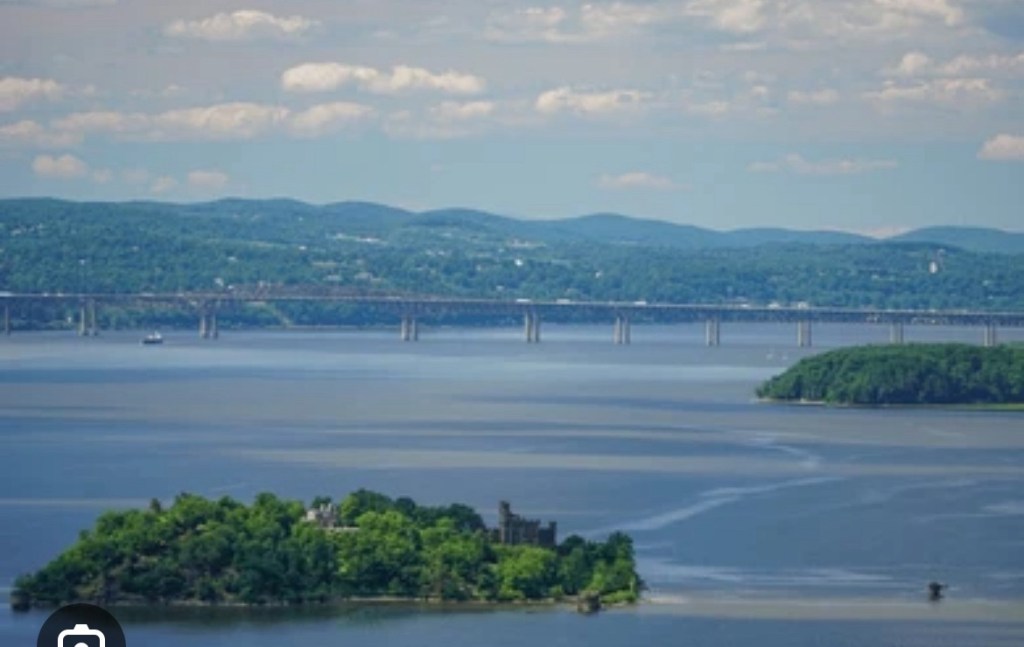
For 10.000 years the Hudson River Valley was home to many Native American societies—from the Munsee Indians of the lower valley (also known as Lenape), to the Mohicans and Mohawks of the upper valley. (hudsongreenway.ny.gov). The Hudson River runs through the Munsee, Lenape, Mohican, Mohawk, and Haudenosaunee homelands. Prior to European exploration, the river was known as the Mahicannittuk by the Mohicans, Ka’nón:no by the Mohawks, and Muhheakantuck by the Lenape. The river was subsequently named after Henry Hudson, an Englishman sailing for the Dutch East India Company who explored it in 1609. (Wikepedia) “Muhheakantuck ” means “water that flows both ways”. The southern part of river is actually an estuary that changes direction twice a day as the ocean pushes salt water in against the river current with the high tide; the tidal influence extends as far as the Federal Dam in Troy.
One of the most important rivers in U.S history, the 315 mile river was a major navigation route before there were trains and automobiles. The Hudson’s connection to the Mohawk River allowed travelers to eventually get to the Great Lakes and the Mississippi River. A strategic waterway during the American Revolution, the Hudson was the scene of numerous battles, including the decisive American victory at Saratoga and the naval battle of Tappan Zee.
 Perspectives on the Road
Leave a comment