
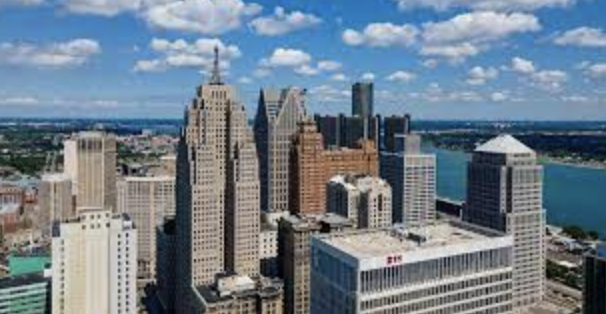
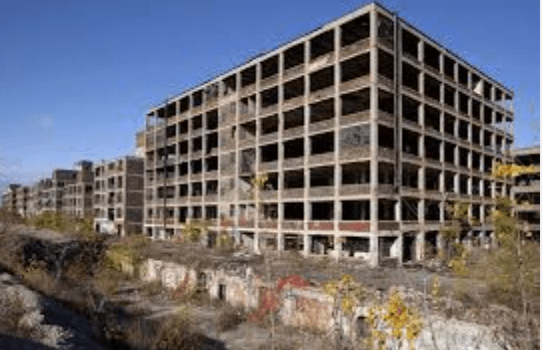
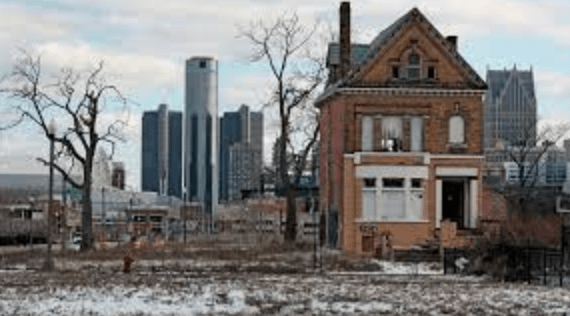
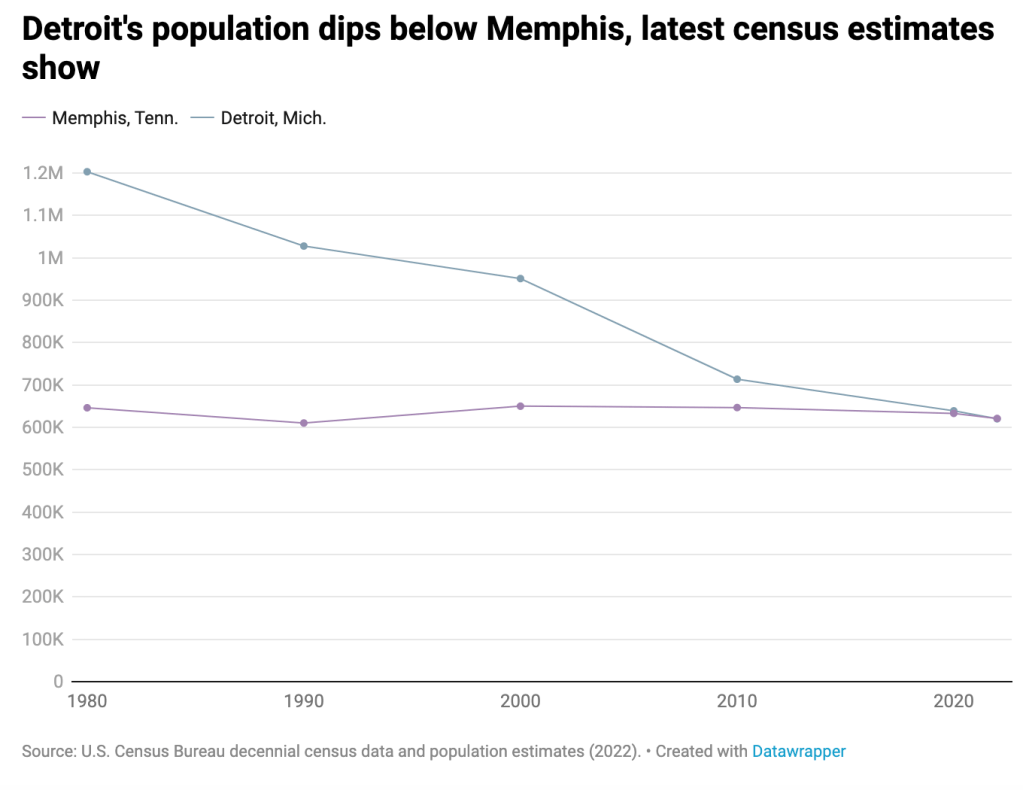
We arrived in Detroit yesterday, the ancestral homelands of three Anishinaabe nations of the Council of Three Fires: the Ojibwe, Ottawa, and Potawatomi. Detroit drew immigrants of many nationalities including Italians, English, Germans, Polish, Irish, Mexicans, Middle Easterners, Africans, and Greeks. Our downtown hotel is near the Corktown neighborhood, named after County Cork, Ireland the oldest existing neighborhood in the city.[2][3] Many Irish folk immigrated to the United States during the Irish Potato Famine in the 1840’s and at that time the Irish were the largest ethnic group settling in Detroit. By the Civil War, German immigrants had begun making inroads into the Corktown neighborhood.[5] By the turn of the century, the original Irish population had diffused through the city, and new immigrants, notably Mexican and Maltese, moved into this older housing.[5] As the century progressed, migrants from the American South and Appalachia, both Black and white, came to the city for good paying jobs in the automobile industry.[5] As these jobs were shipped overseas, the people left also. For the past 40 years, Detroit has been the largest Black majority city in the U.S. with 76% Black population, but due to the drastic loss of population in Detroit, Memphis may now the largest Black majority city. As jobs left the city, poverty increased and the city went bankrupt.
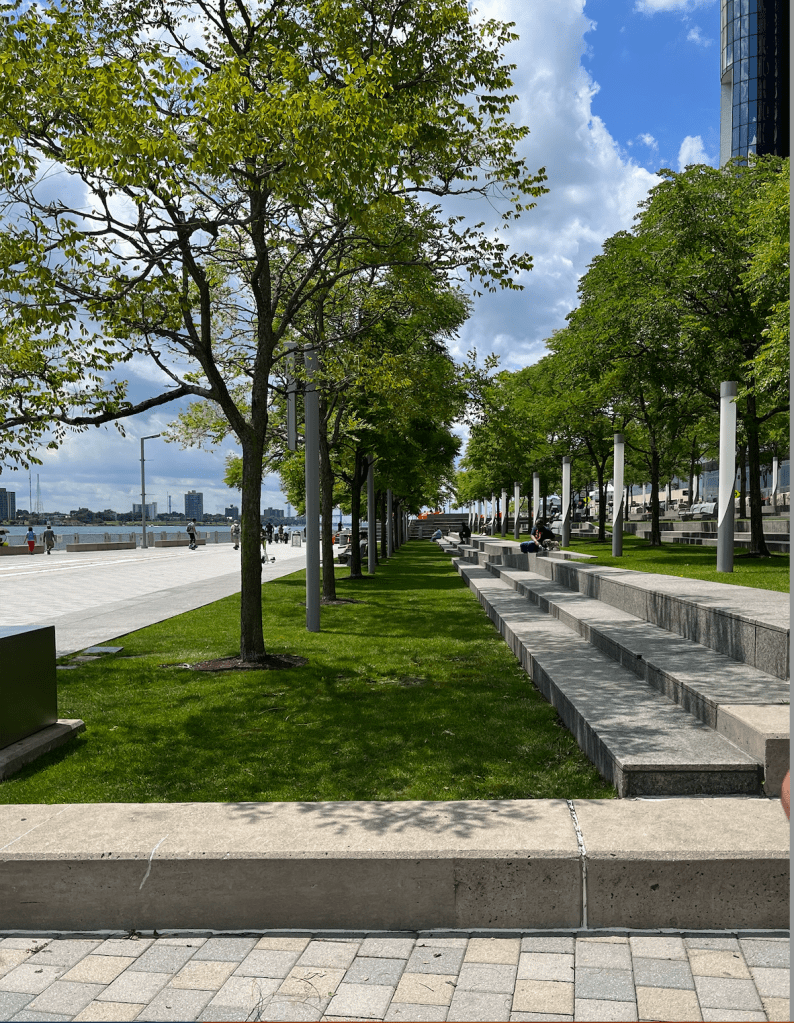
There are still many parts of Detroit that are abandoned still, but there is revitalization happening. An example of that is the Detroit Riverwalk, built through a public-private partnership to clean-up a five mile abandoned industrial area along the Detroit river. The strip right along the river is very nice walkway now, where we enjoyed seeing people biking, walking dogs and children playing. Right behind the walk way are miles of abandoned GM parking lots.
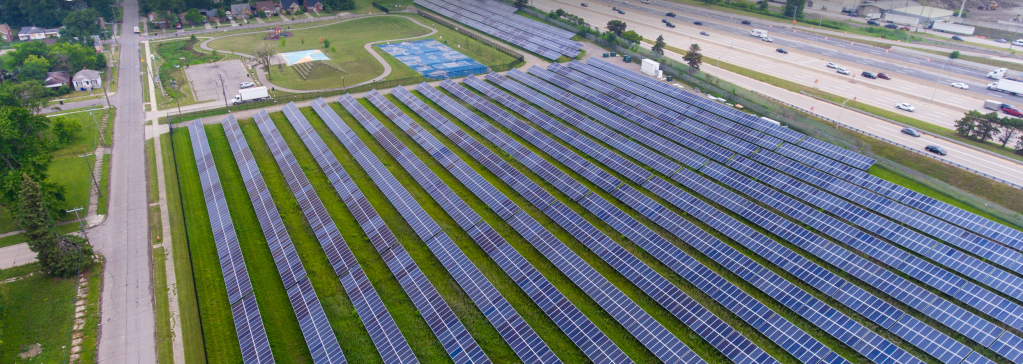
The fact that Detroit has so many vacant sites is a blight on the city, but also an opportunity. They may be a step ahead of other cities in building a new green infrastructure. For example, the City of Detroit Office of Sustainability is seeking block clubs and community groups to host solar fields on large parcels of vacant land to power city buildings. The Solar Company incentivizes it by giving back to the community – for a 10 acre site, the neighborhood group gets to decide what to do with $250,000. You can listen to the Mayor’s speech about it here.
According to an interesting National Geographic article, multibillionaire Dan Gilbert is Detroit’s sugar daddy. Gilbert, who founded Quicken Loans, bought more than 70 properties (mostly downtown and ripe for rehab), seeded dozens of start-ups, and employs an estimated 12,500 people.
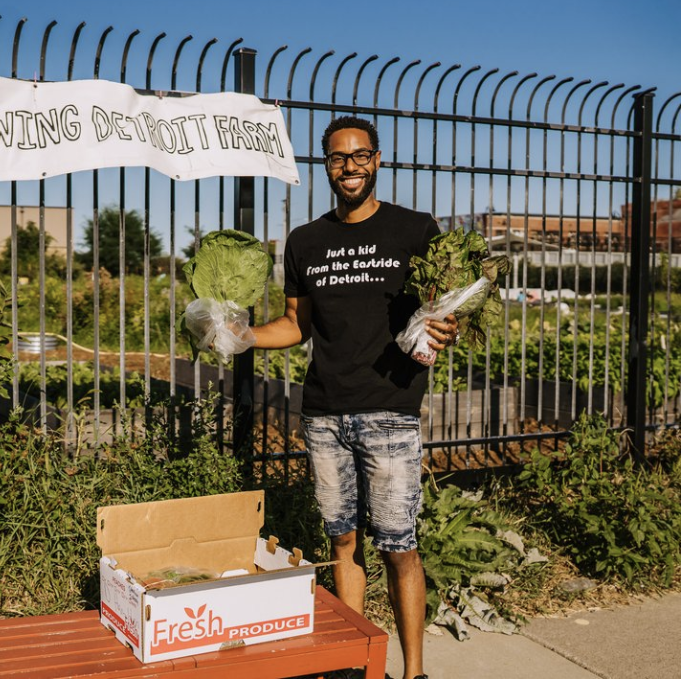
Keep Growing Detroit is an organization with a mission “to cultivate a food sovereign city where the majority of fruits and vegetables consumed by Detroiters are grown by residents within the city’s limits”.
It will be interesting to watch Detroit’s evolution. It could be a good place for the young and adventurous to land.
 Perspectives on the Road
A good place for Ithaca to learn from?
♥️NancyG
Sent from my iPhone
LikeLiked by 1 person
Hi Karen,
I love this!
Did you share with Kev: kthomps1234@gmail.com?
Love, M
[University of New Orleans]http://www.uno.edu/ Michelle M. Thompson, PhD, GISP Associate Professor Louisiana Manufactured Housing Association Professorship in CUPA MasterCard Center for Inclusive Growth, Alumni Senior Data Fellow Planning & Urban Studies (PLUS) Milneburg Hall, Room 380 2000 Lakeshore Drive New Orleans, LA 70148 mmthomp1@uno.edu office 504-280-6593+1-504-280-6593 | fax 504-280-6272+1-504-280-6272 http://works.bepress.com/michelle_m_thompson/ http://http//works.bepress.com/michelle_m_thompson/
LikeLike
Thanks! I forwarded it to him via email. I think he has to sign up to get it via email.
LikeLike
Fascinating. Thanks for sharing.
LikeLiked by 1 person