
We are in Williamsburg, Virginia and yesterday we visited the Jamestown Settlement Museum. We were not sure what to expect in terms of an inclusive historical perspective and were happy to see that they describe the museum”s mission as fostering “an awareness and understanding of the early history, settlement, and development of the United States through the convergence of American Indian, European, and African cultures and the enduring legacies bequeathed to the nation.” It does seem that they are very much attempting to be inclusive in the telling of history. I am wondering how different it is from the presentation of facts 20 years ago?
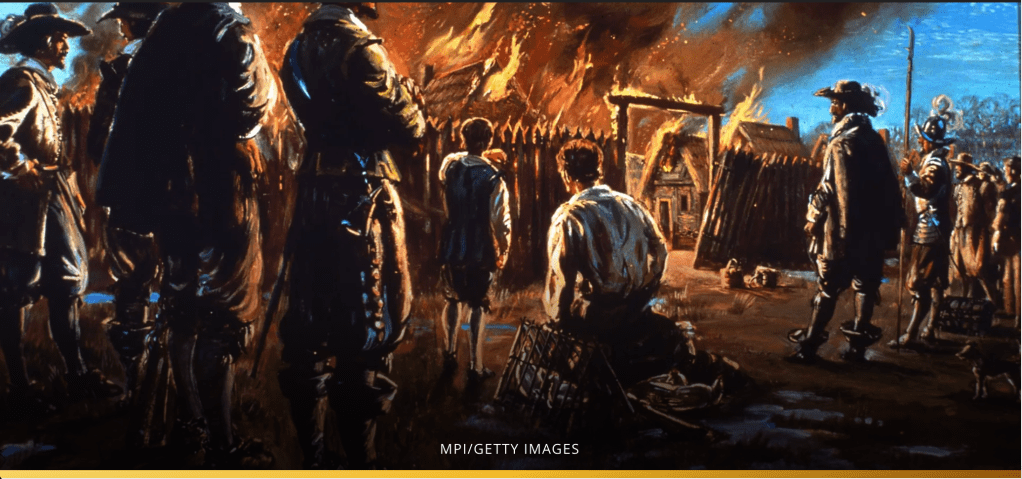
I did not know much about Bacon’s Rebellion, an armed rebellion of settlers against Colonial Governor William Berkeley, Bacon and his armed rebels ransacked their colonial capital, threatened its governor and upended Virginia’s social order. They managed to chase Berkely from Virginia and burned the settlement to the ground. The rebellion failed. Soon Bacon was dead and his militia defeated. The rebellion he led is commonly thought of as the first armed insurrection by American colonists against Britain and their colonial government a hundred years before the American Revolution. (History.com) The alliance between European indentured servants and Africans (a mix of indentured, enslaved, and free Blacks) disturbed the colonial upper class. They responded by hardening the racial caste of slavery in an attempt to divide the two races from subsequent united uprisings with the passage of the Virginia Slave Codes of 1705.[5][2][6]. White indentured servants were subsequently offered 50 acres of land to farm when their servitude ended, giving them considerably more status, while Blacks were subject to lifetime servitude or slavery, which was a very effective way to prevent any future uprisings.


 Perspectives on the Road