On this trip I am going to share examples of courage fighting injustice, both current and from for history. I very much need this inspiration to keep fighting the good fight.
Last night, we stopped in Elyria, Ohio, on the Black River six miles from Lake Erie and 20 miles west off Cleveland.
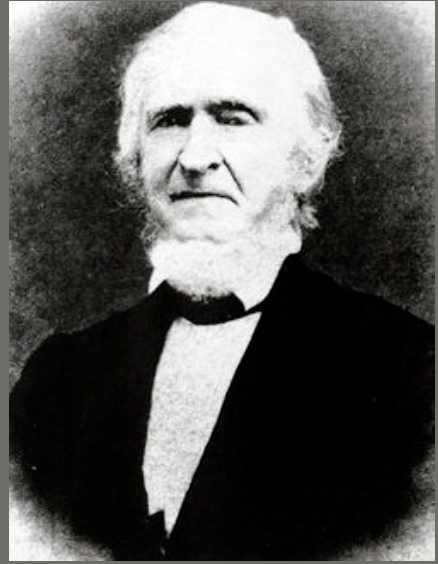
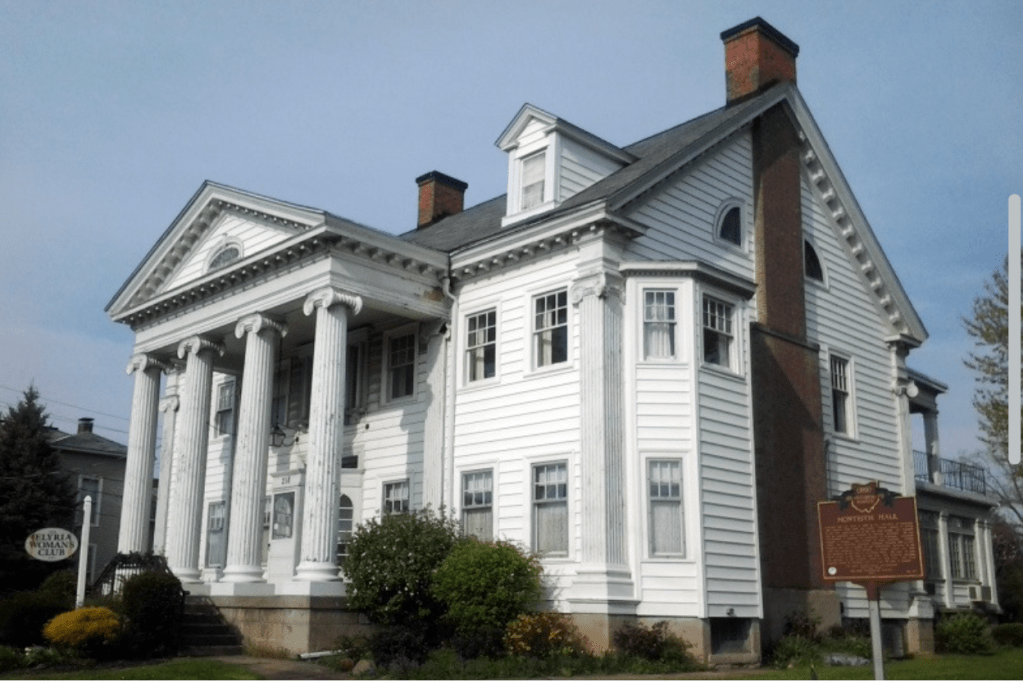
We learned about Reverend John Monteith (1788-1868), who was an abolitionist in Elyria, Ohio who used his home, Monteith Hall, as a “station” on the Underground Railroad. For seven years, his home served as a hiding place for enslaved people escaping to freedom. A tunnel ran from the back of the house to the Black River, which was used to help people escape to the shores of Lake Erie. From there they could board a ship across the lake to Canada and freedom. The home was built in 1835 as a boarding school for girls , which he also gets props for, and a residence for Montheith’s family. He managed the Underground Railroad network on the southern shore of Lake Erie.
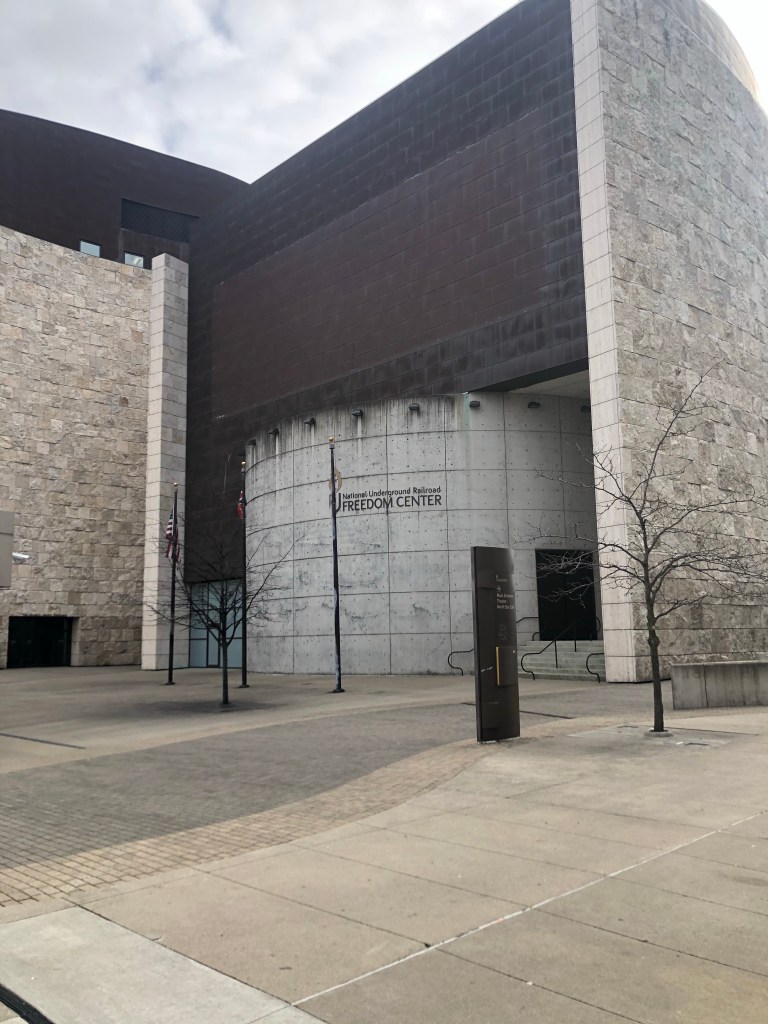
Today we went to the National Underground Railroad Freedom Center in Cincinnati, Ohio. It is well worth a visit. We’ll have to go back a second day next trip to take it all in.
Standing on the banks of the Ohio River, the unknowing can appreciate the power and majesty of the river, but there is so much more. I am in awe of the the significance of river, which seperates Ohio (was a free state) from Kentucky (was a slave state). Crossing this river meant freedom to countless enslaved people. Here is the poem, Eliza Crossing the River by Harriet Beecher Stowe. Many of us read Uncle Tom’s Cabin by Harriet Beecher Stowe and learned that most conductors on the underground railroad were White. Today we leaned that more often than not, it was Black folk, both free and enslaved, who risked their lives helping people to freedom. While many Quakers did settle in Southern Ohio and many White people of all faiths did help freedom seekers, this is not the whole story. Today we learned about John Parker, a formerly enslaved person, who helped hundreds of people cross the Ohio River. You can read more about John Parker here. The Freedom Center featured an excellent dramatization of the work of John Parker and Rev. John Rankin in a film called “Brothers of the Borderland”.
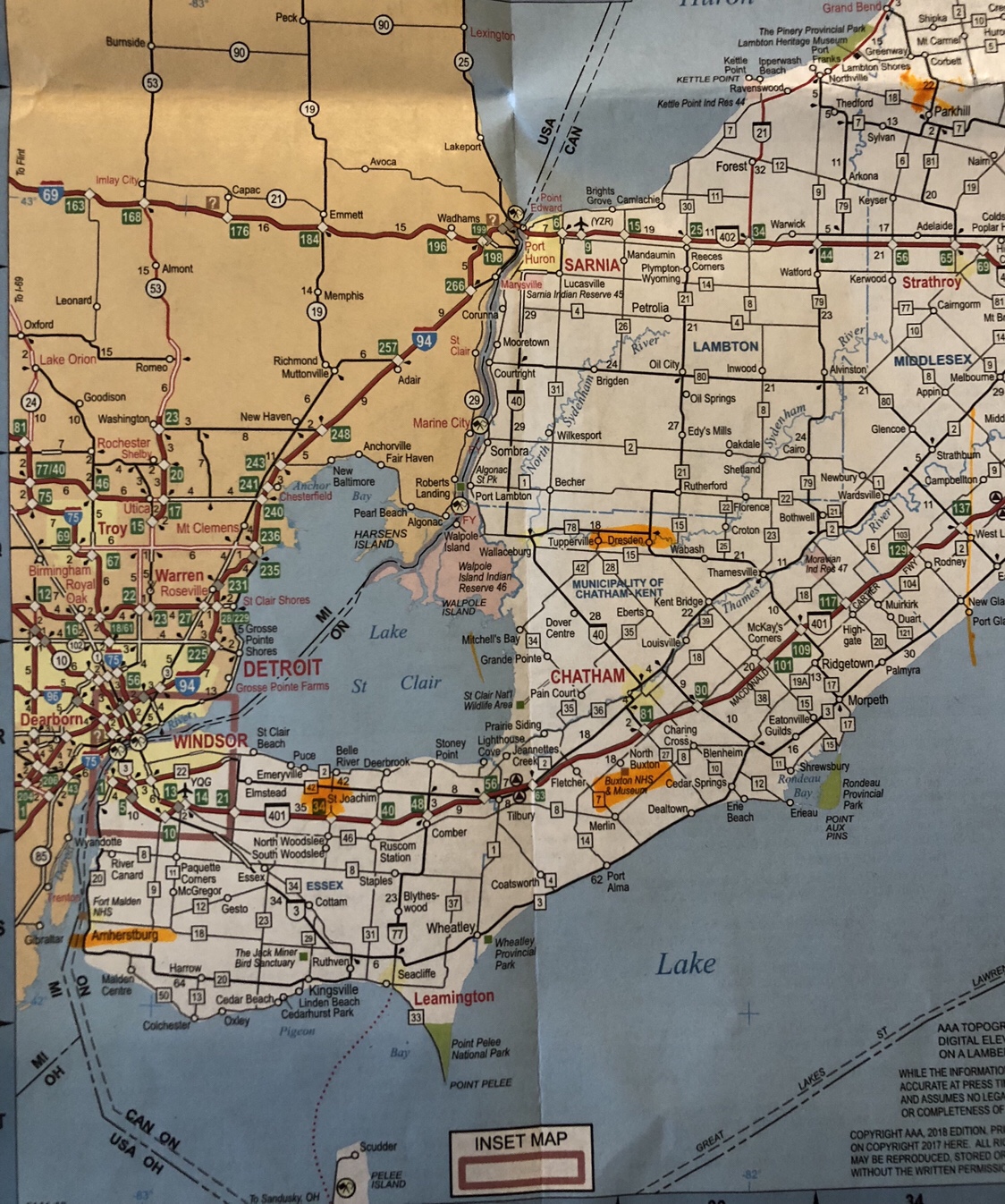
Today we arrived in Chatham- Kent, a small city in Ontario, above Lake Erie about an hour from Detroit.
According to the city welcome website, Chatham-Kent is now known for great fishing, classic cars and welcoming of diverse populations. Even though the Chatham-Kent population seems pretty White now, this area of Ontario has a proud Black History. Between 1830 and 1860 about 30,000 Black freedom seekers crossed from the U.S. into this part of Southern Ontario to find a home free from the oppression of slavery.
Have you ever wondered what happened at the end of the underground railroad in Canada? Did formerly enslaved people find peace and prosperity? Did they live in freedom from racial hostility? What was day-to-day life like for them?
We found out that there were a number of thriving Black communities in this region between 1830 and 1860. They are now mostly just a memory marked by historic sites since most of the residents returned to the U.S to fight in the civil war or returned after the war when slavery was abolished.
We visited the Buxton National Historic Site and Museum located in the municipality of Chatham-Kent. At it’s height, Buxton Settlement became home for approximately 2,500 people of African descent. The community was self-sufficient. Within the first few years they cleared the land, built houses, schools and churches and a thriving farming economy was the result.
This cabin was built by its original owner Henry Colbert when he came to Buxton in 1850.
It was moving to spend some time alone in the cabin that was built by one of the original settlers.
Frederick Douglas visited Buxton in 1854 and wrote that ” the visit deepened our convictions of the grand possibilities of our race”.
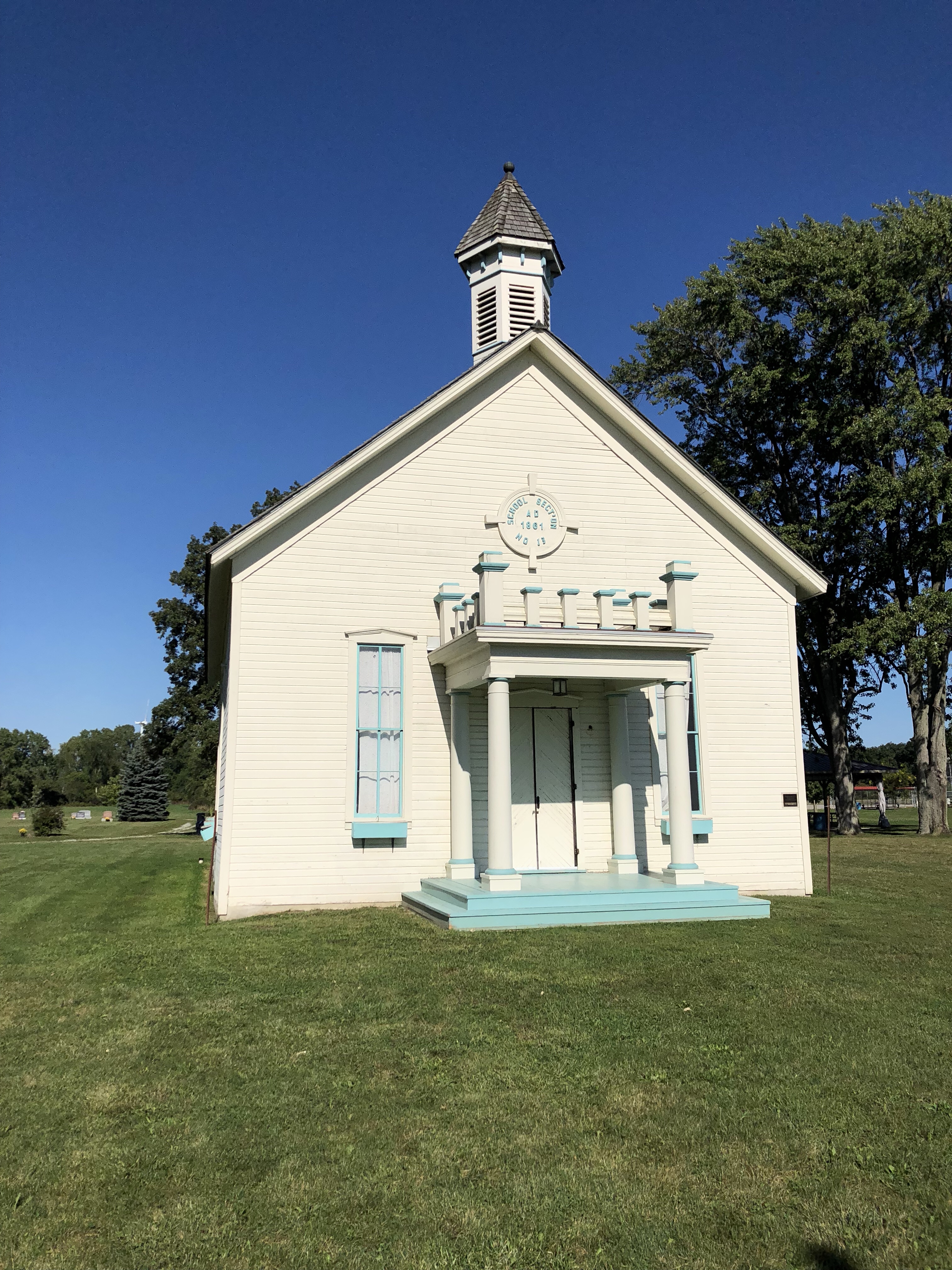
As former enslaved people denied the opportunity to learn to read and write, the Buxton community highly valued education as a key to success. Buxton had three schools that were considered so superior that nearby whites sent their children to attend these schools.
Original schoolhouse at Buxton
The Elgin Association, founded by Reverend William King, initially bought 9,000 acres of land, which they sold and financed at low cost to Black settlers.
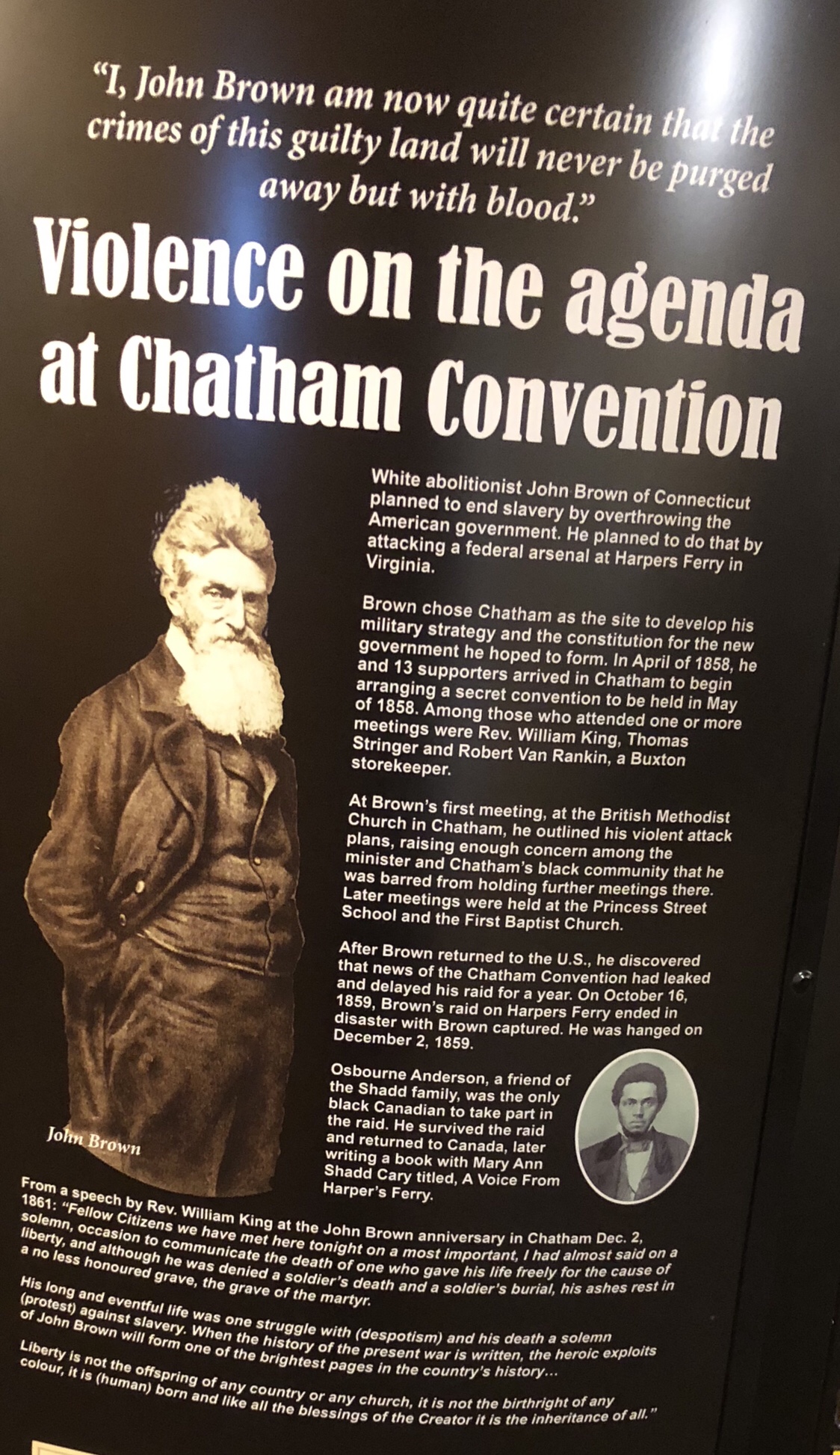
In addition to Frederick Douglas, John Brown visited Buxton. It was here he planned the Harper’s Ferry raid.
To learn more about what life might have been like in Buxton, I recommend readingElijah of Buxton by Christopher Paul Curtis, a novel for young people written from the perspective of Elijah, an eleven year old boy who was the first child born in Buxton. It attempts to be historically accurate and has a very moving account of how Buxton welcomed Black refugees to the community.
We are struck by the parallels with the current day journey of many Central American refugees who are also fleeing violence and oppression. Perhaps the U.S can learn something from Canada about welcoming refugees.




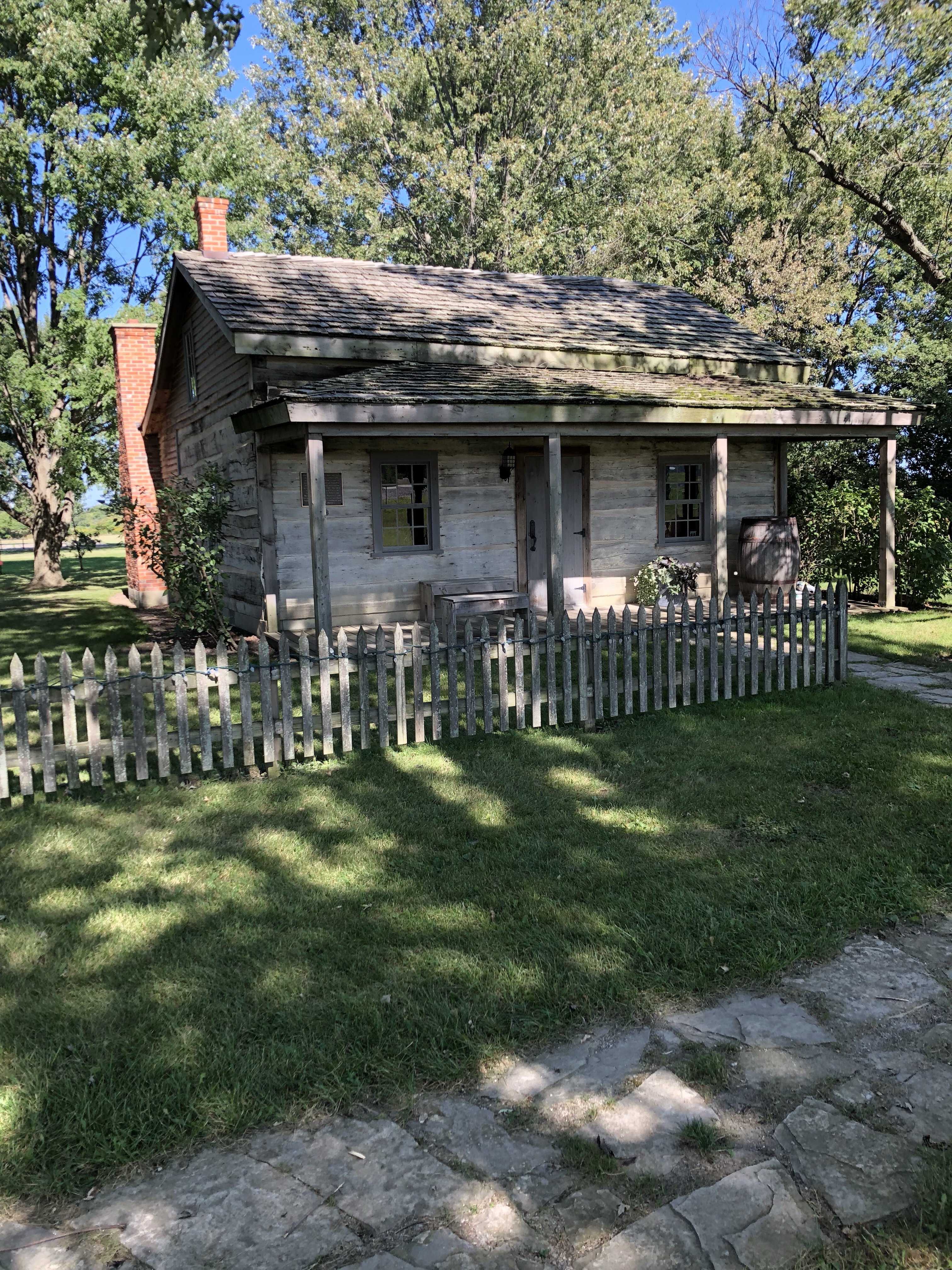 This cabin was built by its original owner Henry Colbert when he came to Buxton in 1850.


 Perspectives on the Road