Yesterday we visited McLeod Plantation, one of many former southern plantation’s that gives tours near Charleston, South Carolina. A major difference berween the McLeod Plantation and all of the others is that it is owned by Charleston County Park, Recreation and Tourism Commission rather than the heirs of the original planation owners. It is also a member of the International Coalition of Sites of Consciousness, that focuses on transforming places that preserve the past into spaces that promote civic action.
The McLeod Plantation has been controversial because it introduces you to the Gathers and Dawson families, who were enslaved on the plantation, as well as the McLeods. It talks about the free black Massachusetts 55th Volunteer Infantry emancipating the enslaved people and using the planation as headquarters as well as the plantation being the headquarters for the James Island Freedman’s Bureau during Reconstruction. It tells the truth about the brutal treatment of the enslaved people on a sea island cotton plantation and the plight of Black folks in Charleston even to this day.
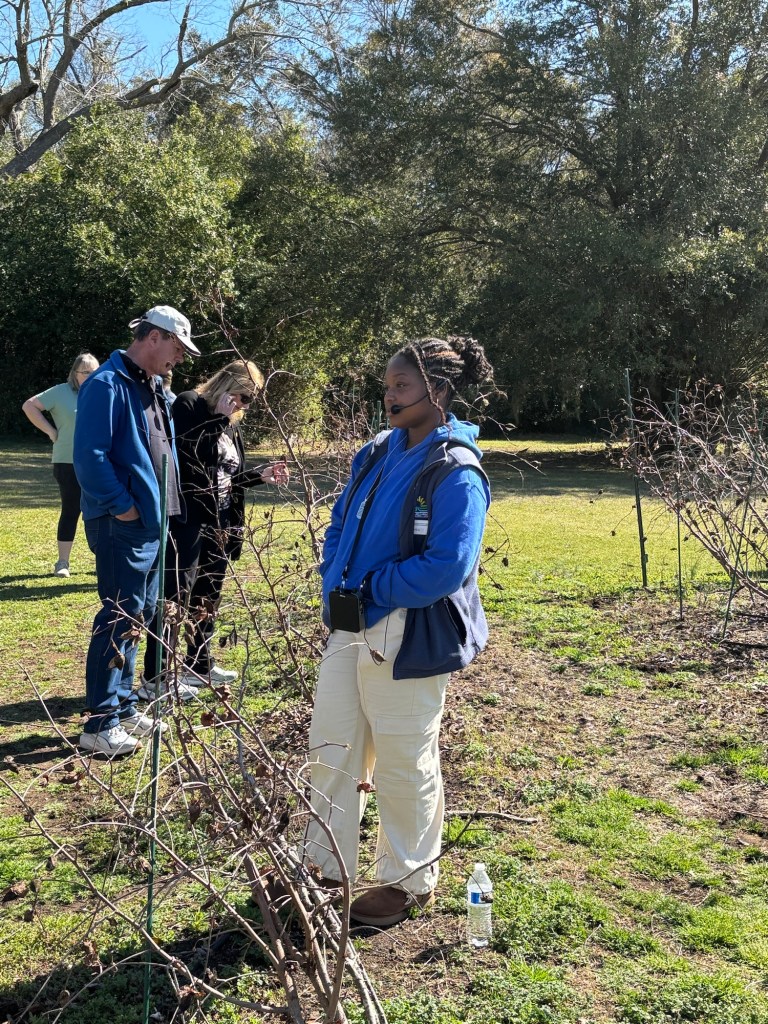
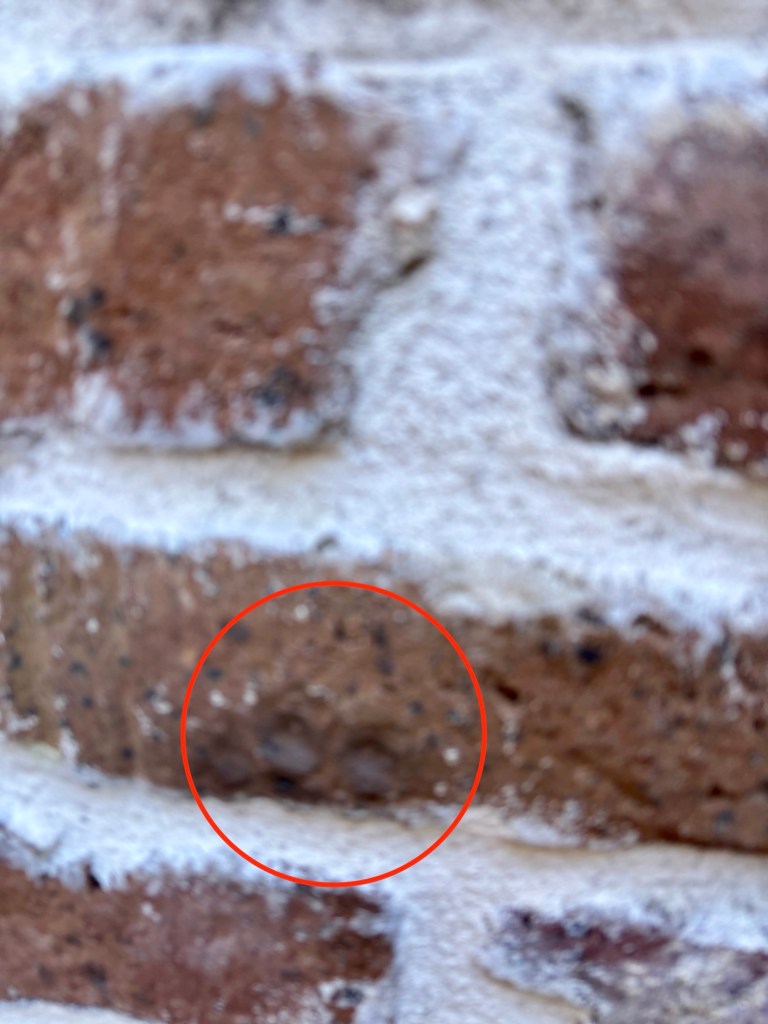
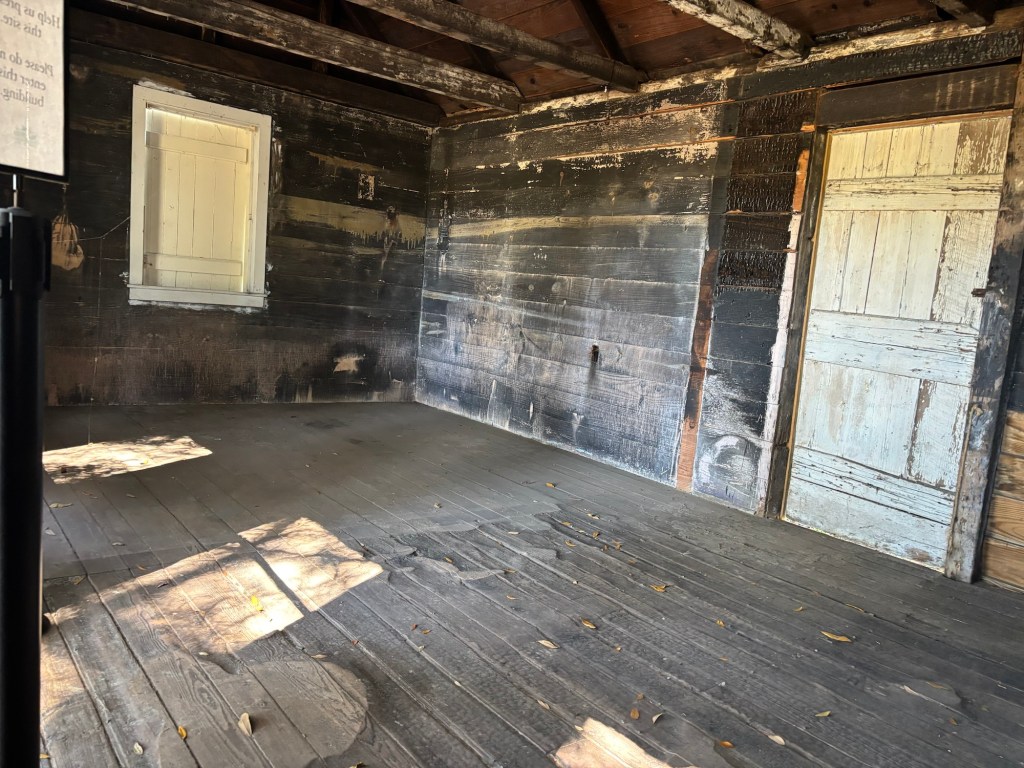
Our tour guide Kayla showing us Sea Island cotton plants.Bricks with fingerprints of young enslaved children who labored to make the bricks. Inside of slave cabins that people still rented until 1990. Here is a video describing the McLeod Planation tour. If the video does not load, here is the link: https://www.ccprc.com/1447/McLeod-Plantation-Historic-Site
In case you cannot tell, if you find yourself in Charleston, highly recommend this tour!
We are in Williamsburg, Virginia and yesterday we visited the Jamestown Settlement Museum. We were not sure what to expect in terms of an inclusive historical perspective and were happy to see that they describe the museum”s mission as fostering “an awareness and understanding of the early history, settlement, and development of the United States through the convergence of American Indian, European, and African cultures and the enduring legacies bequeathed to the nation.” It does seem that they are very much attempting to be inclusive in the telling of history. I am wondering how different it is from the presentation of facts 20 years ago?
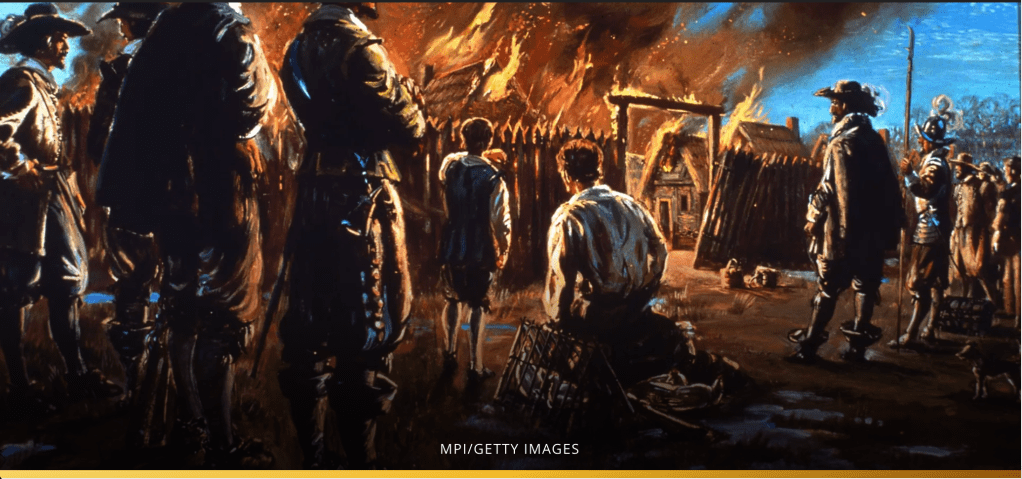
I did not know much about Bacon’s Rebellion, an armed rebellion of settlers against Colonial GovernorWilliam Berkeley, Bacon and his armed rebels ransacked their colonial capital, threatened its governor and upended Virginia’s social order. They managed to chase Berkely from Virginia and burned the settlement to the ground. The rebellion failed. Soon Bacon was dead and his militia defeated. The rebellion he led is commonly thought of as the first armed insurrection by American colonists against Britain and their colonial government a hundred years before the American Revolution. (History.com) The alliance between European indentured servants and Africans (a mix of indentured, enslaved, and free Blacks) disturbed the colonial upper class. They responded by hardening the racial caste of slavery in an attempt to divide the two races from subsequent united uprisings with the passage of the Virginia Slave Codes of 1705.[5][2][6]. White indentured servants were subsequently offered 50 acres of land to farm when their servitude ended, giving them considerably more status, while Blacks were subject to lifetime servitude or slavery, which was a very effective way to prevent any future uprisings.
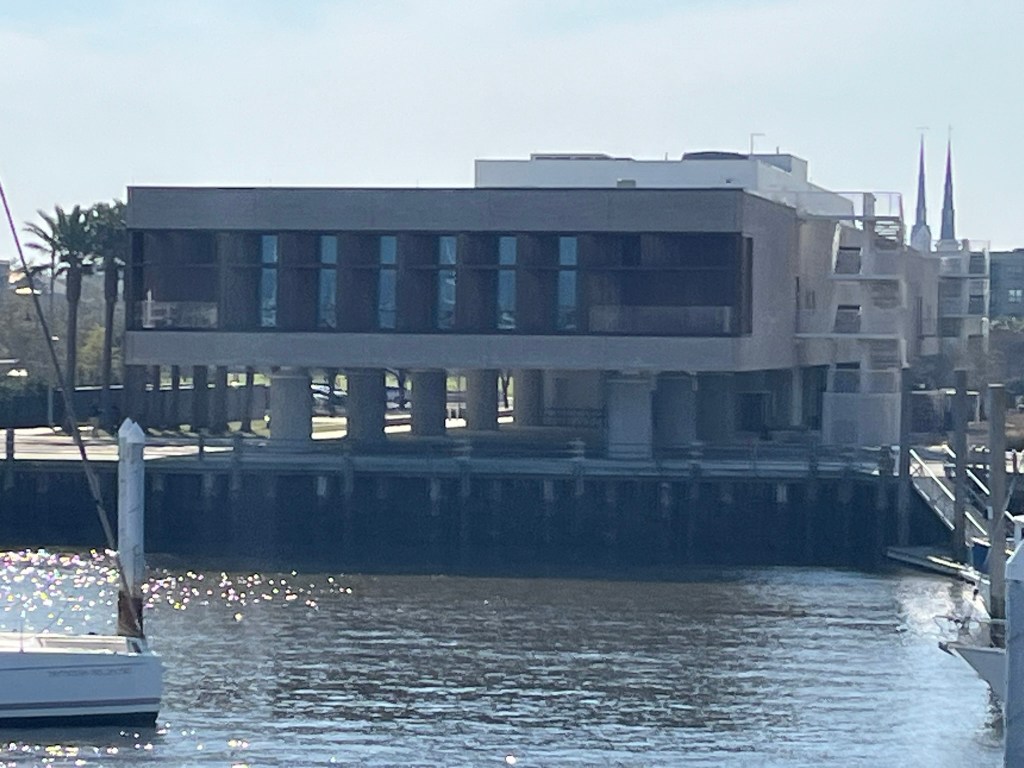
The new International African American Museum in Charleston, South Carolina is definitely worth a visit. Built on Gadsden’s Wharf, where 40% of all American enslaved persons entered the country, the museum has an interesting focus on reconnecting African American families with their history and ancestors through their Center for Family History. Here is a PBS news story about the genealogy research center.
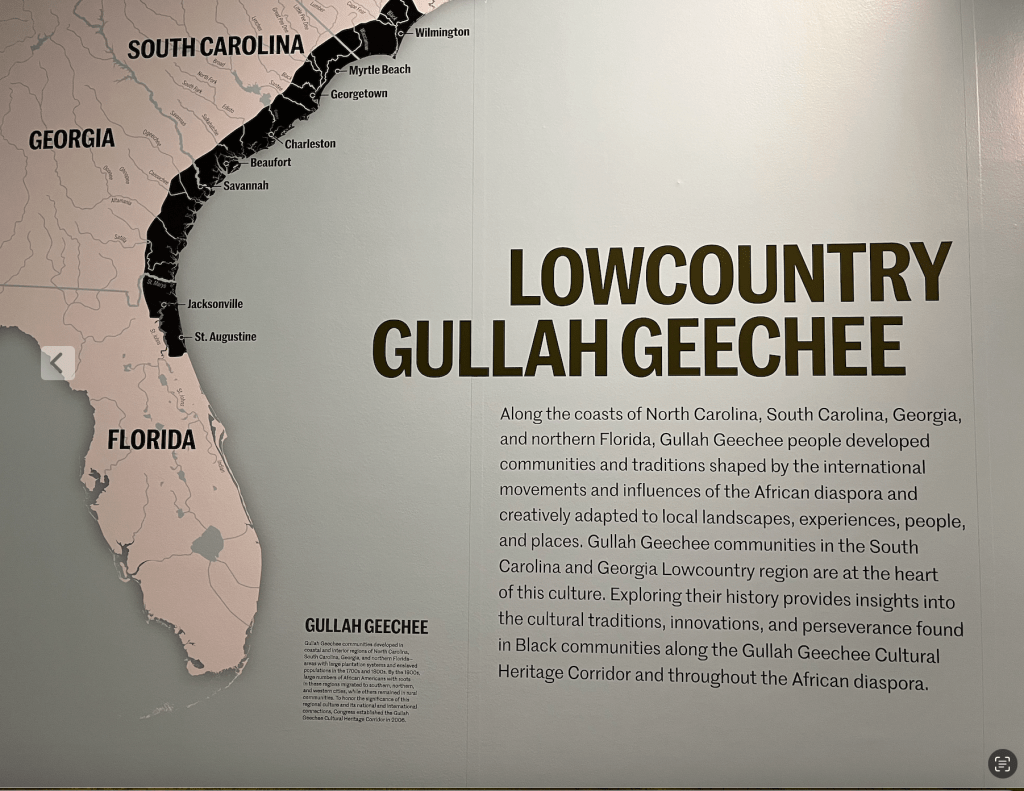
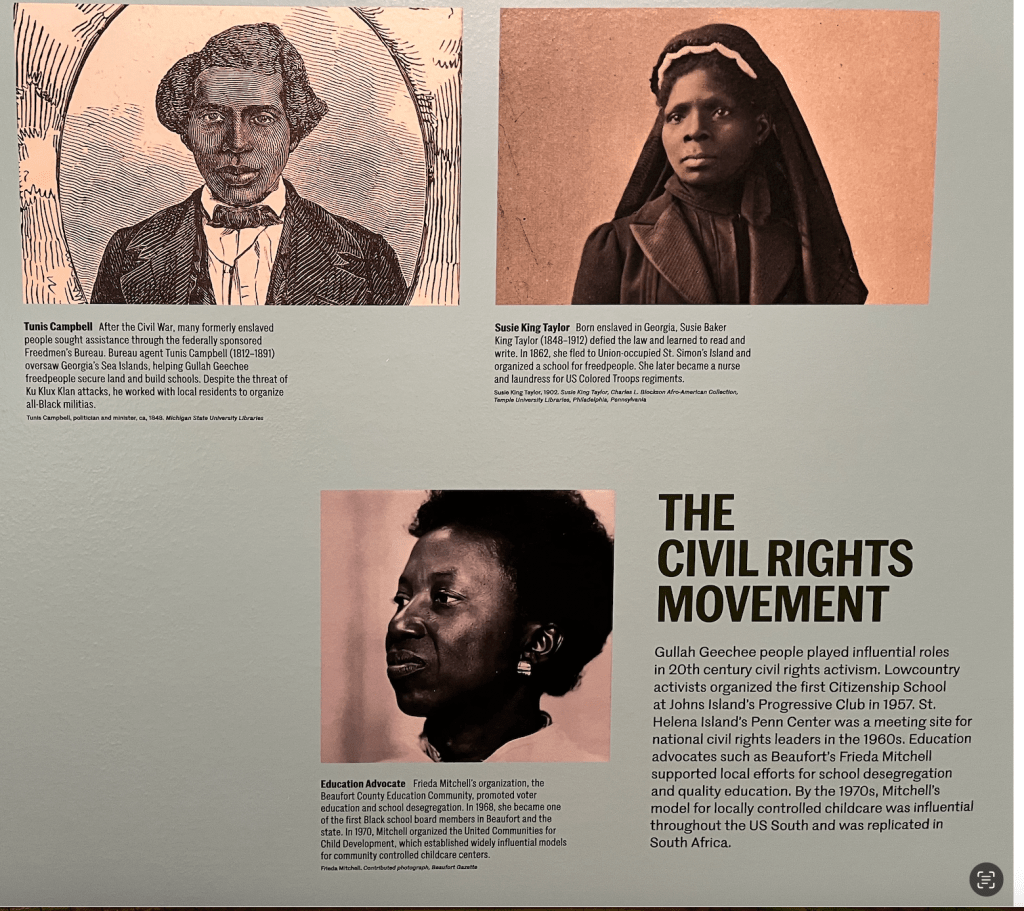
The museum has a large exhibit on the Gullah Geechee of the Carolinas, Florida and Georgia Low Country.
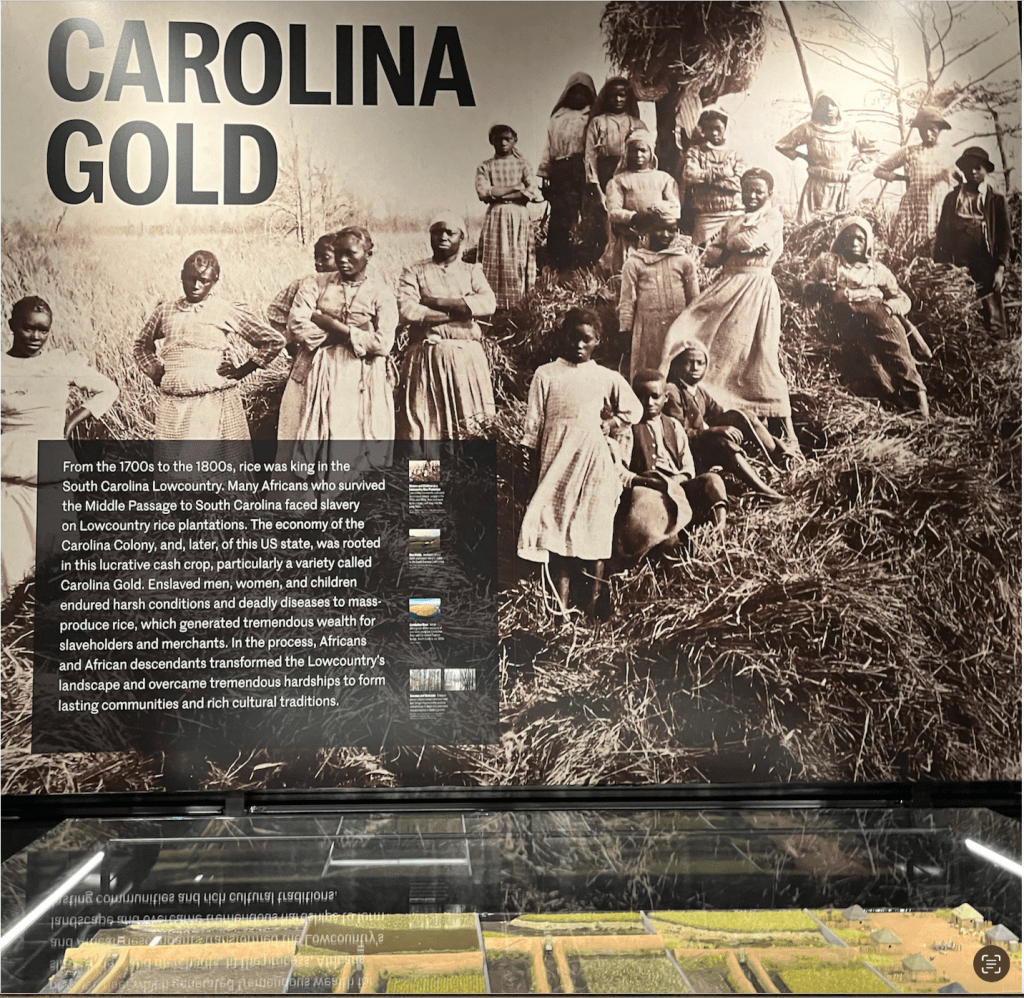
You can also learn about Carolina Gold- the rice industry in South Carolina that was developed by enslaved people who brought the knowledge of rice production from their homeland in Africa..
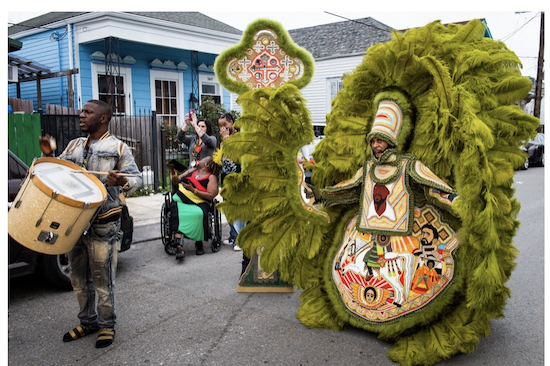
They also had a movie about the Black Indian society for the New Orleans Mardi Gras. Many enslaved people were taken in by the Seminoles and that history is celebrated during Mardi Gras.
As we visit museums on the Civil Rights Trail, we have noticed that the info can get somewhat repetitive. This museum presents information that I have not seen elsewhere. I encourage you to visit!
As much as DeSantis wants to erase Black History in Florida, we are fortunate that he cannot erase all that the internet offers. In 1990, the Florida Legislature created the Study Commission on African American History in Florida “to explore ways to increase public awareness of the contributions of African Americans to the state.” The commission created an in-depth document called the Florida Black HerItage Trail. While the language is somewhat dated, it seems like a pretty good reference. I read this document in addition to an article by the Fort Mose Historical Society and blackpast.org to learn the story of the first free Black community in North America.
The first Underground Railroad in America did not lead from south to north, but north to south. As early as 1687, enslaved people fled bondage from English-controlled South Carolina to seek life as free men and women in Spanish Florida. As Great Britain, France, and Spain competed for control of the New World and its wealth, they all in varying ways, came to rely on African labor to develop their overseas colonial possessions. Exploiting its proximity to plantations in the British colonies in North America and the West Indies, King Charles II of Spain issued the Edict of 1693 which stated that any male slave on an English plantation who escaped to Spanish Florida would be granted freedom provided he joined the militia and became a Catholic. This edict became one of the New World’s earliest emancipation proclamations.
The Spanish established the fortified town of Gracia Real de Santa Teresa de Mose (on St. Augustine’s northernmost border) to accommodate the influx of escaped enslaved people. Fort Mose became the site of the first free black community in what is now the United States. By 1738 there were 100 Black living in Fort Mose; many were skilled workers, blacksmiths, carpenters, cattlemen, boatmen, and farmers. With accompanying women and children, they created a colony of freed people that ultimately attracted other fugitive slaves. Throughout the following decade, the Spanish continued to strengthen Fort Mose to provide an effective defense against English army advances.
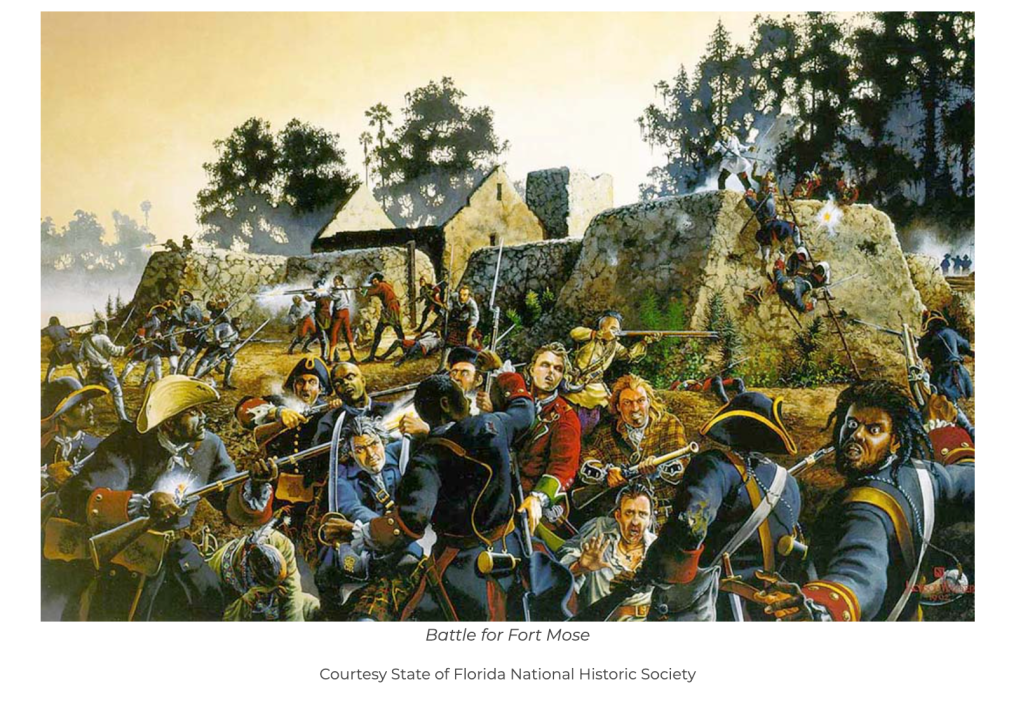
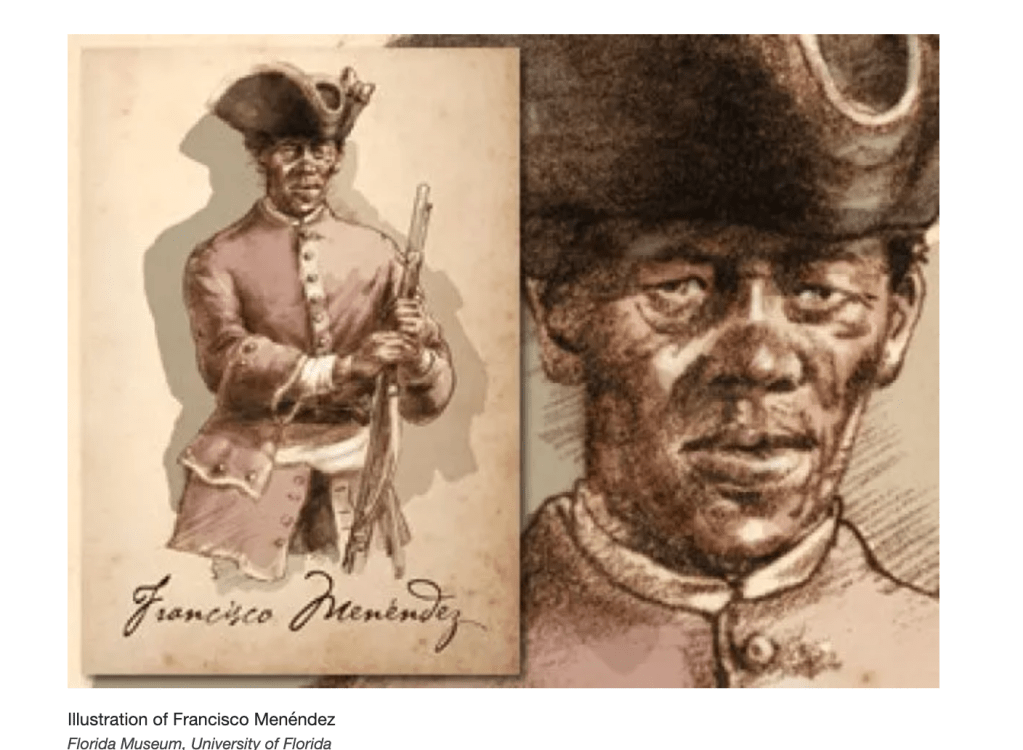
When war broke out in 1740 between England and Spain, the people of St. Augustine and nearby Fort Mose found themselves involved in a conflict that stretched across three continents. The English sent thousands of soldiers and dozens of ships to destroy St. Augustine and bring back any runaways. They set up a blockade and bombarded the town for 27 consecutive days. Hopelessly outnumbered, the diverse population of blacks, Indians and whites pulled together. Fort Mose was one of the first places attacked. Lead by Captain Francisco Menendez, the men of the Fort Mose Militia briefly lost the Fort but eventually recaptured it, repelling the English invasion force.
Nonetheless, England eventually prevailed in the battle over control of North Florida. In 1763, the French and Indian War in the Americas ended with the signing of the Treaty of Paris. The treaty turned the Florida colony over to the English and returned Cuba to the Spanish. The residents of Fort Mose sailed to Cuba with the Spanish, along with a few hundred remaining Indians. But, following England’s loss of its American colonies to the revolutionaries during the American Revolutionary War, Spain regained possession of Florida again in 1783. It had to relinquish La Florida to the newly created United States in 1821. Florida became a slave-holding state. Even as an American slave territory, many blacks continued to find freedom in Florida. While Seminole Indians owned slaves, permitting them to live in separate villages in exchange for one-third of their crops, they also welcomed many escaped, black bondsmen as members of their nation. Some runaway slaves joined the Seminole tribe and made numerous contributions in the doomed effort against the U.S. military during the Second Seminole War (1835-1842).
Over the years, the Fort Mose site was swallowed by marsh, and the important legacy of its community was largely forgotten. Late in the twentieth century, a highly dedicated team of archaeologists, historians, government leaders and committed citizens helped restore Fort Mose to its rightful place of honor. Today, Fort Mose is recognized as a significant local, national and international historic landmark.
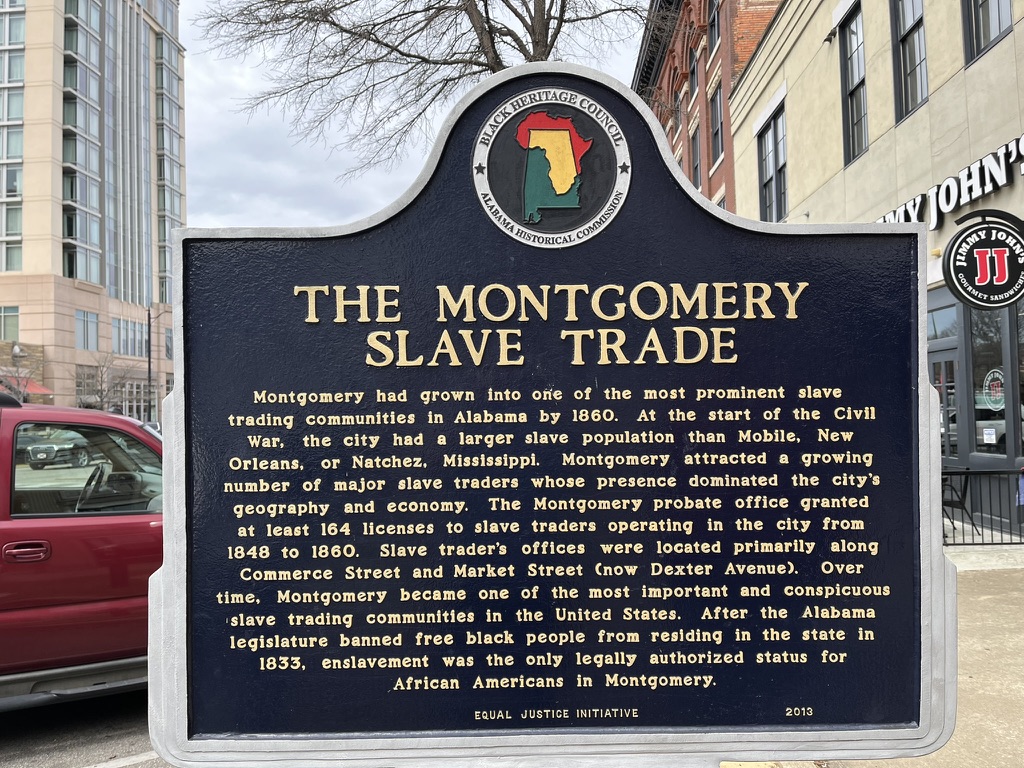
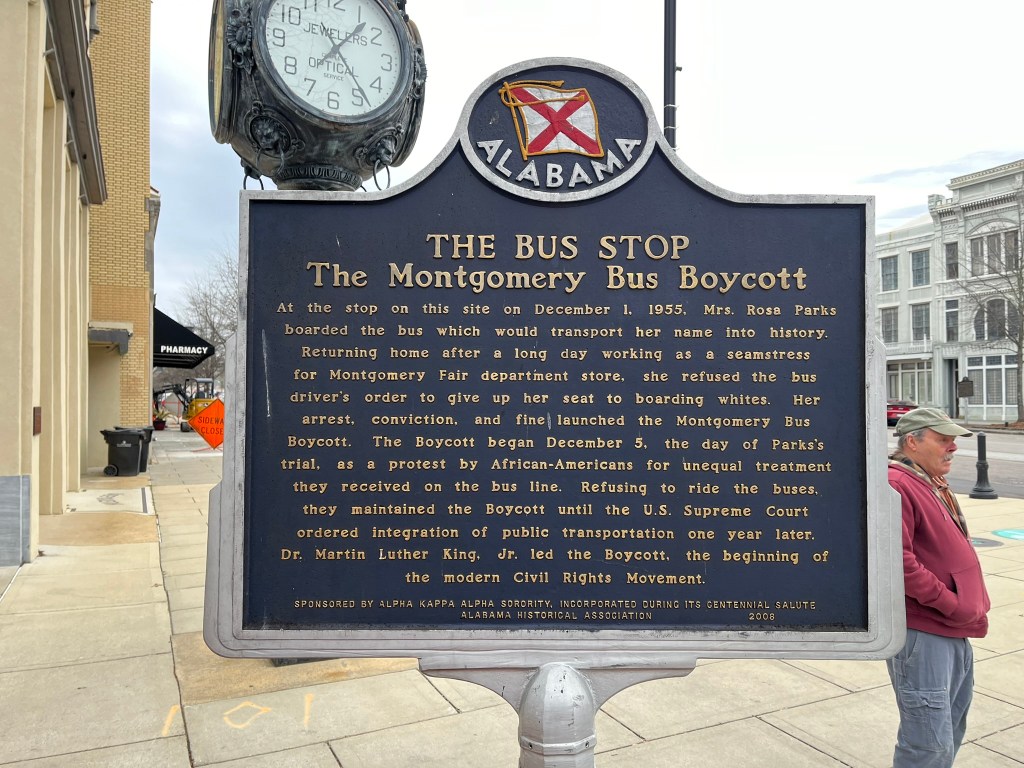
Montgomery, Alabama has to reconcile the fact that it is both the “Cradle of the Confederacy” and the “Birth Place of the Civil Rights Movement”. It raises the question of whose dreams are being fulfilled with it’s nickname “Capitol of Dreams”? To be fair, you can visit The First White House of the Confederacy (two blocks from the Dexter Ave. Baptist Church where Reverend Dr. Martin Luther King, Jr. was pastor), but I have seen no confederate flags in the city. There are plenty of plaques in the city recognizing the large role the city played in the slave trade and also marking civil rights milestones. Montgomery is the home of the Legacy Museum . It seems the city has done a pretty good job of recognizing all aspects of its past, however I did not see any plaques acknowledging what they did to the Creeks, the indigenous people living there when White settlers arrived.
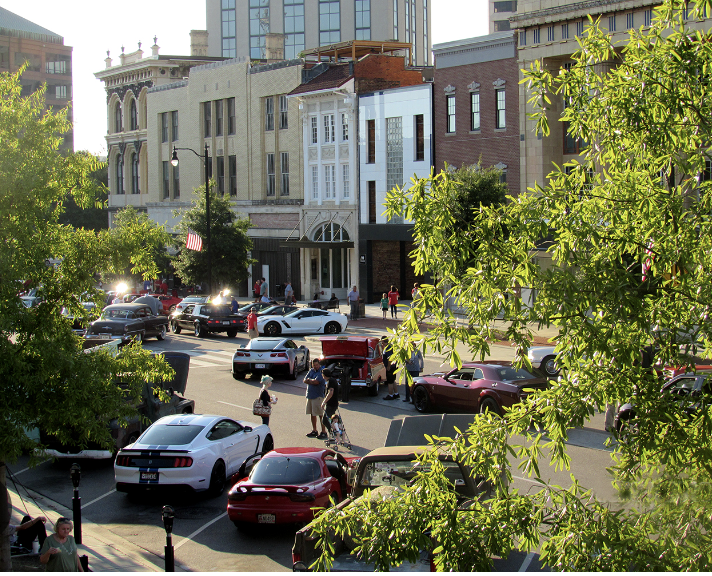
Montgomery is a pretty city with a lot of downtown revitalization happening. It was one of the first cities in the nation to implement SmartCode Zoning, focusing on walkable neighborhoods. Montgomery is a majority Black city (61% of population) and, we were told it has an increasing Korean population due to the large Hyundai plant located there. Once home to the First White House of the Confederacy, Montgomery grew to become the center of the Civil Rights Movement, notably the Montgomery Bus Boycotts.
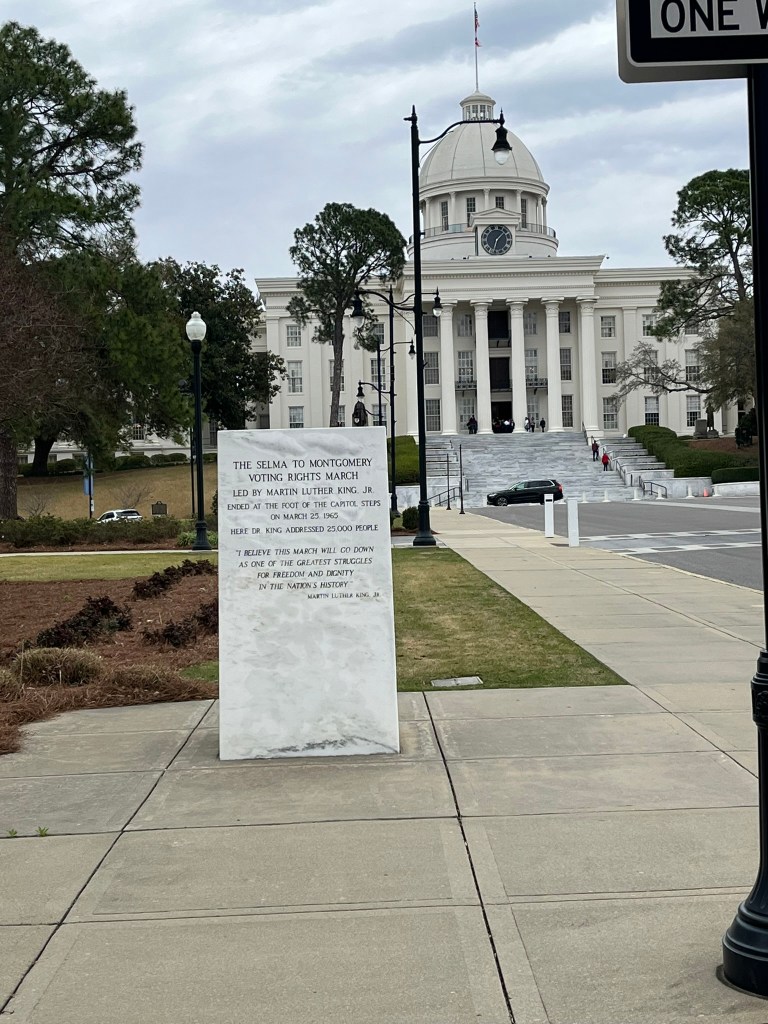
Reverend Martin Luther King, Jr. was pastor of The Dexter Avenur Baptist Church from 1954- 1960. The Montgomery Bus Boycott was organized here. The church stands right next to the State Capitol.Rosa Partk’s protest happened on December, 1st, 1955 on the day oi my birth.
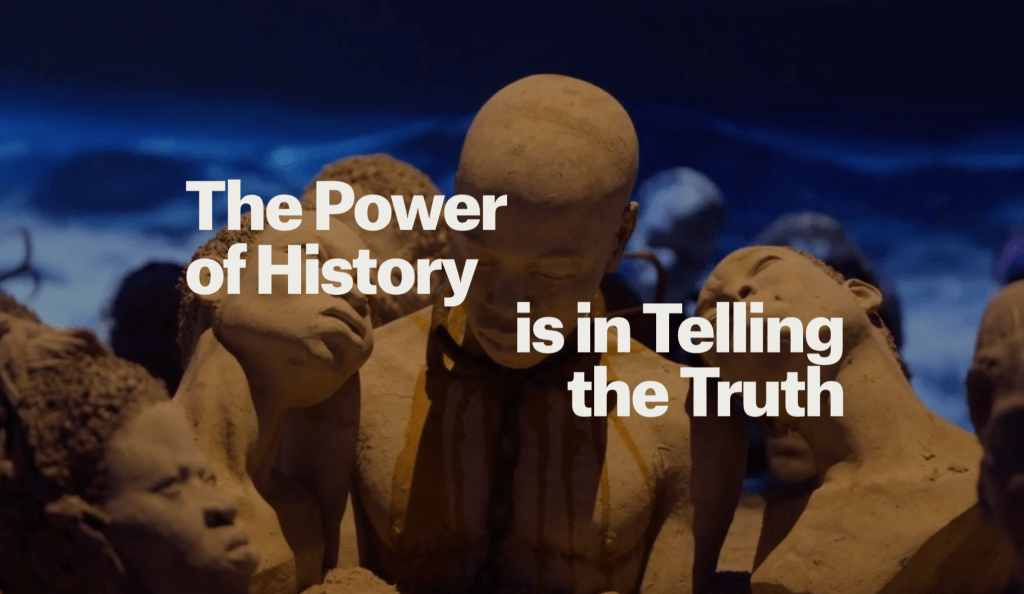
If I had to choose one stop on the National Civil Rights Trail, the Legacy Museum in Montgomery, Alabama is at the top of the list. We have visited a number of Civil Rights Trail sites over the years and this is one of the most powerful. The museum takes you on a journey over 400 years from enslavement to racial terrorism to codified segregation and finally the mass incarceration of today. Photos and videos are not allowed so I am reporting mostly from memory. When you first enter the museum, you experience huge ocean waves as you cross the ocean as part of the middle passage. You hear many first hand narratives-from ghosts of enslaved people waiting for auction, to a father holding his young daughter in his arms before he is dragged away from her to be sold down the river, (half of enslaved families were broken up) to people who were incarcerated as teenagers serving life without parole. You see jars of dirt holding the DNA of a fraction of the 4,400 people lynched over a 73 year period in this country.
“When we have the courage to learn the truth we open up doors that permit justice, that permit reckoning, that permit healing. This museum is dedicated to creating a society where the children of our children are no longer burdened by the legacy of slavery.”
The National Memorial for Peace and Justice, standing on a hill overlooking Montgomery is a sacred, reflective space memorializing more than 800 people who were lynched. The names and dates of people who were lynched in each county are etched onto a hanging steel monument. The sheer number of counties is overwhelming, and they are not just in the South. They have gifted each county stones that can be publicly displayed in their county. Jefferson County. Alabama had 63 documented lynchings. They are planning a display in Kelly Ingram Park in Birmingham.
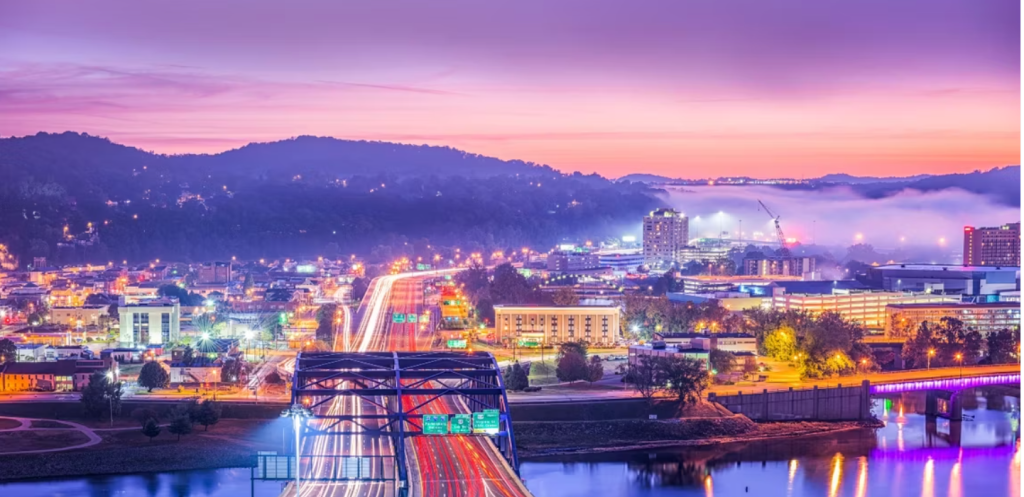
After traveling on one lane mountain roads through isolated West Virginia for most of the day, we spent the night in Charleston, West Virginia, a surprisingly large city, with 210,605 residents in the larger metropolitan area. It is now the capital of West Virginia, which once was part of Virginia. I found the West Virginia’s beginnings to be surprising and interesting. Once again I am reminded that we can and should learn from history in this time of political turmoil.
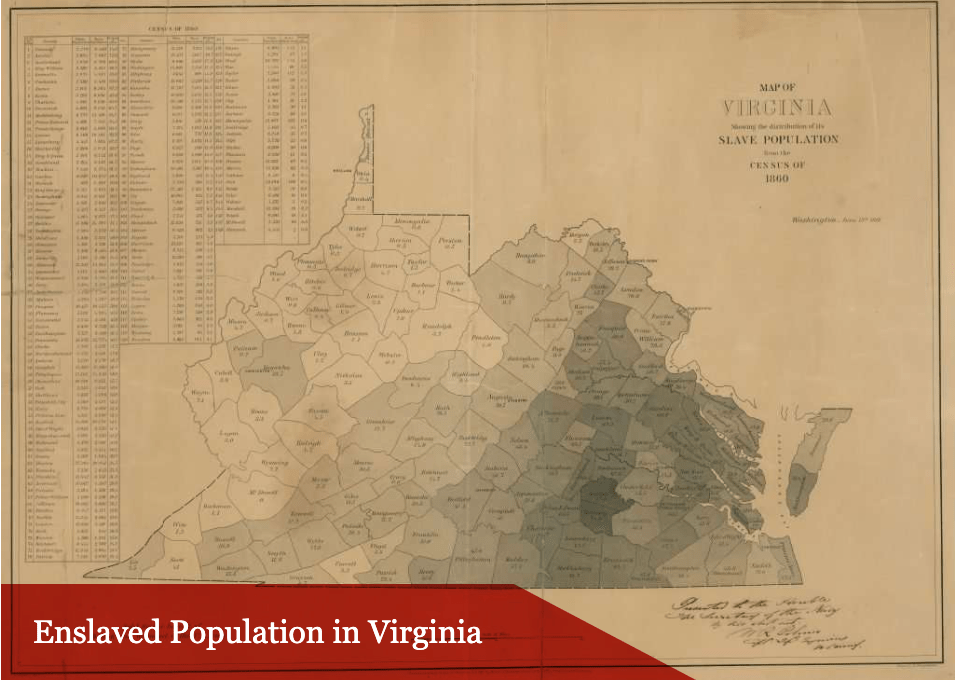
Political divisions between the eastern agricultural Virginia and mountainous western Virginia were present from the beginning of the revolutionary period. The Virginia Constitution of 1776 hampered western political participation by placing property-holding qualifications on voters and officeholders and allowing for disproportionate eastern political representation. Confronted with a tax code that benefited slaveholders and large landowners and eastern reluctance to dedicate taxes for western internal improvements, western Virginians clamored for reform from the beginning. This set the stage for the creation of a separate state.
The development of western Virginia industries (iron, coal, salt, and oil) that largely relied on free labor emerged in sharp contrast to eastern Virginia’s slave-based commercial agricultural economy. By the early 19th century, salt brines were discovered along the Kanawha River, and the first salt well was drilled in 1806.[13] This created a prosperous time and great economic growth for the area. By 1808, 1,250 pounds of salt were being produced a day, and the Farmers’ Repository newspaper began publication.[14] An area adjacent to Charleston, Kanawha Salines (now Malden) would become the top salt producer in the world. Later, coal became central to economic prosperity in the city and the surrounding area. The emergence of an economically motivated western antislavery ideology threatened relations between the eastern and western Virginians. (encyclopediavirginia.org).
The 1860 election of Abraham Lincoln as U.S. president resulted in the secession of seven Southern states and on February 13, 1861, Governor John Letcher opened Virginia’s own secession convention. During the convention, Lincoln’s inaugural address, the attack on Fort Sumter in Charleston, South Carolina (April 12 and 13), and Lincoln’s call for 75,000 volunteers led to the passage of the Ordinance of Secession on April 17, 1861. Nearly two-thirds of the votes against secession came from northwestern Virginia. VirginianSouthern Unionists, who aimed to repeal the Ordinance of Secession that Virginia made during the American Civil War, won their fight to succeed from Virginia and remain part of the Union when West Virginia was admitted as a U.S. State on June 20, 1863 (https://encyclopediavirginia.org)
John S. Carlile, an Unconditional Unionist at the Richmond Secession Convention stated, “For several days before the Convention passed the Ordinance of Secession, it was absolutely besieged; members were threatened with being hung to the lamp posts; their lives were jeopardized; the mob was marching up and down the streets, and surrounding the Capitol, and everything was terror and dismay.”[5]
Carlile continued to impeach the legitimacy of Virginia’s referendum on secession. “Immediately upon the passage of the Ordinance of Secession, in every county, as far as I can learn, a systematic reign of terror was inaugurated.” Throughout the state, “irresponsible persons assembled, under the name of ‘committees of safety’, who [told Union men] that they must leave the State… All Union men were admonished that they would be prosecuted for treason.” Carlile then described the days leading up to the referendum: ” Before the day of election arrived we see the troops from South Carolina, Georgia and other Southern States, placed all over the eastern and southern parts of the States running up into the valley, and in some parts of Western Virginia. In those parts of the State freedom of election was completely suppressed, and men who dared to vote against secession done it at the hazard of their lives. Thus, sir, you see the concert by which secession has been inaugurated and carried out in Virginia; and we see that same spirit that reigned in it from the beginning… TREASON…”[5]
On June 13, 1861 Carlile introduced to the Wheeling Convention “A Declaration of the People of Virginia.” The document declared that under the Virginia Declaration of Rights, any substantial change in the form of state government had to be approved by the people via a referendum. Therefore, the Secession Convention was illegal since it had been convened by the legislature, not a referendum, and all of its acts–including the Ordinance of Secession–were ipso facto void. It also called for a reorganization of the state government, on the grounds that all state officials who had supported the Ordinance of Secession had effectively vacated their offices. On June 19, delegates approved this plan unanimously.
The next day, June 20, the convention selected new state officers for what came to be called the Restored Government of Virginia to avoid confusion with the pro-secessionist government. Francis Pierpont of Marion County was elected governor. On June 25, the convention adjourned until August 6. President Lincoln and Congress swiftly recognized the Restored Government as the legitimate government of the entire Commonwealth of Virginia.
On October 8, 1869, Virginia voted to ratify the Fourteenth and Fifteenth Amendments as part of the requirement for being readmitted to the Union. The act readmitting Virginia to the Union and its representatives into Congress was signed by President Ulysses S. Grant on January 26, 1870.
In this time of political turmoil, it is important that we learn from history.
I have known about Sojourner Truth most of my life, but she always seemed larger than life and more like a myth than an actual person. It turns out the actual person, Isabella Baumfree, was born in 1797 and was enslaved on a farm in the town of Esopus in Ulster County, New York in the Hudson Valley. At the age of 29 she liberated herself from a by walking 11 miles to freedom over the Shaupeneck Ridge carrying her infant daughter, Sophia, the youngest of her four children. She found help from Quaker Levi Rowe and his wife who lived in a cabin in her path. (scenichudson.org) They directed her to the Van Wagenen family who took her in and helped her buy her freedom from from her enslaver for $20 and her daughter for $5 one year before slavery was outlawed in New York state.
In 1828 Sojourner Truth sucessfully sued for the freedom of her son, Peter, in the Ulster County Courthouse. in Kingston, NY. Early in 1827, Peter had been sold and sent to Alabama illegally. She succeeded in regaining custody of her son, but Peter never recovered from the cruelty and terror he experienced while enslaved in the Deep South. While she was fighting for custody of Peter, Isabella experienced a spiritual awakening, which guided her the rest oif her life.
In 1828, Isabella moved to New York City. She joined the African Methodist Episcopal Zion Church, which allowed her to meet and speak with many Black community leaders. She continued to explore her new religious calling and learned more about the abolitionist movement. She also found new causes to champion, including temperance, women’s rights, Black uplift, and pacifism. She took up teaching and preaching in New York’s poorest neighborhoods, boldly going places other women activists feared to visit.
For the next 11 years, Isabella worked as domestic servant before undergoing a second spiritual transformation. She believed God was calling her to travel and preach about the causes she believed in. To mark the start of this new chapter in her life, Isabella changed her name to Sojourner Truth. She was about 45 years old.
Sojourner traveled throughout the Northeast, telling her story and working to convince people to end slavery and support women’s rights. She had little money, so she often walked from place to place and sometimes slept outdoors. She met abolitionist leaders like Frederick Douglass, William Lloyd Garrison, and David Ruggles along the way. She never shied away from challenging these celebrities in public when she disagreed with them. Sojourner’s lack of education and her Dutch accent made her something of an outsider, but the power of words and her conviction impressed all those around her.
Though Truth never learned to read or write, she produced a book and sold it to support herself. This Narrative, dictated by her to Olive Gilbert was first published in 1850 and was republished five times during her lifetime. Later editions included selections from her Book of Life, a scrapbook containing newspaper articles, letters, songs etc., that she collected.
In spite of many obstacles in her life, Sojourner Truth’s tenacity, courage and conviction helped her became one of the most consequential abolitionists, and activists for African-American civil rights, women’s rights, and alcohol temperance in U.S history. (Wikepedia).









 Perspectives on the Road