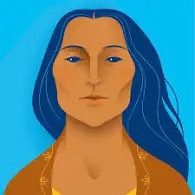
Today I learned about Jigonhsasee, the Haudenosaunee Mother of Peace. According to Wikipedia, she was known for her hospitality to warriors as they traveled to and from battlegrounds and their homes. At her hearth, warriors of the various factions could come in peace. While they ate her food, she acted as counsel and learned their hearts.
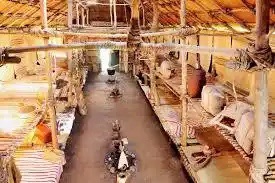
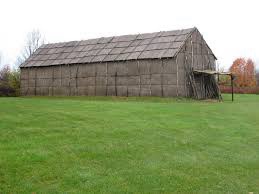
It is in this context that the Great Peacemaker came to her and described his vision for a peace to be built upon a confederacy of the warring nations. She said this sounded good but asked what form it would take. He replied, “It will take the form of the longhouse in which there are many hearths, one for each family, yet all live as one household under one chief mother. They shall have one mind and live under one law. Thinking will replace killing, and there shall be one commonwealth.”[3.
Longhouse at Ganondagan State Historic Site
The woman recognized the power in peace. The Great Peacemaker gave her the task of assigning the men to different positions at the peace gathering, and to women the power to choose the chiefs of the longhouse. He called her Mother of Nations, as she was the first ally of his peace movement.
This seems very relevant in today’s world. Who is our current day Mother of Nations?
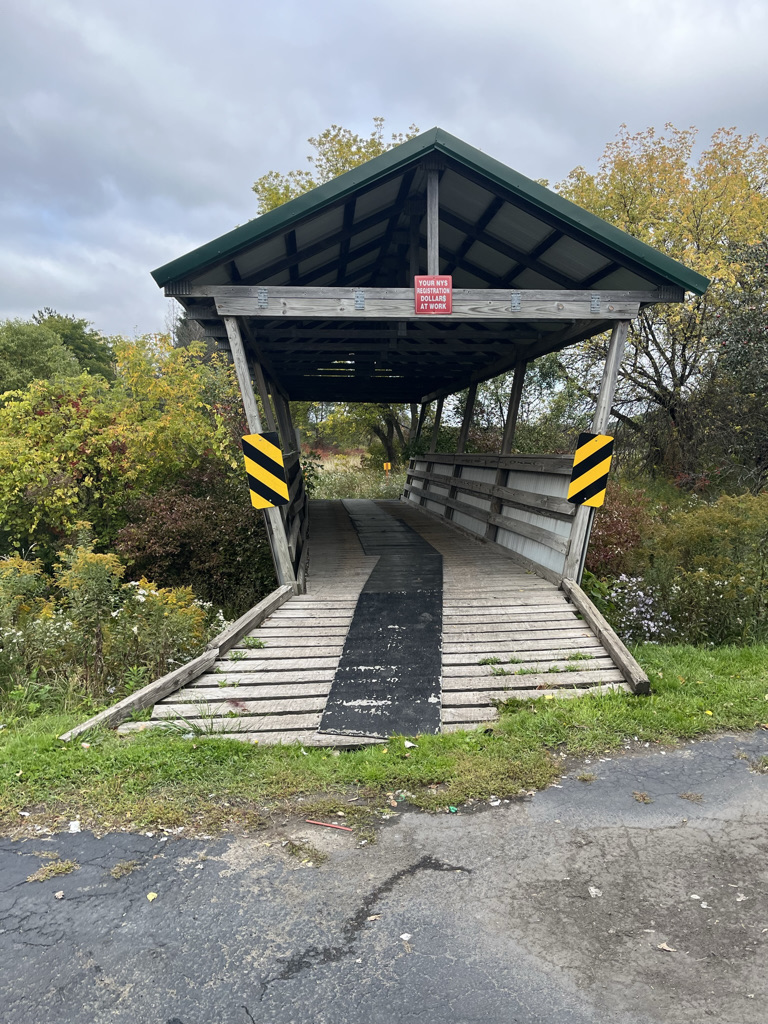
We stopped in Cuba, New York on Rt. 86 in Allegany County for a pit stop. I got wondering about the town, especially why it is called “Cuba”. The story goes that in 1822, the white settlers carved a piece out of a neighboring town called “Friendship”. and they needed a name for the new town. Someone suggested the Roman word “Cuba” that means “Goddess” or “protector of the young” and it was chosen for no apparent reason other than it sounds nice. This was a little disappointing as I was hoping for a much more interesting story and the name was not it. There was a cute covered bridge next to the gas station/ liquor store where we stopped. It is not big enough for a car. Any guesses what it is for?
If you guessed snow mobiles you would be correct!
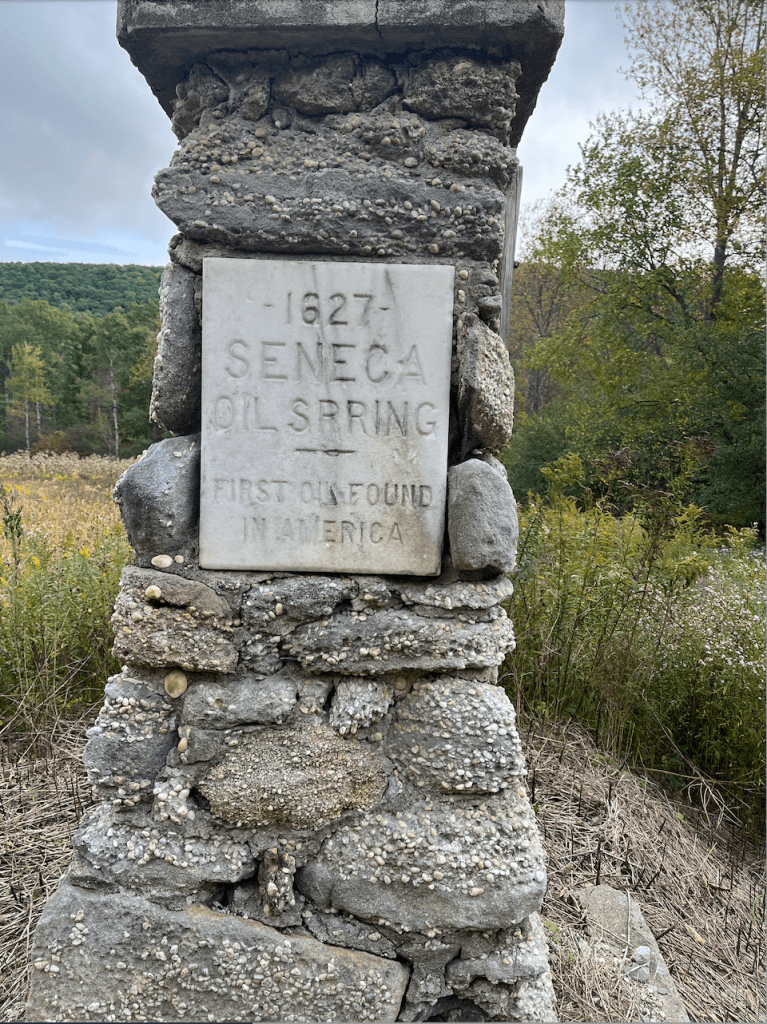
I read that the town is best known for Cuba Cheese, Cuba Lake and the Seneca Oil Spring. Being ever inquisitive, we wondered about Seneca Oil Spring, of which neither of us had ever heard a mention. It is on the Seneca Nation Territory that starts just west of the Cuba town line and google knew the way. We came to a stone pillar next to a dirt road that said “1627 Seneca Oil Spring- First One Found in America”
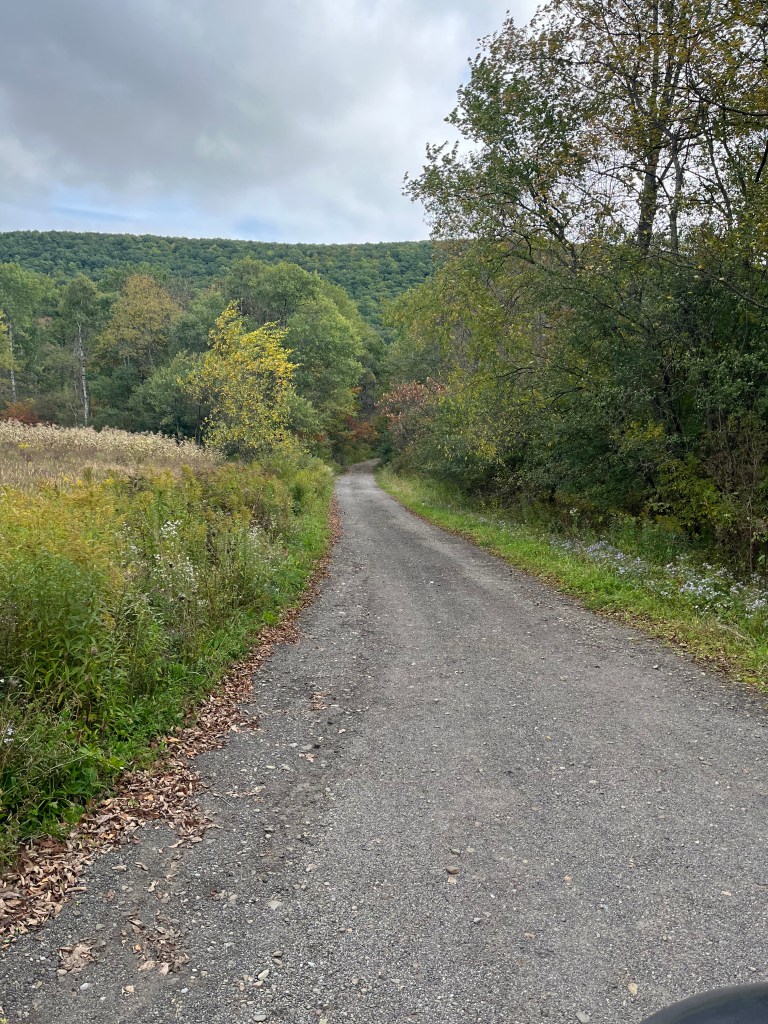
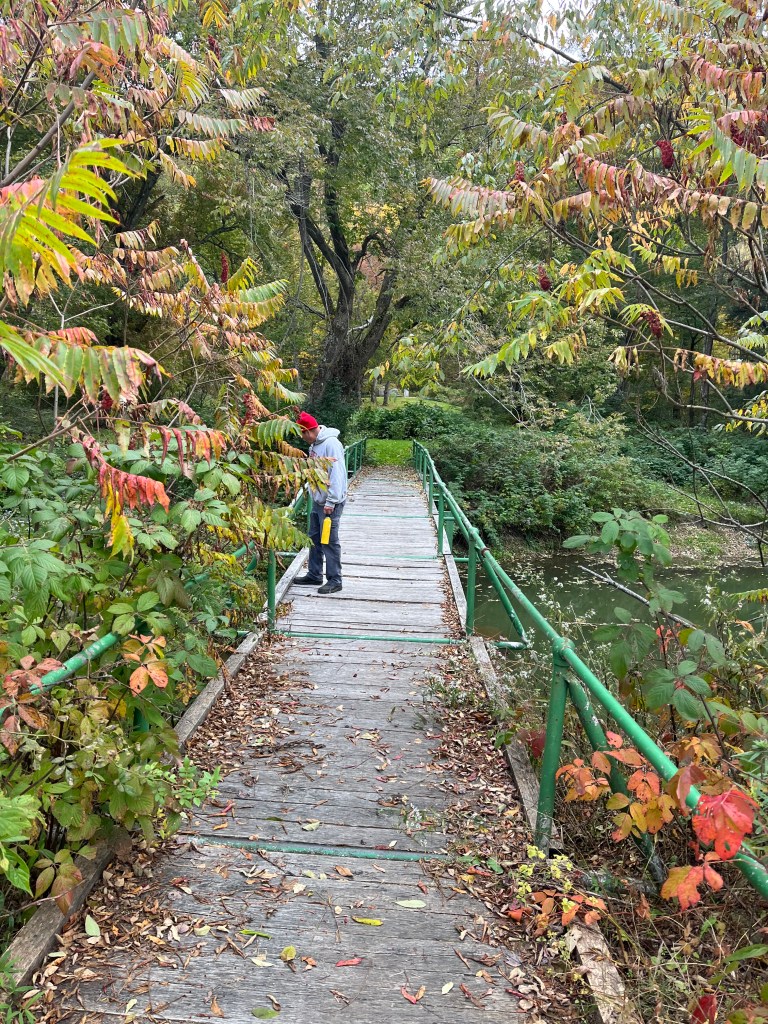
Of course we took the dirt road and came to a parking lot and a walking bridge over a creek to the Spring.
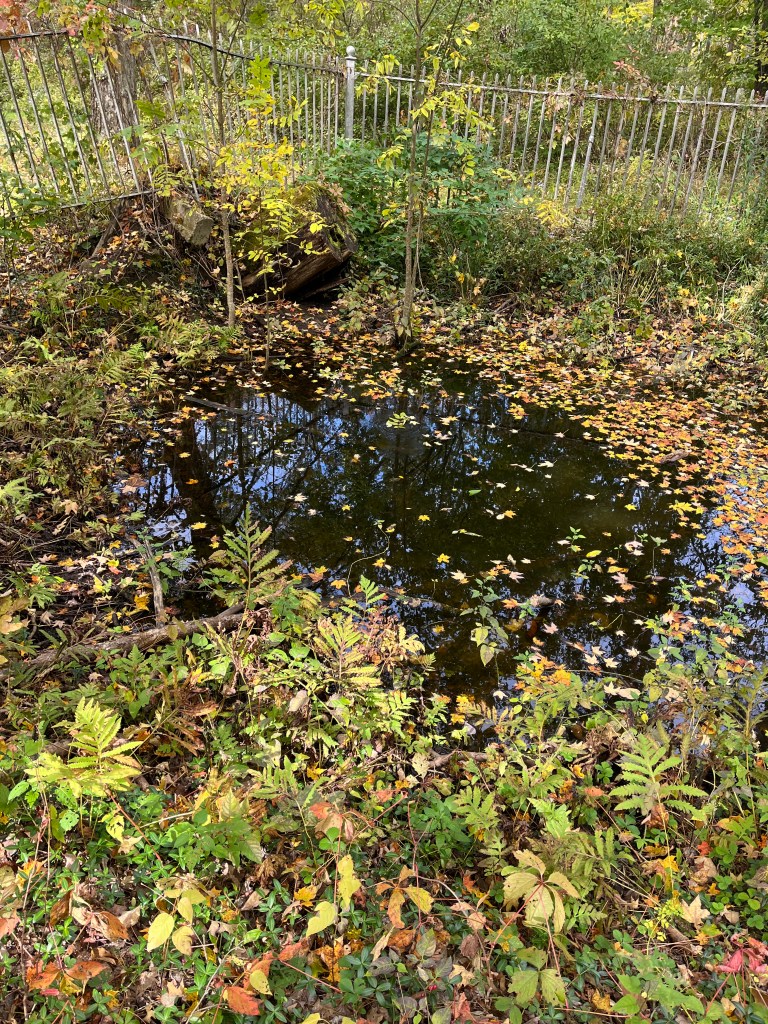
The Seneca discovered the oil spring and kept the “mysterious and magical” substance floating on the water secret. They would dip their blankets in and wring them into brass kettles to collect the liquid. They used the oil for medicinal purposes, making body paints, and adding it to fires and torches to make them flare (nyhistoric.com). Their mistake was trusting a missionary Father Joseph De La Roche and telling him the secret of the spring in 1627, who wrote back to his people in France about it. This is the first recorded discovery of oil in North America.
The Seneca fought on the side of the British during the American Revolution in an attempt to oust European settlers on their land. The Seneca and other Iroquois nations were forced to cede most of their lands to the U.S. in the Treaty of Canandaigua in 1794, , but the Seneca negotiated to keep 5 plots, including the Oil Springs. In the 1850s , the Seneca began a case to evict squatters, including Horatio Seymour, future New York Governor from Oil Springs Reservation in order to restore control and use to the tribe. Thanks to the efforts of influential Seneca leader, Governor Blacksnake, the state appeals court ruled in the tribe’s favor and the reservation was returned to the Seneca in 1861. Oil no longer comes from the spring, but the Seneca did build a casino on the Oil Springs Reservation.


 Perspectives on the Road