Oberlin: A Green City

Hotel Oberlin opened in 2016 as one of the first hotels in the US to incorporate solar and geothermal power as well as use radiant heating and cooling

In Oberlin, we saw evidence of climate positive actions, movement toward sustainability and use of renewable energy. It seems that Ithaca has a rival in that regard. Oberlin is one of just three C40 “Climate Positive” cities in the U.S. recognized by the Clinton Foundation Climate Initiative and the U.S. Green Building Council; the other two are Portland, OR. and San Francisco, CA. The Oberlin Project, a joint project of Oberlin college and the city , has the following goals:

  • Creating one of the first climate positive cities in America by shifting the City and College to renewable energy sources, radically improving efficiency, sharply reducing our carbon emissions, and improving our economy in the process.
  • Creating new and supporting existing business ventures in energy efficiency and solar deployment, food and agriculture, and the sustainable use of local resources.
  • Conserving 20,000 acres of green space and developing a robust local foods economy to meet 70% of our consumption.
  • Creating an educational alliance between the College, the Oberlin schools, the Joint Vocational School, and Lorain County Community College focused on integrating sustainability into education at all levels.
  • Developing a 13-acre Green Arts District at the US Green Building Council Platinum level.
  • Serving as a model that can be replicated in other communities.

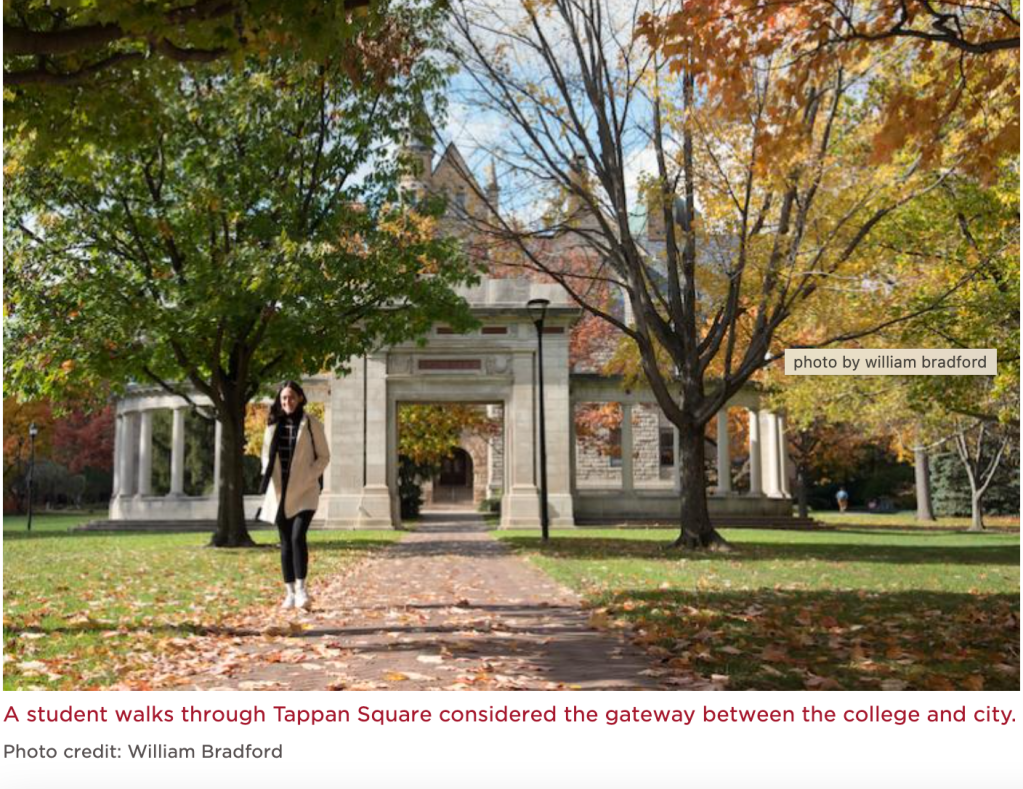
We stayed at the Oberlin Hotel right on campus across from Tappan Square in the heart of the city and campus. In addition to being a solar/geothermal building, it is unique in sharing a building with the Admissions Office, which undoubtably is a great convenience for families looking at the college.

Oberlin, Ohio beginnings

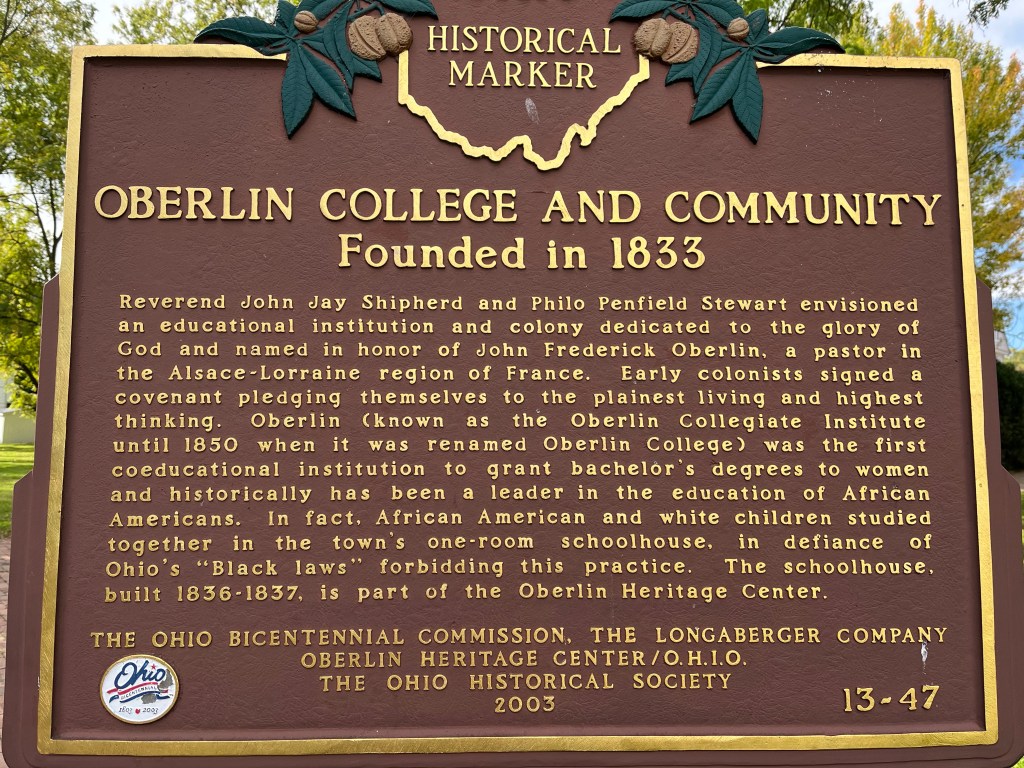
Today we stoped in Oberlin, which is a beautiful college town with an inspiring beginning. It was founded by a Presbyterian Minister and a missionary- Rev. John J. Shipherd and Philo P. Stewart. They became friends while during the summer of 1832 in nearby Elyria, when they realized they were both disillusioned with the new towns and cities were being “settled by greedy, ignorant people who did not follow God’s commandment to love their neighbors”.(OberlinYesterday, Today, Tomorrow). They shared a vision of founding a community and college based on their religious beliefs. In 1833 , on 500 acres of donated land in the wilderness and financial help from generous benefactors, they founded the town and college. The college was to accept Blacks and women, a first in the United States.

The first Oberlin President was Asa Mahan, an abolitionist with controversial views. “Mahan was appointed President of the Oberlin Collegiate Institute on January 1, 1835. Things did not go smoothly, however. He was a passionate man with strong views, and a stronger personality. His views on ‘perfectionism’ and abolition opened the college to criticism. He thought his colleagues lukewarm, and they thought him excessive. His fellow staff tried to remove him in the 1840’s but did not succeed until 1850.” (Healing and Revival, 2004)

The college and community seem to have thrived on progressive causes and social justice to this day. The founders succeeded in attracting young families, students and financial support. The motto of the school was “”Learning and Labor” because students could work in the community in lieu of tuition. This attracted students who were eager for an education, but could not afford tuition, a concept unique to Oberlin at the time.

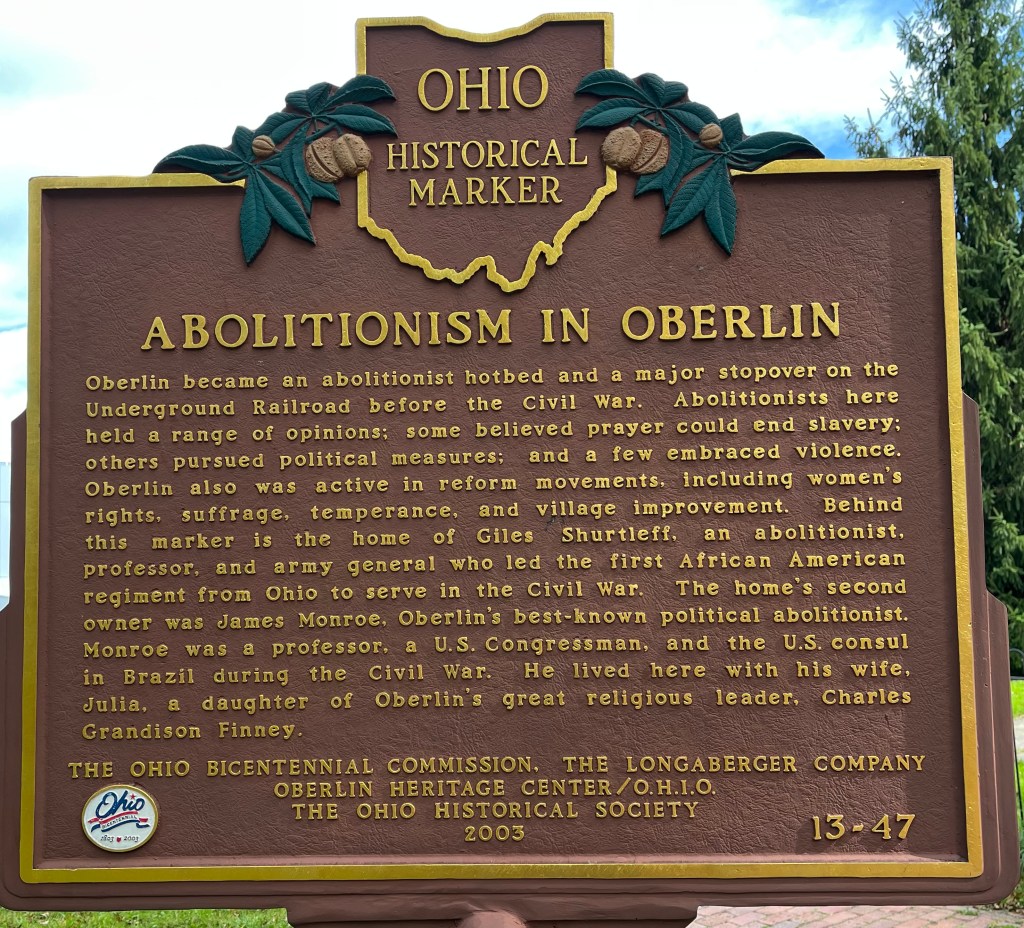
We stopped at the Oberlin Heritage Center, which includes the Monroe House, of Italianate architecture, built in 1866. James Monroe (1821- 1898) was born to a Quaker family who raised him with strong humanitarian values of abolition and pacifism. As a young man, Monroe was convinced by William Lloyd Garrison to use his oratorical skills to speak out against slavery. He traveled with Frederick Douglass on the abolitionist lecture circuit. Douglass respected Monroe because he not only spoke out against slavery, but also against racism. If Douglass was refused meals and accommodations because of his race, which happened often even with white abolitionist allies, Monroe refused their offers also.

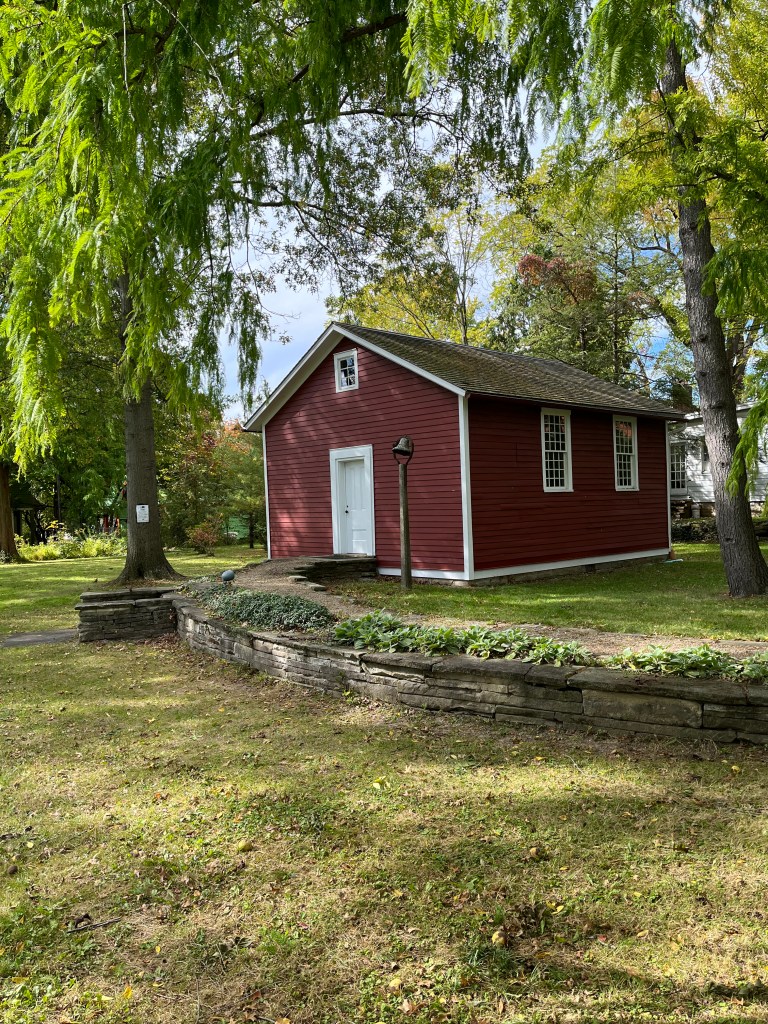
The Oberlin Heritage Center also includes the original Oberlin school house, which defied Ohio “Black laws” at the time by serving children of all races together.

I am sure if I look hard enough, I will find serious hypocricies that defy these auspicious beginnings, however, I desperately need to believe in the ability of communities to live up to their ideals, so I am going to leave it alone!

Blog at WordPress.com.

Up ↑