Montgomery, Alabama: Capitol of Dreams

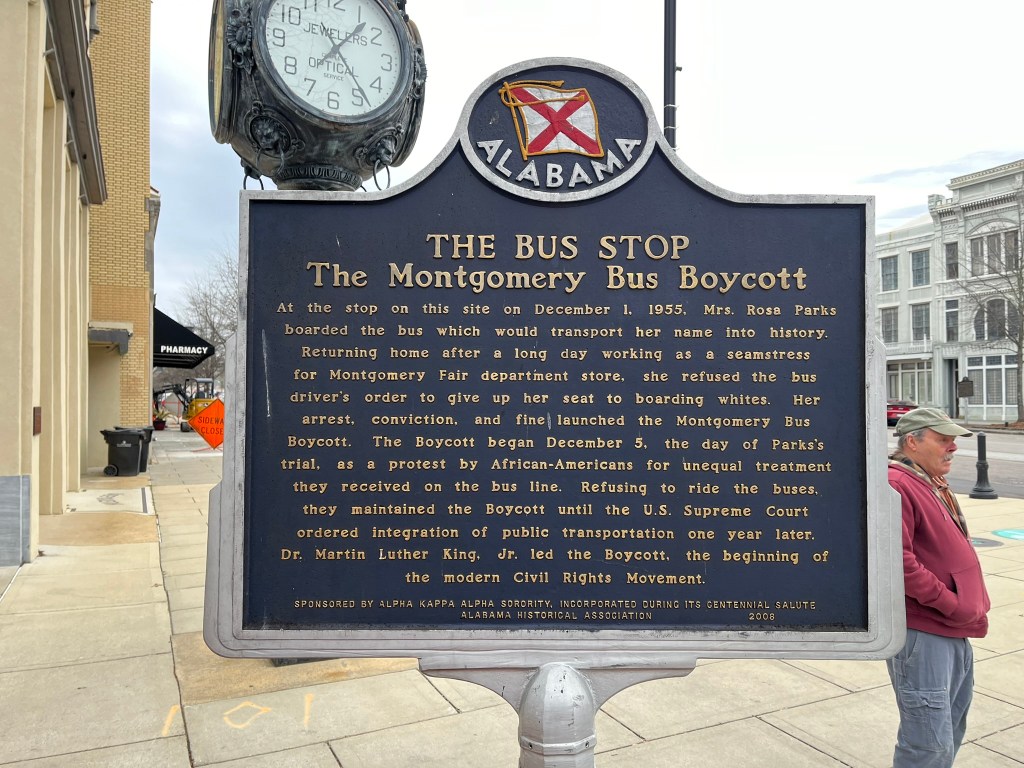
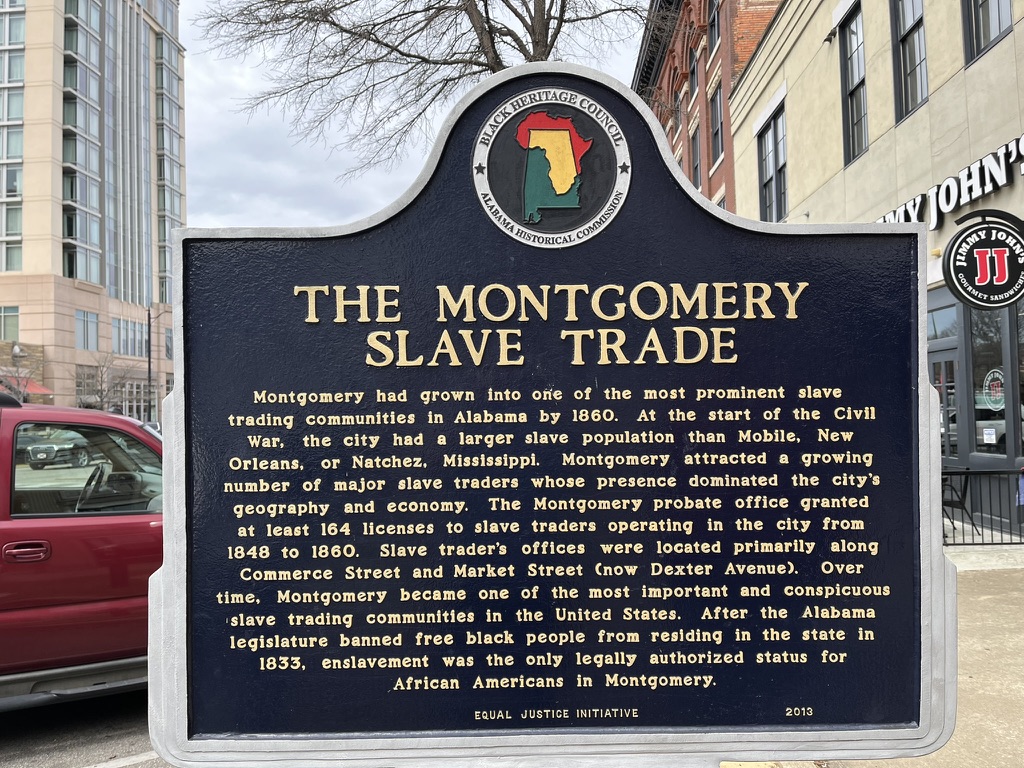
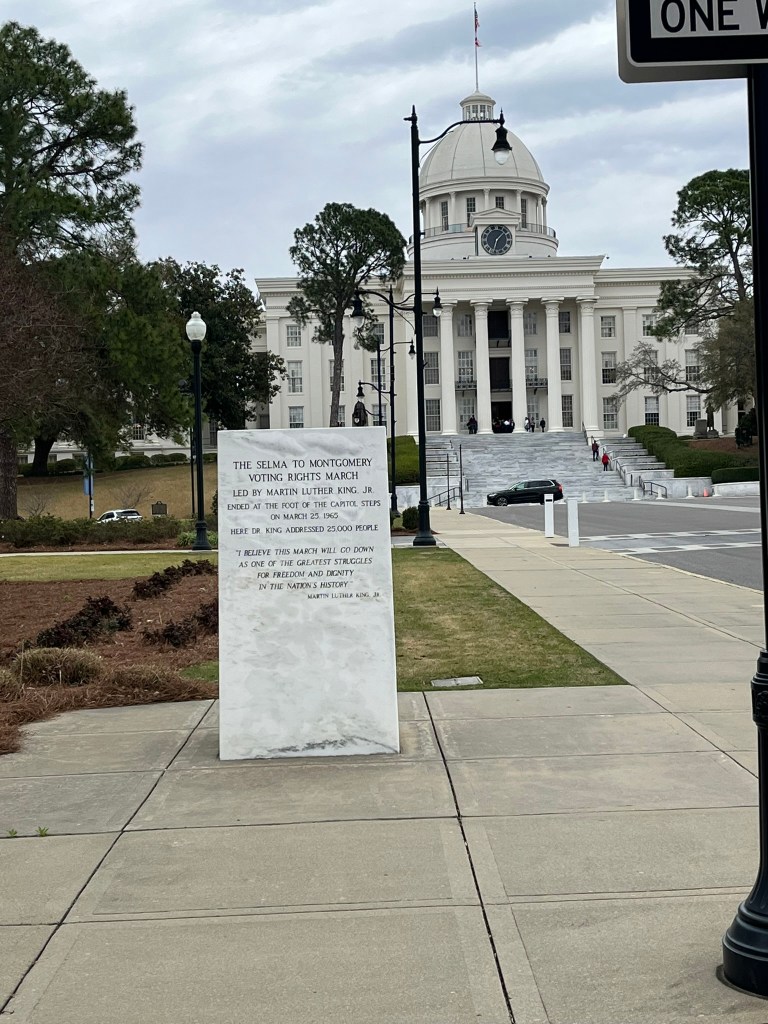
Montgomery, Alabama has to reconcile the fact that it is both the “Cradle of the Confederacy” and the “Birth Place of the Civil Rights Movement”. It raises the question of whose dreams are being fulfilled with it’s nickname “Capitol of Dreams”? To be fair, you can visit The First White House of the Confederacy (two blocks from the Dexter Ave. Baptist Church where Reverend Dr. Martin Luther King, Jr. was pastor), but I have seen no confederate flags in the city. There are plenty of plaques in the city recognizing the large role the city played in the slave trade and also marking civil rights milestones. Montgomery is the home of the Legacy Museum . It seems the city has done a pretty good job of recognizing all aspects of its past, however I did not see any plaques acknowledging what they did to the Creeks, the indigenous people living there when White settlers arrived.
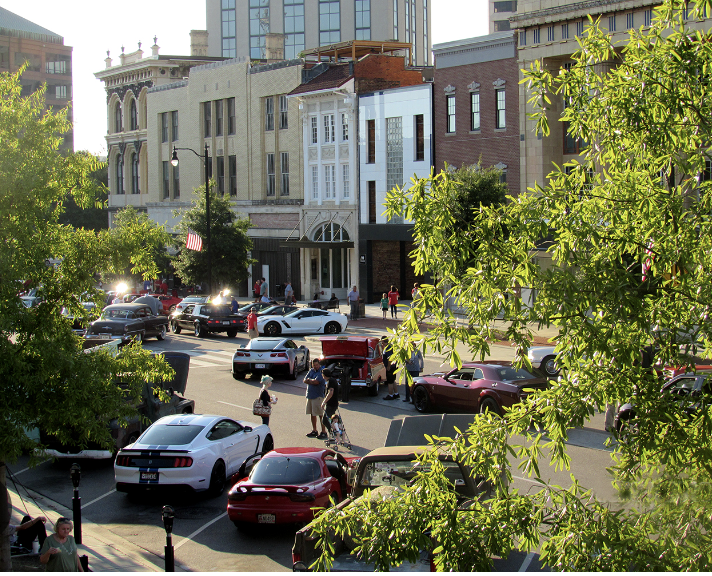
Montgomery is a pretty city with a lot of downtown revitalization happening. It was one of the first cities in the nation to implement SmartCode Zoning, focusing on walkable neighborhoods. Montgomery is a majority Black city (61% of population) and, we were told it has an increasing Korean population due to the large Hyundai plant located there. Once home to the First White House of the Confederacy, Montgomery grew to become the center of the Civil Rights Movement, notably the Montgomery Bus Boycotts.

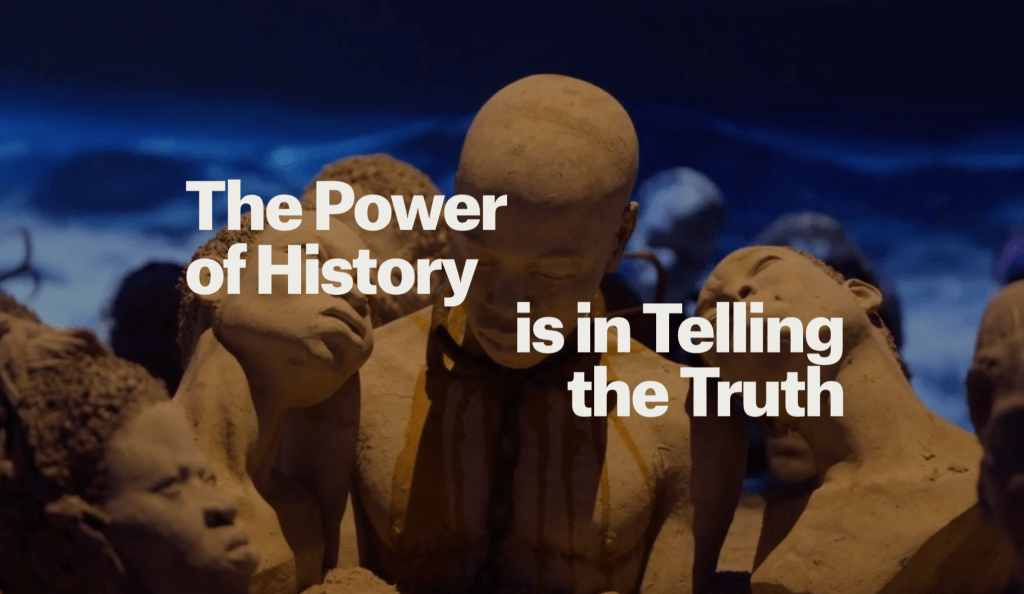
Legacy Museum: The Power of History is in Telling the Truth

If I had to choose one stop on the National Civil Rights Trail, the Legacy Museum in Montgomery, Alabama is at the top of the list. We have visited a number of Civil Rights Trail sites over the years and this is one of the most powerful. The museum takes you on a journey over 400 years from enslavement to racial terrorism to codified segregation and finally the mass incarceration of today. Photos and videos are not allowed so I am reporting mostly from memory. When you first enter the museum, you experience huge ocean waves as you cross the ocean as part of the middle passage. You hear many first hand narratives-from ghosts of enslaved people waiting for auction, to a father holding his young daughter in his arms before he is dragged away from her to be sold down the river, (half of enslaved families were broken up) to people who were incarcerated as teenagers serving life without parole. You see jars of dirt holding the DNA of a fraction of the 4,400 people lynched over a 73 year period in this country.

“When we have the courage to learn the truth we open up doors that permit justice, that permit reckoning, that permit healing. This museum is dedicated to creating a society where the children of our children are no longer burdened by the legacy of slavery.”

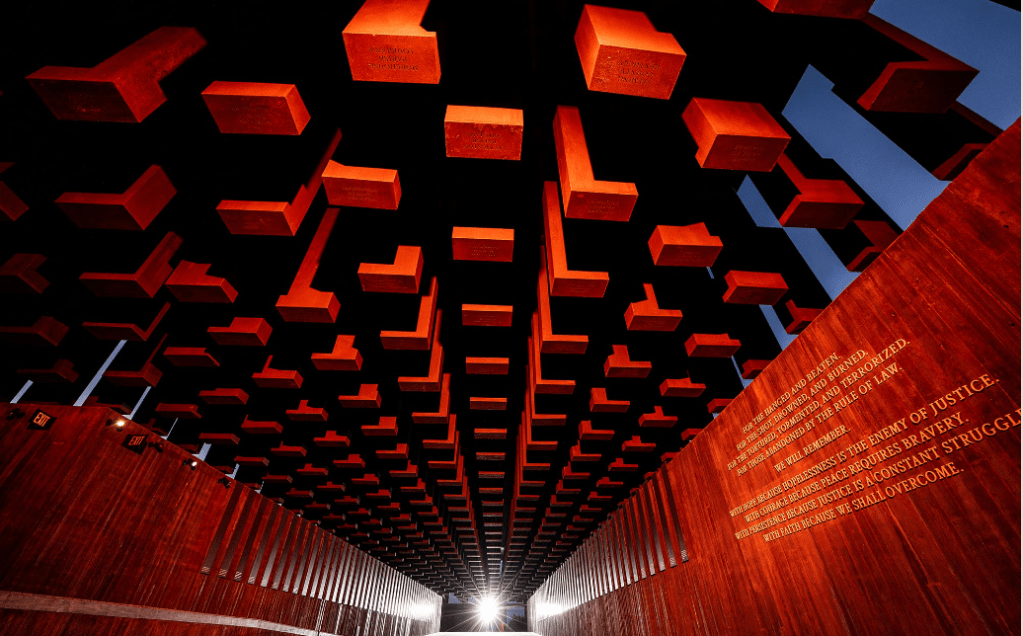
The National Memorial for Peace and Justice, standing on a hill overlooking Montgomery is a sacred, reflective space memorializing more than 800 people who were lynched. The names and dates of people who were lynched in each county are etched onto a hanging steel monument. The sheer number of counties is overwhelming, and they are not just in the South. They have gifted each county stones that can be publicly displayed in their county. Jefferson County. Alabama had 63 documented lynchings. They are planning a display in Kelly Ingram Park in Birmingham.

Blog at WordPress.com.

Up ↑