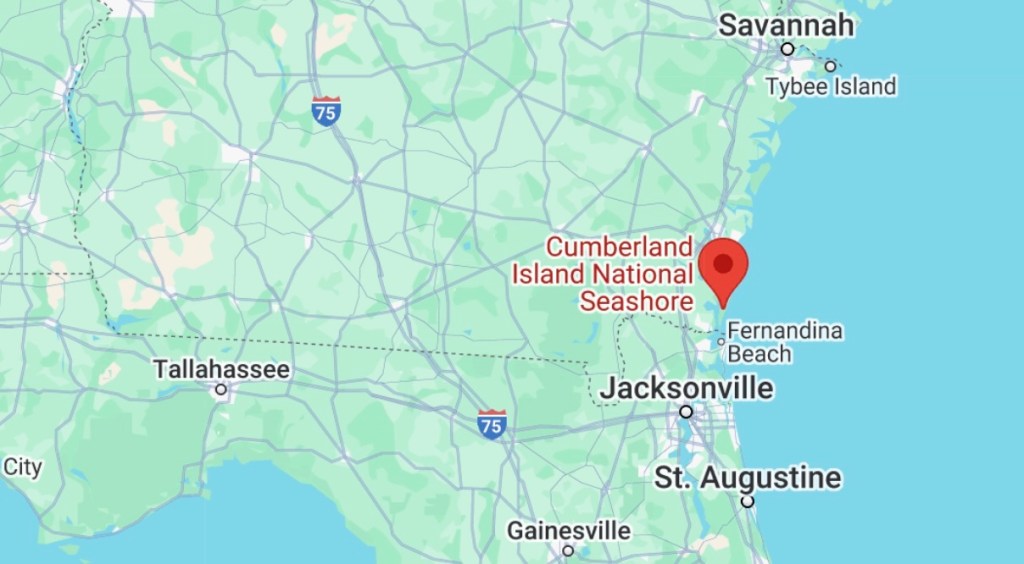
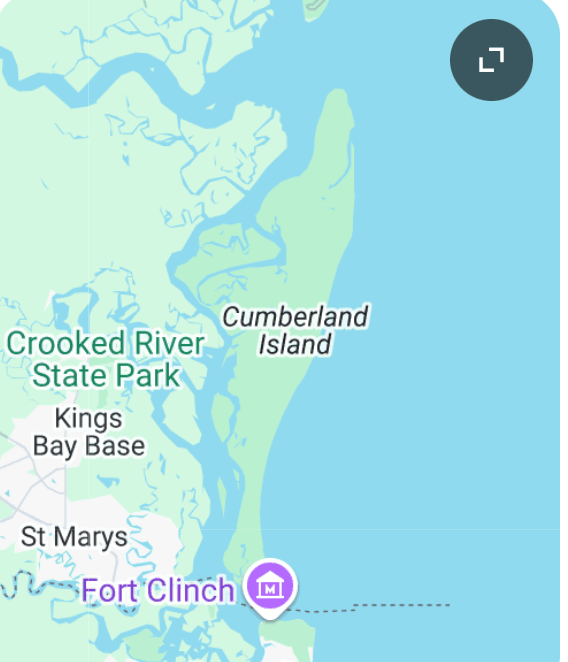
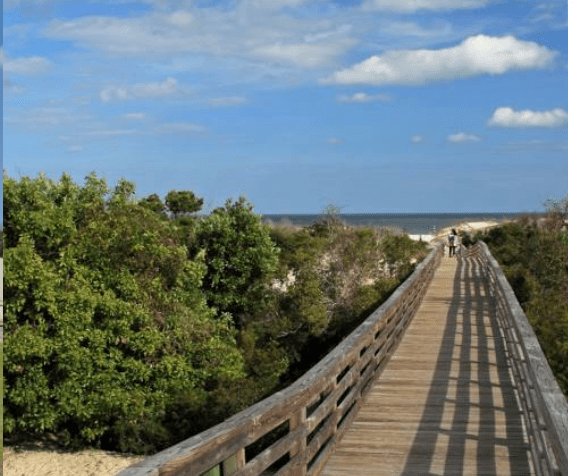
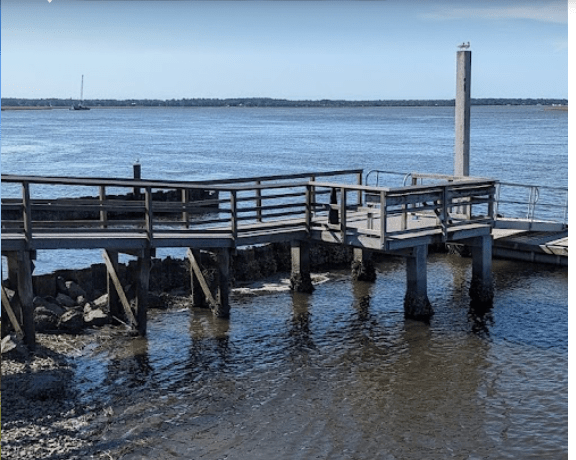
Cumberland Island National Seashore: A National Treasure

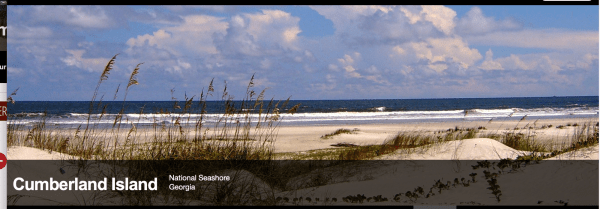
The first inhabitants of Cumberland Island were indigenous people who settled there as early as 4,000 years ago. In the 16th and 17th centuries, the Timucua people lived there and interacted with the Spanish missionaries. Like most indigenous people at the time, their numbers were decimated by diseases brought by the Europeans. The Timucua eventually relocated to an area near St. Augustine, Florida. The English general James Oglethorpe arrived at the Georgia coast in 1733. In 1735 he made a treaty with the Creek nation, and claimed ownership of the coastal islands between the Savannah River and St. Johns River for the British.

According to the National Park Service, slavery in Georgia became legal in 1751, and the early European settlers on Cumberland Island enslaved Africans and African Americans to grow rice, indigo, and Sea Island cotton.

As the demand for enslaved African labor with rice-growing expertise increased from 1800-1865, over 13,000 Africans were enslaved and brought from the “Rice Coast” and  ”Grain Coast” (Senegal to the Ivory Coast) African regions, bringing their sophisticated knowledge of rice and grain harvesting. This invaluable knowledge of rice cultivation under challenging conditions contributed to coastal Georgia becoming one of the major rice-producing areas of the period and greatly influenced the region’s demographic makeup. In fact, by 1860, over 500 enslaved people lived on Cumberland Island, outnumbering white inhabitants by a ratio of seven to one.(visitkingsland.com)
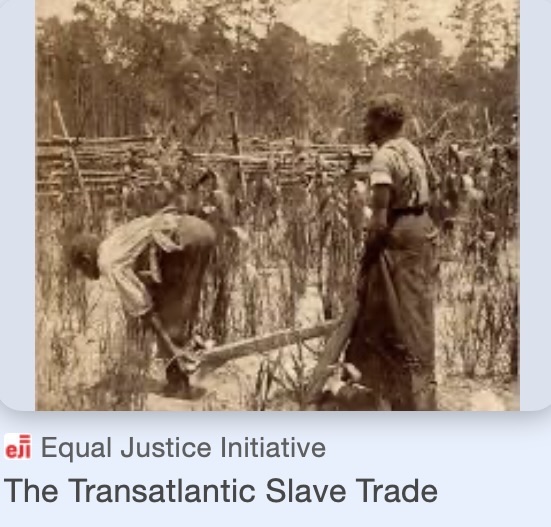
.So arduous was life that many enslaved Africans dreamt of escaping the system and rebelled. One such incident occurred during the later years of the War of 1812. In 1815, British troops took over Cumberland Island and all its plantations, offering freedom to the enslaved by joining British forces or boarding British ships as free persons headed for British colonies. Over 1,500 formerly enslaved people who made it to Cumberland Island from across the Coastal region sought freedom by boarding British ships to Bermuda, Trinidad, and Halifax in Nova Scotia. 

There were a number of plantations on the island by the early 1800s, with the largest belonging to Robert Stafford, who enslaved 348 people at its peak. Stafford let his enslaved people earn their own money working for other plantations after their work was done, so many of them saved money. The Union Army took over the island during the Civil War and freed the enslaved people, who promptly left. After the war was over, some came back and bought land on Cumberland Island with their savings.

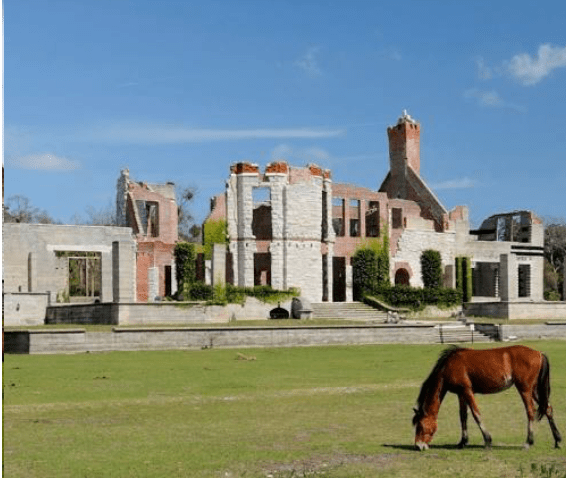
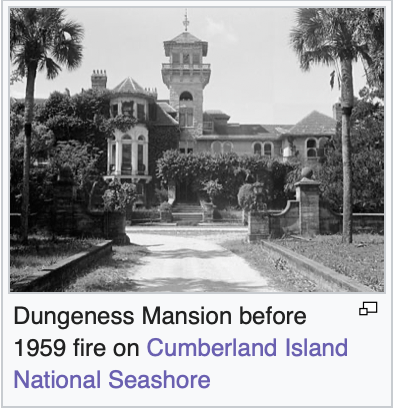
After the civil war ended, many wealthy northern industrialist families were drawn to the south. They appreciated the warm weather and real estate was dirt cheap. In the 1880s Thomas M. Carnegie, brother of steel magnate Andrew Carnegie, and his wife Lucy bought land on Cumberland for a winter retreat. In 1884, they began building a mansion, called Dungeness, though Carnegie never lived to see its completion. Lucy and their nine children continued to live on the island. The Carnegies built other mansions for the heirs and owned 90 percent of the island. During the Great Depression, the family left the island and left the mansion vacant. It burned in a 1959 fire, believed to have been started by a poacher who had been shot in the leg by a caretaker weeks before. Today, the ruins of the mansion remain on the southern end of the island.
In 1954, some of the members of the Carnegie family invited the National Park Service to the island to assess its suitability as a National Seashore. In 1955, the National Park Service named Cumberland Island as one of the most significant natural areas in the United States and plans got underway to secure it. Plans to create a National Seashore were complicated when, in October 1968, some Carnegie descendants sold three thousand acres of the island to real estate developer Charles Fraser, who had developed part of Hilton Head Island in South Carolina. Other Carnegie heirs (and members of the Candler family who also owned an estate on the Island) were opposed to further development. They joined forces with the Sierra Club and Georgia Conservancy, politicians and activists to push Fraser to sell to the National Park Foundation. They also pushed a bill through U.S. Congress to establish Cumberland Island as a national seashore. This bill was signed by President Richard Nixon on October 23, 1972 and it officially became the Cumberland Island National Seashore.
Stonewall Jackson’s Lost Arm

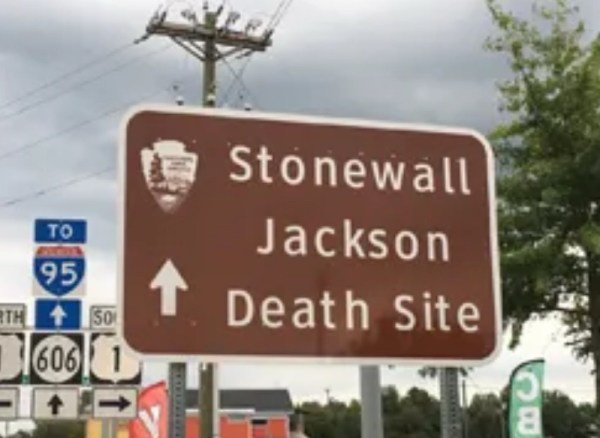
We saw this sign along I95 on the way to Richmond, VA., “Stonewall Jackson Death Site”. Seems like peculiar wording and got us wondering how Stonewall Jackson did die. Did he die in battle during the Civil War? Apparently, he was accidentally fired upon by his own troops, the 18th North Carolina Infantry Regiment, while reconnoitering with members of his staff. He lost his left arm to amputation. Weakened by his wounds, he died of pneumonia eight days later. Jackson’s death proved a severe setback for the Confederacy

Another interesting story (I can’t attest to the truth of it) is that Union Troops dug up his arm during the Battle of the Wilderness in 1864.  Another story suggests that U.S. Marines visiting the area in 1921 also dug up and reburied the arm. While these stories are difficult to substantiate, they confirm that Jackson’s arm has become a point of curiosity over time. In 1998, archaeologists working for the National Park Service investigated the area but did not find a specific burial site. 

Not sure why there is such interest in Stonewall Jackson’s arm. Maybe we will have to visit this national park site to find out more.

General John Glover and His Integrated Regiment

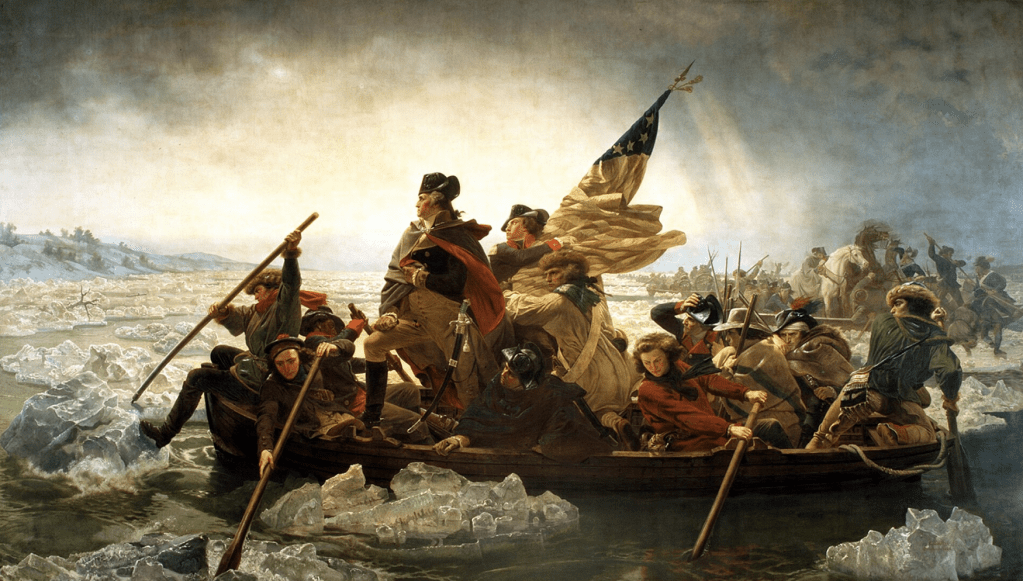
John Glover’s racially integrated regiment rowed George Washington’s troops across the Delaware leading to a victory at the Battle of Trenton

Yesterday we arrived in Williamsburg, Virginia, which is home to both the Jamestown Settlement Museum and Colonial Williamsburg living history museum. We decided to visit the Jamestown Settlement first and were very surprised to see pods of military people all over the place dressed in costume from the Greek Phalanx (500 B.C.E) to the current day Virginia National Guard as part of the 40th annual Military through the Ages event. Being a Quaker and a pacifist, I was not happy to see this taking over the Jamestown Settlement Museum. I have to admit, that I did find elements of it very interesting. There was a pod there representing Black Soldiers of the American Revolution.

We spoke at length with a man from New Jersey (I never got his name) who was representing the 14th Continental Regiment. He was a wealth of information about Black history in general and particularly John Glover’s regiment from Marblehead, Massachusetts.

Glover marched his regiment to join the siege of Boston in June 1775. At Boston, General George Washington chartered Glover’s schooner Hannah to raid British supply vessels, the first of many privateers or warships authorized by Washington. For this reason the Hannah has been occasionally called the first vessel of the Continental Navy or its later successor the United States Navy.[10] (Wikipedia)

The Marblehead militia or “Glover’s Regiment” became the 14th Continental Regiment. John Glover was able to raise a regiment of 500 men composed of both his militia and Marblehead mariners, and termed by Washington as soldiers “bred to the sea.”[11] This regiment became known as the “amphibious regiment” for their vital nautical skills. It was composed almost entirely of seamen, mariners and fishermen.[12] Many of these men of were Native Americans, Jewish, African-Americans, and Spanish forming the first integrated units in the new American military.[2] The regiment’s muster rolls listed one-third of the men as dark complexioned. A Pennsylvania general was shocked by the “number of negroes” treated as equals in Glover’s Regiment.[13] Most of the regiment lived in Marblehead, and came together before the war, fishing in the Grand Banks. At sea, everyone was working towards a common goal, and a person’s background didn’t matter, a philosophy carried over into the regiment.[2] (Wikipedia)

Our Jamestown experience in all was very interesting, although it was disconcerting to see Jamestown Settlement staff in costume intermingled with people walking around in togas, suits of armor, kilts, viking costumes and current day combat gear. I will do another post on what I learned about the Jamestown Settlement itself.

The Politics of Rage

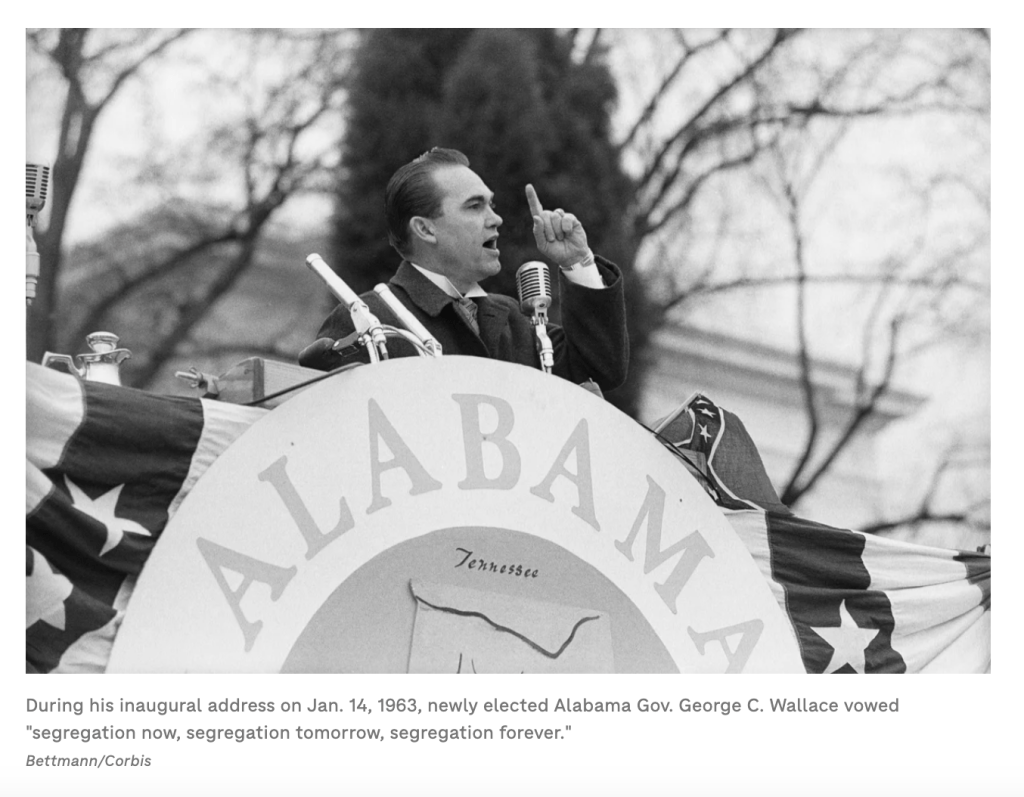
We are in Eufaula, 85 miles south east of Montgomery, in Barbour County, Alabama, still in the deep south on the Georgia border. Eufaula is where Governor George Wallace was born and raised. On January 14, 1963, George Wallace was sworn in as Alabama Governor (in the same spot that Jefferson Davis was sworn in as President of the Confederacy) spewing the infamous lines, “segregation now, segregation tomorrow, and segregation forever!” Wallace made sure to thank the “home folks” of his native Barbour County for giving “an anxious country boy” a chance.

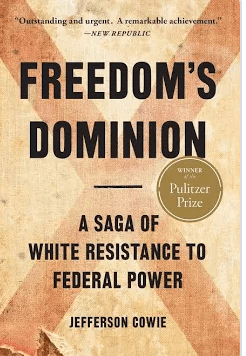
It is here in Barbour County, Alabama that Jefferson Cowie, in his Pulitzer Prize winning book, Freedom’s Dominion: A Saga of White Resistance to Federal Power (2022) chronicles “the unholy union , more than two hundred years strong, between racism and rabid loathing of government” (New York Times Book Review). I have always associated “freedom” with the fight of the oppressed for a better, more just world. Freedom is also a word used by those looking to dominate. This book helped me understand the hatred of white supremacists toward the Federal government that Trump used to enflame his followers to act during the January 6th, 2021 insurrection. I was first alerted to this book because Cowie is scheduled to speak at Ithaca College on Thursday, March 28th, at 5pm in the Park School Auditorium. 

According to the book’s introduction, Freedom’s Dominion is ” a story of rough continuity, recurring conflict, and ideological regeneration across time in one place. In Barbour County, freedom served as an ideological scaffolding that supported most every form of domination discussed in this book- Indian land dispossession and removal, mob political violence, lynching, convict labor, Jim Crow, resistance to school integration, and the fight against voting rights… Those defending racism, land appropriation, and enslavement portrayed themselves, and even understood their own actions, as part of a long history of freedom.”

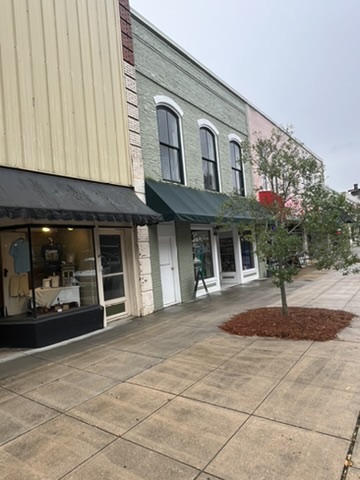
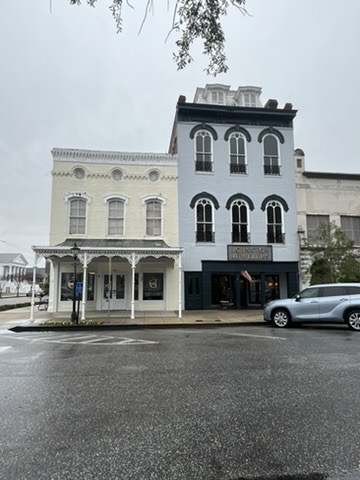
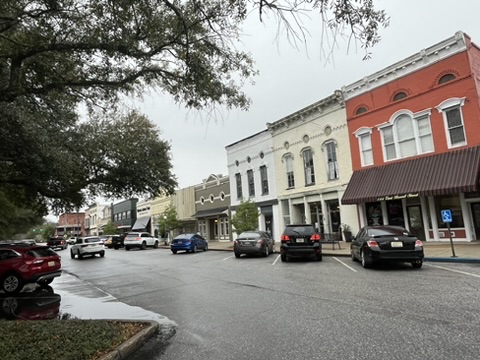
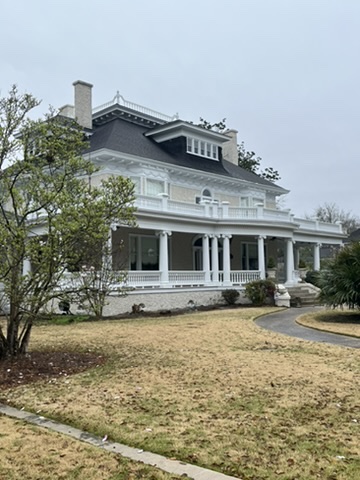
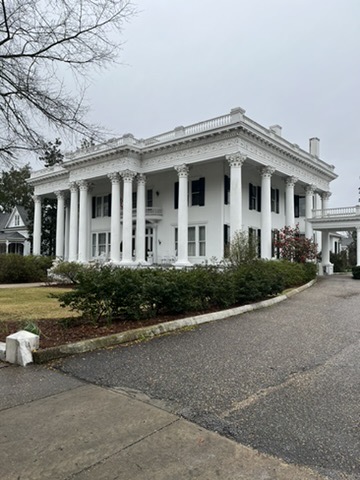
I have to say, since I skimmed this book before I arrives in Eufaula, I expected to find a back water place ravaged by history. This is not at all what we found. Eufaula is home to the second largest historic district in the state, with more than 700 historic and architecturally significant structures. There are quite a number of antebellum mansions and the downtown is quite well preserved and attractive. There is money here. According to the Eufaula Chamber of Commerce pamphlet , when the Union Troops rode in to Eufaula at the end of the Civil War, some town aristocrats wined and dined the Union General, who decided to spare the town and there was no death and destruction for the White gentry as occurred in many other southern towns. Somehow, this just makes the violent, racist history of the town seem worse.

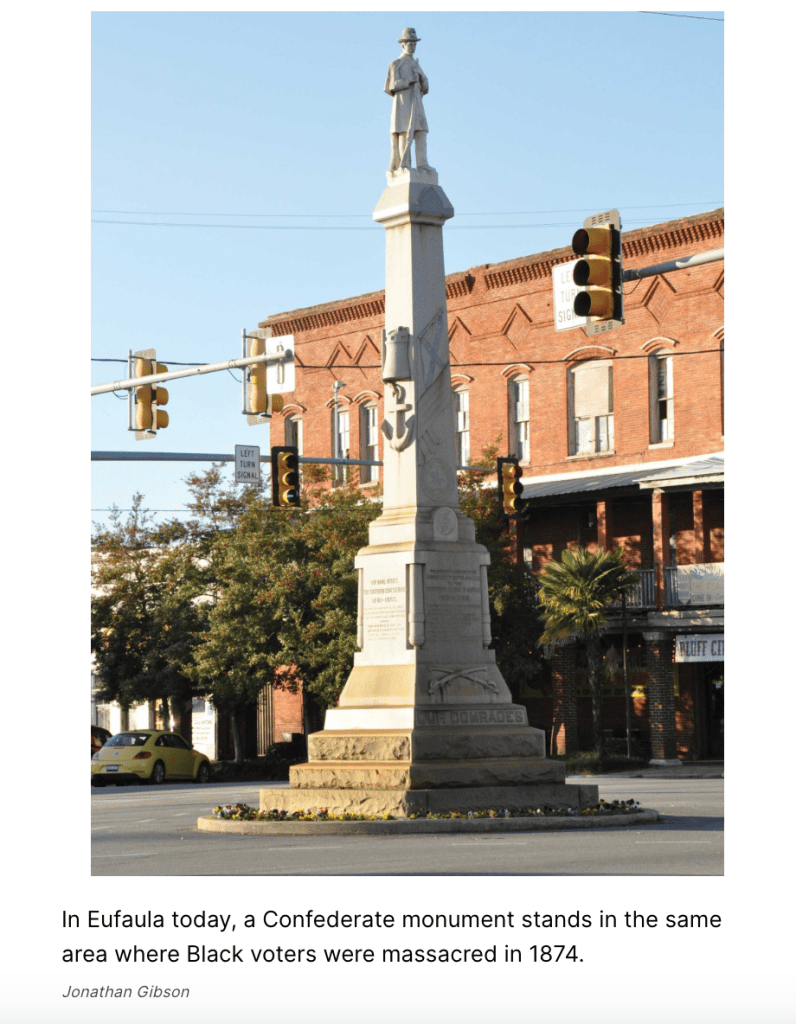
“In downtown Eufaula, the streets where Black voters were shot down for voting more than 140 years ago now host a towering Confederate monument erected by the United Daughters of the Confederacy in 1904. S.H. Dent, a former Confederate soldier who witnessed and possibly helped commit the massacre, spoke at the monument’s unveiling.”

Reconstruction in America: A Truth That Needs Telling, Equal Justice Initiative

Except for the fact that it was spared at the end of the Civil War, and so many grand historic structures remain, Eufaula and Barbour County are not so different than any other southern counties, and I dare say some northern counties, too. This point was driven home when we saw the sheer number of counties that had documented lynchings when we went to the lynching museum in Montgomery.

Montgomery, Alabama: Capitol of Dreams

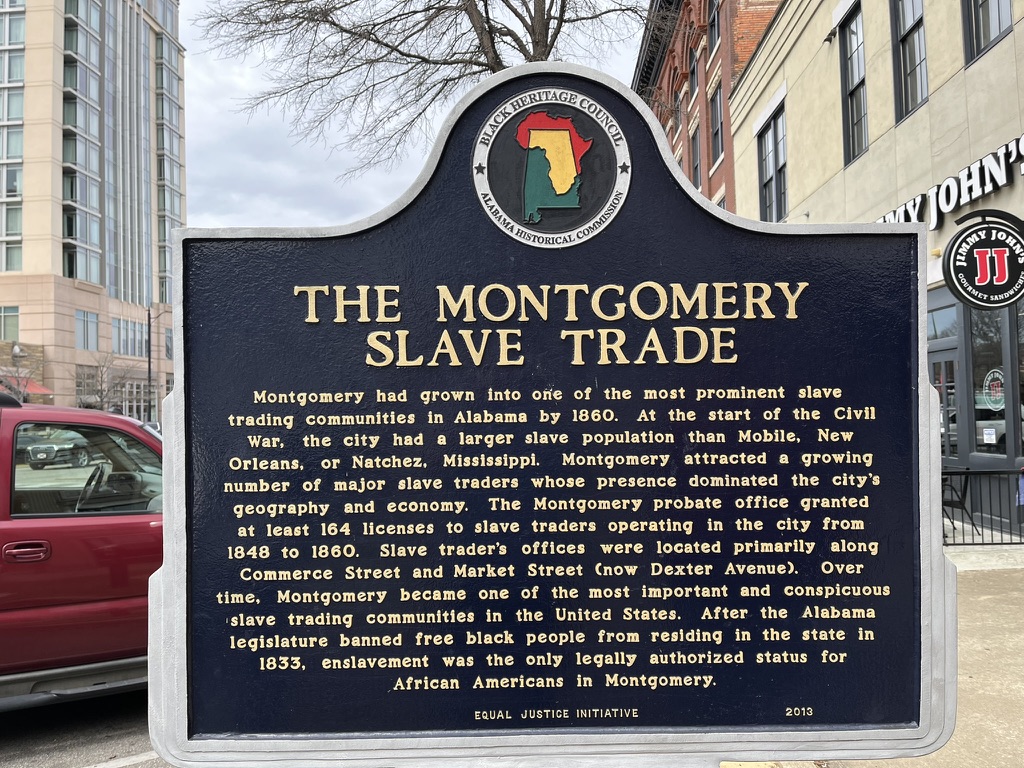
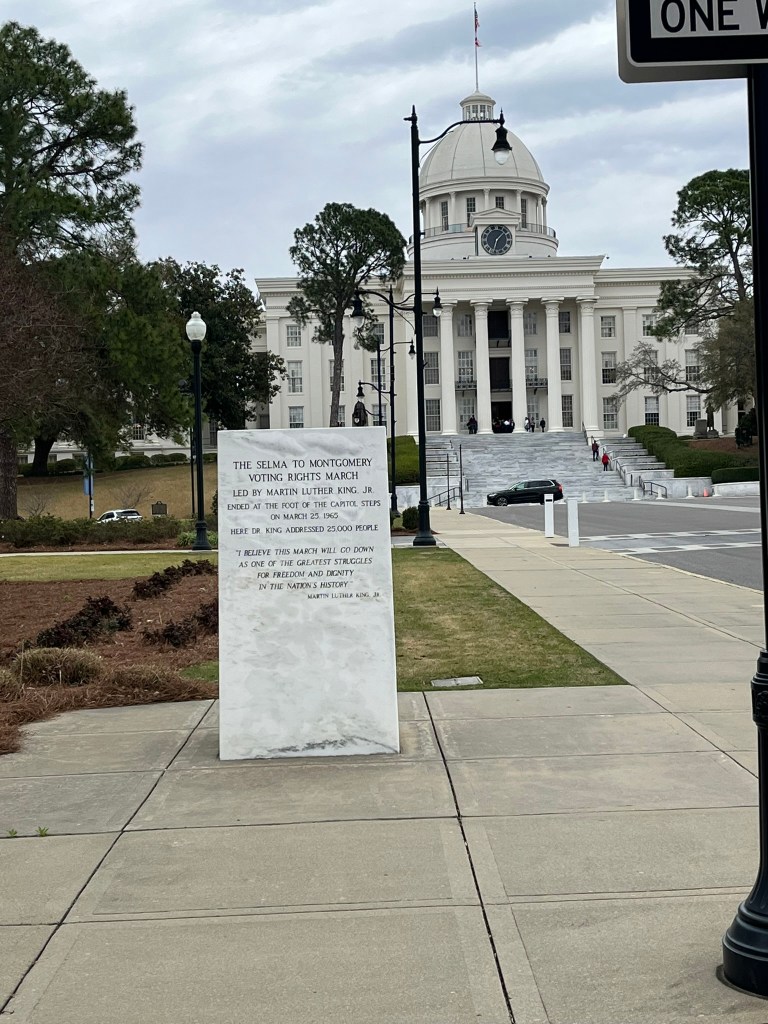
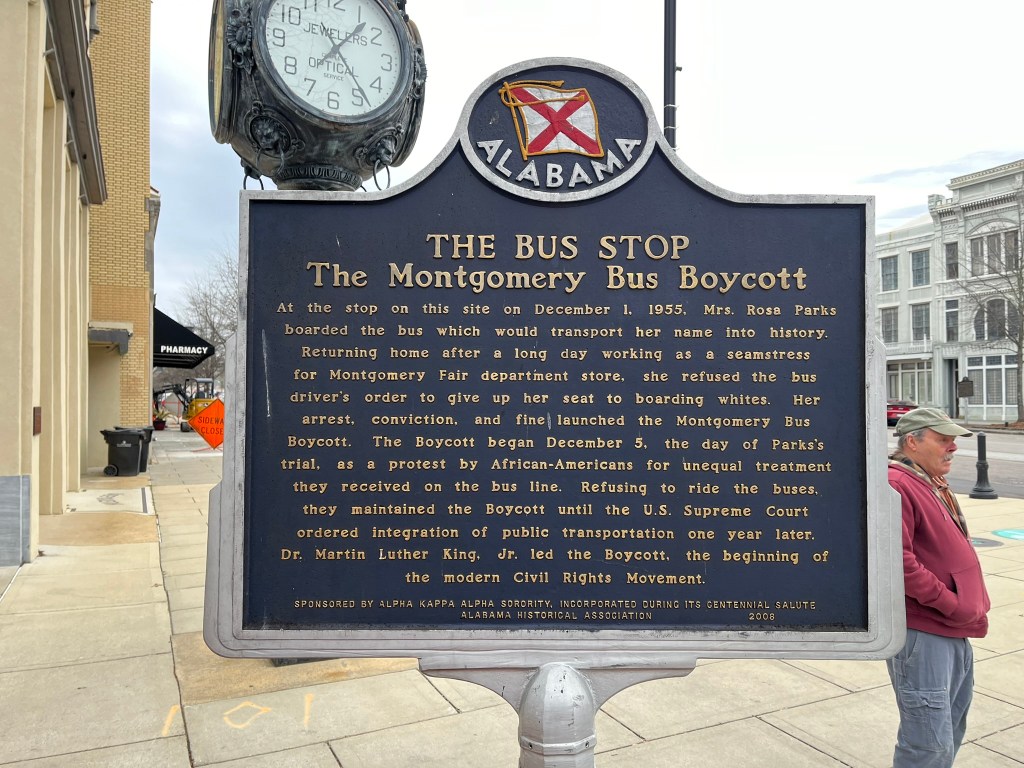
Montgomery, Alabama has to reconcile the fact that it is both the “Cradle of the Confederacy” and the “Birth Place of the Civil Rights Movement”. It raises the question of whose dreams are being fulfilled with it’s nickname “Capitol of Dreams”? To be fair, you can visit The First White House of the Confederacy (two blocks from the Dexter Ave. Baptist Church where Reverend Dr. Martin Luther King, Jr. was pastor), but I have seen no confederate flags in the city. There are plenty of plaques in the city recognizing the large role the city played in the slave trade and also marking civil rights milestones. Montgomery is the home of the Legacy Museum . It seems the city has done a pretty good job of recognizing all aspects of its past, however I did not see any plaques acknowledging what they did to the Creeks, the indigenous people living there when White settlers arrived.

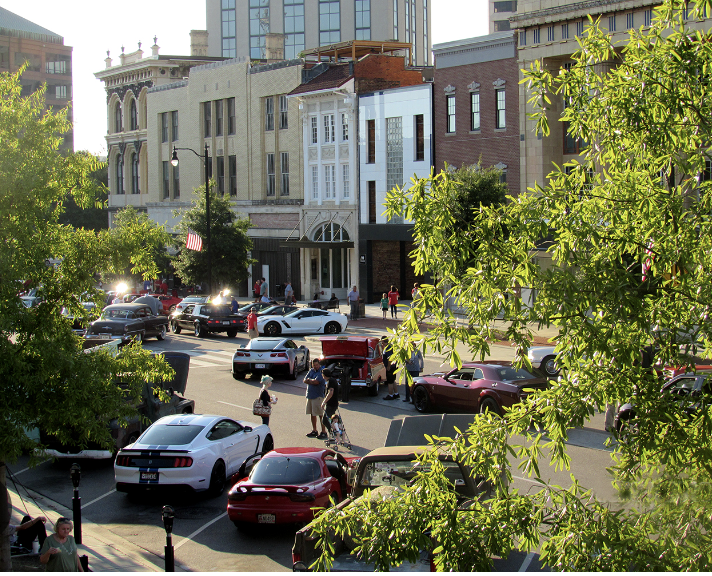
Montgomery is a pretty city with a lot of downtown revitalization happening. It was one of the first cities in the nation to implement SmartCode Zoning, focusing on walkable neighborhoods. Montgomery is a majority Black city (61% of population) and, we were told it has an increasing Korean population due to the large Hyundai plant located there. Once home to the First White House of the Confederacy, Montgomery grew to become the center of the Civil Rights Movement, notably the Montgomery Bus Boycotts.

West Virginia’s Birth in a Reign of Terror

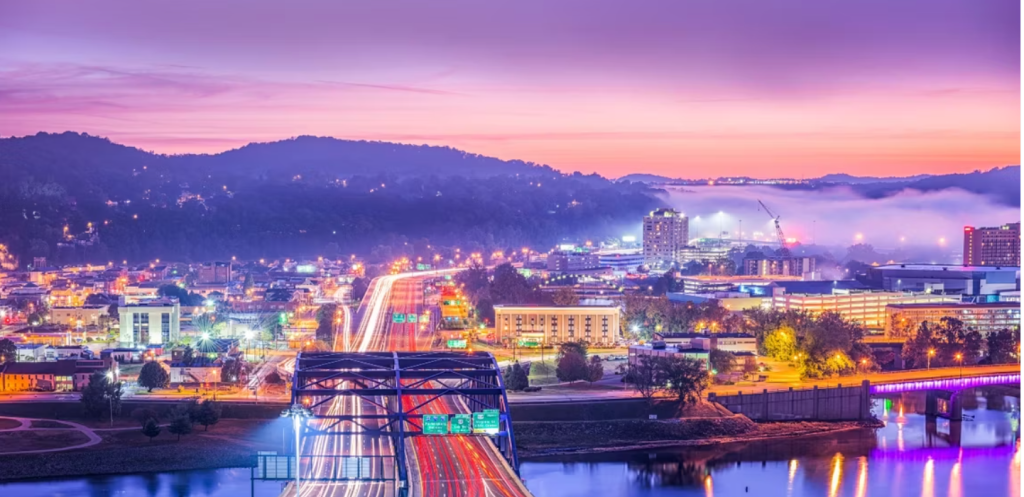
After traveling on one lane mountain roads through isolated West Virginia for most of the day, we spent the night in Charleston, West Virginia, a surprisingly large city, with 210,605 residents in the larger metropolitan area. It is now the capital of West Virginia, which once was part of Virginia. I found the West Virginia’s beginnings to be surprising and interesting. Once again I am reminded that we can and should learn from history in this time of political turmoil.

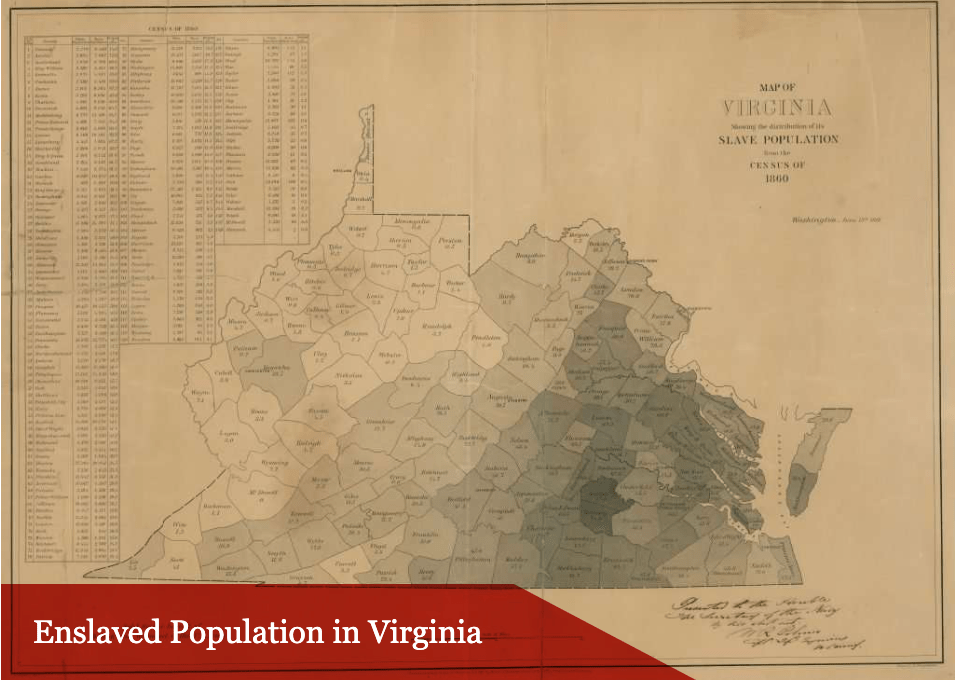
Political divisions between the eastern agricultural Virginia and mountainous western Virginia were present from the beginning of the revolutionary period. The Virginia Constitution of 1776 hampered western political participation by placing property-holding qualifications on voters and officeholders and allowing for disproportionate eastern political representation. Confronted with a tax code that benefited slaveholders and large landowners and eastern reluctance to dedicate taxes for western internal improvements, western Virginians clamored for reform from the beginning. This set the stage for the creation of a separate state.

The development of western Virginia industries (iron, coal, salt, and oil) that largely relied on free labor emerged in sharp contrast to eastern Virginia’s slave-based commercial agricultural economy. By the early 19th century, salt brines were discovered along the Kanawha River, and the first salt well was drilled in 1806.[13] This created a prosperous time and great economic growth for the area. By 1808, 1,250 pounds of salt were being produced a day, and the Farmers’ Repository newspaper began publication.[14] An area adjacent to Charleston, Kanawha Salines (now Malden) would become the top salt producer in the world. Later, coal became central to economic prosperity in the city and the surrounding area. The emergence of an economically motivated western antislavery ideology threatened relations between the eastern and western Virginians. (encyclopediavirginia.org).

The 1860 election of Abraham Lincoln as U.S. president resulted in the secession of seven Southern states and on February 13, 1861, Governor John Letcher opened Virginia’s own secession convention. During the convention, Lincoln’s inaugural address, the attack on Fort Sumter in Charleston, South Carolina (April 12 and 13), and Lincoln’s call for 75,000 volunteers led to the passage of the Ordinance of Secession on April 17, 1861. Nearly two-thirds of the votes against secession came from northwestern Virginia. Virginian Southern Unionists, who aimed to repeal the Ordinance of Secession that Virginia made during the American Civil War, won their fight to succeed from Virginia and remain part of the Union when West Virginia was admitted as a U.S. State on June 20, 1863 (https://encyclopediavirginia.org)

John S. Carlile, an Unconditional Unionist at the Richmond Secession Convention stated,  “For several days before the Convention passed the Ordinance of Secession, it was absolutely besieged; members were threatened with being hung to the lamp posts; their lives were jeopardized; the mob was marching up and down the streets, and surrounding the Capitol, and everything was terror and dismay.”[5]

Carlile continued to impeach the legitimacy of Virginia’s referendum on secession. “Immediately upon the passage of the Ordinance of Secession, in every county, as far as I can learn, a systematic reign of terror was inaugurated.” Throughout the state, “irresponsible persons assembled, under the name of ‘committees of safety’, who [told Union men] that they must leave the State… All Union men were admonished that they would be prosecuted for treason.” Carlile then described the days leading up to the referendum: ” Before the day of election arrived we see the troops from South Carolina, Georgia and other Southern States, placed all over the eastern and southern parts of the States running up into the valley, and in some parts of Western Virginia. In those parts of the State freedom of election was completely suppressed, and men who dared to vote against secession done it at the hazard of their lives. Thus, sir, you see the concert by which secession has been inaugurated and carried out in Virginia; and we see that same spirit that reigned in it from the beginning… TREASON…”[5]

On June 13, 1861 Carlile introduced to the Wheeling Convention “A Declaration of the People of Virginia.” The document declared that under the Virginia Declaration of Rights, any substantial change in the form of state government had to be approved by the people via a referendum. Therefore, the Secession Convention was illegal since it had been convened by the legislature, not a referendum, and all of its acts–including the Ordinance of Secession–were ipso facto void. It also called for a reorganization of the state government, on the grounds that all state officials who had supported the Ordinance of Secession had effectively vacated their offices. On June 19, delegates approved this plan unanimously.

The next day, June 20, the convention selected new state officers for what came to be called the Restored Government of Virginia to avoid confusion with the pro-secessionist government. Francis Pierpont of Marion County was elected governor. On June 25, the convention adjourned until August 6. President Lincoln and Congress swiftly recognized the Restored Government as the legitimate government of the entire Commonwealth of Virginia.

On October 8, 1869, Virginia voted to ratify the Fourteenth and Fifteenth Amendments as part of the requirement for being readmitted to the Union. The act readmitting Virginia to the Union and its representatives into Congress was signed by President Ulysses S. Grant on January 26, 1870.

In this time of political turmoil, it is important that we learn from history.

Blog at WordPress.com.

Up ↑