Yesterday we visited McLeod Plantation, one of many former southern plantation’s that gives tours near Charleston, South Carolina. A major difference berween the McLeod Plantation and all of the others is that it is owned by Charleston County Park, Recreation and Tourism Commission rather than the heirs of the original planation owners. It is also a member of the International Coalition of Sites of Consciousness, that focuses on transforming places that preserve the past into spaces that promote civic action.
The McLeod Plantation has been controversial because it introduces you to the Gathers and Dawson families, who were enslaved on the plantation, as well as the McLeods. It talks about the free black Massachusetts 55th Volunteer Infantry emancipating the enslaved people and using the planation as headquarters as well as the plantation being the headquarters for the James Island Freedman’s Bureau during Reconstruction. It tells the truth about the brutal treatment of the enslaved people on a sea island cotton plantation and the plight of Black folks in Charleston even to this day.
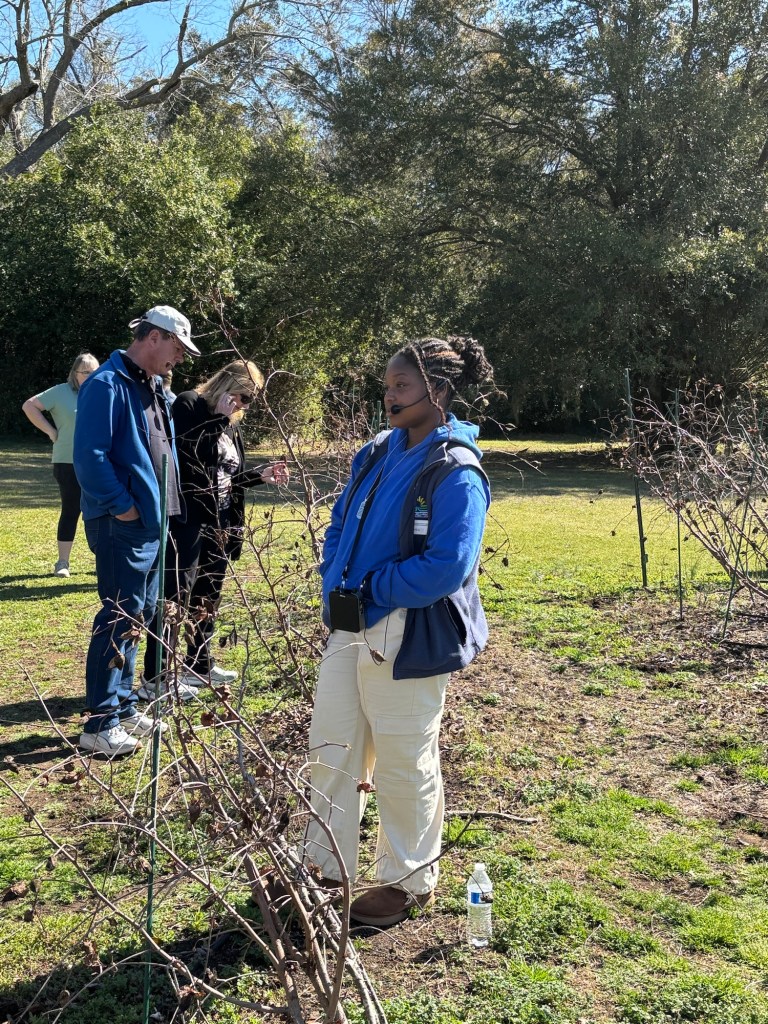
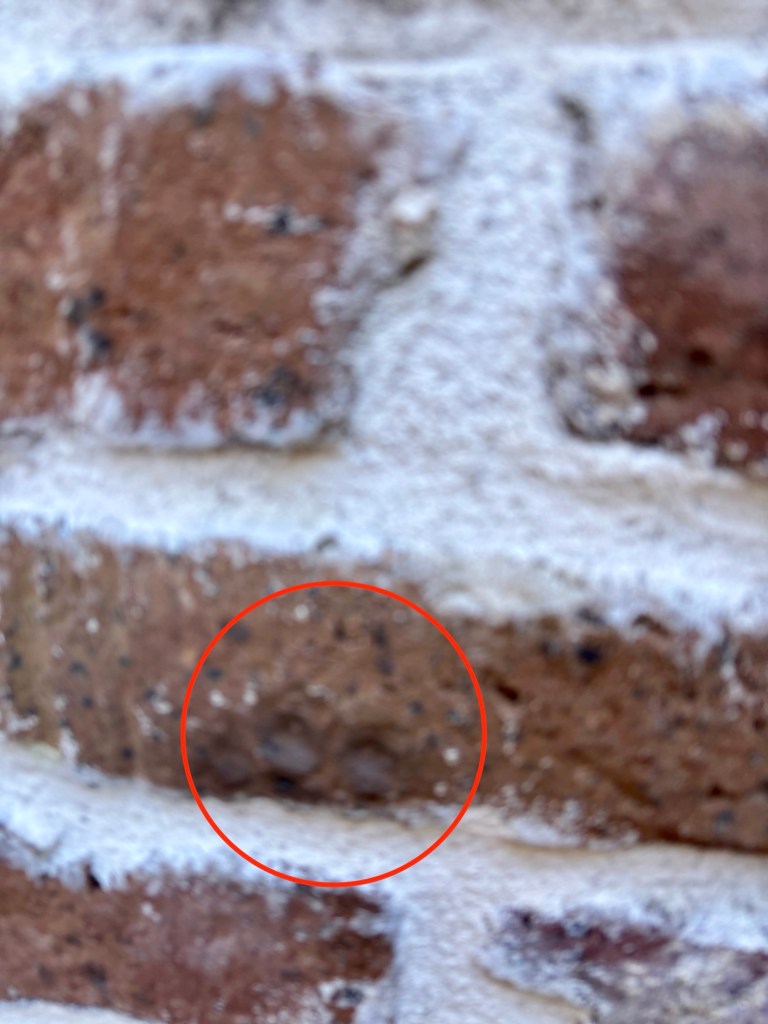
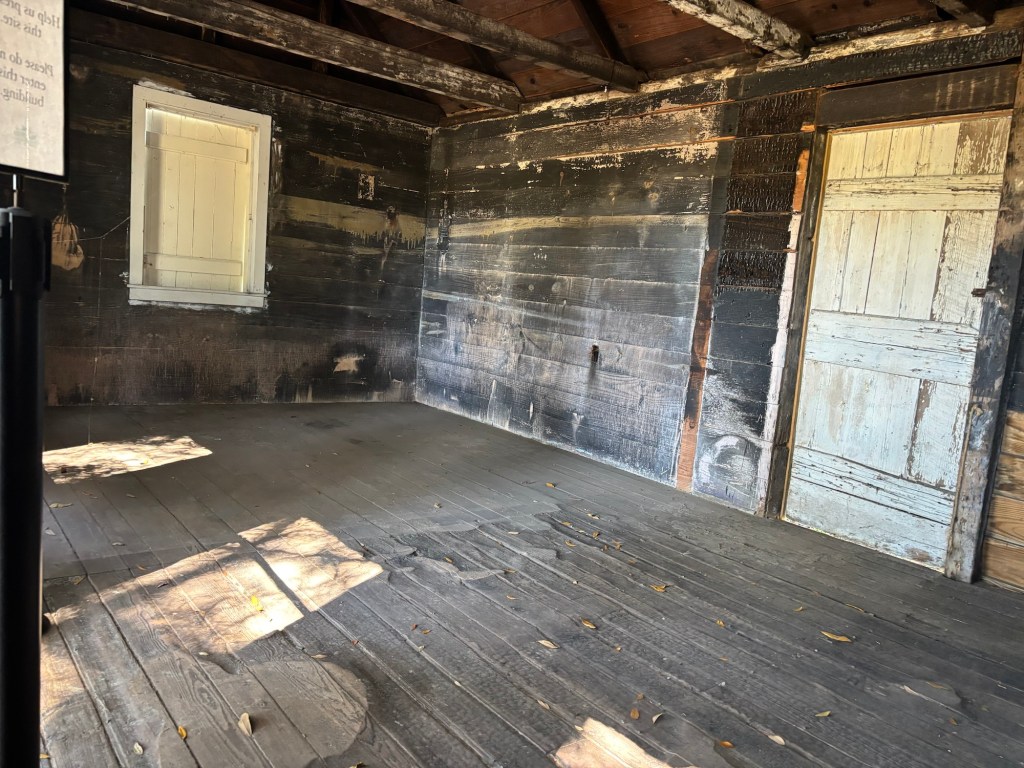
Our tour guide Kayla showing us Sea Island cotton plants.Bricks with fingerprints of young enslaved children who labored to make the bricks. Inside of slave cabins that people still rented until 1990. Here is a video describing the McLeod Planation tour. If the video does not load, here is the link: https://www.ccprc.com/1447/McLeod-Plantation-Historic-Site
In case you cannot tell, if you find yourself in Charleston, highly recommend this tour!
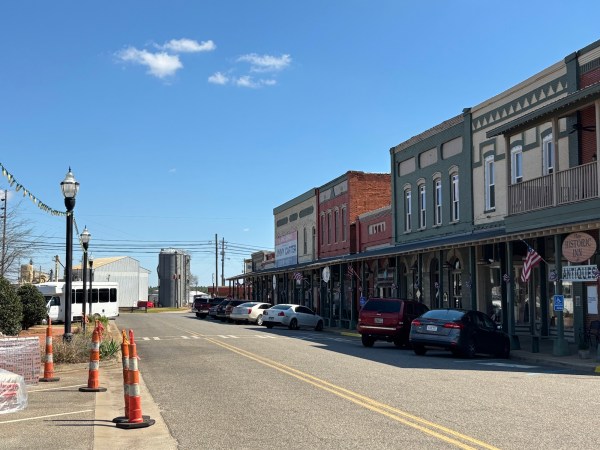
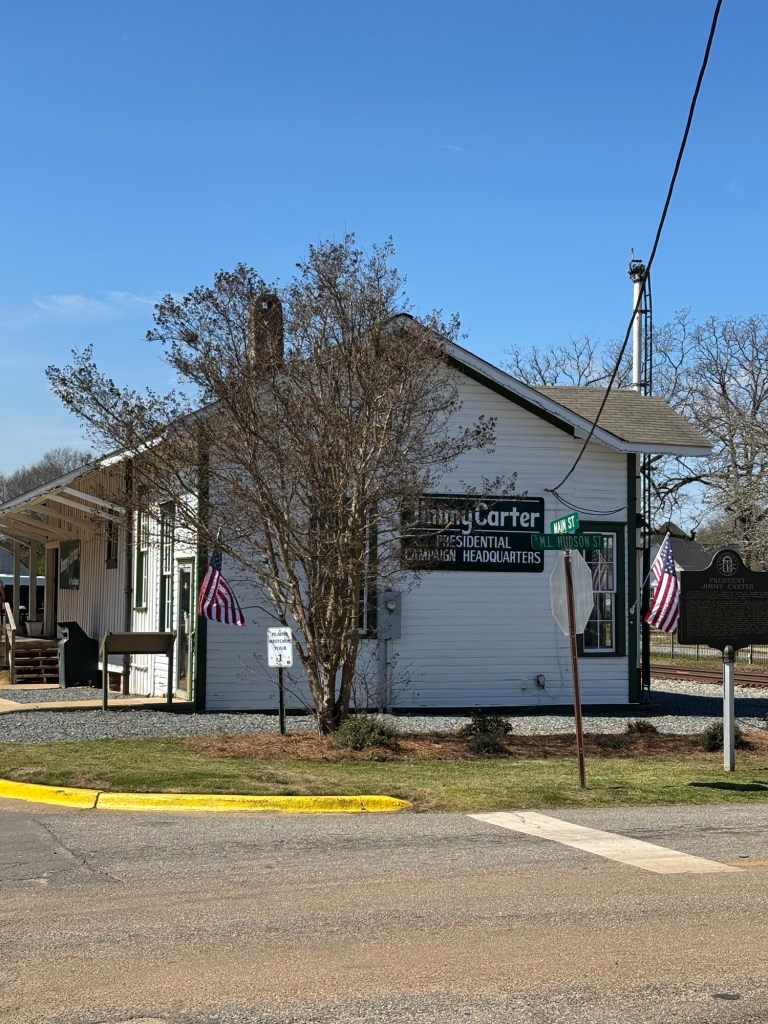
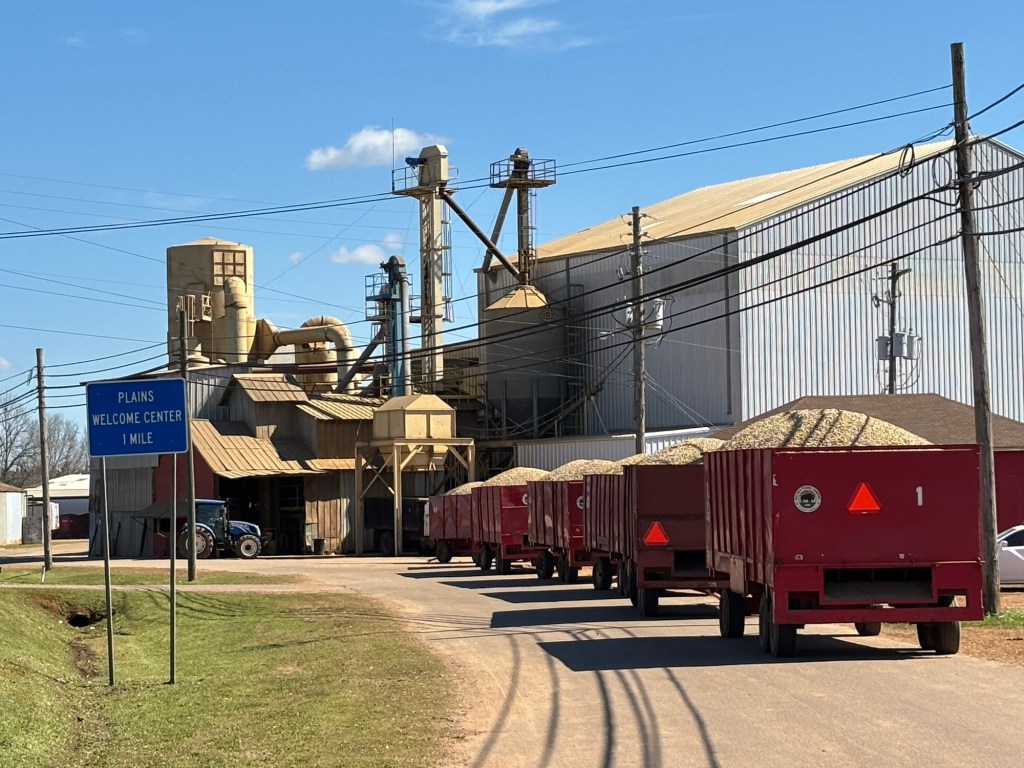
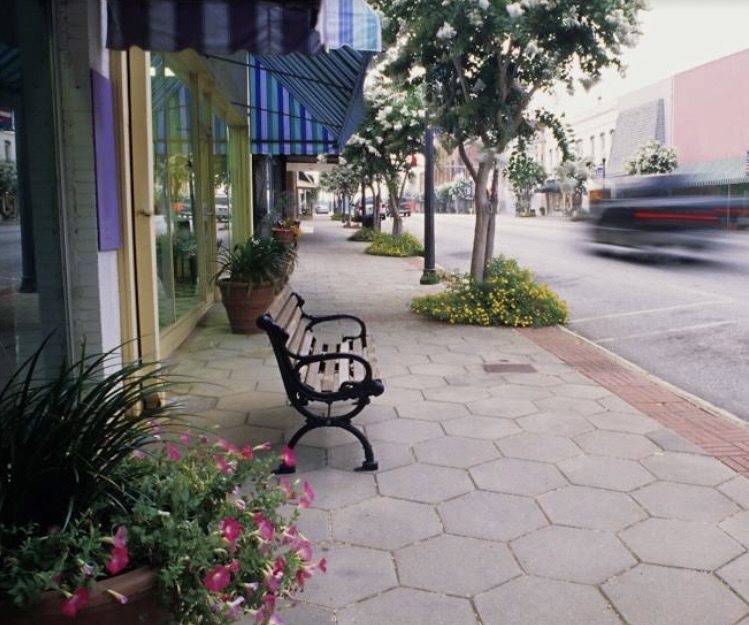
Yesterday we went to Plains, Georgia hometown of President Jimmy Carter. This tiny town, population 573, was where Jimmy Carter and his wife Rosaylnn were born, lived most of their lives, died and are buried. I gained some understanding of how this man developed such strong moral character. I think I am happy that he did not live to see what is happening now to our country, which would cause him great pain. The above photo is the one block that is downtown Plains. Down the street in the background is a peanut processing plant and in the other direction is the tiny train depot that Jimmy Carter used as his presidential campaign headquarters.
The Carter campaign chose this tiny, rustic train depot as national campaign headquarters in Plains because it was the only available building with a bathroom. Peanut processing plant in downtown Plains, Georgia.
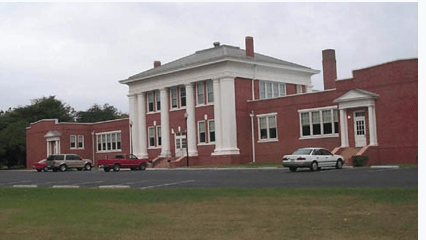
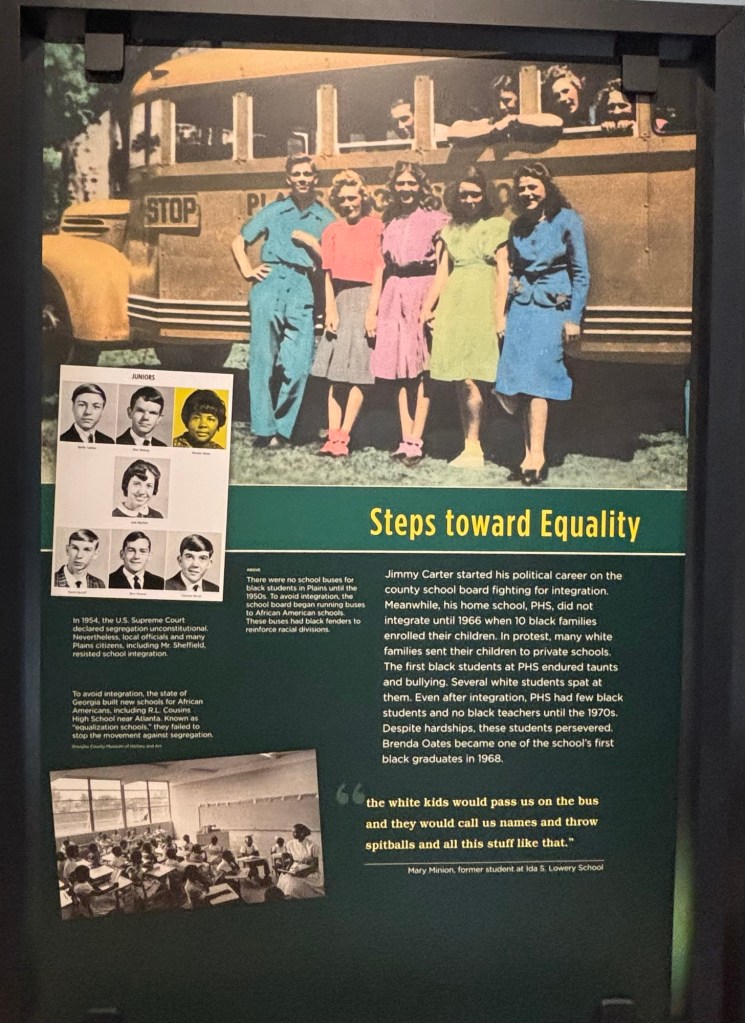
The Jimmy Carter National Historical Park consists of Carter’s boyhood home and farm. The old high school is now the visitor center.The house the Carters lived in most recently and the grave sites on the property will be part of the National Park as well.
The Plains High School now serves as the Jimmy Carter National Historical Park Visitor Center and zMuseum. Jimmy and Rosalynn both graduated from this school.
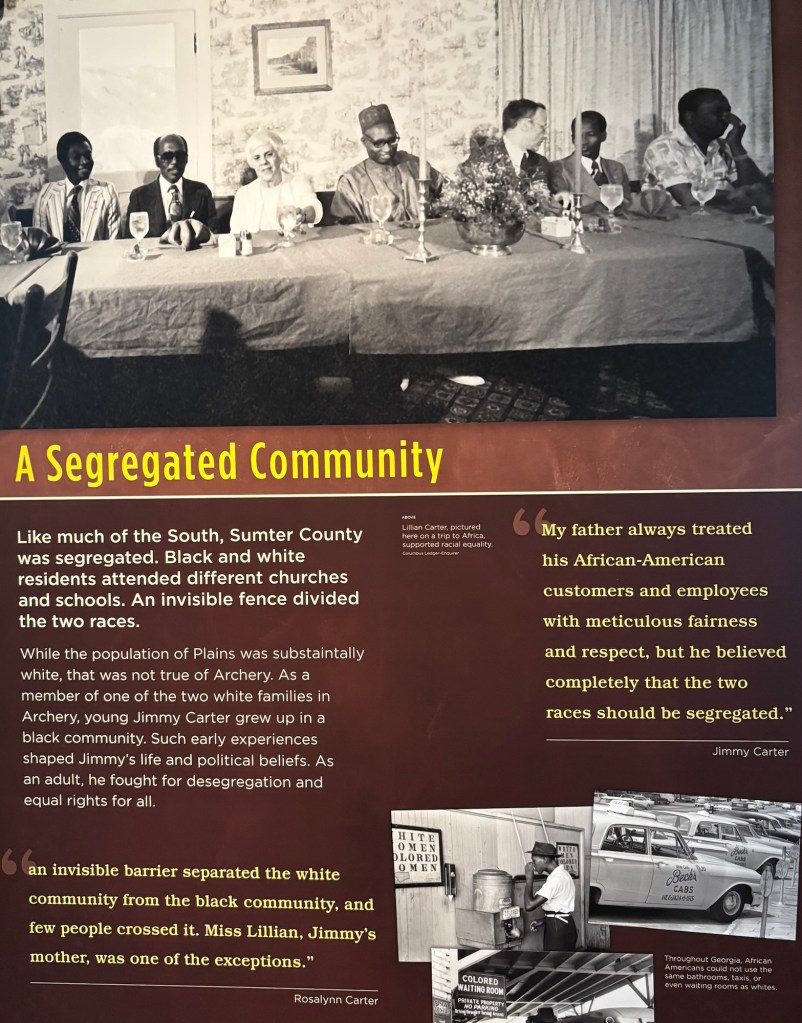
Jimmy graduated from this school in 1941. It was called the high school but served white students from grade 1-11. There was no 12th grade. In 1941 schools were racially segregated. I believe Sumter County has always been a majority Black county, so the majority of children had to attend far inferior schools. Jimmy Carter served on the Sumter County School Board after Brown vs the Board of Education supreme court case that desegregated schools. He had to tackle the question of school consolidation and desegregation. It took him a while to decide to attack desegregation head-on. Once he did, it gave him valuable lessons that made him a much better Governor and President. Here is an interesting “ Study of Segregation, Politics, and Public Education in Sumter County, Georgia, 1930s-1970s” if you would like more information.
Jimmy Carter National Historical Park DisplayJimmy Carter National Historical Park Display
Two days ago we arrived in Americus, GA, a pretty little town (population: 15,703) just nine miles from Plains, GA, the home town of our 37th President Jimmy Carter.
We met the former Americus Mayor Bill McGowan and his wife, while stopping in for lunch at the Buffalo Cafe in Plains. They were very friendly and very humble- he had lots to say about his downtown hotdog joint and his kids but he did not mention that he was elected in 2016 to the Georgia House of Representatives as a Democrat. In fact, he managed to flip the House Blue with his win.
We learned that a favorite hotdog topping is a coleslaw and chili combo. Next time we are in Americus at lunchtime we will have to give it a try!
Here are some interesting facts about Americus. I suggest you click on the inks for some very interesting stories:
Habitat for Humanity was founded in Americus and the international headquarters is there.
Charles A. Lindbergh bought his first airplane and made his first solo flight there during a two-week stay in May 1923.
Souther Field (now Jimmy Carter Regional Airfield) was used for British Royal Air Force pilot training (1941–1942) as well as US pilot training before ending the war as a German prisoner of war camp
Shoeless Joe Jackson served as the field manager for the local baseball team after his banishment from professional baseball
Koinonia Farm, an interracial Christian community, was organized near Americus in 1942 by Clarence Jordan. Its interracial nature occasioned much opposition from local residents.
The Leesburg Stockade incident occurred in 1963 when a group of African-American girls, aged 12 to 15, were arrested in Americus after trying to buy movie tickets at a theatre’s whites-only window as a form of civil protest.
You can read more about the Americus Movement, a lesser known part of the civil rights movement here.
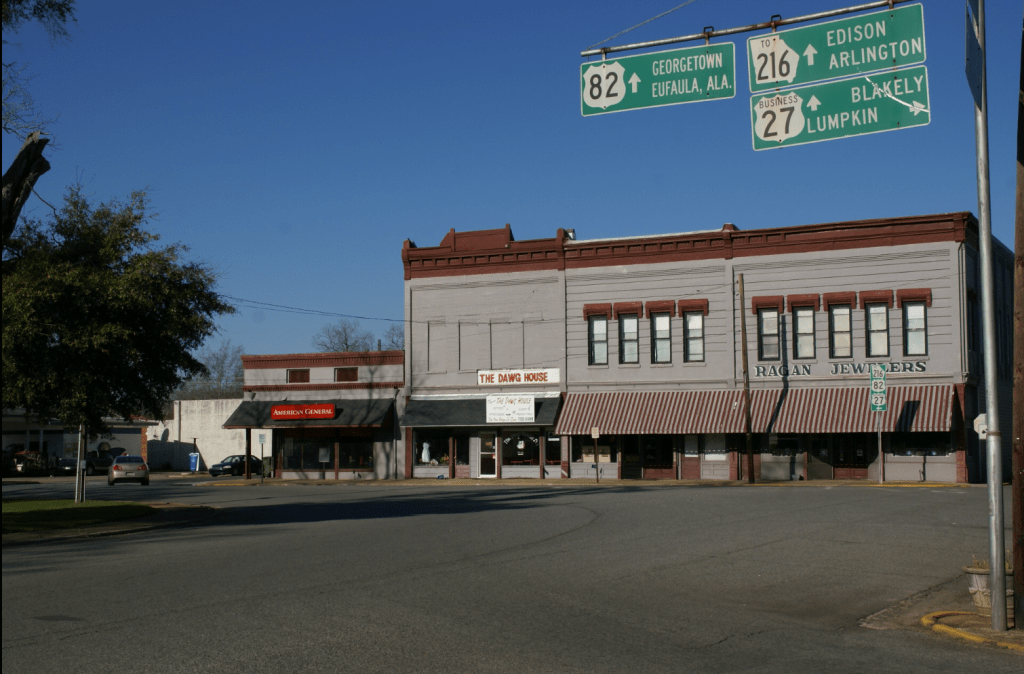
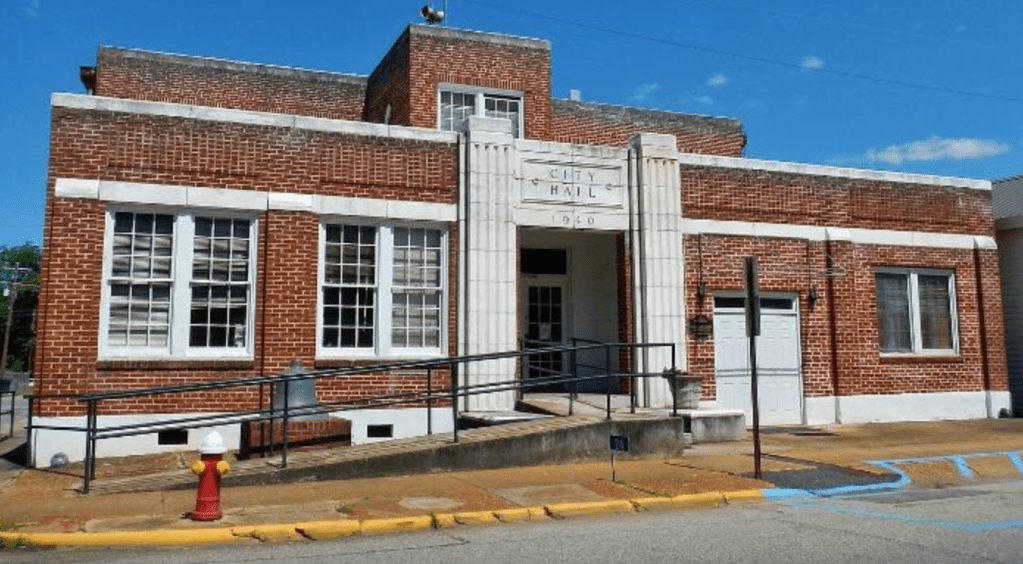
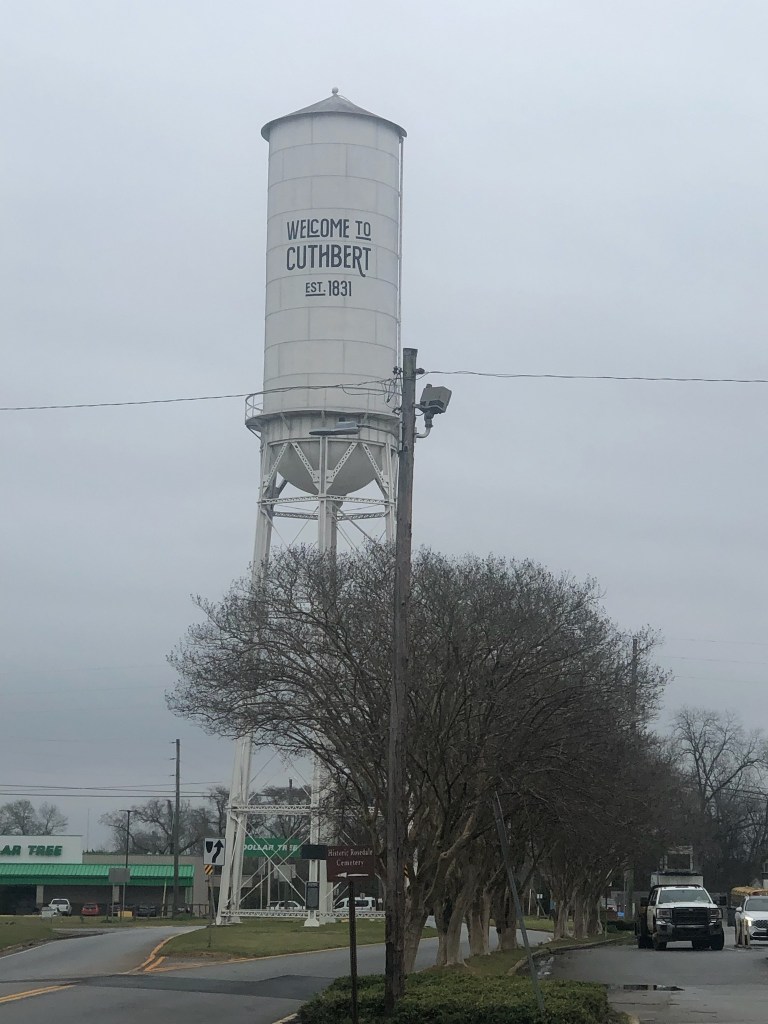
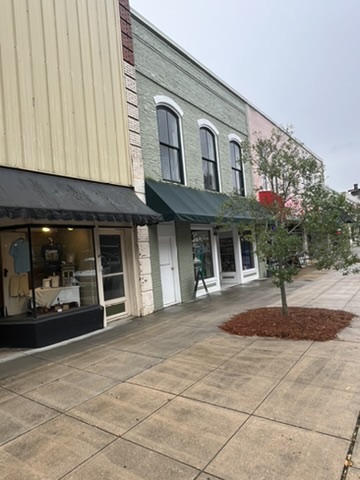
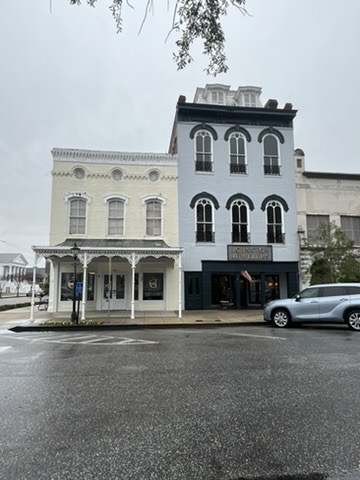
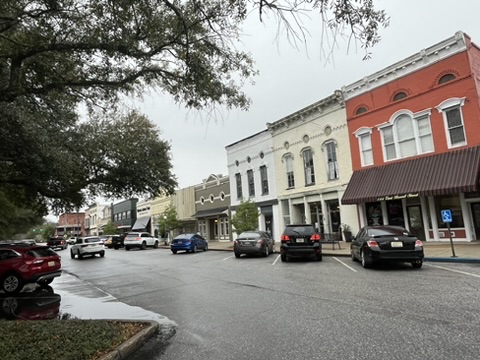
We enjoyed driving less traveled roads through Georgia today. We stopped for gas in Cuthbert, Georgia (population 3,143), on the Jefferson Davis Highway. It is 100 miles from the gulf coast, 100 miles from the closest city (Montgomery, Al) and not near, it seems, anything at all. The City of Cuthbert, incorporated in 1831, is the county seat of Randolph County, which has a total population of 6,287 people. Most of the buildings, built on Cuthbert town square around 1890, are still there. One surprising thing about Cuthbert is that there are no obvious chain restaurants or motels, except for the ever present Dollar General. Is there a rural town in America that does not have a Dollar General?
According to Wikipedia, the county was developed for cotton plantations, the major commodity crop, and the rural area had a high proportion of enslaved Black workers. Today the Cuthbert population is still 80% Black. The main occupation now is food production as there is a large chicken processing plant owned by Tyson in Cuthbert. Poultry is now the largest sector of Georgia’s agricultural production since the Georgia cotton industry was decimated by the Boll Weevil. The insect first swept into GA in 1915 in dust clouds from the west. By the early 1920s, it had destroyed over 60 % of Georgia’s cotton crops.(New Georgia Encyclopedia)
The Cuthbert Water Tower, erected in 1895, has the distinction of being the only water tower in the middle of a federal highway. It is located in the middle of US Highway 82 (Jefferson Davis Highway) and defines the skyline of Cuthbert. For many years, people believed those who drank water from the tower would either stay or return to Cuthbert.
Cuthbert is the birthplace of boxer Larry Holmes, NFL player Rosey Grier and jazz and swing musician Fletcher Henderson Jr. (1897-1952). Another famous person who grew up in Cuthbert heard of is Winfred Rembert, a Black artist who used hand-tools and shoe dye on leather canvases. During a civil rights march in the 1960s, Rembert was arrested without being charged. He spent seven years on a chain gang and survived a lynching.You can watch a short documentary film about Rembert called All Me: The Life and Times of Winfred Rembert. His memoir, Chasing Me to My Grave: An Artist’s Memoir of the Jim Crow South, was published posthumously in September 2021 and won the 2022 Pulitzer Prize for Biography.
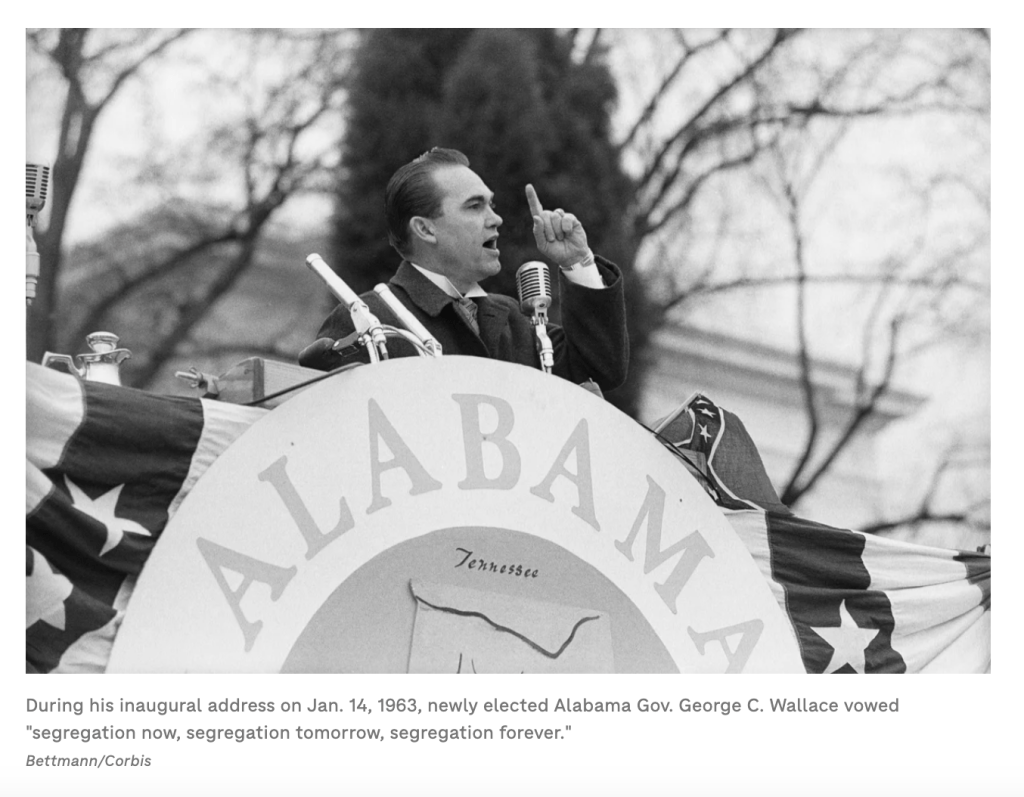
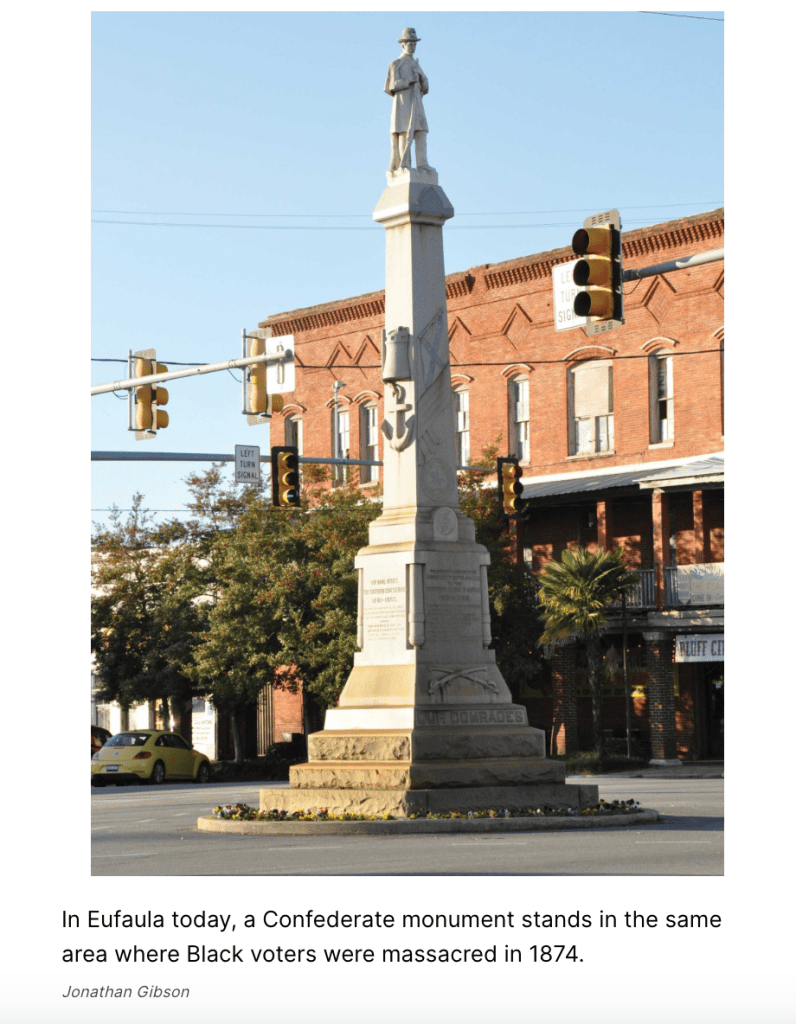
We are in Eufaula, 85 miles south east of Montgomery, in Barbour County, Alabama, still in the deep south on the Georgia border. Eufaula is where Governor George Wallace was born and raised. On January 14, 1963, George Wallace was sworn in as Alabama Governor (in the same spot that Jefferson Davis was sworn in as President of the Confederacy) spewing the infamous lines, “segregation now, segregation tomorrow, and segregation forever!” Wallace made sure to thank the “home folks” of his native Barbour County for giving “an anxious country boy” a chance.
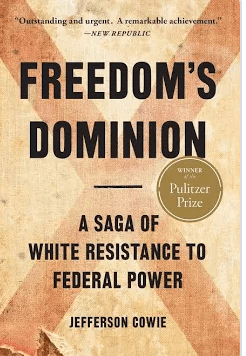
It is here in Barbour County, Alabama that Jefferson Cowie, in his Pulitzer Prize winning book, Freedom’s Dominion: A Saga of White Resistance to Federal Power (2022) chronicles “the unholy union , more than two hundred years strong, between racism and rabid loathing of government” (New York Times Book Review). I have always associated “freedom” with the fight of the oppressed for a better, more just world. Freedom is also a word used by those looking to dominate. This book helped me understand the hatred of white supremacists toward the Federal government that Trump used to enflame his followers to act during the January 6th, 2021 insurrection. I was first alerted to this book because Cowie is scheduled to speak at Ithaca College on Thursday, March 28th, at 5pm in the Park School Auditorium.
According to the book’s introduction, Freedom’s Dominion is ” a story of rough continuity, recurring conflict, and ideological regeneration across time in one place. In Barbour County, freedom served as an ideological scaffolding that supported most every form of domination discussed in this book- Indian land dispossession and removal, mob political violence, lynching, convict labor, Jim Crow, resistance to school integration, and the fight against voting rights… Those defending racism, land appropriation, and enslavement portrayed themselves, and even understood their own actions, as part of a long history of freedom.”
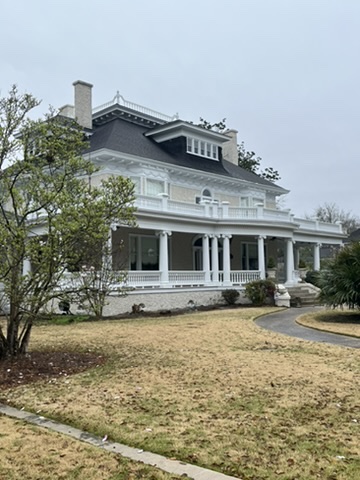
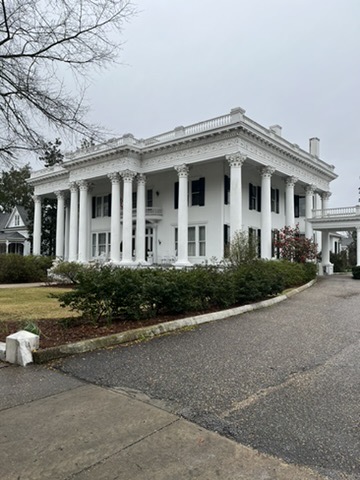
I have to say, since I skimmed this book before I arrives in Eufaula, I expected to find a back water place ravaged by history. This is not at all what we found. Eufaula is home to the second largest historic district in the state, with more than 700 historic and architecturally significant structures. There are quite a number of antebellum mansions and the downtown is quite well preserved and attractive. There is money here. According to the Eufaula Chamber of Commerce pamphlet , when the Union Troops rode in to Eufaula at the end of the Civil War, some town aristocrats wined and dined the Union General, who decided to spare the town and there was no death and destruction for the White gentry as occurred in many other southern towns. Somehow, this just makes the violent, racist history of the town seem worse.
Reconstruction in America: A Truth That Needs Telling, Equal Justice Initiative
Except for the fact that it was spared at the end of the Civil War, and so many grand historic structures remain, Eufaula and Barbour County are not so different than any other southern counties, and I dare say some northern counties, too. This point was driven home when we saw the sheer number of counties that had documented lynchings when we went to the lynching museum in Montgomery.
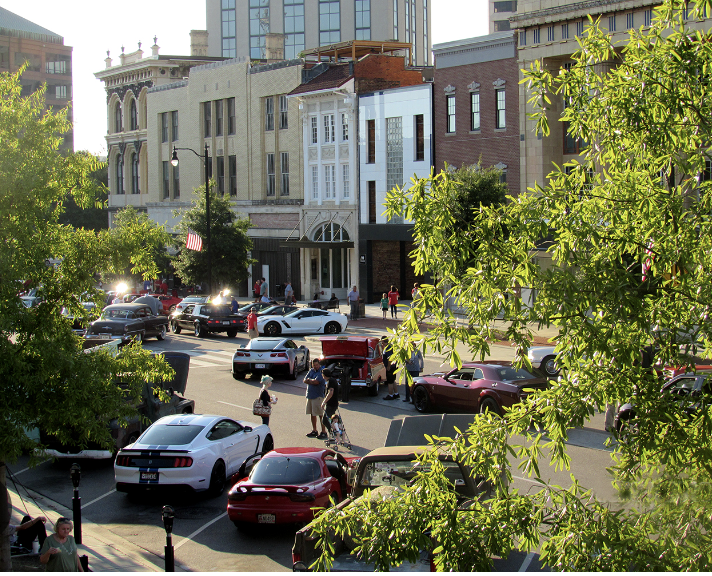
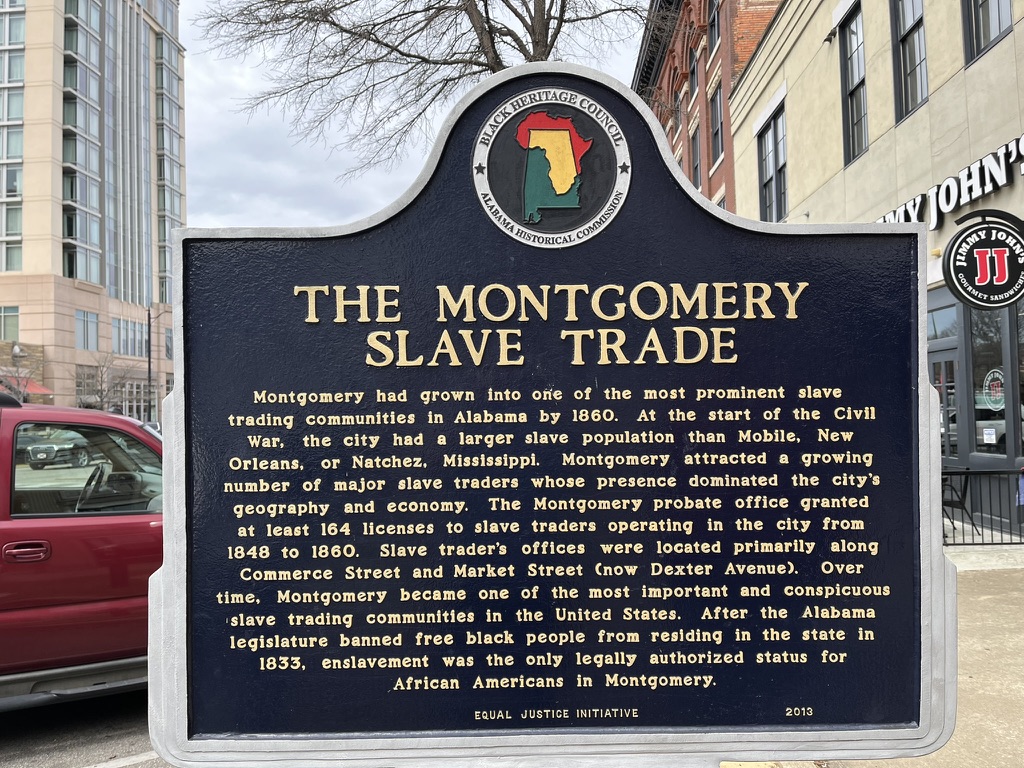
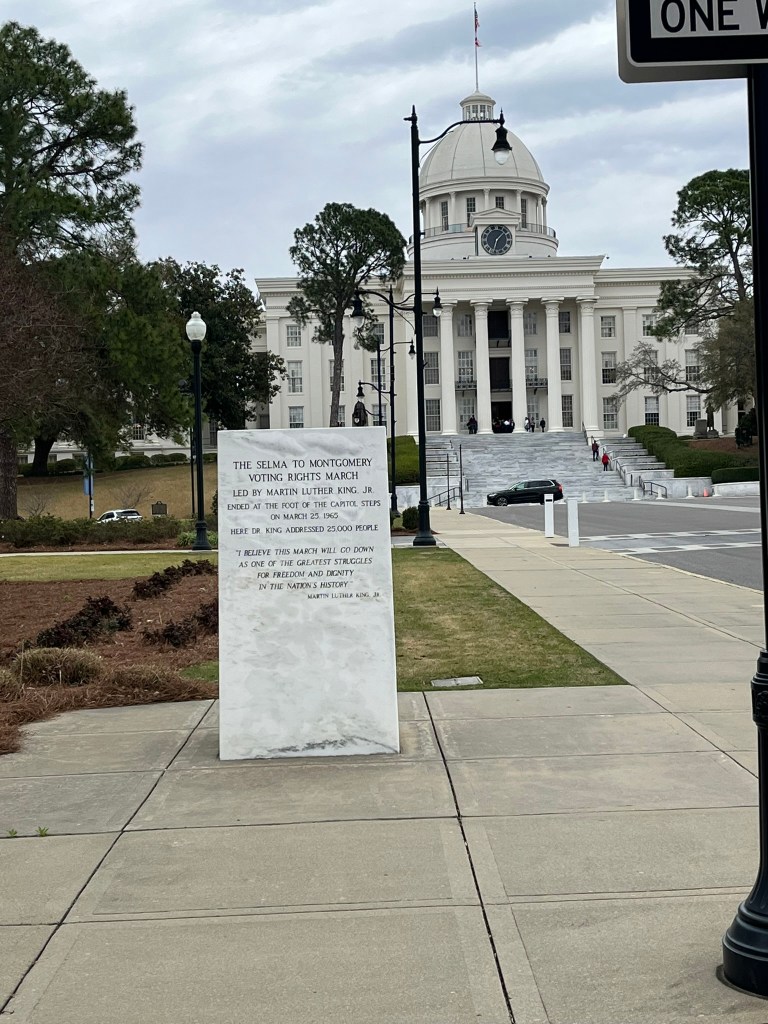
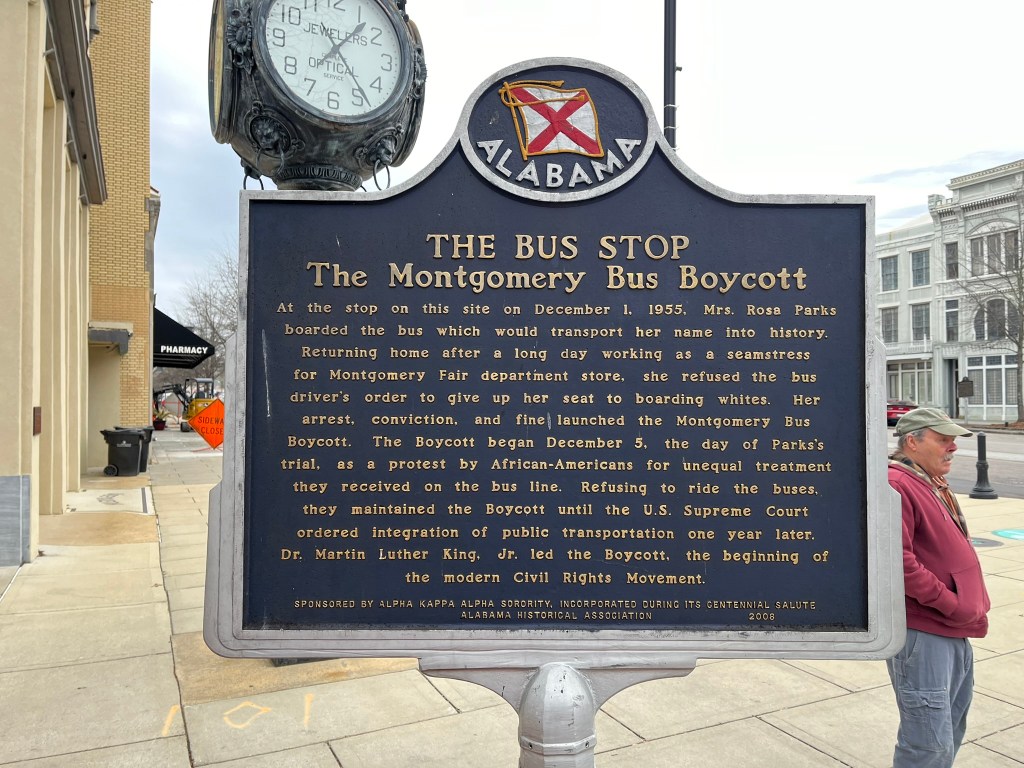
Montgomery, Alabama has to reconcile the fact that it is both the “Cradle of the Confederacy” and the “Birth Place of the Civil Rights Movement”. It raises the question of whose dreams are being fulfilled with it’s nickname “Capitol of Dreams”? To be fair, you can visit The First White House of the Confederacy (two blocks from the Dexter Ave. Baptist Church where Reverend Dr. Martin Luther King, Jr. was pastor), but I have seen no confederate flags in the city. There are plenty of plaques in the city recognizing the large role the city played in the slave trade and also marking civil rights milestones. Montgomery is the home of the Legacy Museum . It seems the city has done a pretty good job of recognizing all aspects of its past, however I did not see any plaques acknowledging what they did to the Creeks, the indigenous people living there when White settlers arrived.
Montgomery is a pretty city with a lot of downtown revitalization happening. It was one of the first cities in the nation to implement SmartCode Zoning, focusing on walkable neighborhoods. Montgomery is a majority Black city (61% of population) and, we were told it has an increasing Korean population due to the large Hyundai plant located there. Once home to the First White House of the Confederacy, Montgomery grew to become the center of the Civil Rights Movement, notably the Montgomery Bus Boycotts.
Reverend Martin Luther King, Jr. was pastor of The Dexter Avenur Baptist Church from 1954- 1960. The Montgomery Bus Boycott was organized here. The church stands right next to the State Capitol.Rosa Partk’s protest happened on December, 1st, 1955 on the day oi my birth.
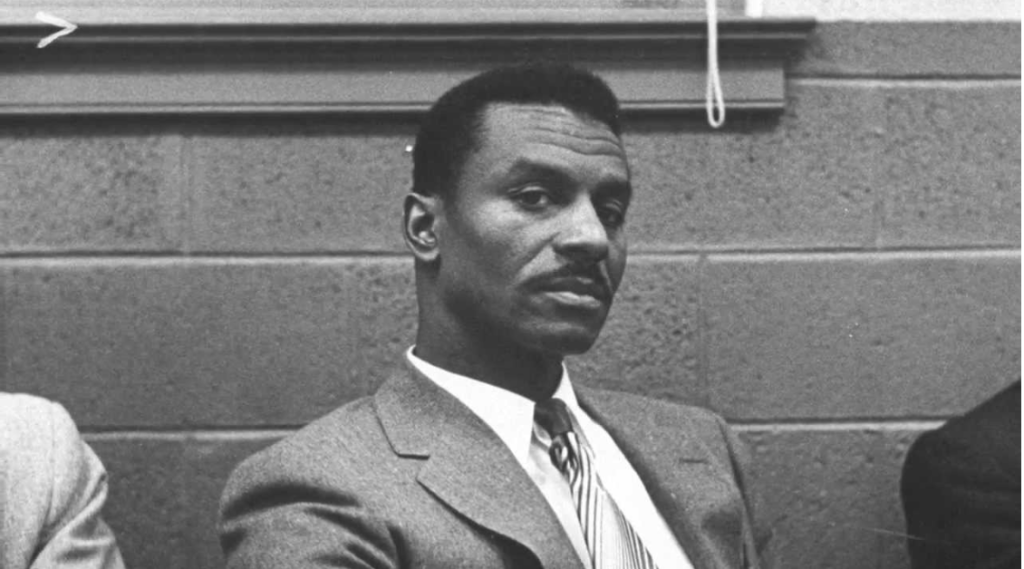
I had heard of Fred Shuttlesworth, but did not really know what this man accomplished during the civil rights movement until I came to Birmingham, Alabama. We took the Red Clay Fight for Rights tour and watched a PBS Documentary “Shuttlesworth”, both of which I recommend. In order to understand why Fred Shuttlesworth was exactly who the movement needed in Birmingham, one needs to understand what it was like there in the 1950s and 1960s under the rule of Bull Connor.
Birmingham was a company town with the owners of the steel, iron and coal companies making the rules. They were segregationists and there was agreement that Blacks should be kept in their place. Birmingham was essentially a police state supporting the industries. Bull Connor became the political intermediary between the corporate interests and the Ku Klux Klan, so that the corporations could keep their hands clean. In the documentary “Shuttlesworth”, eye witnesses talk about the Klan regularly parading with the police cars leading the procession. If a Black person stepped out of line, they could expect a violent reaction- bombing, beating, arrest or even lynching.
Fred Shuttleworth was described as a warrior, leading people in to battle, willing to risk his life for change. Some folks said he was crazy- they bombed his house, beat him up multiple times, took his car yet he persisted and refused to give up. He was not afraid of Bull Connor; he always believed that God would protect him. He was called “the most courageous civil rights fighter in the South” by Martin Luther King, Jr.
Reverend Fred Shuttlesworth was a firey preacher with an authoritarian personality. When he was growing up in an abusive household in Montgomery, his mother put him in charge of his 8 younger siblings. He felt like he was being prepared for something and other people felt that too. He learned his persistence from his mother. He knew by the time he was 22 years old that he would be a preacher.
Reverend Shuttlesworth came to Birmingham in 1952 and became preacher of Bethel Baptist Church in 1953. In 1956 the Alabama attorney general outlawed the NAACP, so Reverend Shuttlesworth established the Alabama Christian Movement for Human Rights (ACMHR), serving as president of the group until 1969. The ACMHR coordinated boycotts and sponsored federal lawsuits aimed at ending segregation in Birmingham and the state of Alabama.
The Shuttlesworth family lived next to the church. On Christmas Day, 1956, sixteen sticks of dynamite that had been placed under the house where the bedroom was, exploded and the house collapsed. Fred walked out of the rubble without a scratch on him. Andrew Manis, a member of the church said, “if we had seen Jesus walk on water, we wouldn’t have been any more reverent than we were when we saw Fred come out of that building alive. Fred Shuttlesworth was not only their man but God’s man.” He and his church survived two more bombing.
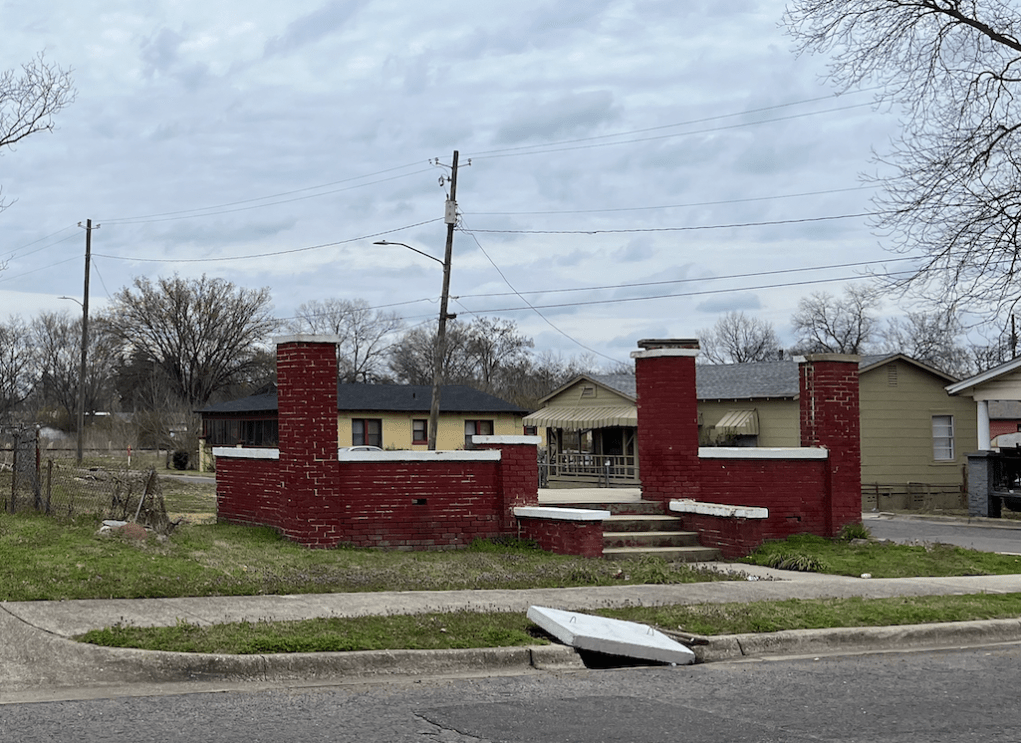
Remains of a guard station across from the Bethel Baptist Church and Shuttlesworth home. It was for volunteers who served as armed guards to protect Reverend Shuttlesworth and the church every night.
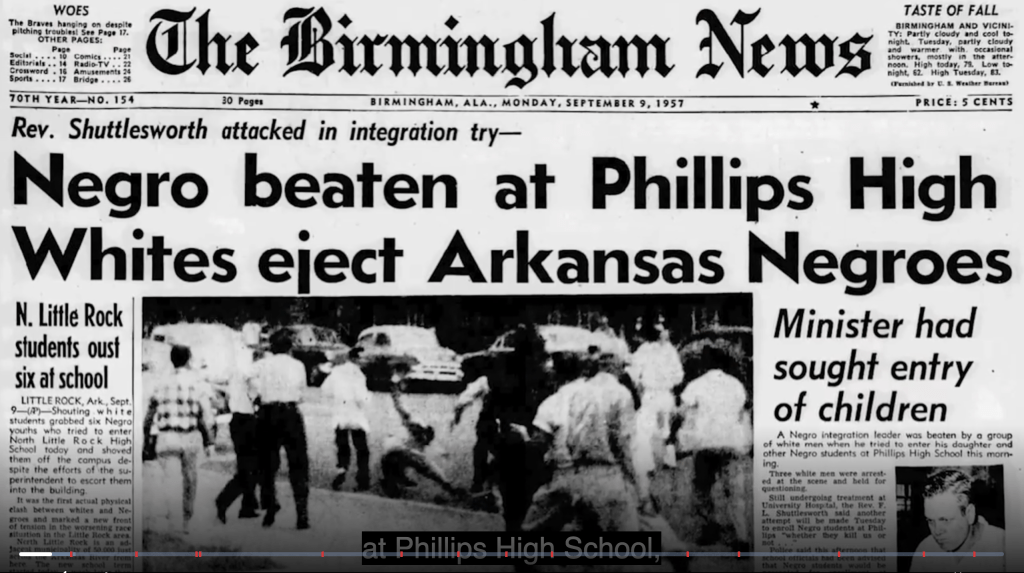
After the Brown vs.the Board of Education Supreme Court ruling desegregating schools, Birmingham schools stayed segregated. Shuttlesworth tried to enroll his own children at a white high school in Birmingham. The Klan was waiting for him in front of the school and beat him so bad he ended up in the hospital.
Shuttlesworth served as secretary of the Southern Christian Leadership Conference (SCLC) from 1958 to 1970. Joining forces with the Congress On Racial Equality (CORE), Shuttlesworth helped organize the Freedom Rides and in 1963, began a campaign called Project “C” to fight segregation in Birmingham through mass demonstrations and boycotts. Project “C” was about conflict, and they had all of the ingredients to make national headlines in Birmingham. They could count on Bull Connor to create physical conflict, so Shuttlesworth convinced Martin Luther King to come. The strategy was to fill the jails until they overflowed. There were lunch counter sit-ins and some arrests, but the adults were not showing up en mass to be arrested for fear of consequences. This is when the idea of the childrens march was hatched, which was an incredible success. A thousand children showed up to march and over 800 were arrested. The Sixteenth Street Baptist Church was where they held the mass meetings and trained the children for the march. When the jails overflowed on the first day, Bull Connor brought out the dogs and fire hoses on the second day. The national press was there to let the world know and the movement got the reaction they needed. Their demands were met, but shortly after that the 16th Street Baptist Church bombing took place and four little girls lost their lives. These events, among others, helped bring about the passage of the Civil Rights Act of 1964 and the Voting Rights Act of 1965. After the passage of the acts, Shuttlesworth continued to focus on issues in Birmingham until he died in 2011 at the age of 89. (https://www.nps.gov/. We need many more people today with the courage, conviction and the mind for strategy of Reverend Fred Shuttlesworth.









 Perspectives on the Road