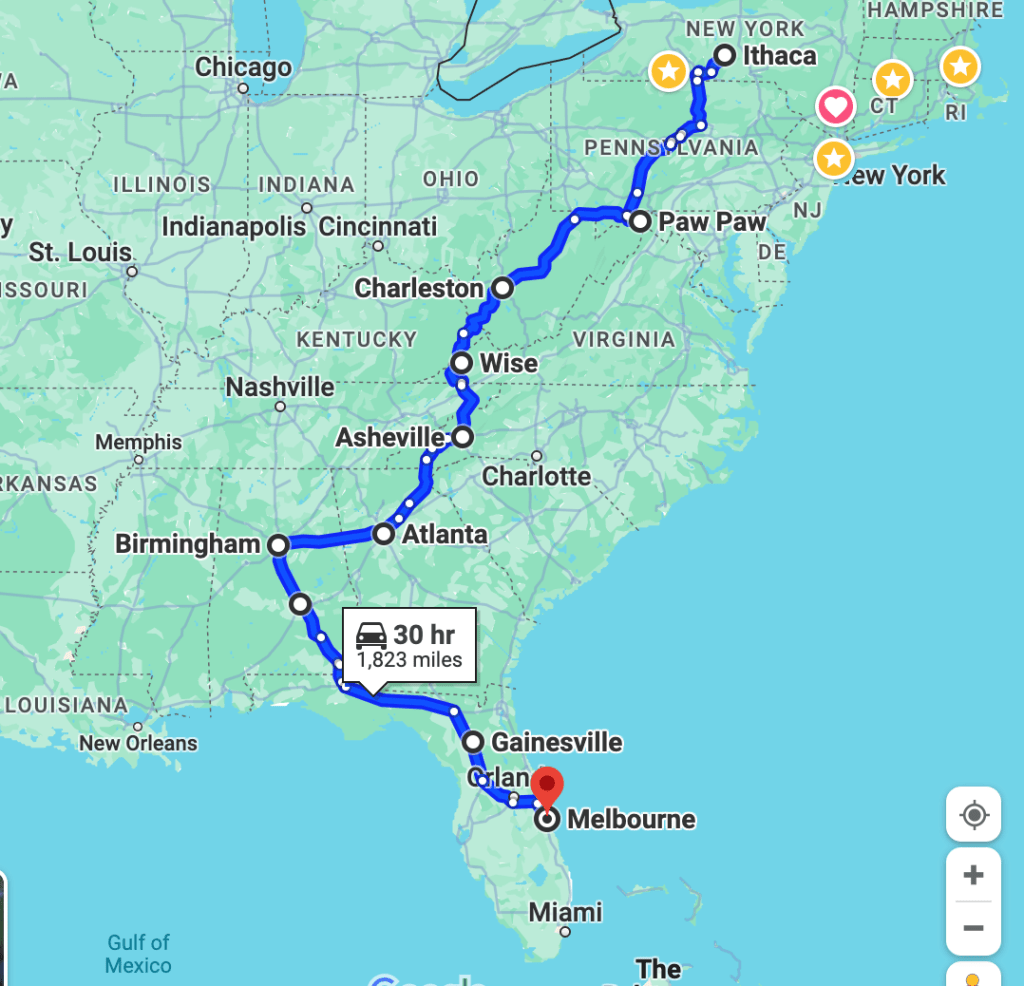
Well, even though we have had little winter this year in upstate New York, we are heading South in a week. This time we will explore West Virginia and follow the civil rights trail in Georgia and Alabama before we head to Florida. Stay tuned!
A retirement travel blog.

Well, even though we have had little winter this year in upstate New York, we are heading South in a week. This time we will explore West Virginia and follow the civil rights trail in Georgia and Alabama before we head to Florida. Stay tuned!

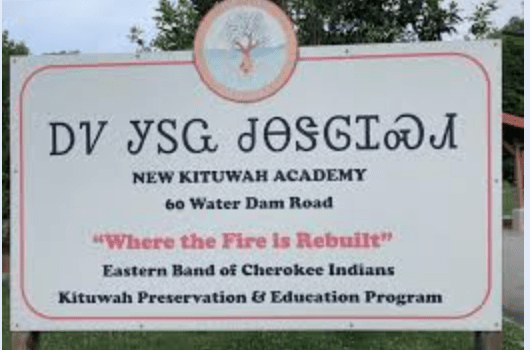
Today we drove through Cherokee, North Carolina, where the Eastern Band of Cherokees is a sovereign nation in Western North Carolina, with its own laws, elections, government, institutions, and schools. Though it has relationships with the United States federal government and the North Carolina state government, the Cherokees are self-governed and autonomous. In the early 1800’s, the Cherokee adapted the tribal governing structure to include a written constitution. Cherokee courts and schools were established and, in 1821, a Cherokee scholar named Sequoyah invented a written Cherokee language. (visitcherokeenc.com)
Located in Cherokee, North Carolina, the Eastern Band of Cherokee Indians were once part of a much larger Cherokee Nation population. However, in 1838, after gold was discovered in Georgia, President Andrew Jackson, ignoring the decision of a U.S. Supreme Court judge that his “Indian Removal Act” was unconstitutional, forced 16,000 native peoples on a 1,000-mile march into Oklahoma—the infamous Trail of Tears, during which between 25% and 50% of the Cherokee tribe died. (visitcherokeenc.com) The Cherokee Tribe became divided into what is known today as the Cherokee Nation and United Kituwah Band, located in Oklahoma, and the Eastern Band, made up of those who remained and rebuilt within North Carolina’s Qualla Boundary. (ebci.com)
The Cherokee are a resilient people. In spite of attempts by the U.S government to exterminate the Cherokee as a sovereign people, they survive and even thrive in North Carolina. Some members, who made it to Oklahoma, turned around and walked back home. Others are descended from Cherokee who managed to keep land they owned and did not march West. Others hid in the mountains and refused to be relocated. In 1850 the Eastern Band of Cherokee Indians numbered approximately 1,000. Presently, the Eastern Band of Cherokee Indians is a sovereign nation with over 14,000 members. (visitcherokeenc.com)
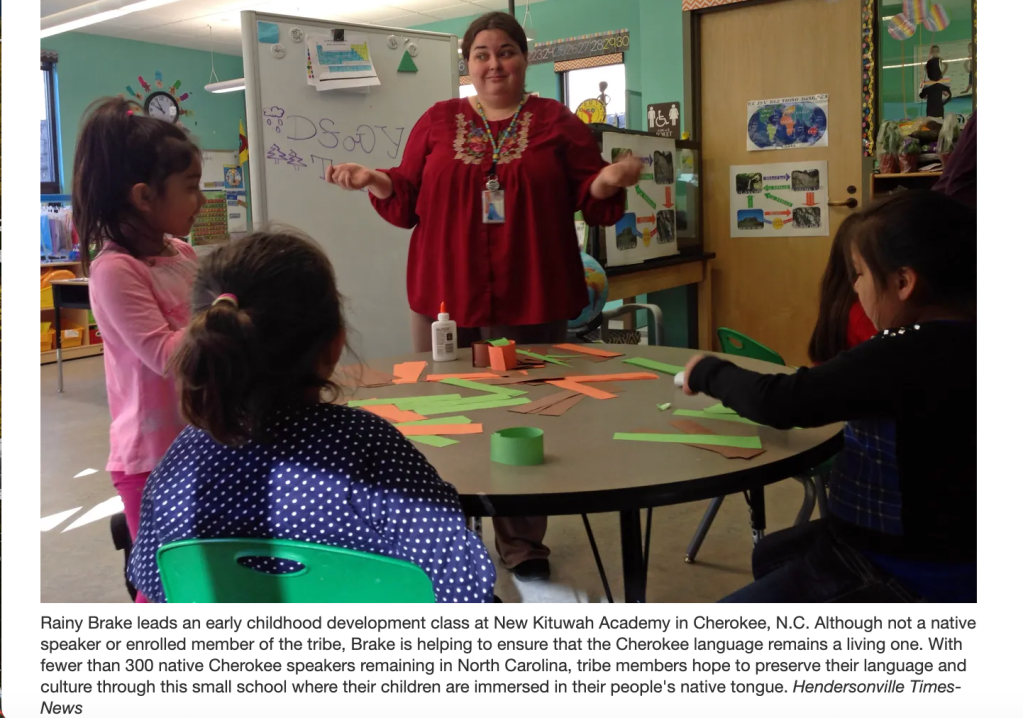
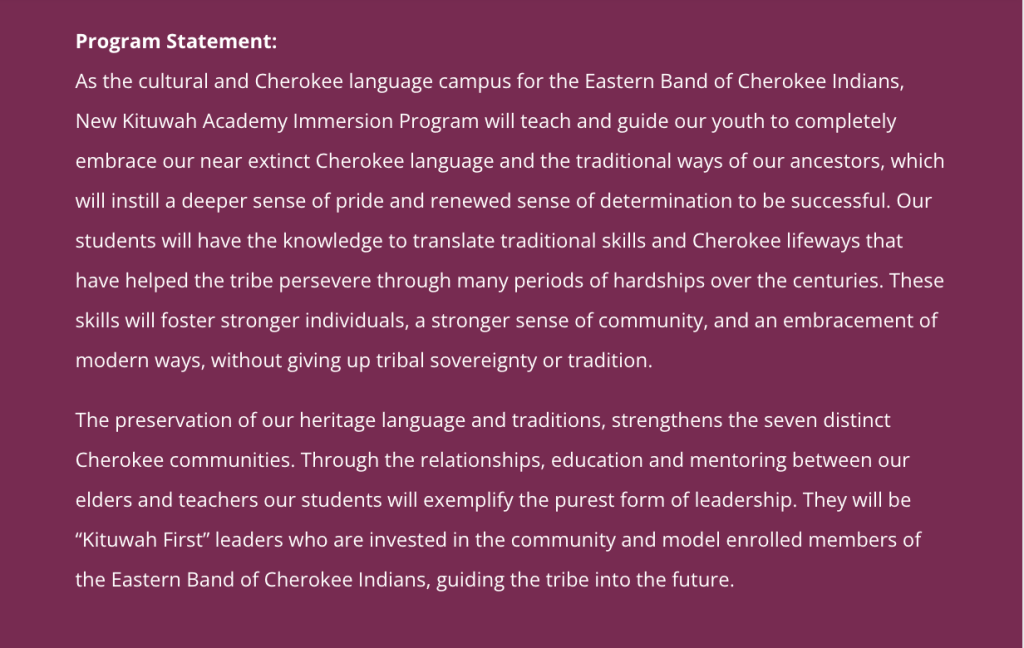
Today, Cherokee people do not live on a reservation, which is land given to a native American tribe by the federal government. Instead, in the 1800’s, the tribal members purchased 57,000 acres of property. This land, called the Qualla Boundary, is owned by the Eastern Band of Cherokee Indians and kept in trust by the federal government. The tribe financially pays for schools, water, sewer, fire, and emergency services without assistance from the federal government. Cherokee schools teach the Cherokee language. In fact, the New Kituwah Language Academy teaches only in the Cherokee language.The New Kituwah Language Academy’s program statement is quite inspiring:
You can click here if you want to learn some basic Cherokee.

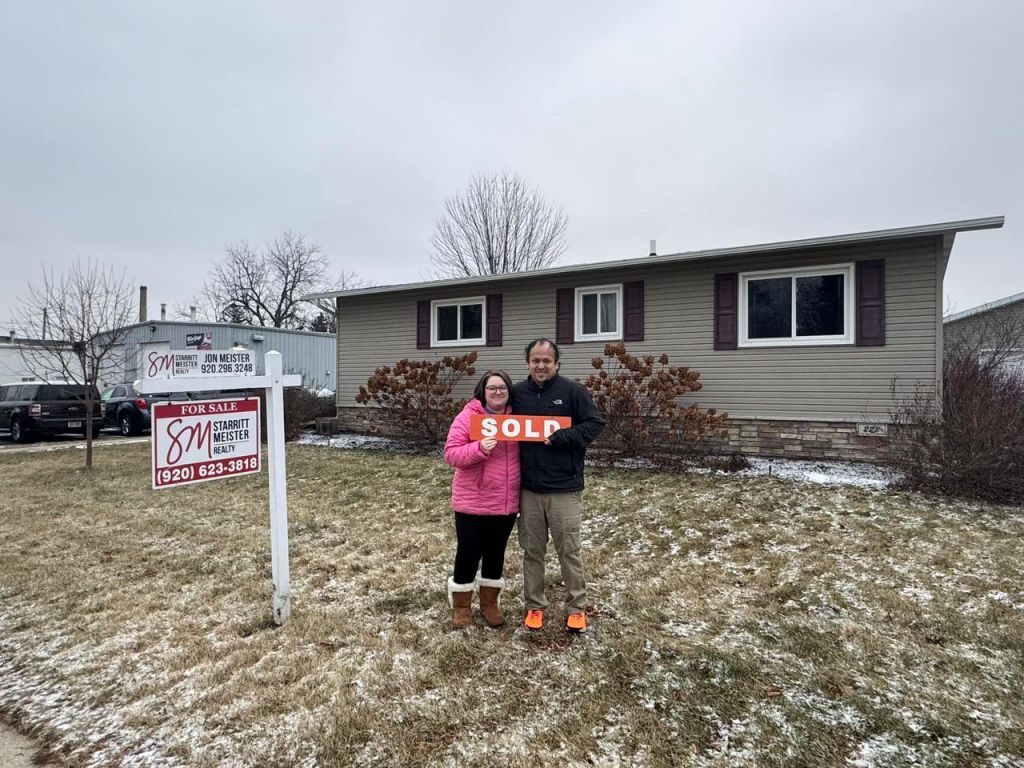
We are in Columbus, WI, about 30 miles Northeast of Madison, helping our son, Sebby and his girlfriend Jayne, settle in to their new house. Columbus is a sleepy little town with population, 5,540. It has above average schools and a cute little downtown. They moved in during a snowstorm and the neighbors were very helpful in snow blowing their driveway. So far it seems like a good move.
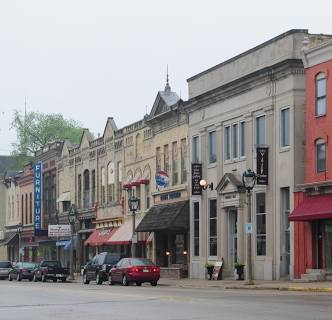

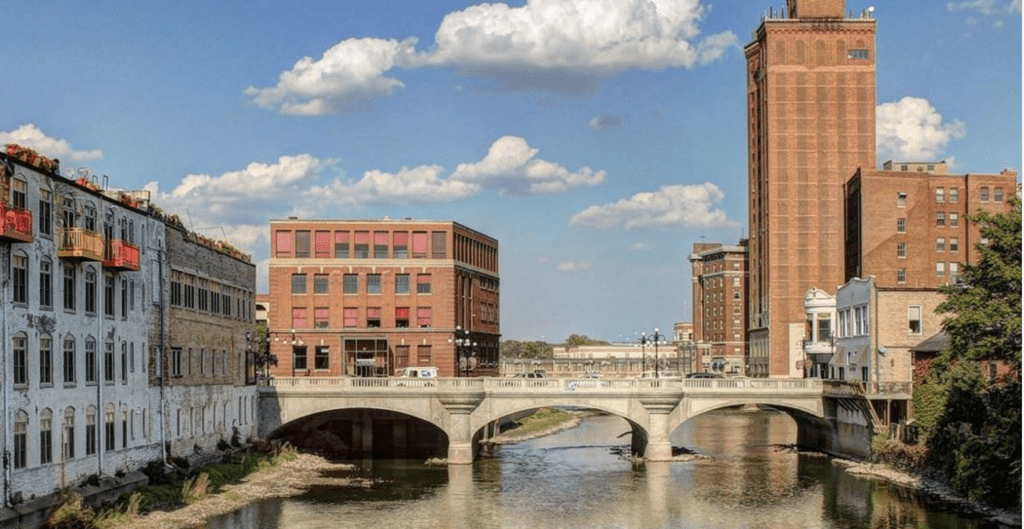
We stayed overnight in Aurora, Ill, a suburban city west of Chicago. We were surprised to see that it was a majority Latino city (primarily Mexican), which provoked me to look in to it’s history. I learned the story of Manuel Pérez, which illuminates some of the city’s history.
In 1910’s, Manuel Pérez was a young Mexican farmer with a small but growing family living in a central Mexican state. One day during the Mexican civil war, government troops rode up and turned their horses loose in his fields. The horses ate and trampled his corn, destroying months of hard labor. In disgust, he joined the rebels, but that was no better. Since the rebels were not getting paid, they lived off of the people, raiding villages and stealing their supplies. After 6 months he left the rebels, making him a marked man on both sides. He knew his only chance for survival was to flee. His father-in-law buried him, his wife and young son, Ben, in a load of hay and drove them to Northern Mexico where they successfully escaped. He spent several year working in American steel plants in Northern Mexico and eventually decided to emigrate to the United States. In 1919, Peréz and his family, following the harvest as a migrant farmworker, moved to the southwest United States. In 1923 a Perez family friend, who was working in Aurora, Illinois at the Chicago, Burlington, & Quincy Railroad (CB&Q), told the Perezes that the CB&Q needed workers so much that it would pay the transportation of laborers willing to move to Aurora and do railroad work. The friend sent the family CB&Q passes and told them to bring others as well. The Perezes accepted this offer. and moved to Aurora in 1924. (The Community-Building Experience of Mexicans in Aurora, Illinois, 1915-1935 https://www.jstor.org/stable/40193974?seq=2)
These Mexican immigrants, in choosing the factory over the field, were the urban pioneers for their group. One of the major characteristics of the overall Mexican population between 1930 and 1950, contrary to popular stereotype, was their extensive, rapid urbanization. By 1930, fifty-eight percent of Mexicans resided in urban areas whereas by 1950, over seventy percent of Mexican immigrants and
their children resided in such areas. (Jose Hernandez Alvarez, “A Demographic Profile of the Mexican Immigration to the United States, 1910-1950,” Journal of Inter- American Studies 8 (July 1966).
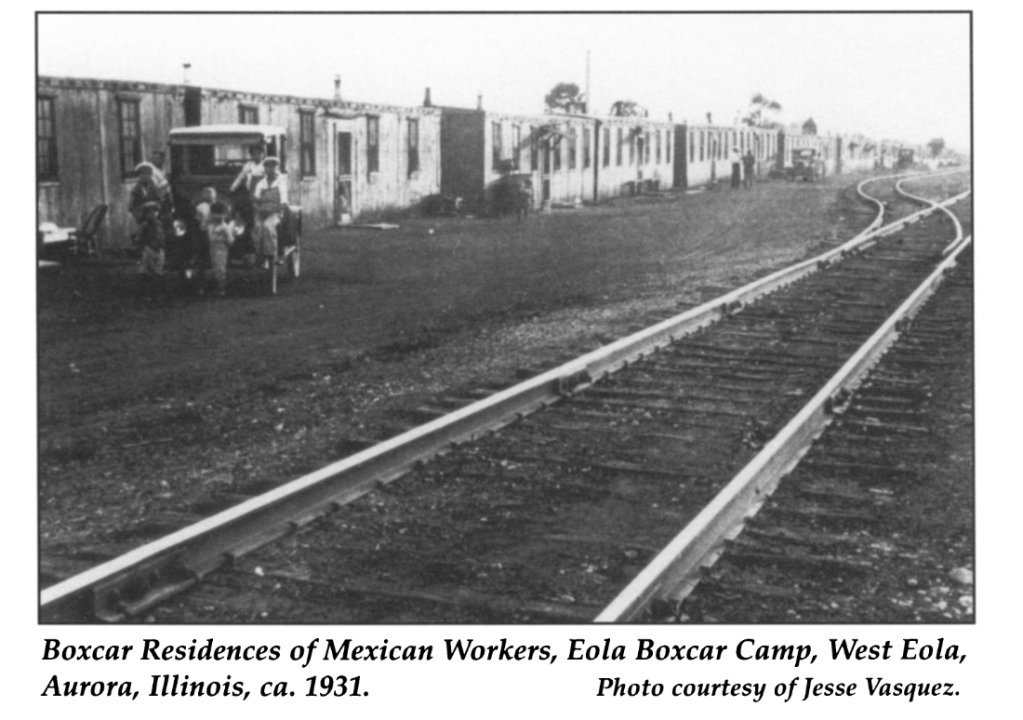
In Aurora, the railroad not only provided transportation from the Southwest and work building tracks, it also provided work building railroad cars and even provided housing in boxcar camps.
In the 1920’s Aurora was a regional industrial and railroad center for the surrounding farming communities in the Fox River Valley. Almost from its beginning in the 1830s, Aurora was a progressive, ethnically diverse town. From the 1850s up through the 1920s, a significant number of immigrant groups
settled in Aurora. The predominant immigrant groups, as reflected in the 1910 census, were as follows: Germans, Romanians, Hungarians, Swedes, Irish, and Russians. Of course, many, other, smaller groups
contributed to Aurora’s ethnic mosaic as well, and Mexicans started to arrive during World War I, continuing through the 1920s. Today Latinos are the largest ethnic group in Aurora, with Mexicans the largest nationality present.
It is interesting to note that the U.S. immigration laws in the 1920s were very strict in an effort to restrict immigration from Europe. There was an exemption for the Western Hemisphere, making Mexico a primary source of large-scale, cheap labor first for the Southwest farms, then the midwest industries.
Aurora was initially divided into two parts: East Aurora and West Aurora. Upon its incorporation in 1857, the two regions merged to create one city. The city’s industry was based around factories and the railroad, until the railroad shops closed in the 1960s, which led to the closure and relocation of other factories. This, in turn, led to an unemployment rate that climbed to 16% during the 1980s. Further development of the city also was a contributing factor to the decline of other areas of the city, which in turn led to heightened crime rates and gang violence. One good thing that did come out of this dark period was that the city was becoming very ethnically and culturally diverse.
During the late 1980s, the city began to make a comeback. More businesses opened and development spread following the construction of the Hollywood Casino in the early 1990s. Development continued through the 1990s and the population of Aurora continued to grow. (worldpopulationreview.com)Today Aurora is the 2nd most populous city in Illinois, after Chicago, with a population of 180,542 (2020 census).
Diversification is changing all of the rusty satellite cities of old into booming new “edge cities,” as the wealth of the Chicago suburbs spreads out to fill former farmland and joins with outriding urban cores. Each of these burgeoning powerhouses is developing a sizable minority population with roots in Latin America, and mainly in Mexico. “A river, a casino and Latinos. They all have these three,” Gonzolo Arroyo, the first Hispanic member of the school board in Aurora East observes, speaking of Chicago’s three older satellite cities: Elgin, Joliet and Aurora. (Chicago Tribune).
In spite of a snow storm, we are on our semiannual trip to Madison, Wisconsin to visit our son. so far the roads are fine. We will hope for the best when we get near the lakes!

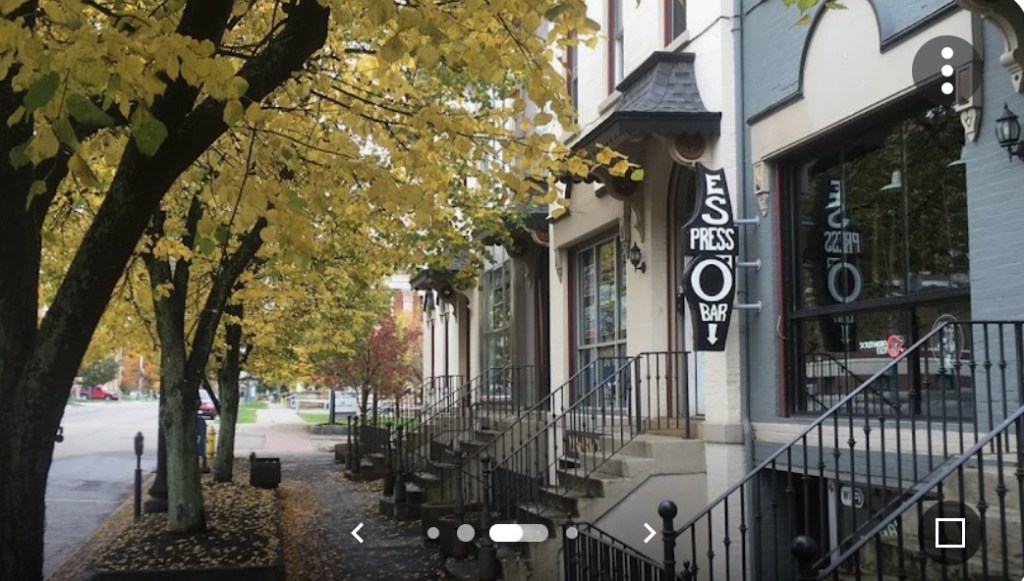
We stopped for lunch at a cozy little vegetarian restaurant, brewery and wine lounge in Jamestown. This was a great find because there are not many places to stop on this stretch of Rt. 86.
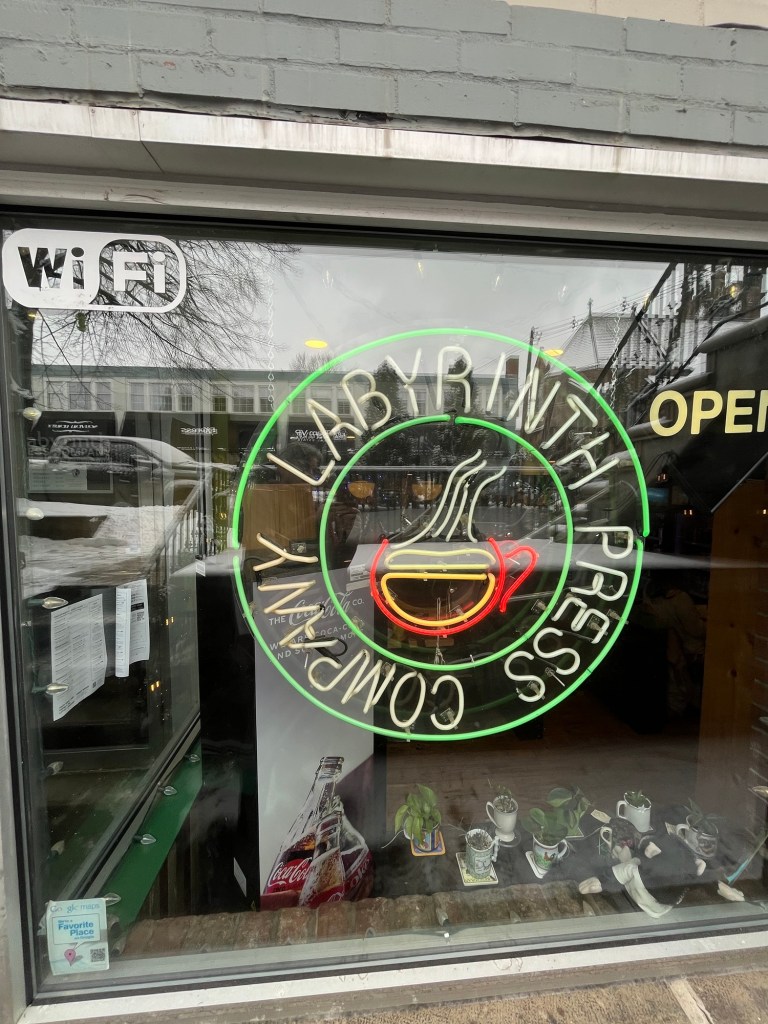
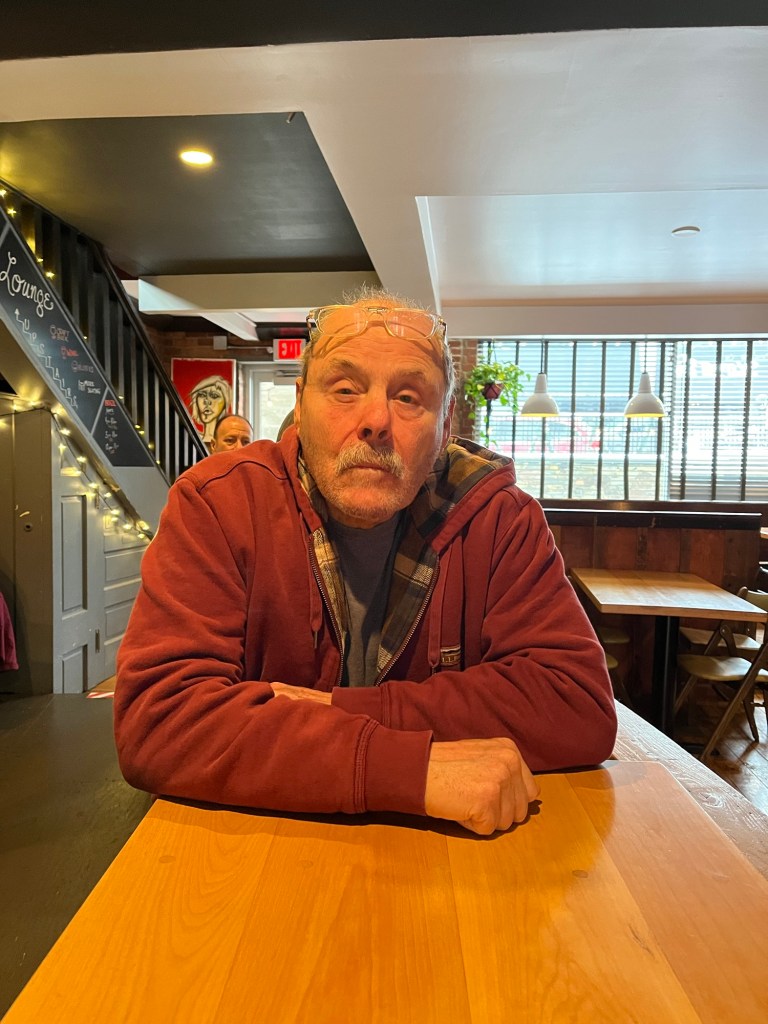
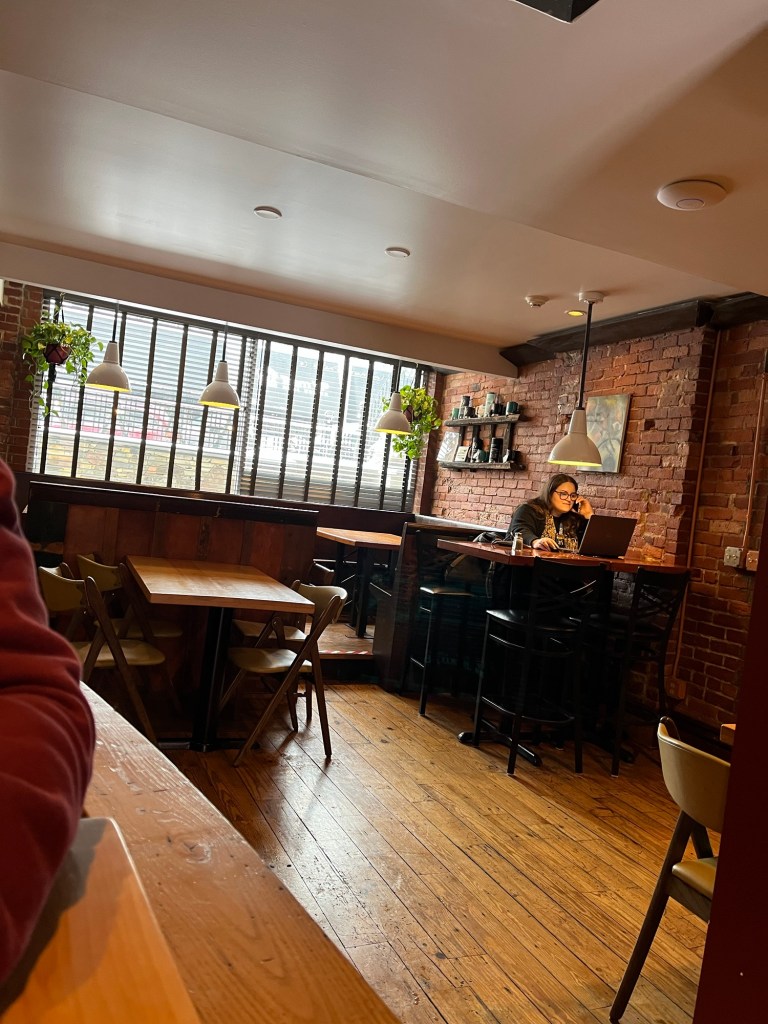
We were impressed by the friendly table service, quality food, and quick service. We might have to make this a regular stop. Give it a try if you find yourself near Jamestown, New York.

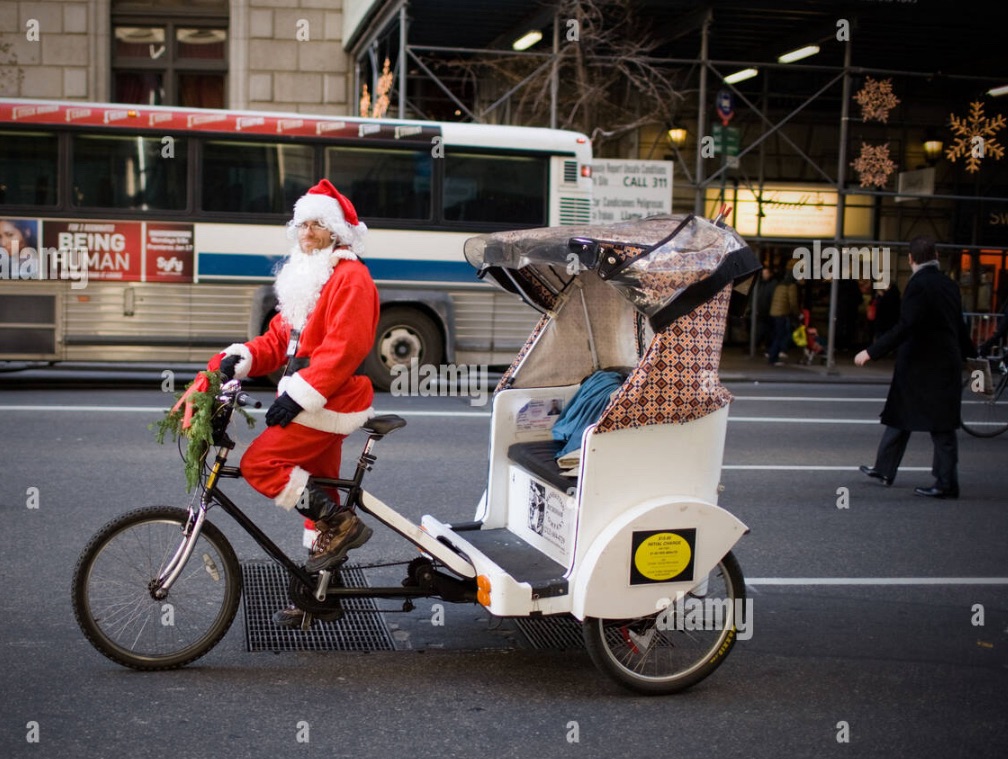
There is something special about New York City st Christmas. The street vendors selling roasted nuts, Santa driving pedi-cabs, Macy’s store windows and the lights!


We went to see Aladdin at the New Amsterdam theatre on Broadway. It was not the best Broadway show I have seen but a lot of fun and larger than life sets one expects on Broadway.

Merry Christmas to all! 🎄🎄🎄🎄🎄🎄🎄

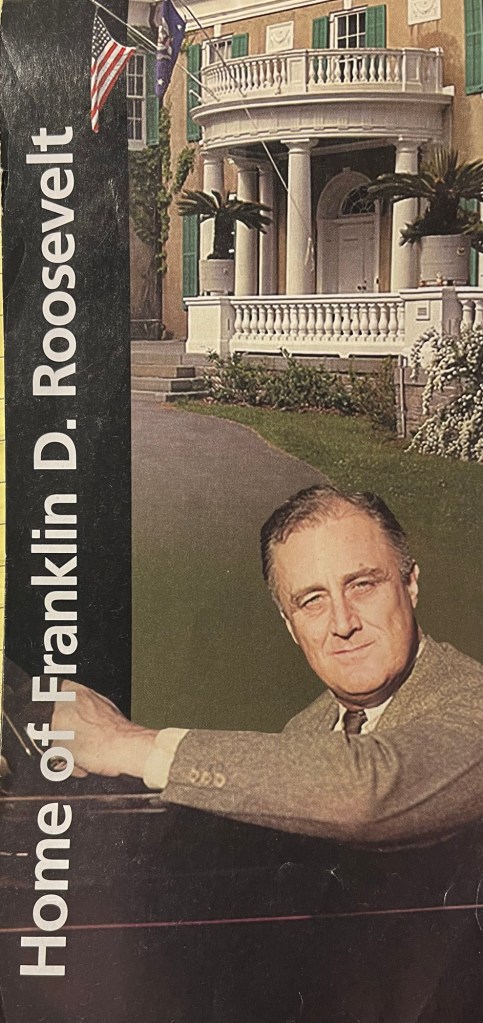
Our main reason for stopping in the Hudson Valley area was to visit the FDR home and presidential library in Hyde Park. If you decide to go, allow a whole day because there is much to see.
FDR won a historic mandate in 1932. After three years of brutal economic depression, Americans decisively rejected President Hoover and the ruling Republican Party. Roosevelt defeated Hoover in a landslide and Democrats seized control of Congress for the first time in 16 years. They dominated the new Senate by an overwhelming margin of 60 to 35 and enjoyed a 310 to 117 majority in the House. Voters handed Roosevelt and the Democrats a blank check. Their only demand was action and FDR acted!

Imagine what could be done about climate change and other pressing issues today with that kind of mandate?
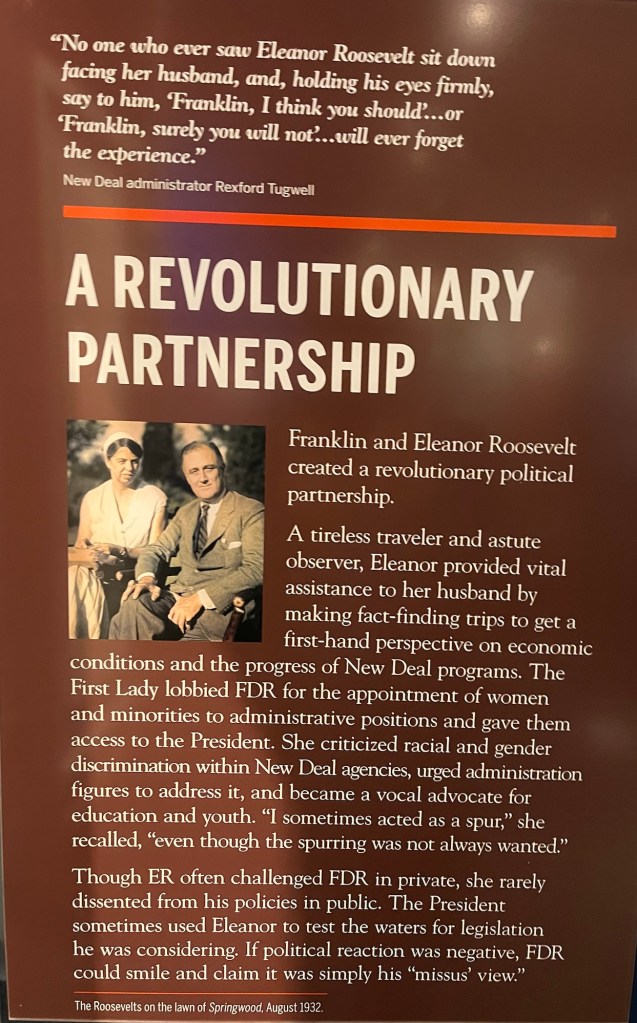
“Eleanor dreaded becoming First Lady. A writer, teacher, social reformer, political activist, she relished her hard-won freedom and financial independence. Though happy for her husband’s success, she now faced the prospect of a life confined to the traditional social duties of the ‘President’s Wife’. At FDR’s insistence, Eleanor resigned all her professional positions. She came to Washington with no defined role other than White House hostess. Yet ER soon began showing FDR how her energy and interest could help him achieve his goals. Instead of conforming to the accepted role of First Lady, she redefined it. She began holding press conferences on political matters for female reporters. She made fact finding trips- logging 40,000 miles in three months. She asked Americans to write to her with their concerns. Within months she received 300,000 letters. ER’s actions served notice that she was a new kind of First Lady.” From museum display
Here are a few more fun facts:
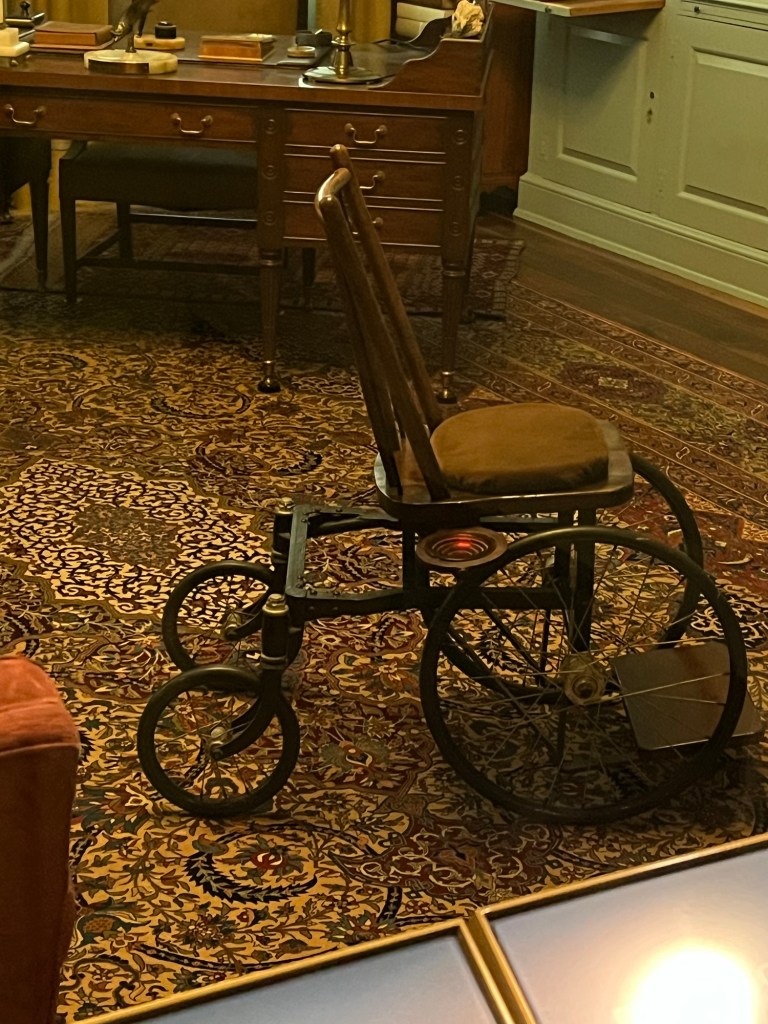
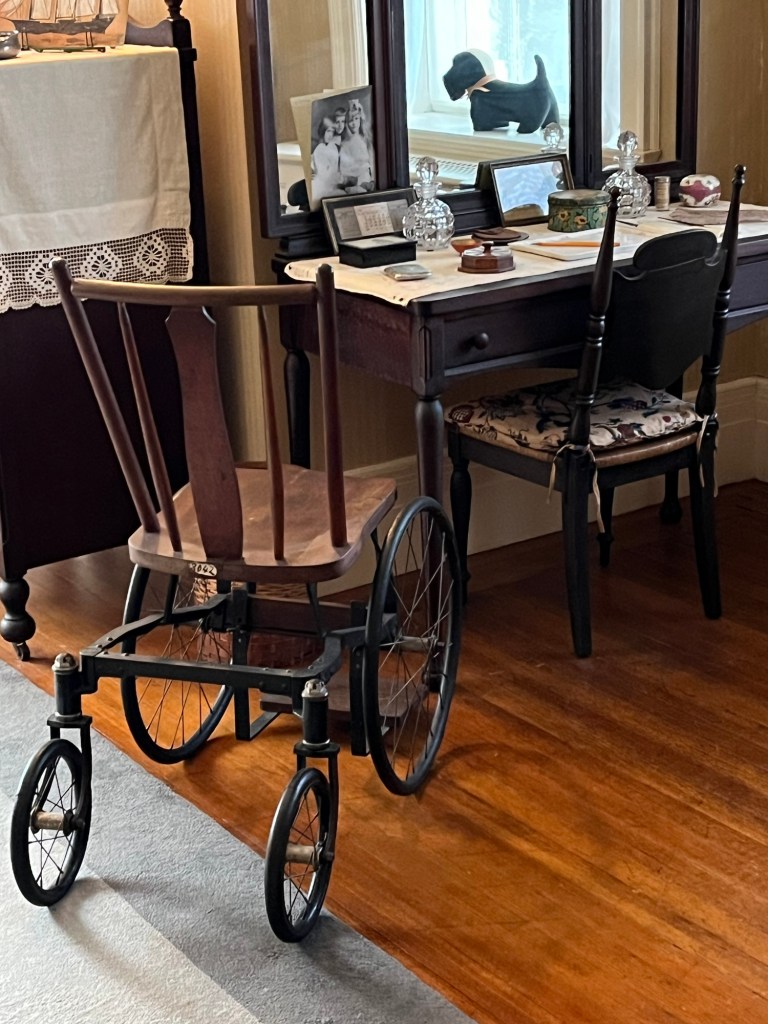
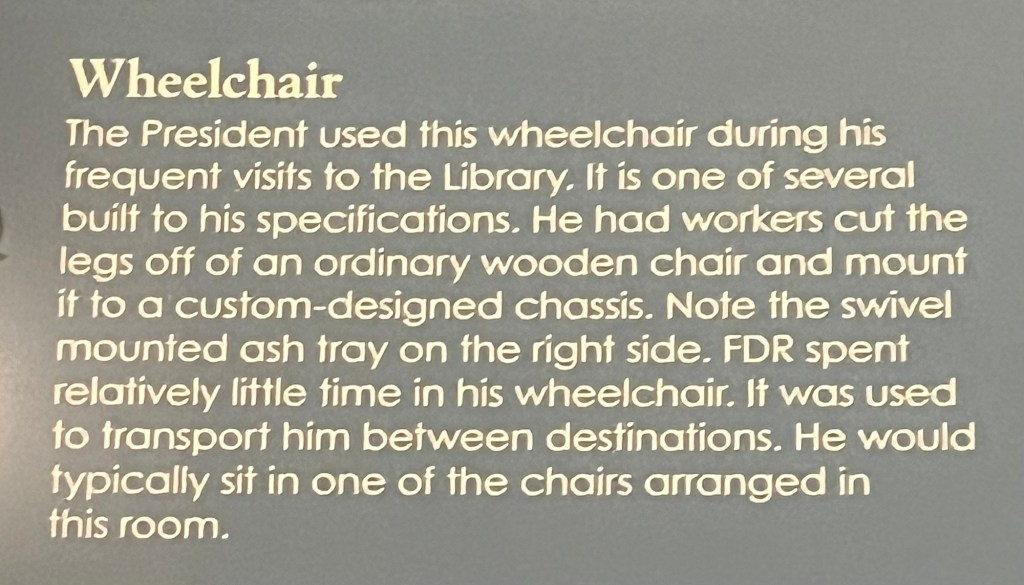
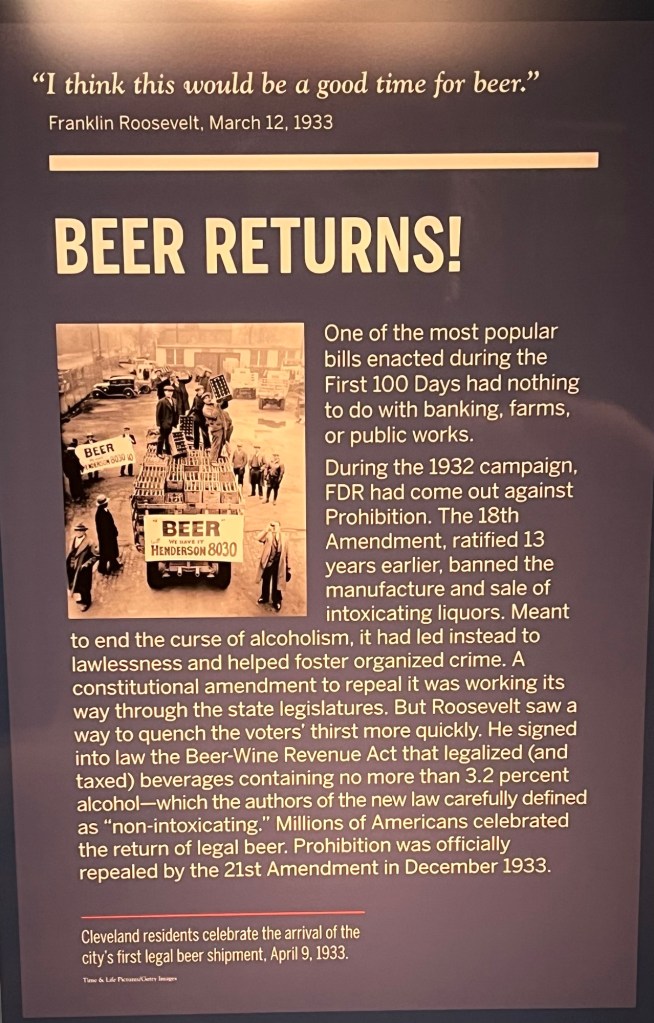
We were sorry that we did not see Valkill, Eleanor’s retreat on the other side of the estate. We plan on a return trip in the summer!
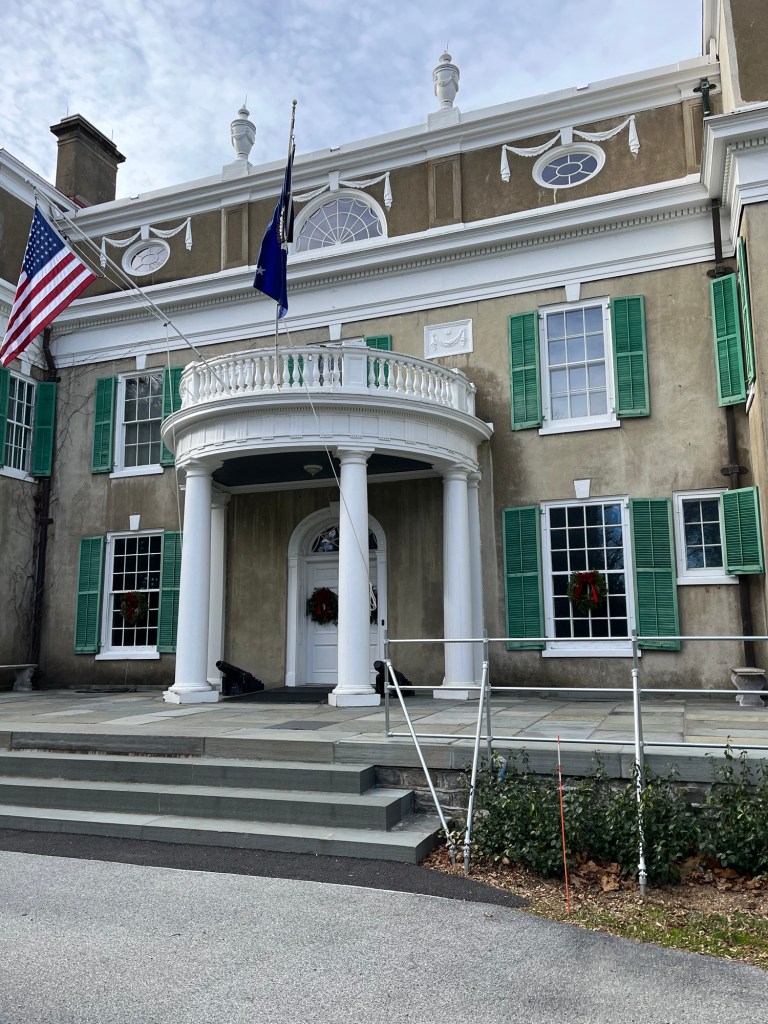
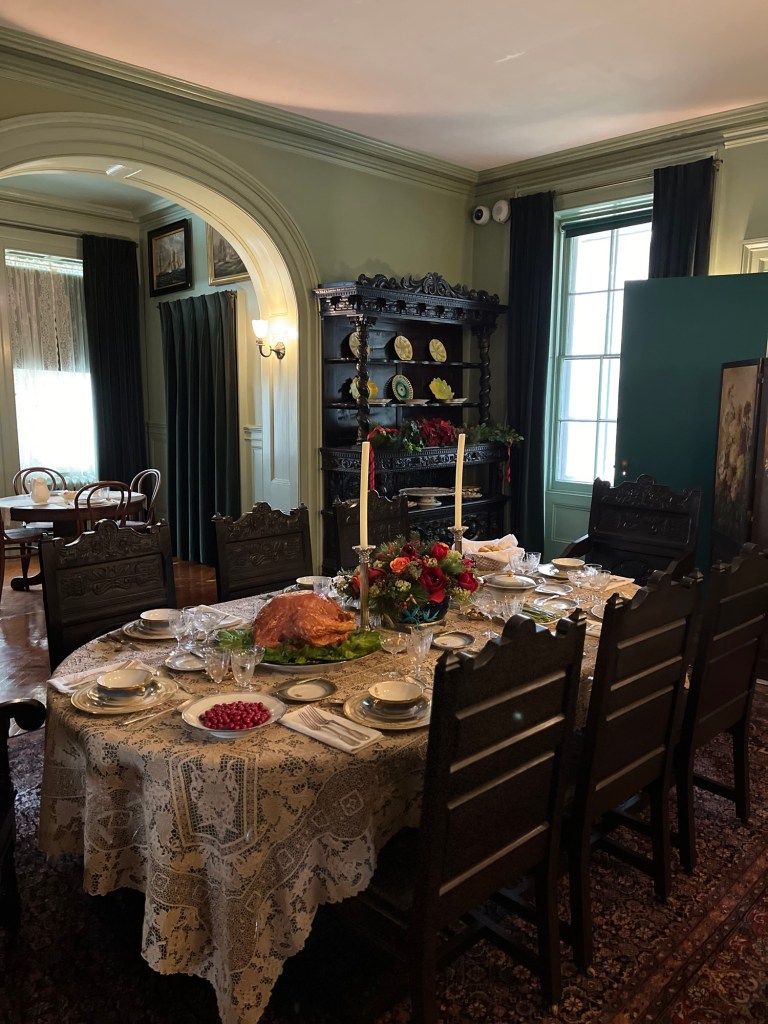
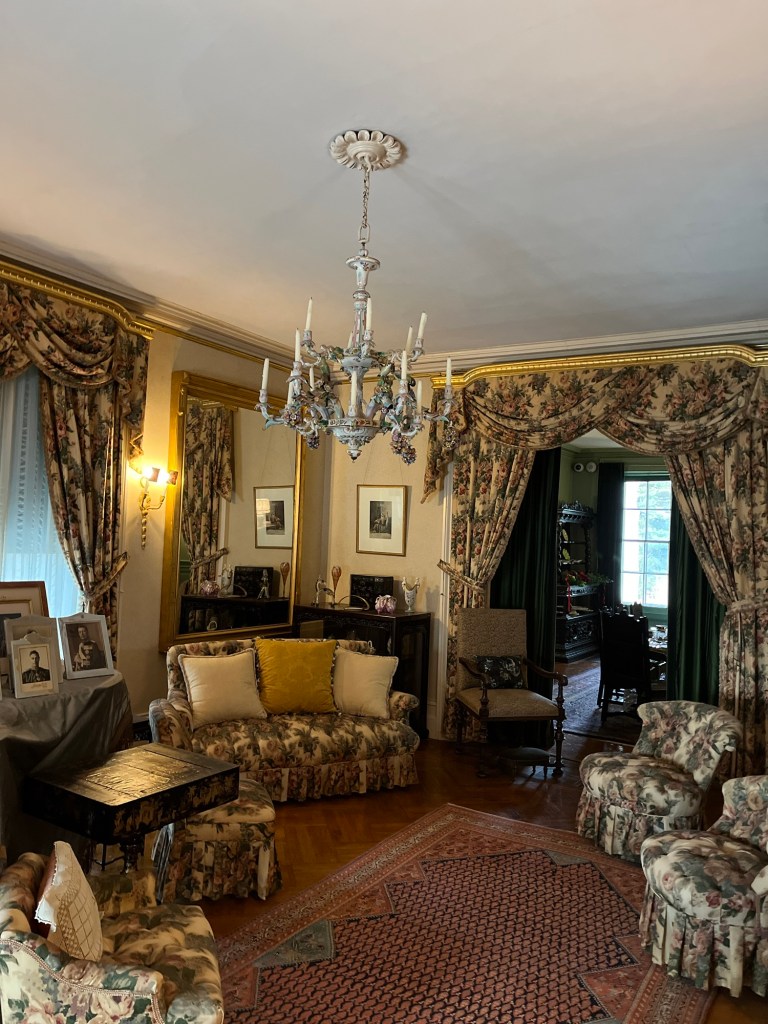
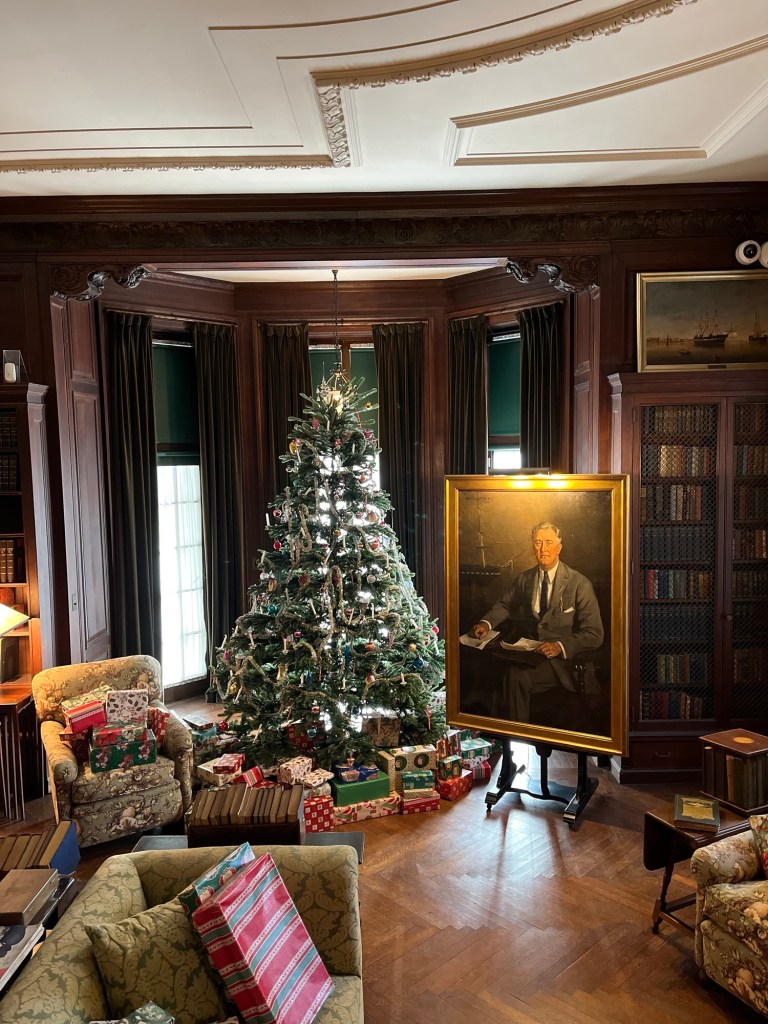
Here is a collage from the Roosevelt residence, Springwood, where FDR was born and lived throughout his life.
I did say we were going on a trip to New York City to experience Christmas lights. Along the way, in LaGrange, NY (near Poughkeepsie) we took in the Gay family home display which holds the Guinness World Record of the most Christmas light in a display- 720,000 lights, all programmed to music in order to celebrate the holiday season in style.
I have known about Sojourner Truth most of my life, but she always seemed larger than life and more like a myth than an actual person. It turns out the actual person, Isabella Baumfree, was born in 1797 and was enslaved on a farm in the town of Esopus in Ulster County, New York in the Hudson Valley. At the age of 29 she liberated herself from a by walking 11 miles to freedom over the Shaupeneck Ridge carrying her infant daughter, Sophia, the youngest of her four children. She found help from Quaker Levi Rowe and his wife who lived in a cabin in her path. (scenichudson.org) They directed her to the Van Wagenen family who took her in and helped her buy her freedom from from her enslaver for $20 and her daughter for $5 one year before slavery was outlawed in New York state.
In 1828 Sojourner Truth sucessfully sued for the freedom of her son, Peter, in the Ulster County Courthouse. in Kingston, NY. Early in 1827, Peter had been sold and sent to Alabama illegally. She succeeded in regaining custody of her son, but Peter never recovered from the cruelty and terror he experienced while enslaved in the Deep South. While she was fighting for custody of Peter, Isabella experienced a spiritual awakening, which guided her the rest oif her life.
In 1828, Isabella moved to New York City. She joined the African Methodist Episcopal Zion Church, which allowed her to meet and speak with many Black community leaders. She continued to explore her new religious calling and learned more about the abolitionist movement. She also found new causes to champion, including temperance, women’s rights, Black uplift, and pacifism. She took up teaching and preaching in New York’s poorest neighborhoods, boldly going places other women activists feared to visit.
For the next 11 years, Isabella worked as domestic servant before undergoing a second spiritual transformation. She believed God was calling her to travel and preach about the causes she believed in. To mark the start of this new chapter in her life, Isabella changed her name to Sojourner Truth. She was about 45 years old.
Sojourner traveled throughout the Northeast, telling her story and working to convince people to end slavery and support women’s rights. She had little money, so she often walked from place to place and sometimes slept outdoors. She met abolitionist leaders like Frederick Douglass, William Lloyd Garrison, and David Ruggles along the way. She never shied away from challenging these celebrities in public when she disagreed with them. Sojourner’s lack of education and her Dutch accent made her something of an outsider, but the power of words and her conviction impressed all those around her.
Though Truth never learned to read or write, she produced a book and sold it to support herself. This Narrative, dictated by her to Olive Gilbert was first published in 1850 and was republished five times during her lifetime. Later editions included selections from her Book of Life, a scrapbook containing newspaper articles, letters, songs etc., that she collected.
In spite of many obstacles in her life, Sojourner Truth’s tenacity, courage and conviction helped her became one of the most consequential abolitionists, and activists for African-American civil rights, women’s rights, and alcohol temperance in U.S history. (Wikepedia).
 Perspectives on the Road