On this trip I am going to share examples of courage fighting injustice, both current and from for history. I very much need this inspiration to keep fighting the good fight.
Last night, we stopped in Elyria, Ohio, on the Black River six miles from Lake Erie and 20 miles west off Cleveland.
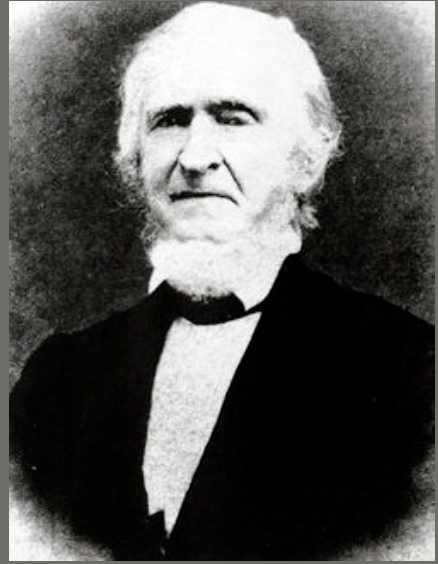
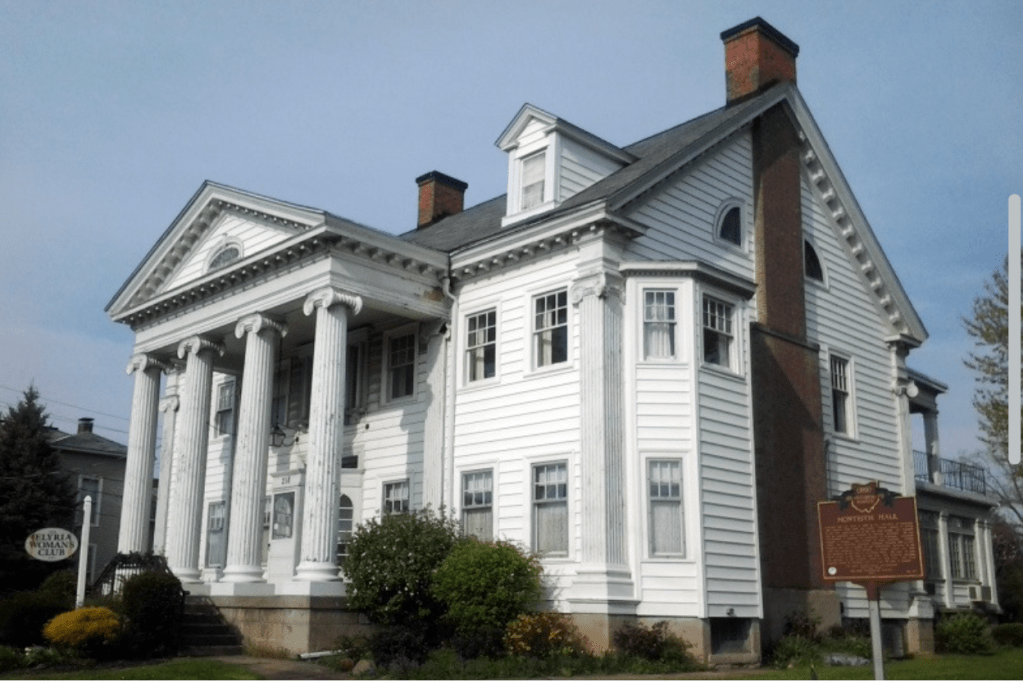
We learned about Reverend John Monteith (1788-1868), who was an abolitionist in Elyria, Ohio who used his home, Monteith Hall, as a “station” on the Underground Railroad. For seven years, his home served as a hiding place for enslaved people escaping to freedom. A tunnel ran from the back of the house to the Black River, which was used to help people escape to the shores of Lake Erie. From there they could board a ship across the lake to Canada and freedom. The home was built in 1835 as a boarding school for girls , which he also gets props for, and a residence for Montheith’s family. He managed the Underground Railroad network on the southern shore of Lake Erie.
It has been a minute since we have travelled anywhere. We are on the road again to visit our son in Wisconsin. Join us on our journey! Not even sure of where we will go, but we will let you know what we find along the way.
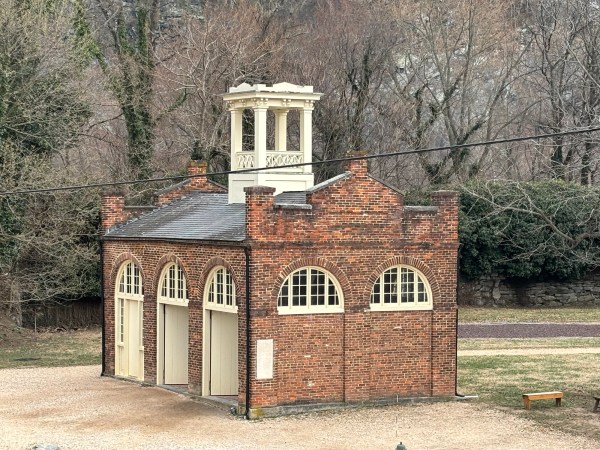
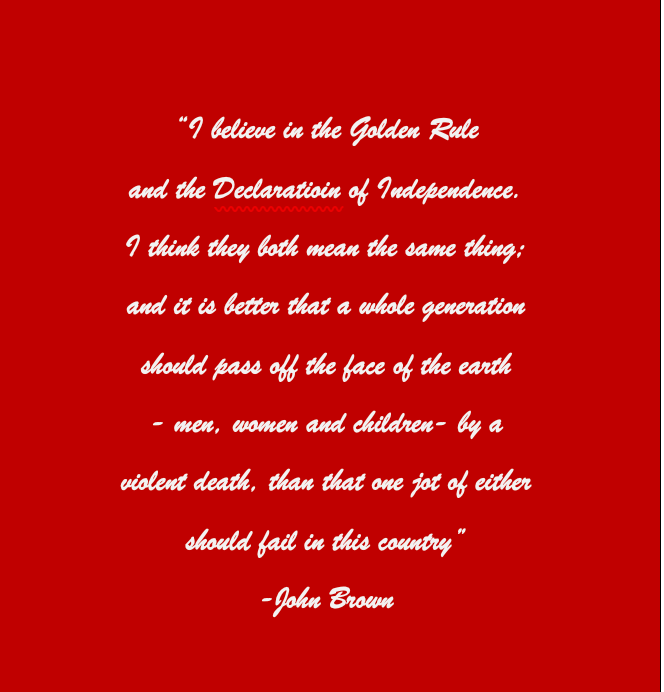
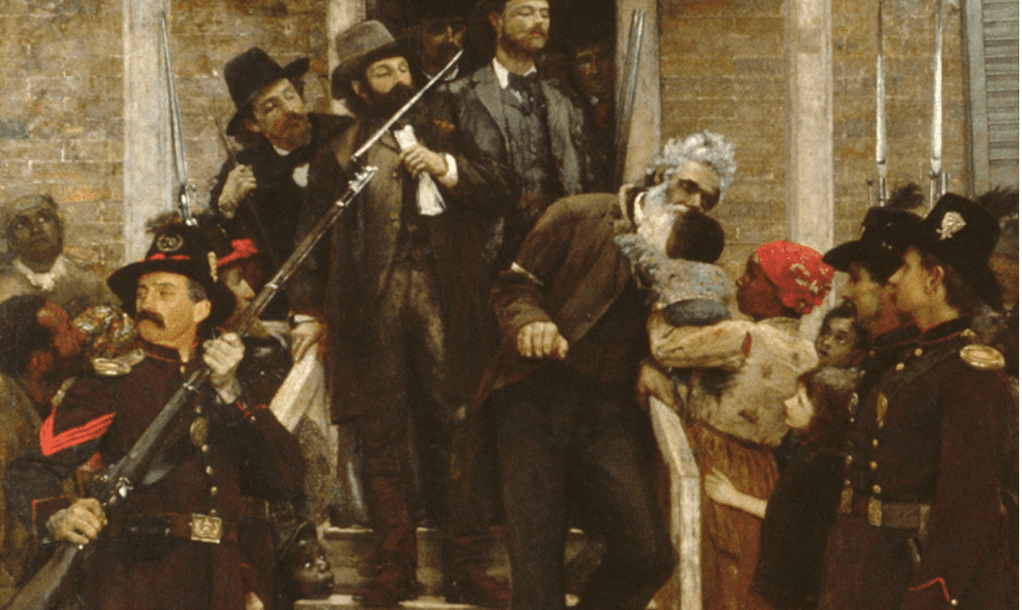
Today we went to Harpers Ferry National Park in West Virginia. Harpers Ferry is where John Brown took his last stand against slavery, He attempted to take the federal army at Harpers Ferry in order to lead a slave rebellion and create an armed underground railroad. The fire engine station (shown in the picture above) was used by John Brown and his army of 21 men as their fort. It was where they were captured and some were killed on October 18, 1859. He was hung shortly after. John Brown’s last written words predicting the Civil War were: “I, John Brown, am now quite certain that the crimes of this guilty land will never be purged away but with blood”.
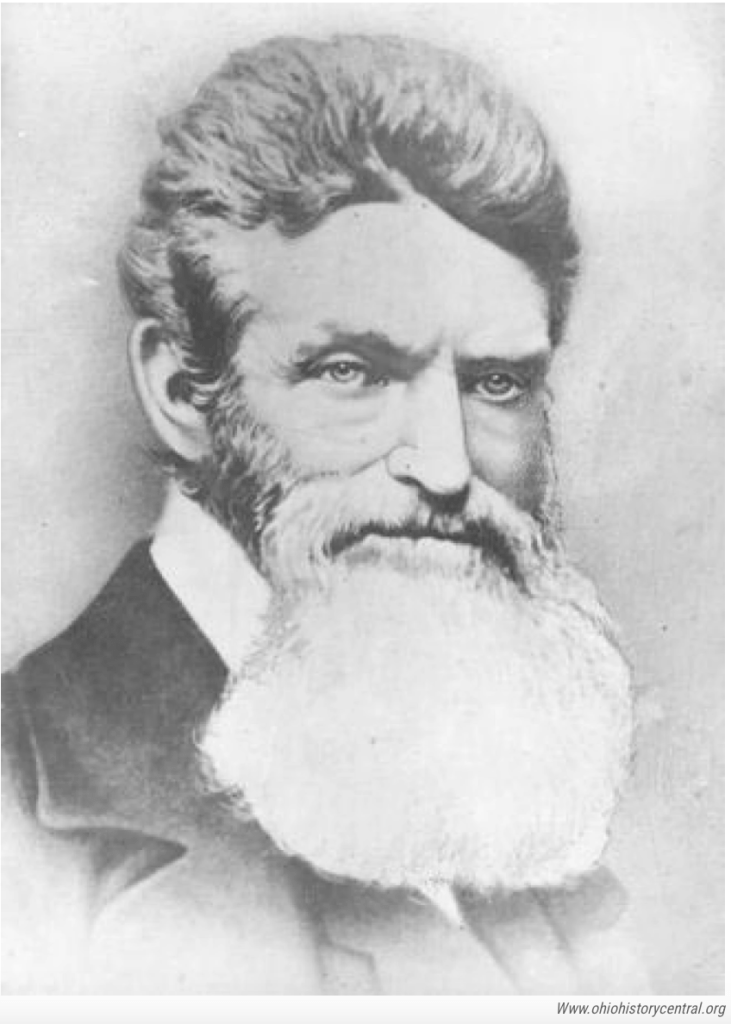
John Brown
I have been interested in John Brown for a long time, especially after reading the book, Cloudsplitter, by Russel Means. It is written as historical fiction, from the perspective of his son and based on historical documents. I feel a bit guilty admiring John Brown so much since violence goes against my Quaker beliefs. Nonetheless, his steadfast dedication to the abolition cause, in spite of major hardships in his life is an inspiration.
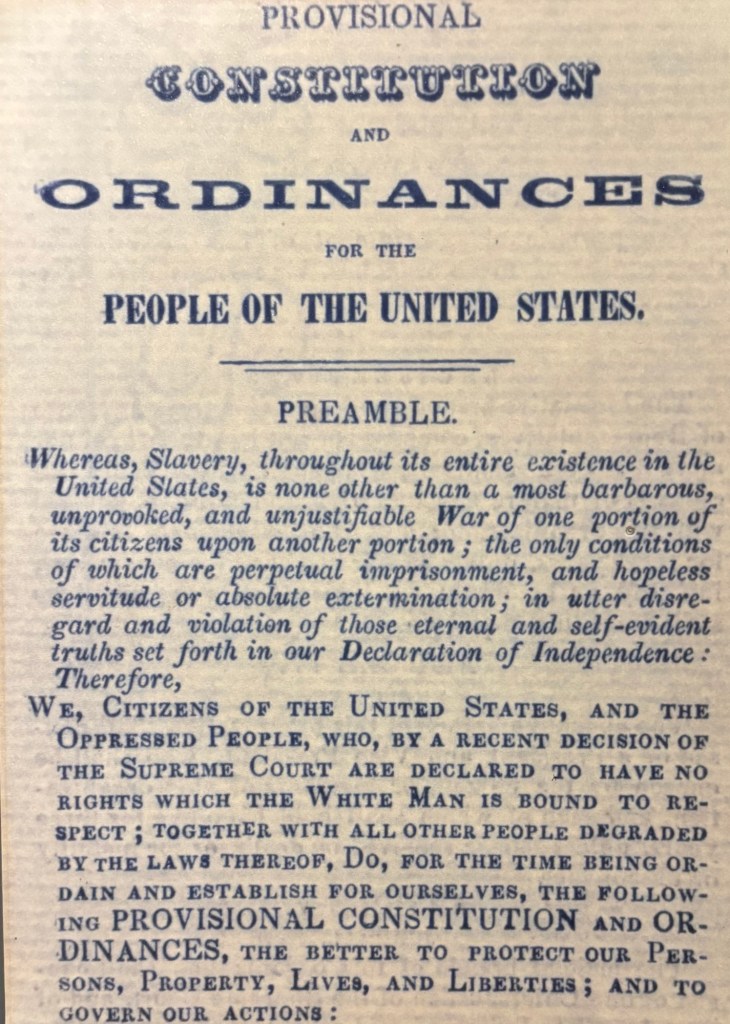
Thomas Hovenden, The Last Moments of John Brown (detail), 1182, oil on canvas, 196.5 x 168.3 cm. Courtesy The Metropolitan Museum of Art.At an anti-slavery convention in Chatham, Ontario, John Brown presented a new constitution abolishing slavery.
While the whole plan at Harper’s Ferry was ill conceived, it did have the support and financial backing of well-heeled abolitionists and the support of Frederick Douglass, who knew of the plan.Harriet Tubman thought very highly of John Brown as well. Brown intended to create a corridor on the underground railroad. By arming abolitionists and freed enslaved people, safer passage to freedom could be provided.
After John Brown was executed in Charlestown, VA, a funeral procession embarked across six states. The funeral train, carrying his coffin traveled through a divided nation teetering on the brink of civil war. John Brown was laid to rest at his farm in North Elba, New York, in the Adirondacks. His body lay in state at the Adam’s Hotel in Elizabethtown, NY (near North Elba). I am proud to say that one of my ancestors, ACH Livingston (an abolitionist from the area) served as a poll bearer. On December 8, 1959 John Brown was laid to rest. John Brown’s Farm and grave is now a State Historic Site.
Yesterday we visited McLeod Plantation, one of many former southern plantation’s that gives tours near Charleston, South Carolina. A major difference berween the McLeod Plantation and all of the others is that it is owned by Charleston County Park, Recreation and Tourism Commission rather than the heirs of the original planation owners. It is also a member of the International Coalition of Sites of Consciousness, that focuses on transforming places that preserve the past into spaces that promote civic action.
The McLeod Plantation has been controversial because it introduces you to the Gathers and Dawson families, who were enslaved on the plantation, as well as the McLeods. It talks about the free black Massachusetts 55th Volunteer Infantry emancipating the enslaved people and using the planation as headquarters as well as the plantation being the headquarters for the James Island Freedman’s Bureau during Reconstruction. It tells the truth about the brutal treatment of the enslaved people on a sea island cotton plantation and the plight of Black folks in Charleston even to this day.
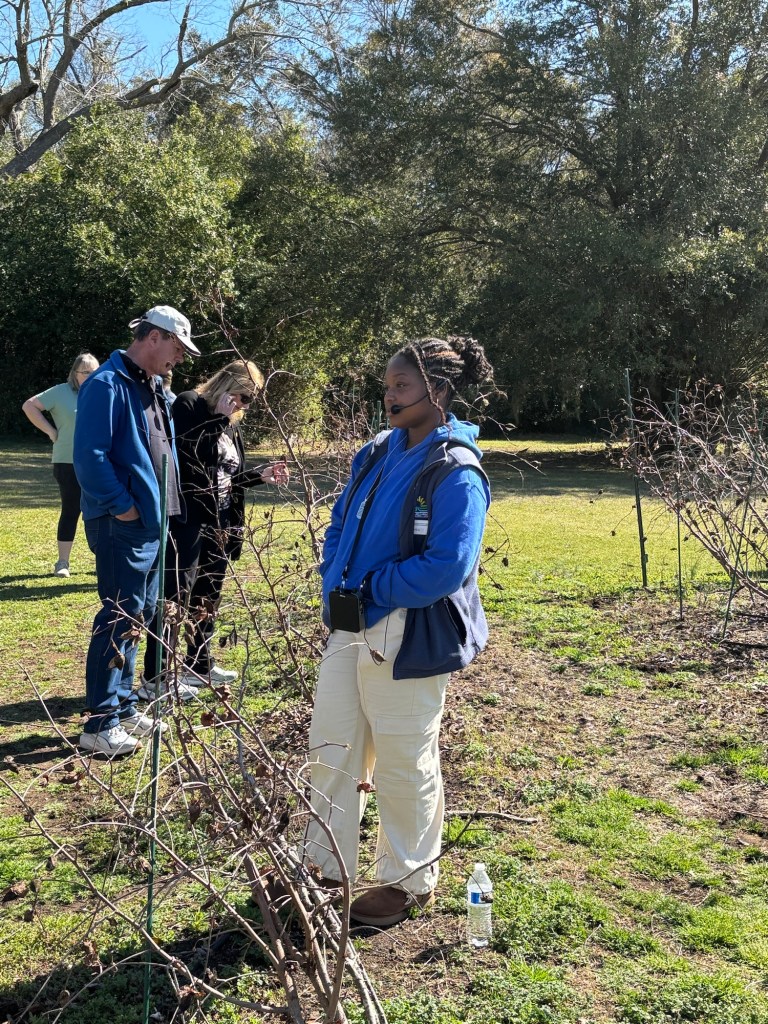
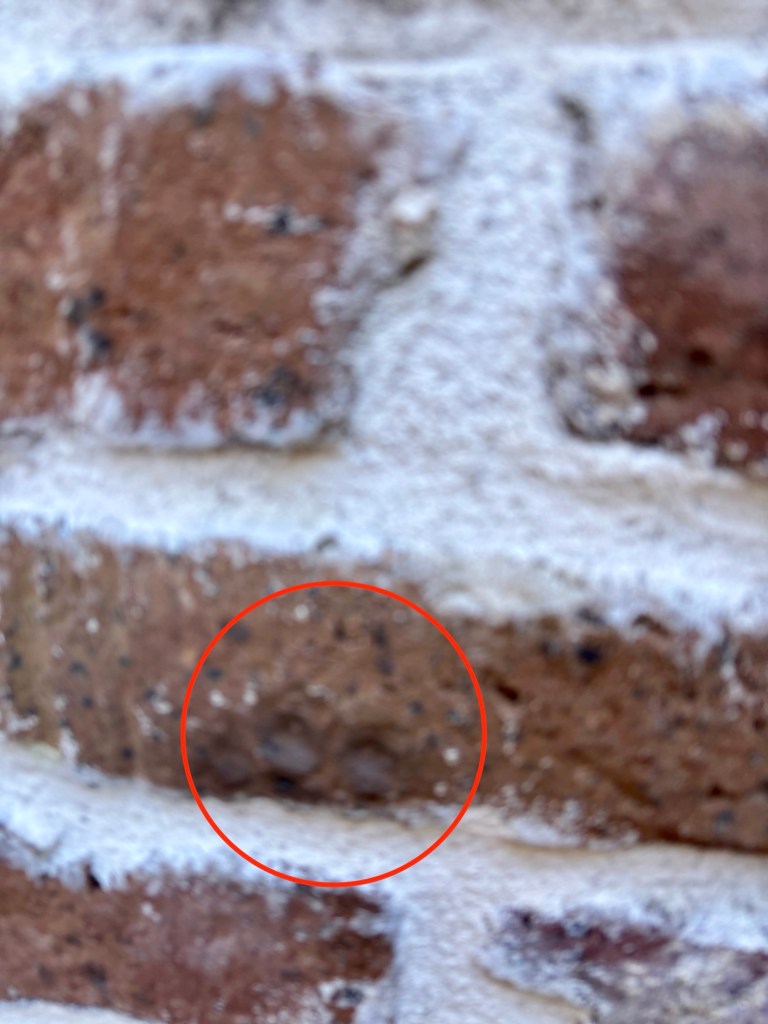
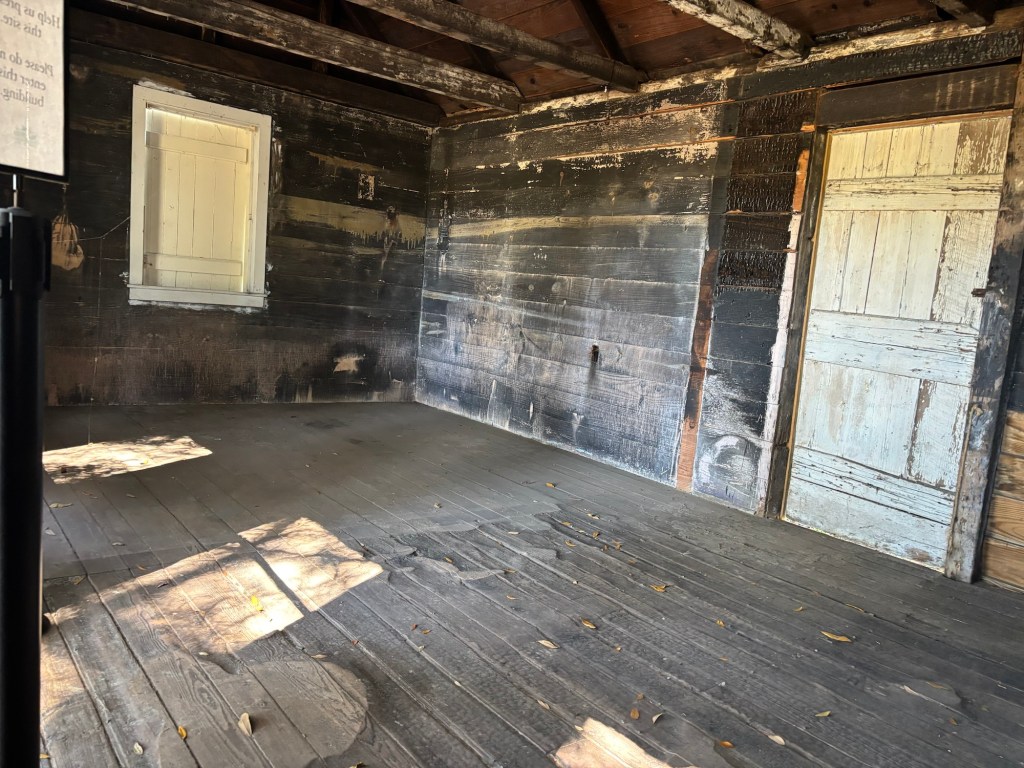
Our tour guide Kayla showing us Sea Island cotton plants.Bricks with fingerprints of young enslaved children who labored to make the bricks. Inside of slave cabins that people still rented until 1990. Here is a video describing the McLeod Planation tour. If the video does not load, here is the link: https://www.ccprc.com/1447/McLeod-Plantation-Historic-Site
In case you cannot tell, if you find yourself in Charleston, highly recommend this tour!
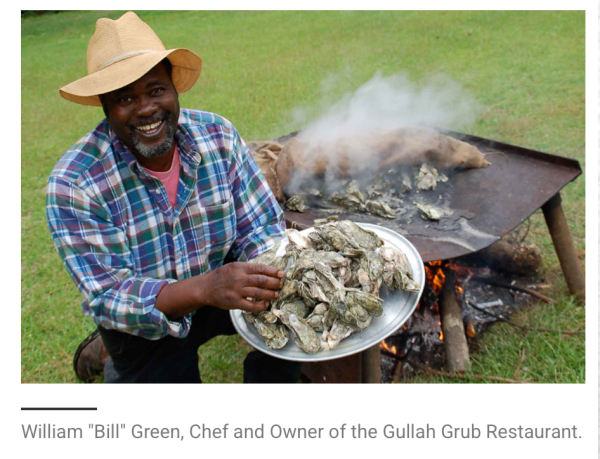
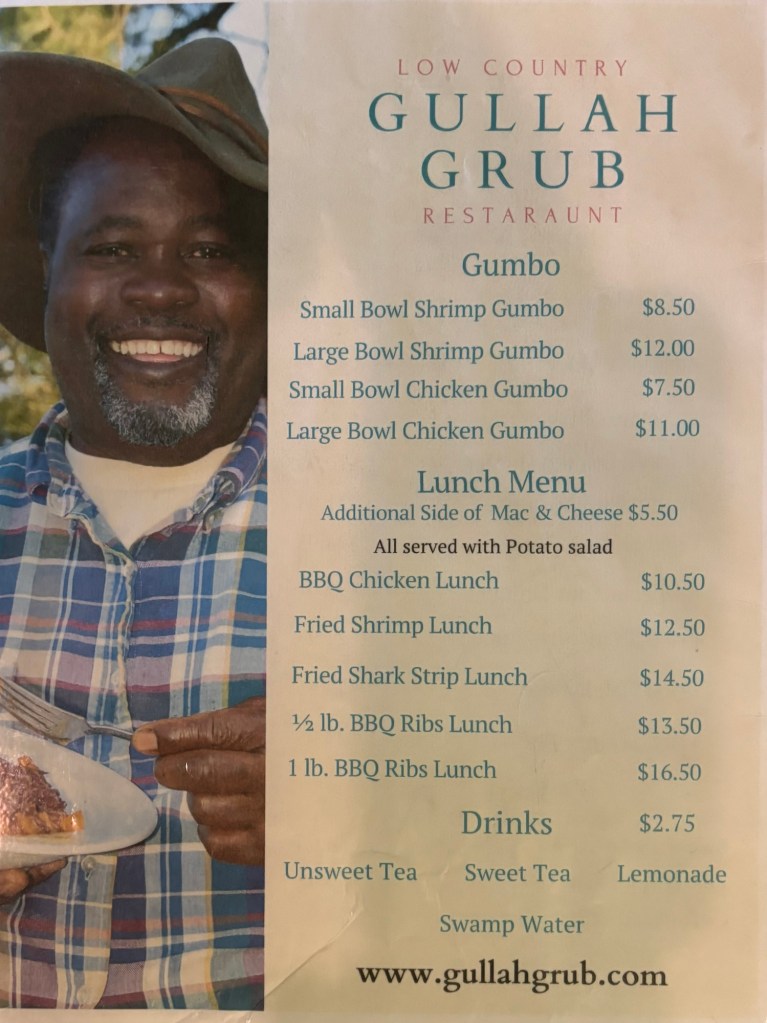
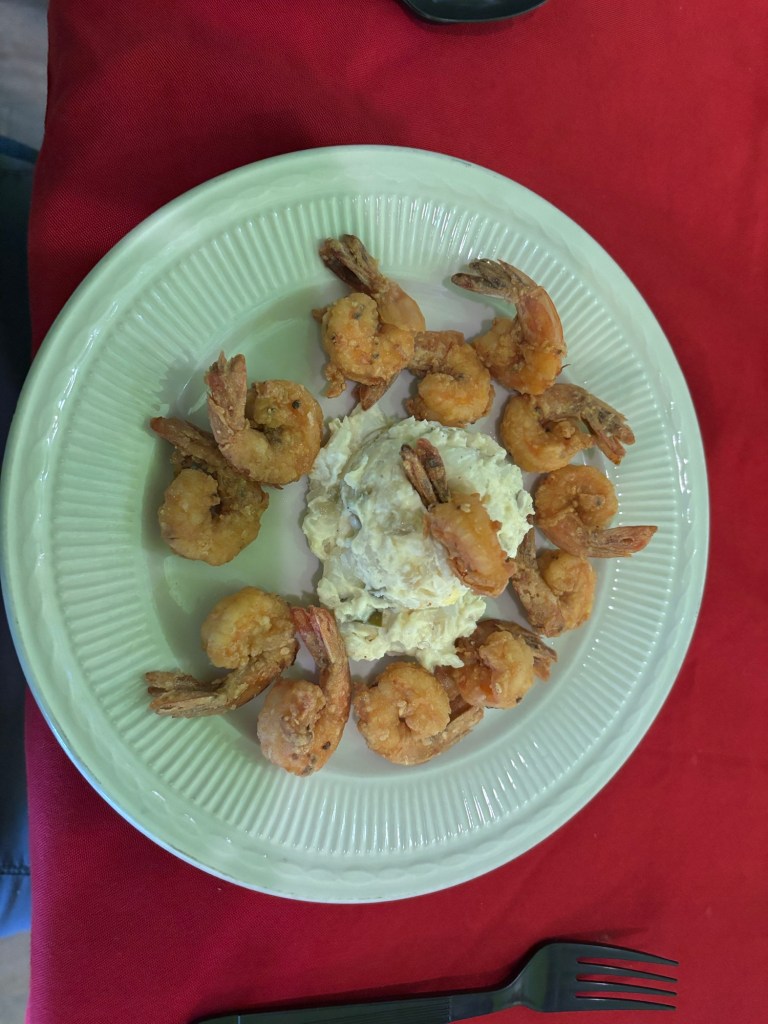
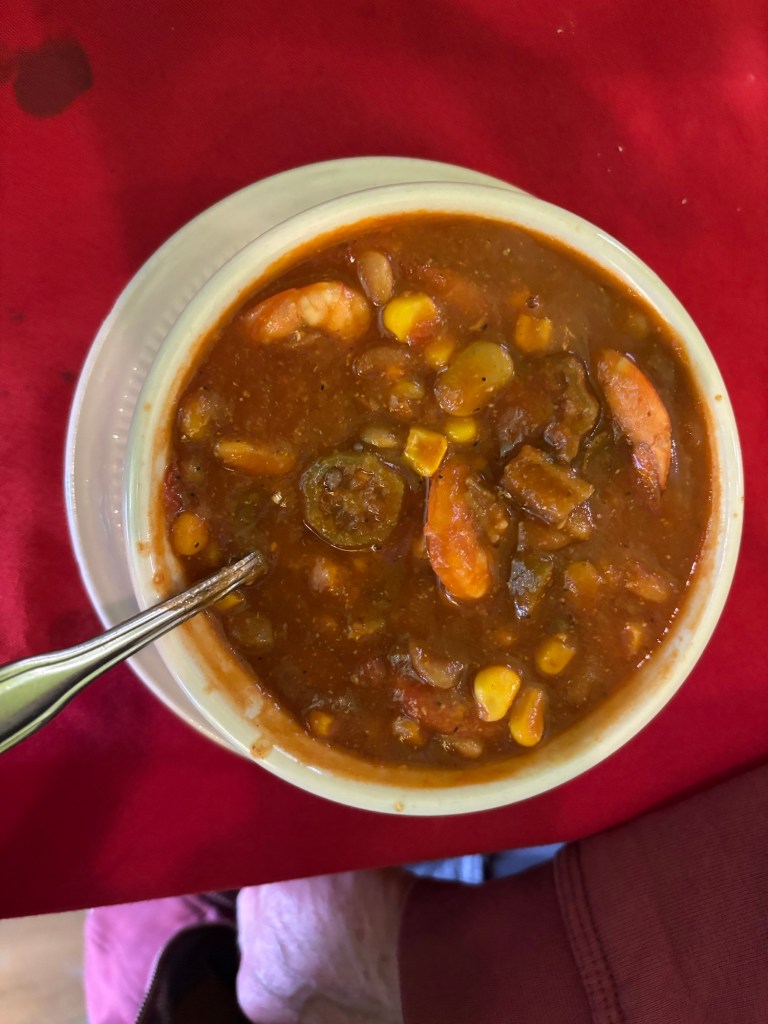
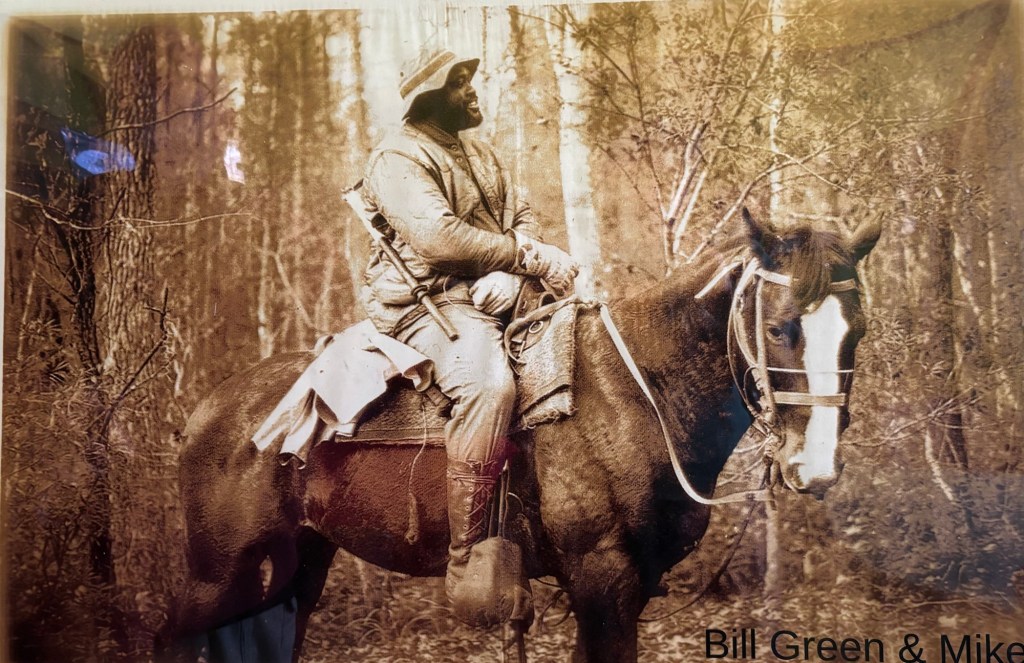
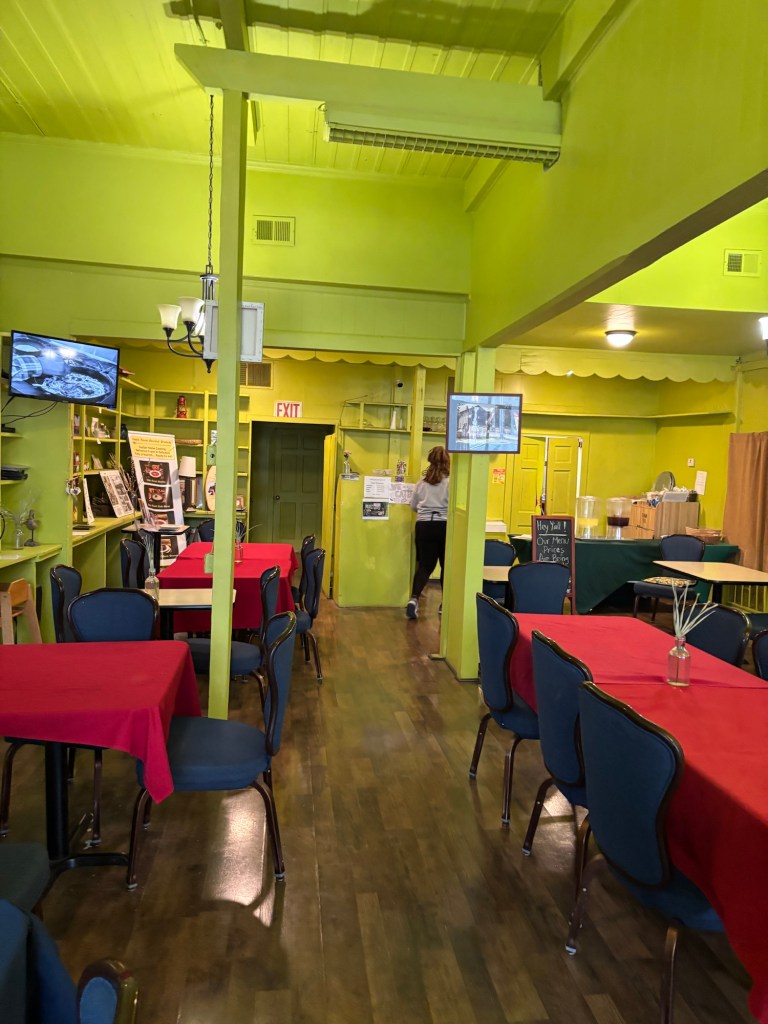
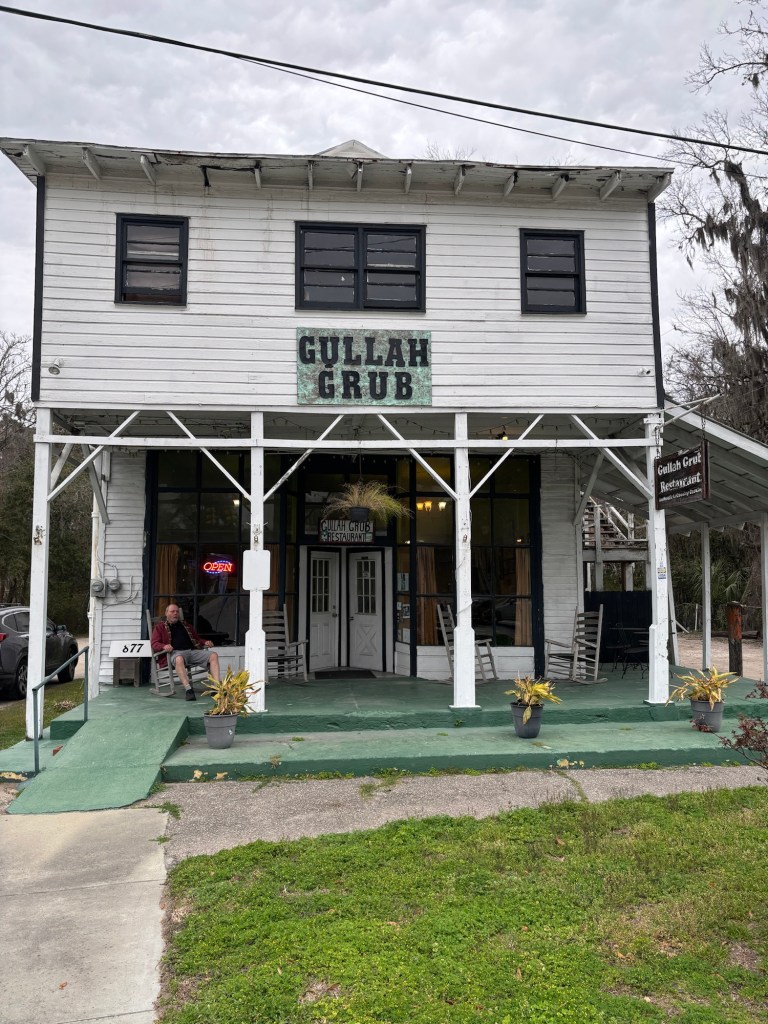
What to do on a rainy day? We decided it was a good day to check out the local cuisine. We are on St. Helena Island near Beaufort, SC. having lunch at the Gullah Grub Restaurant.. The Gullah Grub restaurant serves real Low Country meals that follow the Gullah traditions of eating fresh, local and in season. Owner and Chef Bill Green will cook you up some delectable local dishes.
I had there fried shrimp with potato salad and John had the shrimp gumbo. Our meals did not disappoint.
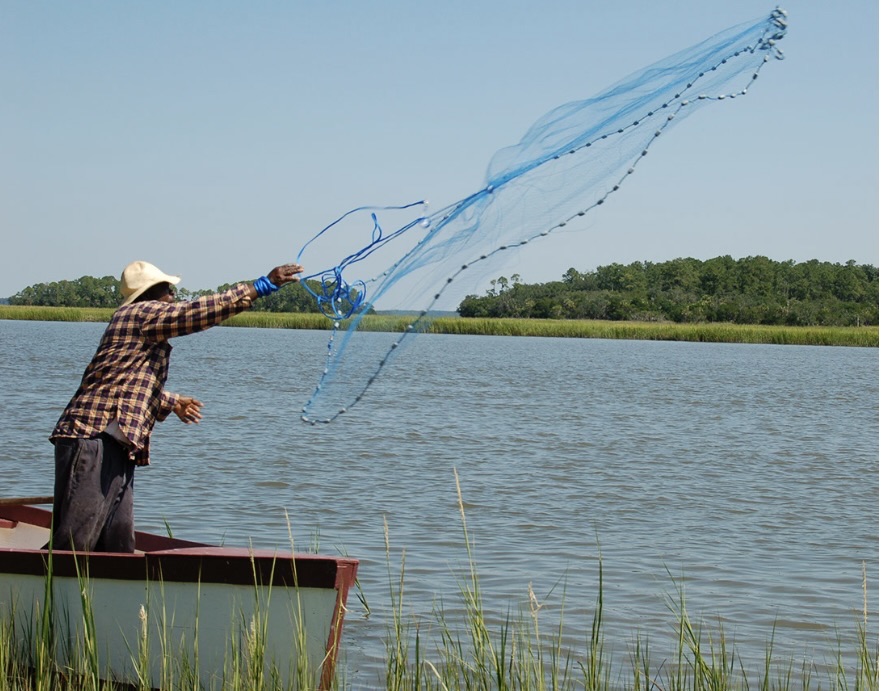
Chef Bill is an avid hunter, fisherman and gardener. He has grown his own organic rice, and serves locally sourced meat and seafood he sometimes catches himself.
We recommend that if you find yourself on the South Carolina Sea Islands in Beaufort County, you visit Chef Bill in the Gullah Grub Restaurant for some local flavor.
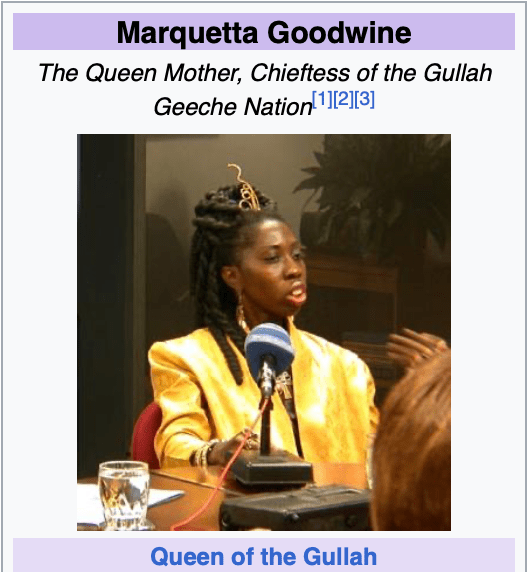
I found Marquette Goodwine’s story to be inspirational and thought it might interest you too. Goodwine, a native of St, Helena Island in Beaufort County, South Carolina, was coronated Queen Quet, Cheiftessof the Gullah/Geechee Nation on July 2nd, 2002.
Born in 1968, Goodwine attended Fordham University double majoring in computer science and mathematics. In 1996 she left Fordham and founded of the Gullah/Geechee Sea Island Coalition.
Queen Quet is a published author, computer scientist, lecturer, mathematician, historian, columnist, preservationist, environmental justice advocate, environmentalist, film consultant, and “The Art-ivist.” (quennquet.com)
Queen Quet has not only provided “histo-musical presentations” throughout the world, but was also the first Gullah/Geechee person to speak on behalf of her people before the United Nations in Genevé, Switzerland. Queen Quet was one of the first of seven inductees in the Gullah/Geechee Nation Hall of Fame. She received the “Anointed Spirit Award” for her leadership and for being a visionary.
In 2008, she was recorded at UNESCO Headquarters in Paris, France at a United Nations Conference in order to have the human rights story of the Gullah/Geechee people archived for the United Nations.Summit.
Due to Queen Quet advancing the idea of keeping the Gullah/Geechee culture alive, the Gullah/Geechee Sea Island Coalition under the leadership of Queen Quet, worked with US Congressman James Clyburn to insure that the United States Congress would work to assist the Gullah/Geechees. Queen Quet then acted as the community leader to work with the United States National Park Service to conduct several meetings throughout the Gullah/Geechee Nation for the “Special Resource Study of Lowcountry Gullah Culture.” Due to the fact that Gullah/Geechees worked to become recognized as one people, Queen Quet wanted to insure that the future congressional act would reflect this in its name and form. As a result in 2006 the “Gullah/Geechee Cultural Heritage Act” was passed by the United States Congress and signed into law by the president.
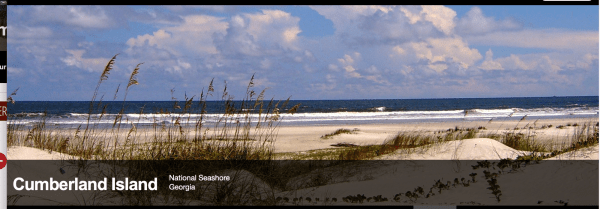
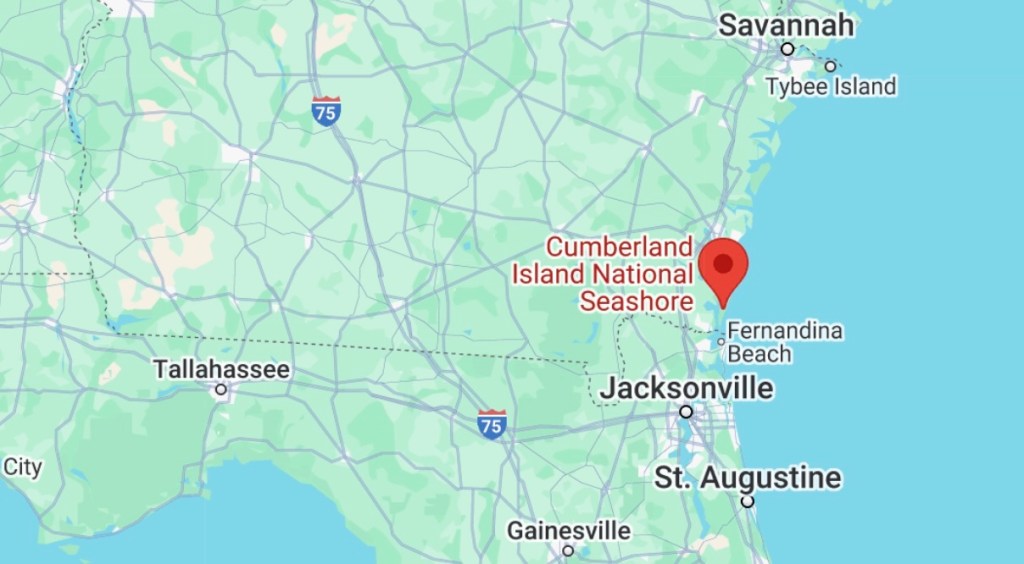
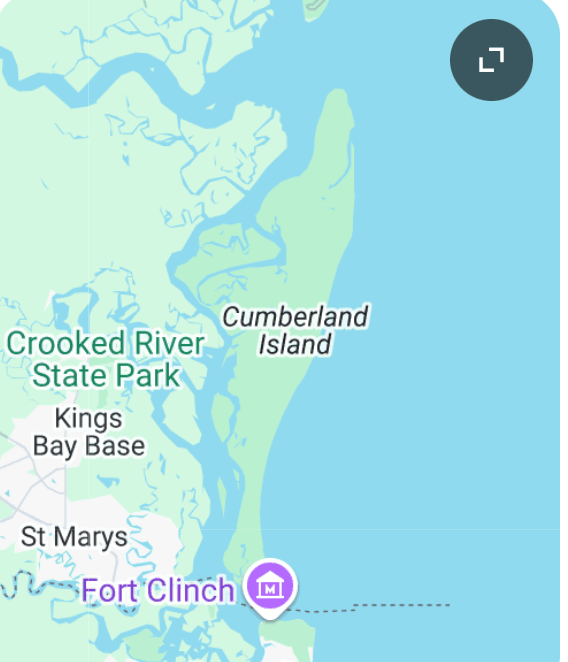
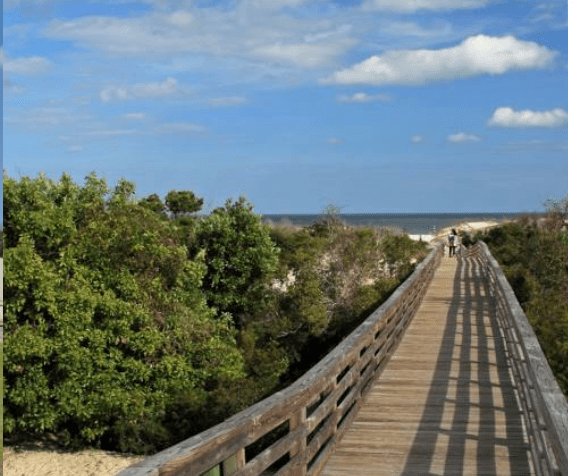
Cumberland Island is near the Georgia/Florida border, just 54 miles north of Jacksonville, Florida. It is Georgia’s largest barrier island.Cumberland Island has has beaches, dunes, marshes, maritime forests, freshwater lakes, feral horses and ruins of historic mansions originally built by the Carnegie family in the 1880s.
The first inhabitants of Cumberland Island were indigenous people who settled there as early as 4,000 years ago. In the 16th and 17th centuries, the Timucua people lived there and interacted with the Spanish missionaries. Like most indigenous people at the time, their numbers were decimated by diseases brought by the Europeans. The Timucua eventually relocated to an area near St. Augustine, Florida. The English general James Oglethorpe arrived at the Georgia coast in 1733. In 1735 he made a treaty with the Creek nation, and claimed ownership of the coastal islands between the Savannah River and St. Johns River for the British.
According to the National Park Service, slavery in Georgia became legal in 1751, and the early European settlers on Cumberland Island enslaved Africans and African Americans to grow rice, indigo, and Sea Island cotton.
As the demand for enslaved African labor with rice-growing expertise increased from 1800-1865, over 13,000 Africans were enslaved and brought from the “Rice Coast” and ”Grain Coast” (Senegal to the Ivory Coast) African regions, bringing their sophisticated knowledge of rice and grain harvesting. This invaluable knowledge of rice cultivation under challenging conditions contributed to coastal Georgia becoming one of the major rice-producing areas of the period and greatly influenced the region’s demographic makeup. In fact, by 1860, over 500 enslaved people lived on Cumberland Island, outnumbering white inhabitants by a ratio of seven to one.(visitkingsland.com)
.So arduous was life that many enslaved Africans dreamt of escaping the system and rebelled. One such incident occurred during the later years of the War of 1812. In 1815, British troops took over Cumberland Island and all its plantations, offering freedom to the enslaved by joining British forces or boarding British ships as free persons headed for British colonies. Over 1,500 formerly enslaved people who made it to Cumberland Island from across the Coastal region sought freedom by boarding British ships to Bermuda, Trinidad, and Halifax in Nova Scotia.
There were a number of plantations on the island by the early 1800s, with the largest belonging to Robert Stafford, who enslaved 348 people at its peak. Stafford let his enslaved people earn their own money working for other plantations after their work was done, so many of them saved money. The Union Army took over the island during the Civil War and freed the enslaved people, who promptly left. After the war was over, some came back and bought land on Cumberland Island with their savings.
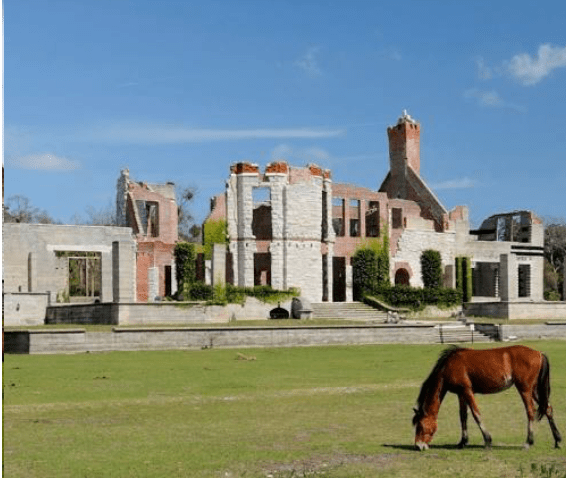
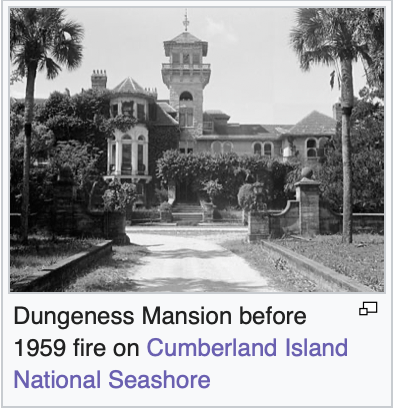
After the civil war ended, many wealthy northern industrialist families were drawn to the south. They appreciated the warm weather and real estate was dirt cheap. In the 1880s Thomas M. Carnegie, brother of steel magnate Andrew Carnegie, and his wife Lucy bought land on Cumberland for a winter retreat. In 1884, they began building a mansion, called Dungeness, though Carnegie never lived to see its completion. Lucy and their nine children continued to live on the island. The Carnegies built other mansions for the heirs and owned 90 percent of the island. During the Great Depression, the family left the island and left the mansion vacant. It burned in a 1959 fire, believed to have been started by a poacher who had been shot in the leg by a caretaker weeks before. Today, the ruins of the mansion remain on the southern end of the island.
In 1954, some of the members of the Carnegie family invited the National Park Service to the island to assess its suitability as a National Seashore. In 1955, the National Park Service named Cumberland Island as one of the most significant natural areas in the United States and plans got underway to secure it. Plans to create a National Seashore were complicated when, in October 1968, some Carnegie descendants sold three thousand acres of the island to real estate developer Charles Fraser, who had developed part of Hilton Head Island in South Carolina. Other Carnegie heirs (and members of the Candler family who also owned an estate on the Island) were opposed to further development. They joined forces with the Sierra Club and Georgia Conservancy, politicians and activists to push Fraser to sell to the National Park Foundation. They also pushed a bill through U.S. Congress to establish Cumberland Island as a national seashore. This bill was signed by President Richard Nixon on October 23, 1972 and it officially became the Cumberland Island National Seashore.
I came across this excellent resource that is part of the National Park Service. The way things are going, with Trump’s effort to whitewash history, it may not be available in the future, so I wanted to make you aware of it. Check it out.
The Reconstruction era (1861-1900) the historic period in which the United States grappled with the question of how to integrate millions of newly freed African Americans into social, political, economic, and labor systems, was a time of significant transformation. This resource maps out sites nationwide relating to Reconstruction.
According to the National Park Service, the John D. Dingell, Jr. Conservation, Management, and Recreation Act was signed into law on March 12, 2019, and outlined the creation of the Reconstruction Era National Historic Network. This network, includes sites and programs that are affiliated with the Reconstruction Era, but not necessarily managed by the National Park Service. The network facilitates and reviews Reconstruction Era related research and collaboration with affiliated sites and programs through agreements and partnerships. This network is nationwide and works to provide opportunities for visitors to connect to the stories of Reconstruction.
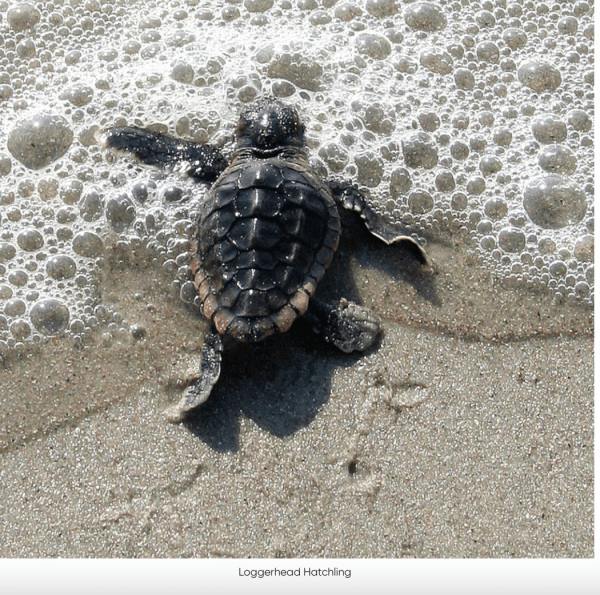
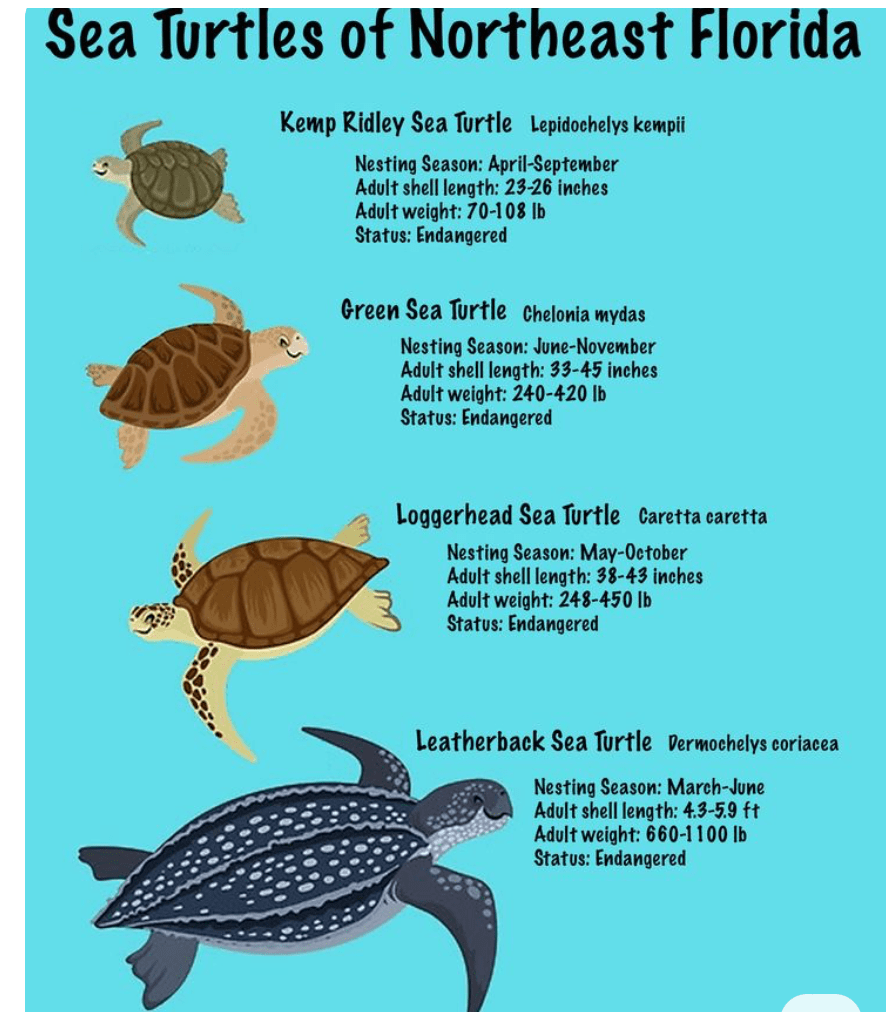
It is the beginning of sea turtle nesting season on the Space Coast in Florida. There are four kinds of sea turtles that make the annual pilgrimage to nest here: Loggerhead, Leatherback, Green and occasionally Kemps Ridley turtles. The last three are considered endangered. The Loggerhead is now considered threatened in Florida.
Poster created by Angelene Davis
Leatherback turtles, the largest, can be up to 5 feet long and more than 500 pounds. They migrate up to 3,700 miles to breed.
Along the Florida coast, sea turtles annually make between 40,000 and 84,000 nests. Nearly 90 percent of sea turtle nesting in the U.S. occurs in Florida from March through October of each year.
Hatchlings tend to emerge from their nests in the dark and use the moonlight’s reflection on the crashing waves to guide their return. Too much light pollution from development can confuse hatchlings and cause them to walk away from the ocean.
It’s the temperature that determines the sex of the hatchlings. Warmer temperatures in the nest will result in female turtles, whereas colder temperatures produce males. There are, in fact more female turtles hatching as a result of warmer temperatures. Turtles take 25 years to reach sexual maturity, so the outcome is not yet known. It is likely that the fewer males will not be able to keep up with fertilizing all those females.
Sea turtles can live 40 to 60 years or more.
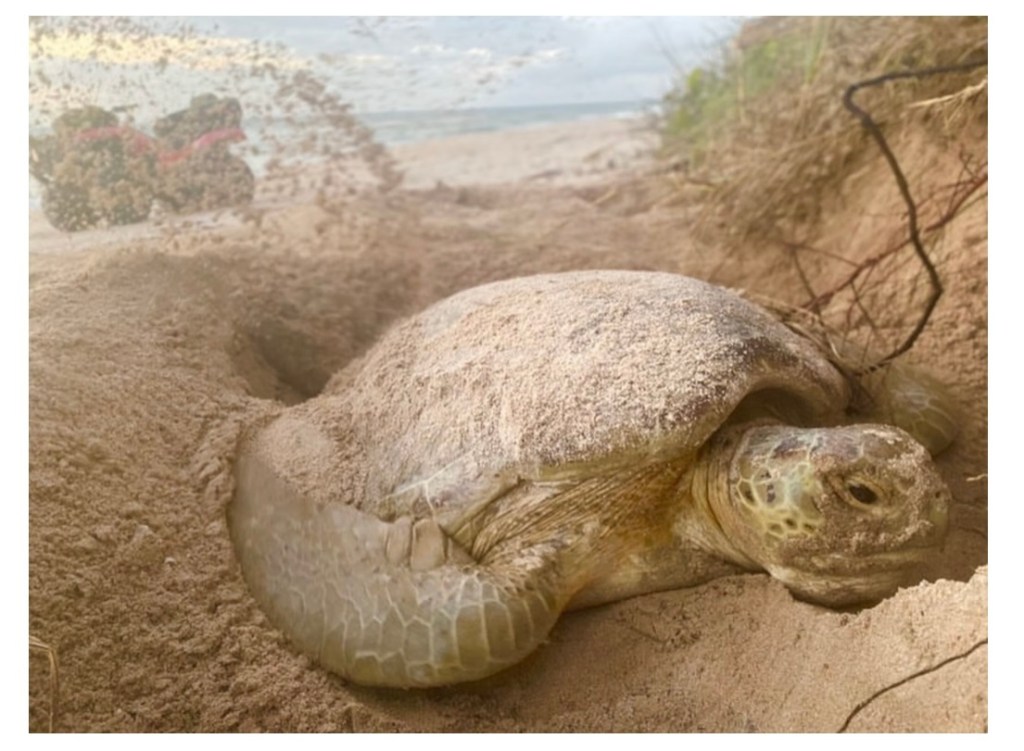
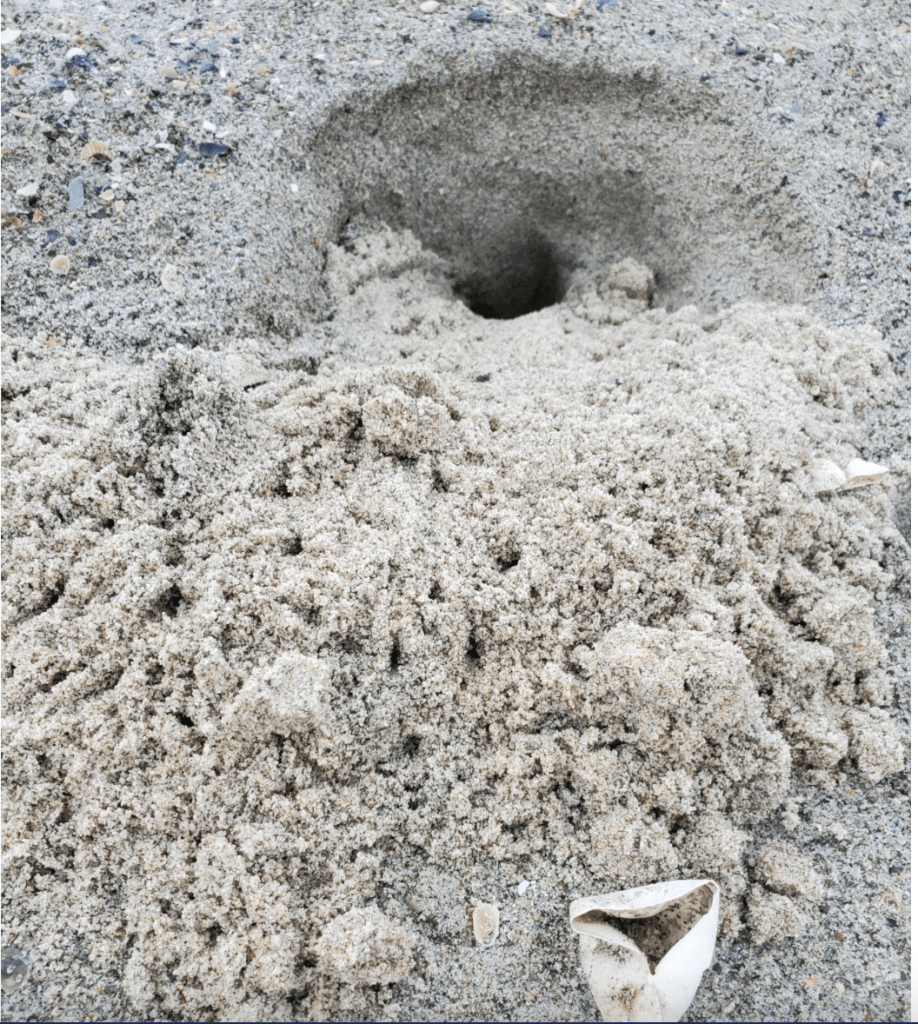
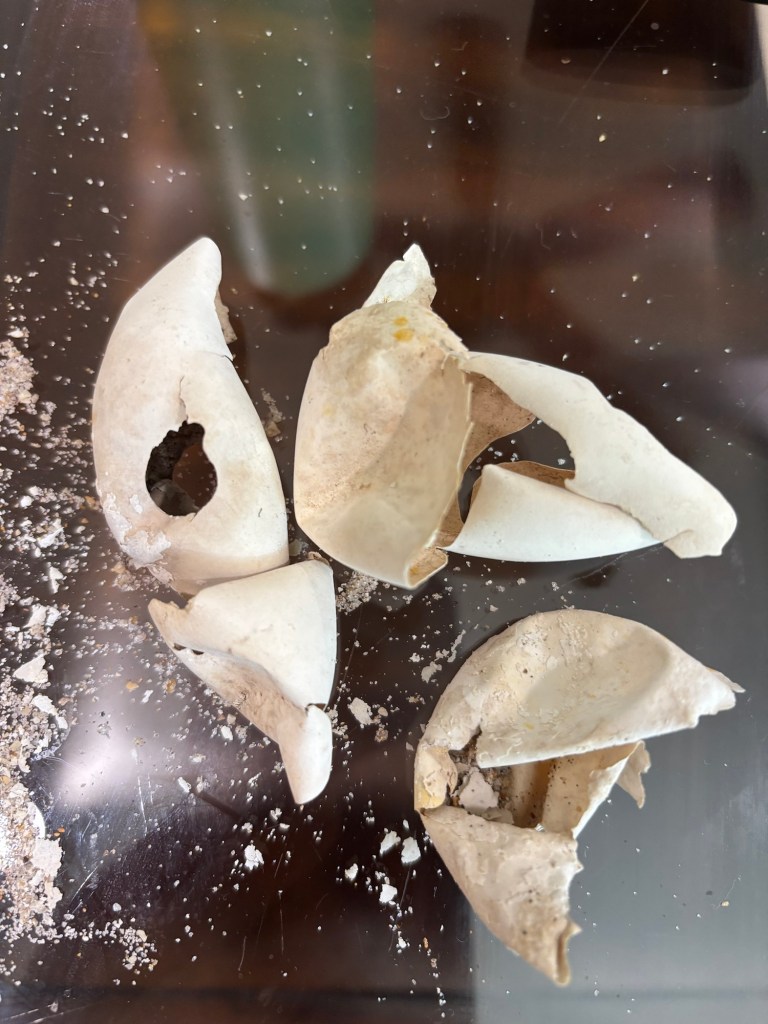
A green sea turtle in Florida covers her newly laid eggs with sand. Some researchers found increases in successful nesting rates during the pandemic when beaches were closed. PHOTOGRAPH BY REBECCA SMITH, UNIVERSITY OF CENTRAL FLORIDA, PERMITTED RESEARCH UNDER MTP-186Hatchlings emerge from their nests in impossibly small holesWe found these turtles shells in old nests along the dunes where turtles have already hatched.
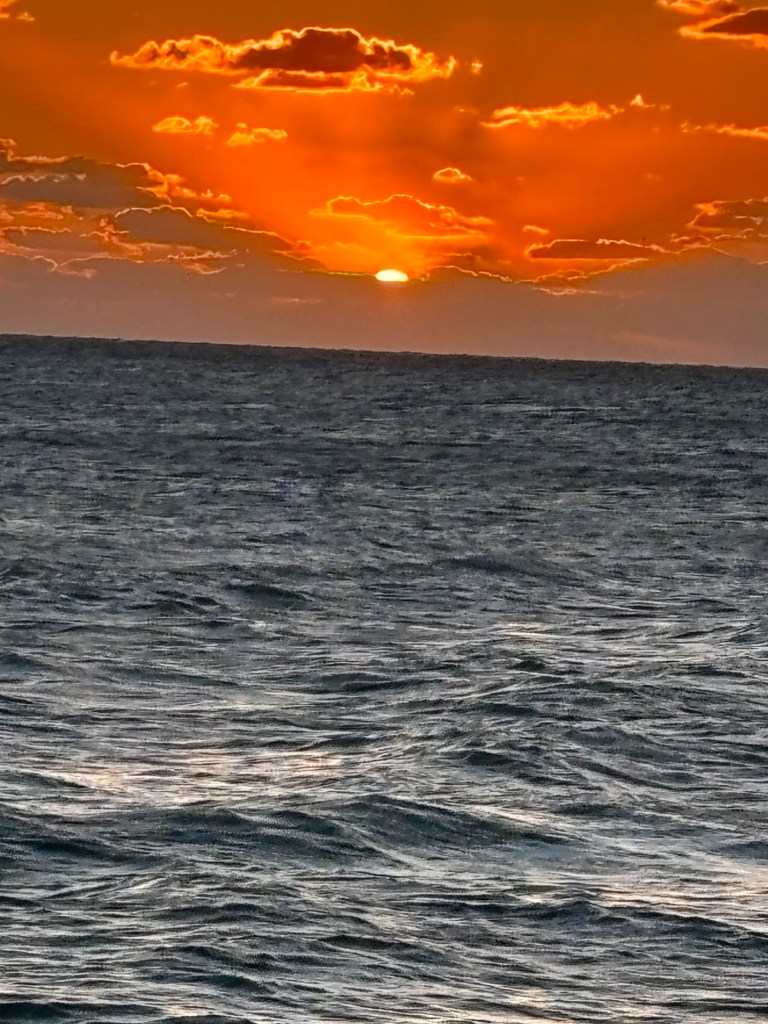
We took a beach walk this morning before sunrise to see if we could see any turtles. We did not, but we did see a beautiful sunrise.
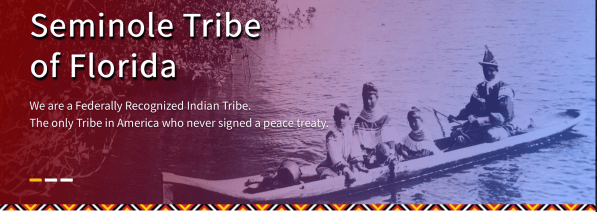
The Seminoles of Florida call themselves the “Unconquered People,” descendants of just 300 Indians who managed to elude capture by the U.S. army in the 19th century. Today, more than 2,000 live on six reservations in the state – located in Hollywood, Big Cypress, Brighton, Immokalee, Ft.Pierce, and Tampa.
According to the Seminole Nation website (semtribe.com) the addition of two new reservations (Tampa and Immokalee) brought Seminole federal trust holdings in Florida to more than 90,000 acres. The opening of a new hotel (Sheraton Tampa East), entry into the lucrative citrus market, opening of the new Ahfachkee Indian School, development of the Ah-Tah-Thi-Ki Museum and Kissimmee-Billie Swamp Safari tourist attraction and the expansion of the profitable smoke shops and gaming enterprises have brought the Seminoles closer to their stated goal of self-reliance.
Today, most Tribal members are afforded modern housing and health care. The Seminole Tribe spends over $1 million each year on education, alone, including grants-in-aid to promising Tribal college students and the operation of the Ahfachkee Indian School. Over 300 Tribal members are employed by the Seminole Tribe in dozens of governmental departments, including legal and law enforcement staffs. Dozens of new enterprises, operated by Tribal members, are supported by both the Tribal Council and Board. (semtribe.com)
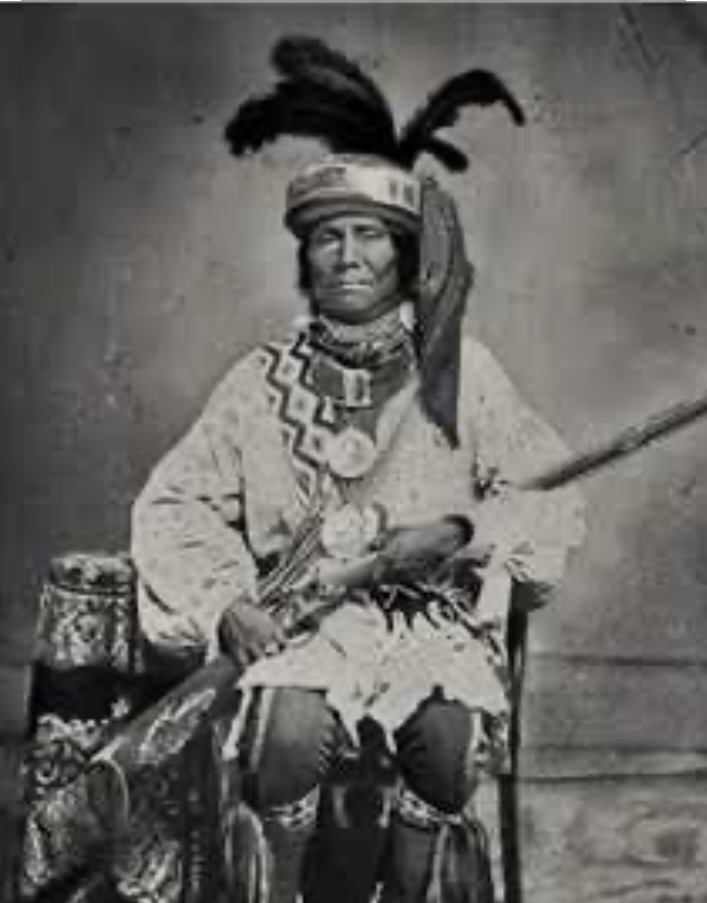
Abiaka (Sam Jones) Seminole Leader
When the Seminole Wars began in 1812, Abiaka was already a respected medicine man of the Mikasuki tribe. By the time the wars ended, he had helped guide the Seminole through nearly five decades of war. Called both Sam Jones and “The Devil” by the American soldiers; he was a medicine man, a warrior, a spy, a strategist, and a leader. His voice was the strongest in opposing removal, and when American leaders talked about forcing the Seminole to leave Florida, the words “Sam Jones and his group will never agree to leave” were a constant. During the wars he regularly stayed away from negotiations with the American military, instead sending trusted lieutenants such as Coacoochee and Osceola in his stead. He would then go into the American camps as a fishermen selling his catch, observing and learning all that he could while being comfortably overlooked. At the end of the wars, Abiaka led the last Seminole remaining in Florida into the deep wetlands, far away from American forces and settlers. The Seminole Tribe of Florida survives today because of him. (semtribe.com) You can click here to learn more about the interesting Seminole history.





 Perspectives on the Road