Wild Goose Jack

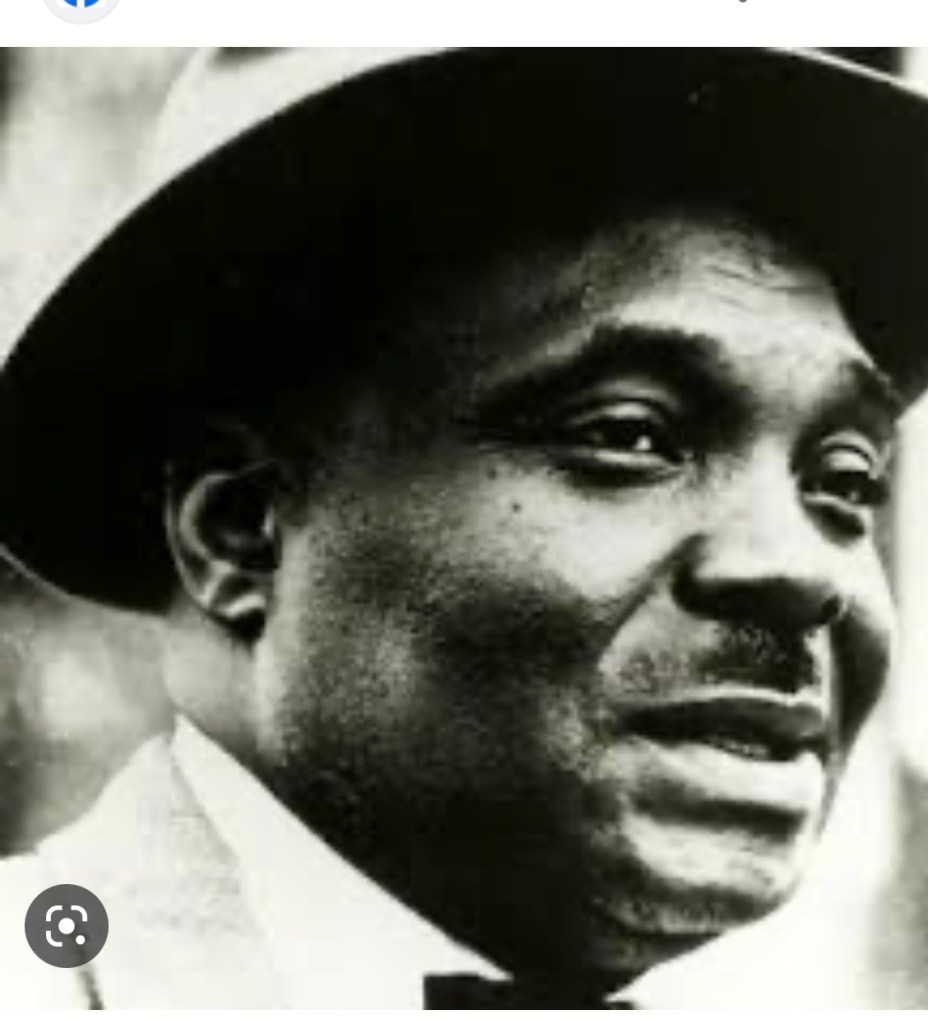
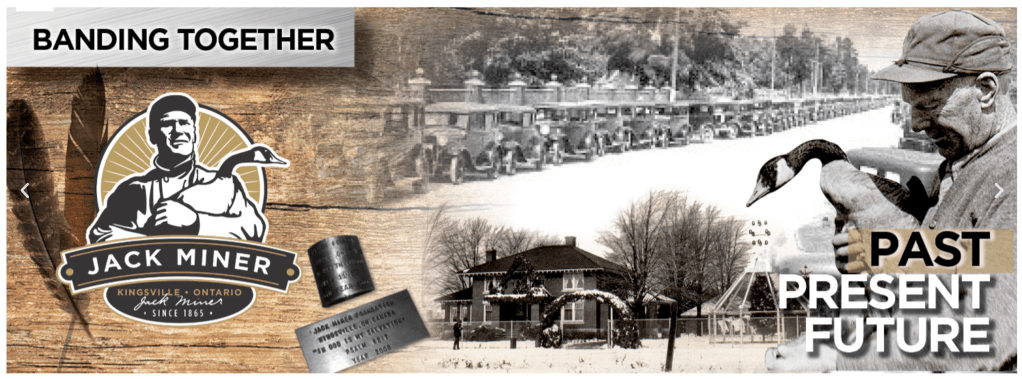
Jack Miner (April 10, 1865 – November 3, 1944) sometimes known as “Wild Goose Jack” was one of the first Canadian bird conservationist, who known for changing the migratory route of the Canada Goose. Jack lived most of his life near Kingsville, Ontario. His parents, who emigrated from England , were enticed to Canada by the Free Grants and Homestead Act of 1868. If a homesteader cleared and cultivated 15 acres of land and built a dwelling at least 16 x 20 feet within five years, they got title to the land. Jack who never had a formal education and was illiterate until he was 33 years old, worked as a hunter, trapper and farmer.

1n 1904 Jack noticed that Canadian geese were stopping at his pond in the spring on their migration North. He bought 7 tamed Canadian geese to live on the pond, hoping to attract wild geese. It took 4 years, but finally geese and ducks were arriving in great numbers. He expanded the size of his pond and by 1913 his entire homestead was a bird sanctuary.

Until 1909, the location of migrating Canadian Geese summer summer breeding grounds were unknown. Miner developed a method for banding birds for the first time. His hand stamped bands included his address and a bible verse. That fall he started receiving tags from eastern shore of James BayHudson Bay, and as far abroad as Baffin Island.[3] A second route south into the United States followed the Mississippi Flyaway, into states such as North and South CarolinaGeorgiaAlabama and the gulf coasts of Florida.[4] He was for thre first time able to map the migration routes of the geese.

In 1923, Miner published an account of his banding methods and waterfowl conservation studies in Jack Miner and the Birds. It was very popular: all 4000 copies of the first print-run sold out in nine months. The book is still in print.[5] The Jack Miner Bird Sanctuary is still a popular spot for bird-watching.

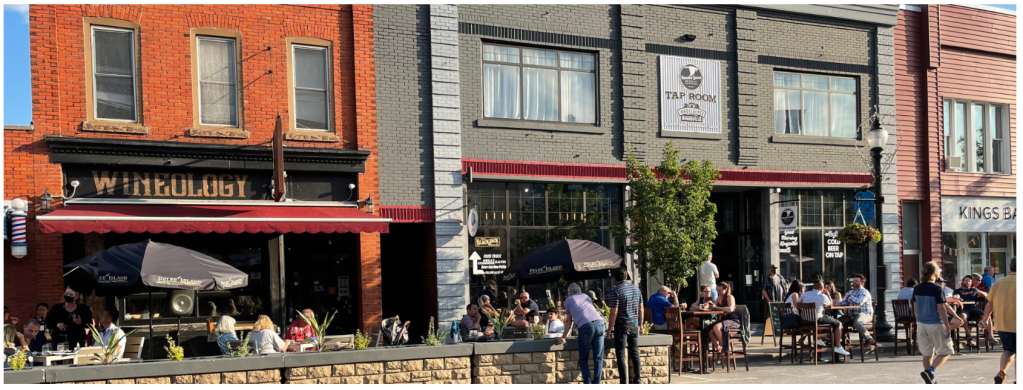
Kingsville, Ontario

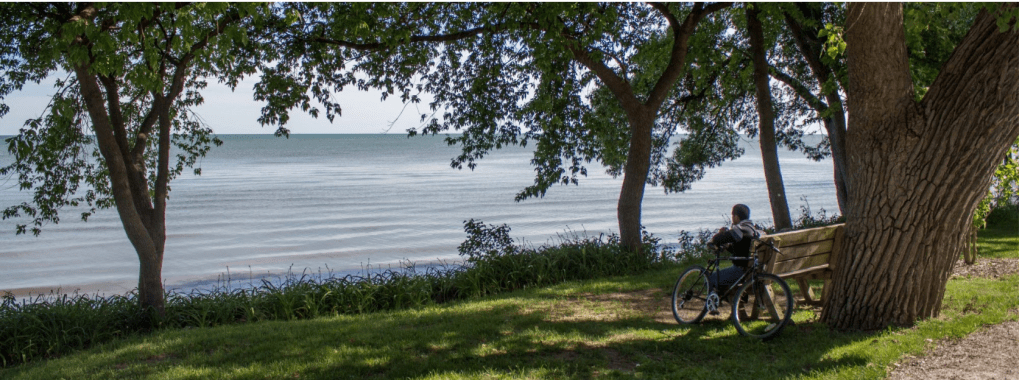
Our first stop is in Kingsville. Ontario, the southernmost town in Canada, with a population of  23,968 . It is on the shores of Erie Lake and home to dozens of vineyards and farms. The Kingsville area boasts one of the largest concentrations of vegetable greenhouses in North America. These greenhouses produce tomatoes, cucumbers, peppers, strawberries, flowers and potted plants.

Kingsville and the Essex County region sell themselves as an affordable place to live and do business. They claim that the cost of their land is among the lowest on the continent, and their housing prices are low compared to the rest of Canada.  Kingsville is just 35 minutes from to the busiest border crossing in North America (Detroit) making Kingsville a desirable location!

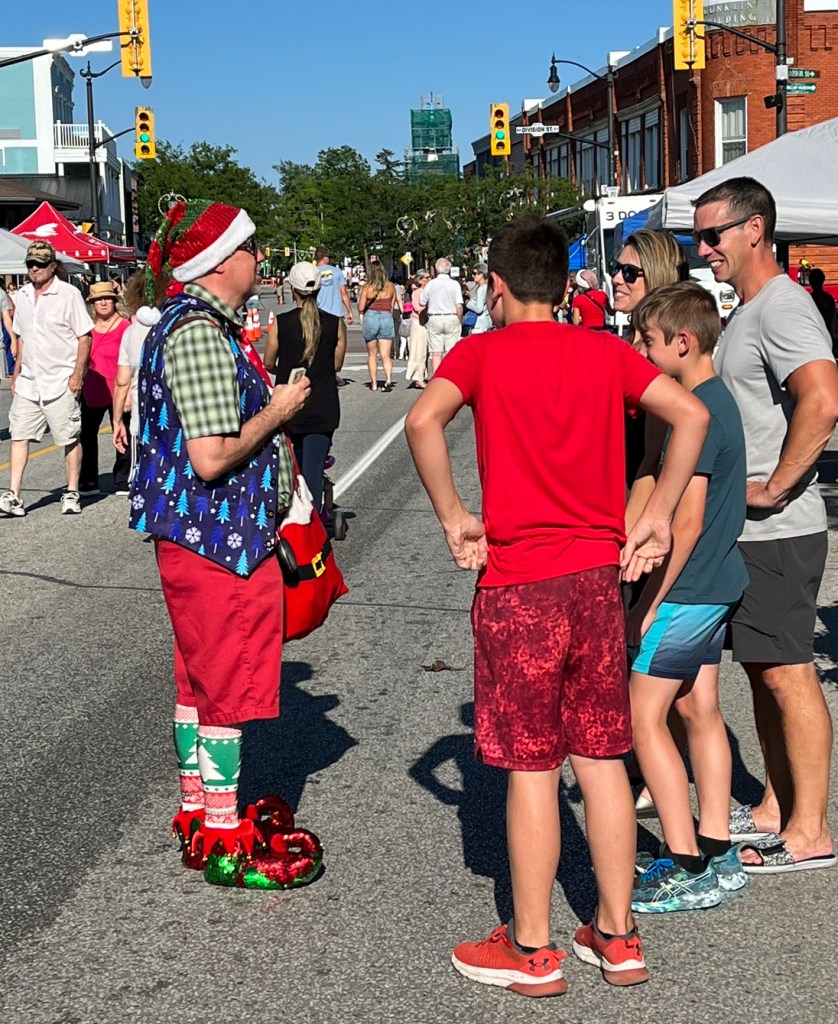
We arrived on a Saturday, when they close Main Street, right in front of our hotel and have all kinds of family activities in the street- games, vendors, food trucks a bagpipe marching band, and a dance band. The theme was Christmas in July. We really enjoyed ourselves.

Heading to Wisconsin

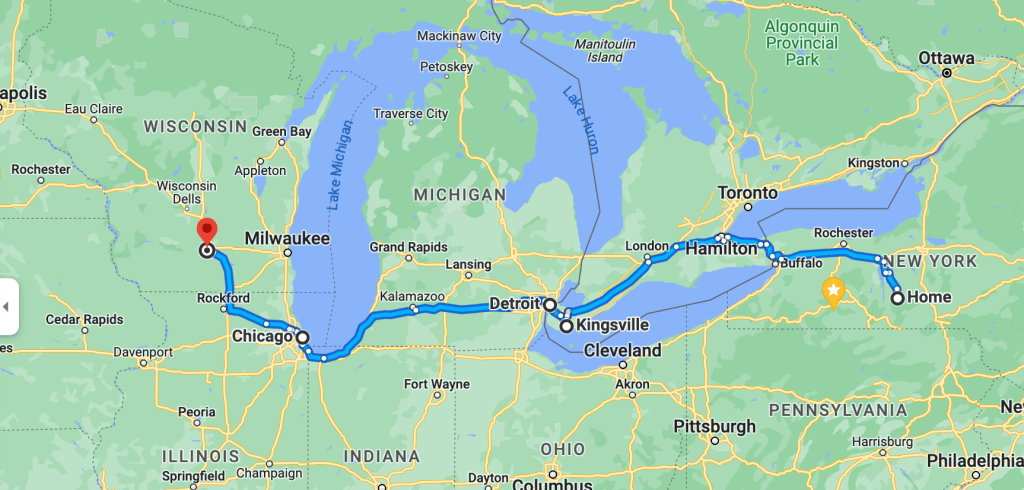
Well, we are heading out again on our annual trip to visit our son, Sebby in Wisconsin. It is getting challenging to find new routes and places to explore. This time we plan to go North through Canada and stop in Detroit (which we have never explored) and Chicago. I will share what we see and learn along the way. Hope you will join us in this adventure!

Covert, Michigan: A Town Built on Equality

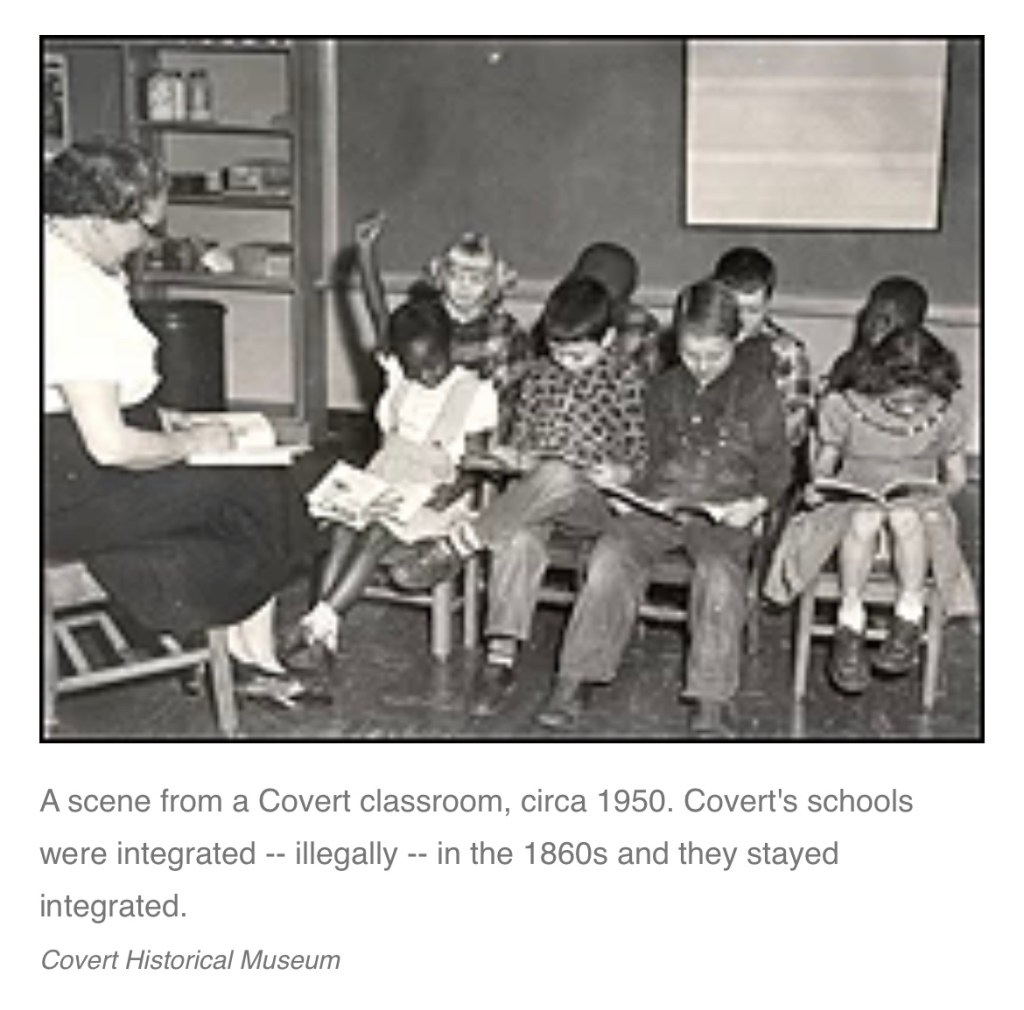
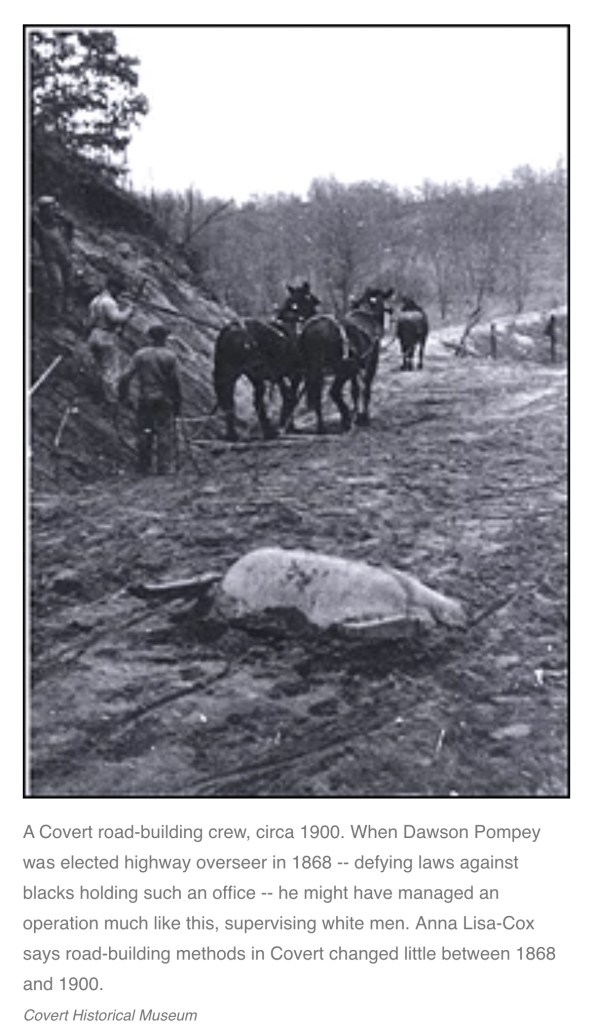
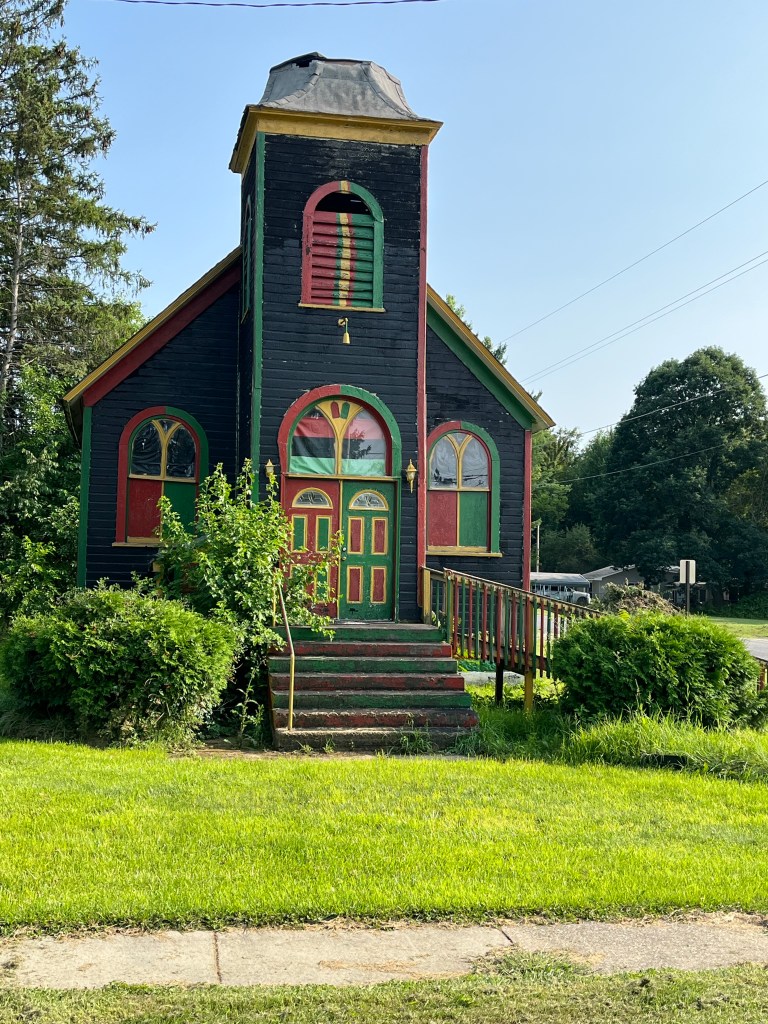
Yesterday we visited Covert, Michigan, a tiny town of 2,502 people on the shores of Lake Michigan, where there are many parks and most people own their own modest homes. Covert has a unique history. Ever since it’s founding in the 1860’s, the town has been integrated, an anomaly for conservative western Michigan.

The school had both black and white students starting in the 1860s. Blacks were elected to numerous positions from 1868 on.[4] The Covert cemetery is the final resting place of both black and white Civil War veterans.[5] The town was not formed by abolitionists or as a freed-black settlement; It was just a bunch of New England whites and former slaves who didn’t mind the color of each other’s skin, working together to carve a community out of the Michigan wilderness.

According to the Detroit News article about Covert:

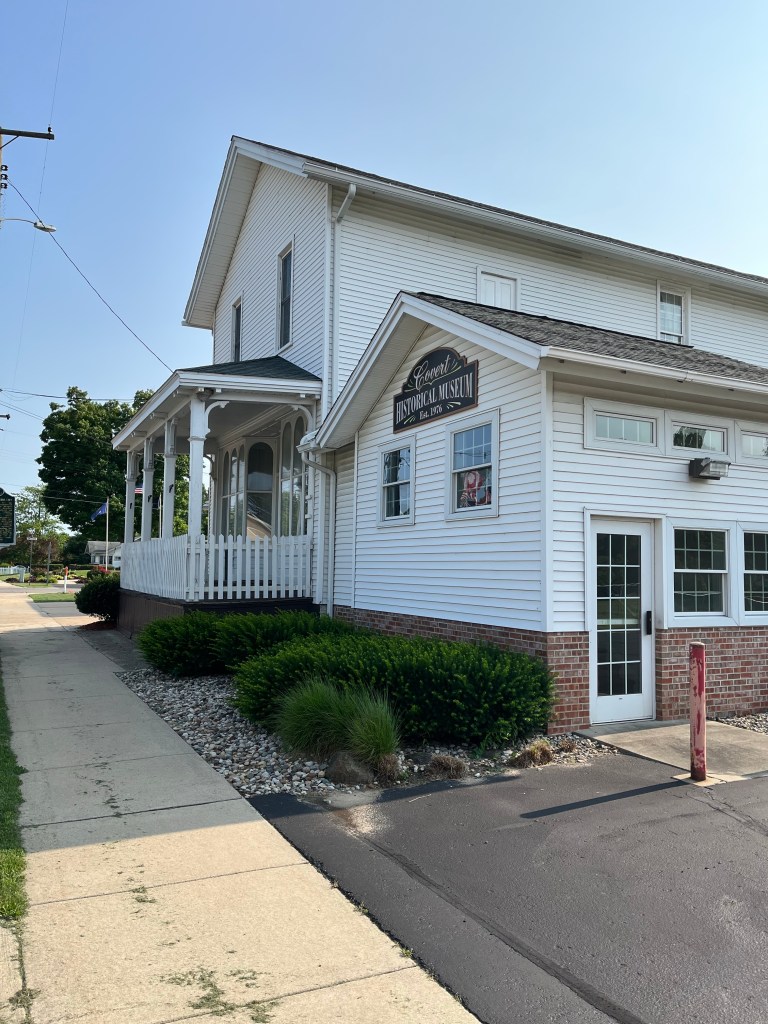
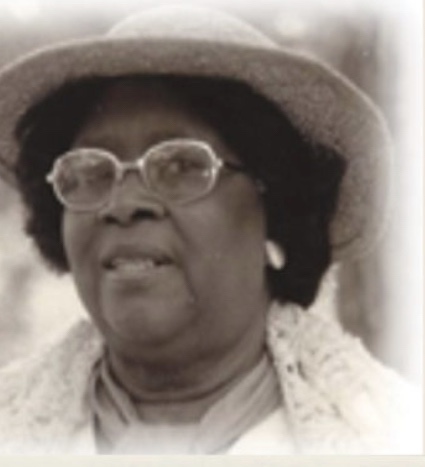
“For 151 years, it has been a land of racial hopes and dreams. Settled by whites and blacks just after the Civil War, it remains the most diverse community in Michigan, according to an analysis of census and demographic data. The different races sat together in one-room schoolhouses in the early 1900s, danced together at sock hops in the 1950s, and were buried side by side at the end of the century, as attested by photos at the Covert Historical Museum. ‘We’ve always looked out for each other,’ said Barbara Rose, 70, a former supervisor who has lived here since 1952. ‘We’ve always come together whenever there’s bad stuff.’”

In 1866, these town folk joined together and quietly flaunted racial laws and customs. It was illegal for whites and blacks to attend school together so the township omitted the race of students when sending rolls to Lansing for state aid, said Anna-Lisa Cox, who wrote a book about the town called A Stronger Kinship: One Town’s Extraordinary Story of Hope and Faith . In 1868, the same year Michigan voters rejected the right of blacks to vote, Covert elected Dawson Pompey, a black farmer who was the son of a slave, to supervise the building of roads, Cox said. By the end of the century, the township had elected 29 blacks as township trustees, constables, drain commissioners and election inspectors, and the first black justice of the peace in Michigan.

In recent years, the beliefs of long-time Covert residents are being tested by a large influx of Latinos, who now are 28% of the Covert population.. They came for the fruit farming. This part of Michigan is known as the Michigan’s Fruit Basket, where pears, peaches, apples, apricots are grown. In Covert, it’s blueberries. Many immigrants came from Chicago, drawn to Covert because it feels like their home in rural Mexico. Some have been able to buy small blueberry farms.
At first, the transition was difficult. Tempers flared between Black and Latino students at the high school. Teachers struggled to communicate with Spanish-speaking students. Many town residents were slow to accept the newcomers because they expected them to leave after the growing season like farm workers in the past. But these folks had come to stay.

Gradually the students got used to each other and tensions eased. Maria Gallegos was elected to the school board in 2014 and became president last year. The older folks, who are proud of the town’s legacy, had an easier time of it. “Nobody cares if someone is black or white or Hispanic,” said Jean Robinson, 75, who was born in Covert and is secretary of the museum board. “We don’t look at color.”

The Jenkins Bus

We were in Charleston, South Carolina yesterday, where we leaned about Esau and Janie B. Jenkins. The couple lived on Johns Island adjacent to Charleston. The Jenkins were deeply religious and took the bible edict that we are our brothers keepers to heart.

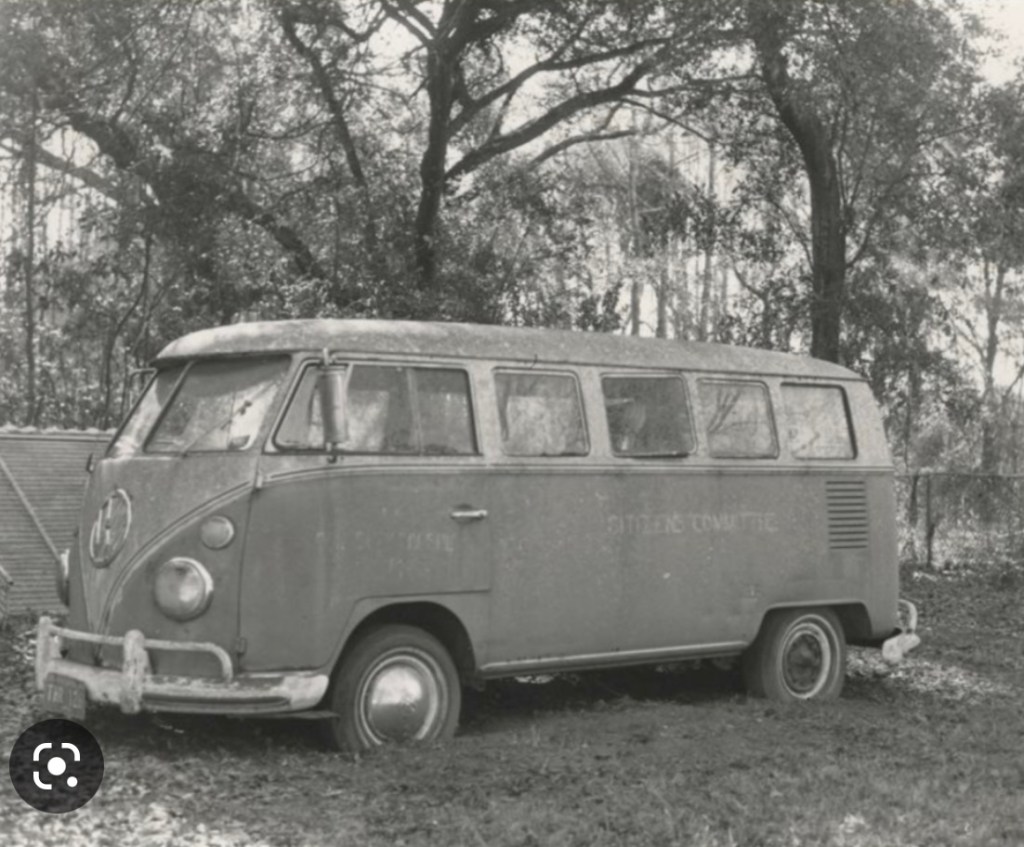
During the 1940’s and 1950’s the Jenkins decided to buy a few VW buses to transport their own 13 children and others to school in Charleston. They also transported workers to their jobs in the city. While on the bus, they taught folks to read the part of the constitution they needed to know to register to vote. The Jenkins also operated a vegetable and fruit stand, restaurant, a portion of Atlantic Beach for African American access to public beaches and were instrumental in organizing the Progressive Club of Johns Island. The Progressive Club, consisting of a community grocery store, gas station, and recreation/education center, also housed one of the citizenship schools established throughout the South during the civil rights movement.

This VW bus sat in the Jenkins backyard for 40 years, but then was moved the Nationsl Mall to showcase the work if the Jenkins.

The Oldest Free Black Neighborhoods in the South

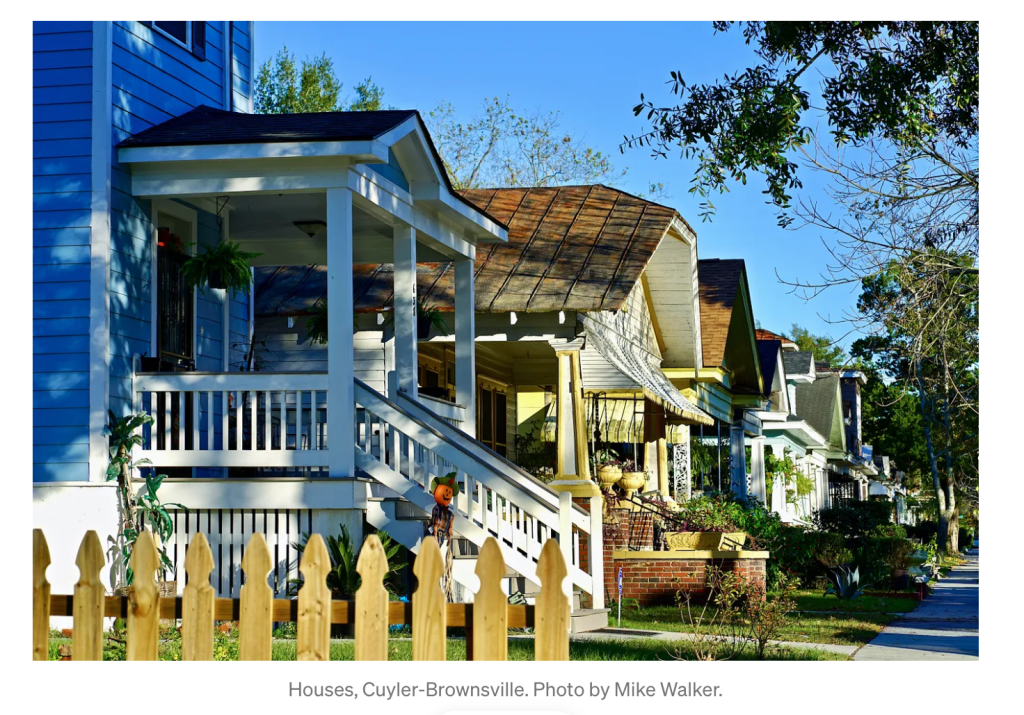
Cuyler-Brownesville and Metropolitan neighborhoods in Savannah Georgia were originally planned and established after the Civil War as free Black neighborhoods. Since Blacks could not access schools, hospitals, stores, restaurants or essentially any institution owned or frequented by Whites, Black business people and professionals made their homes here and it became the center of the Black middle class of Savannah. The communities were largely self-sufficient.

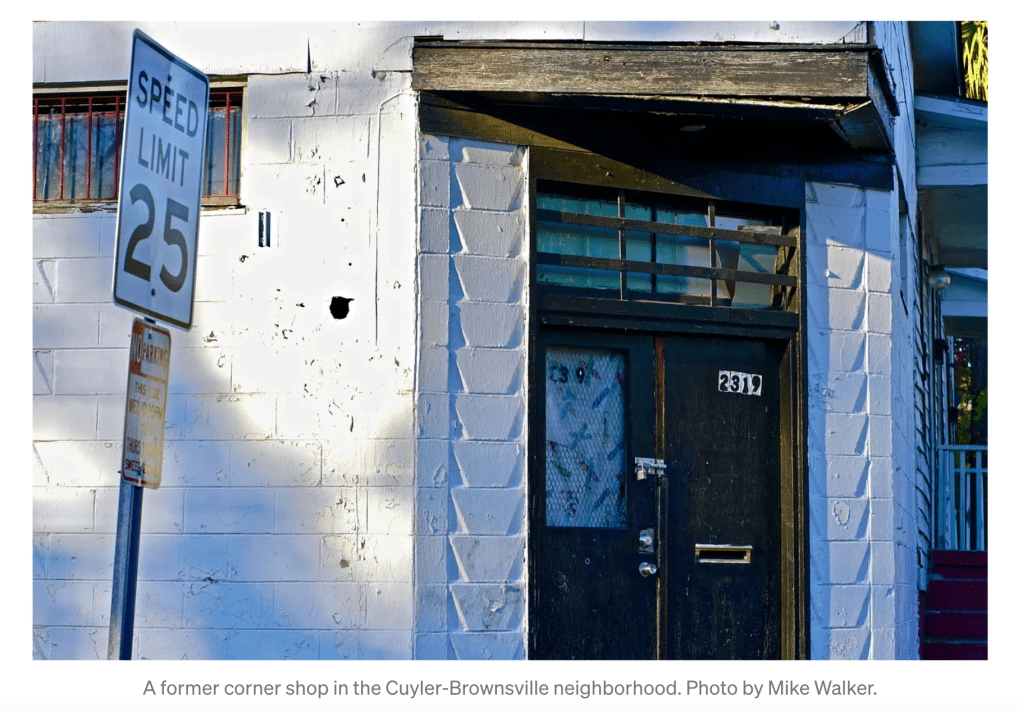
Most of the info and pictures in this post is from an article by Mike Walker, a grad student at Savannah College of Art and Design (SCAD). I recommend a read. He has been documenting the architecture and unique characteristics of these communities, because like most places in the U.S., they are becoming gentrified and losing their character.

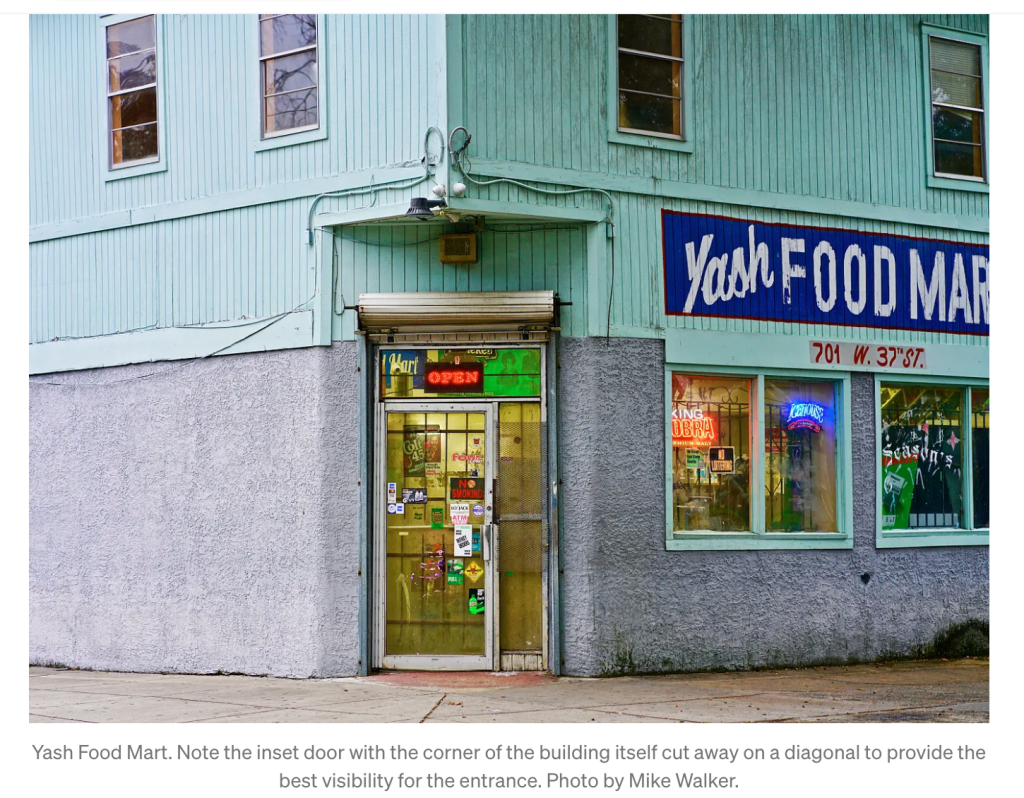
There were corner stores on just about every residential street, usually grocers, with the unique feature of a doorway cut in diagonally. Most are no longer operating; as car ownership increased, it was no longer imperative to have a corner grocer on every block. As efforts increase to become a less car dependent society to address climate change, I wonder if we will see a re-emergence of corner stores. In cities that have good public transportation, they still exist.

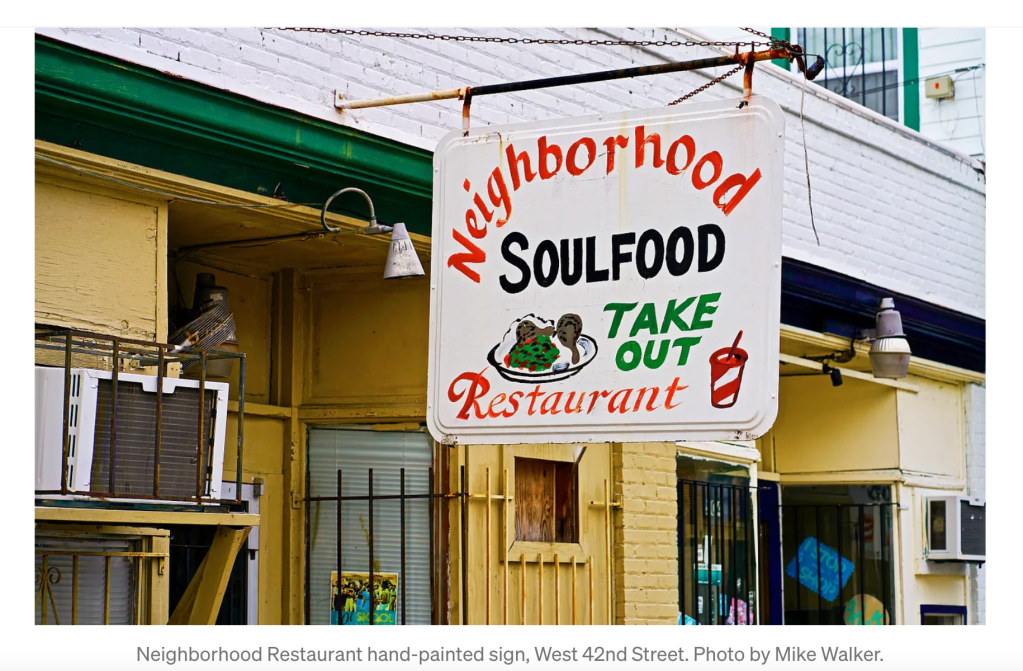
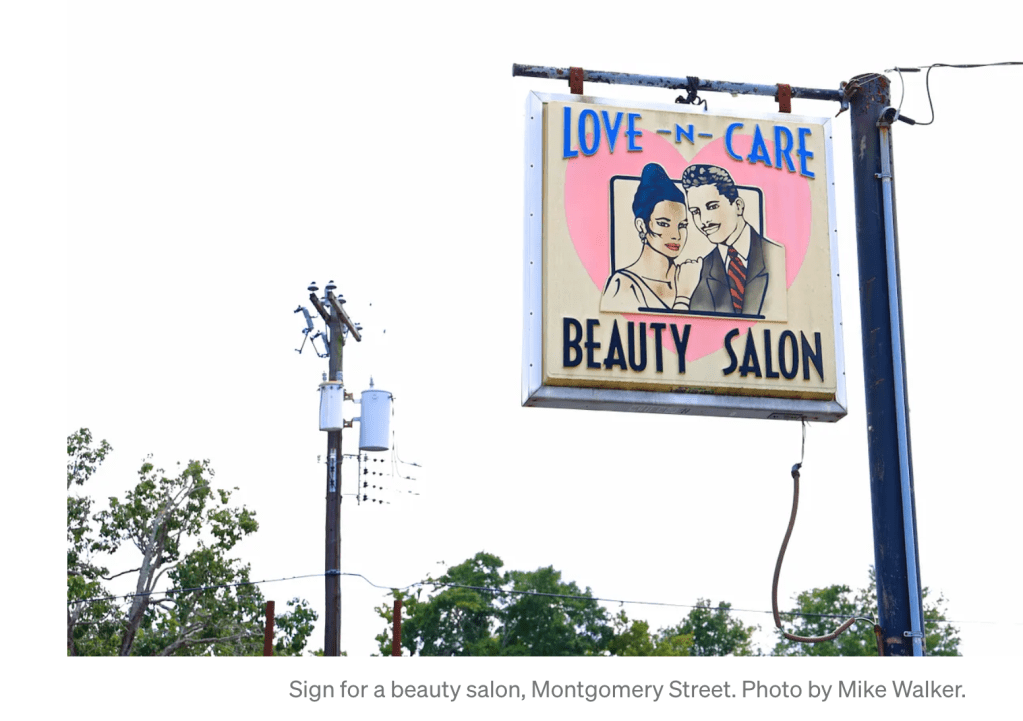
Many businesses in Cuyler-Brownesville had hand-painted commercial signage, a creative tradition in the South especially prevalent in African-American neighborhoods. Lettering on such signs is calligraphic or in the style of hand-lettering used by graphic designers for poster and print work prior to the advent of digital desktop publishing, The signs are large, colorful and often includes drawings related to the business at hand—such as scissors and a blow-dryer for a beauty parlor or crabs and lobsters for a seafood shop. (Williams, et al; 204–205)

Brightline Train

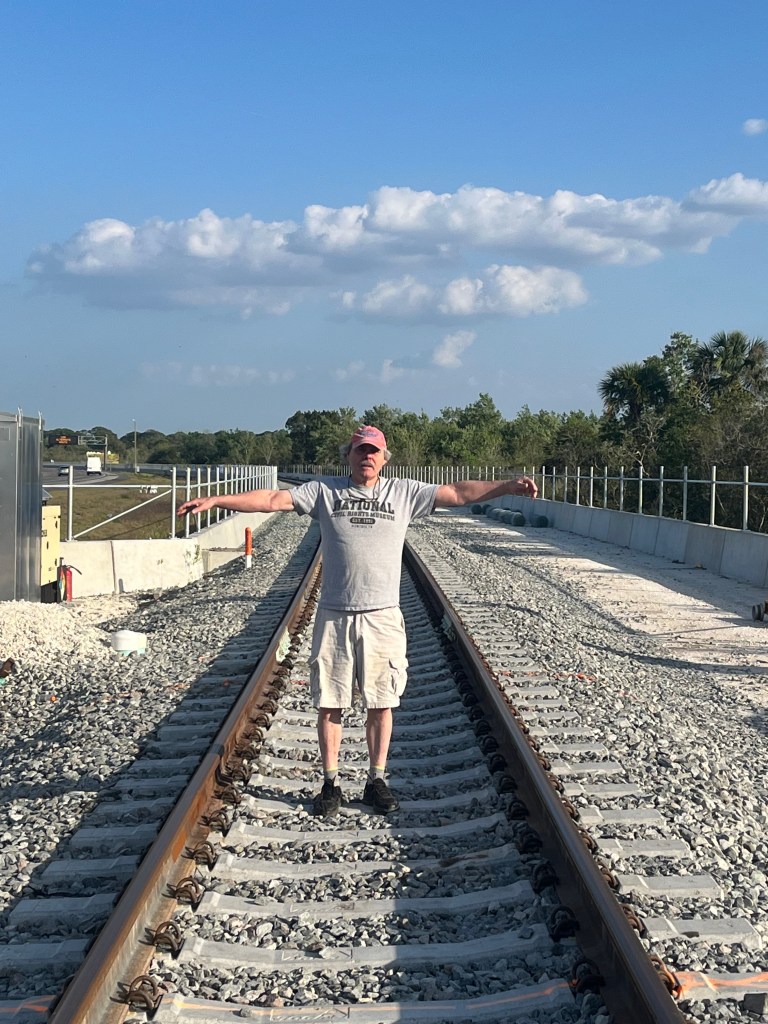
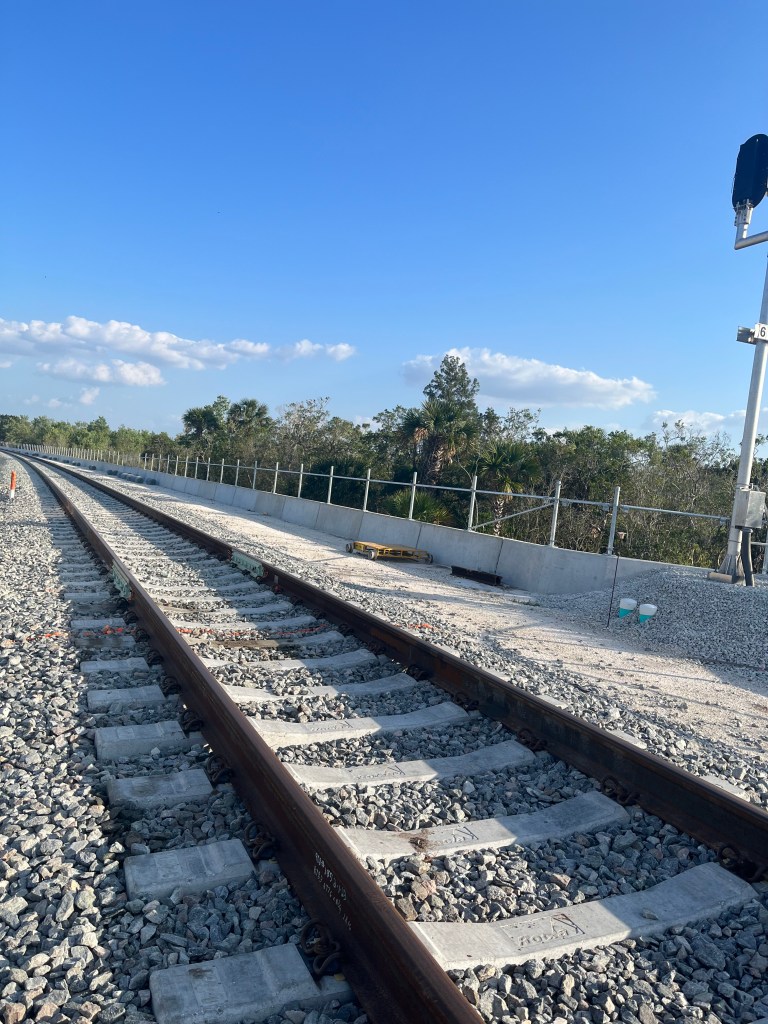
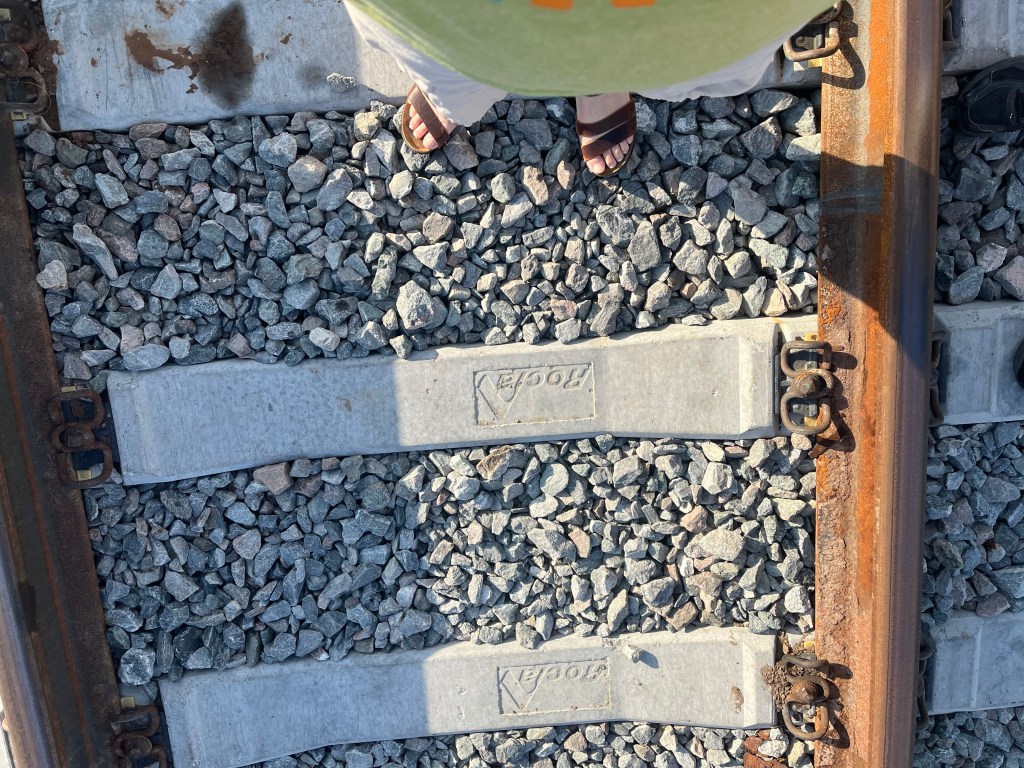
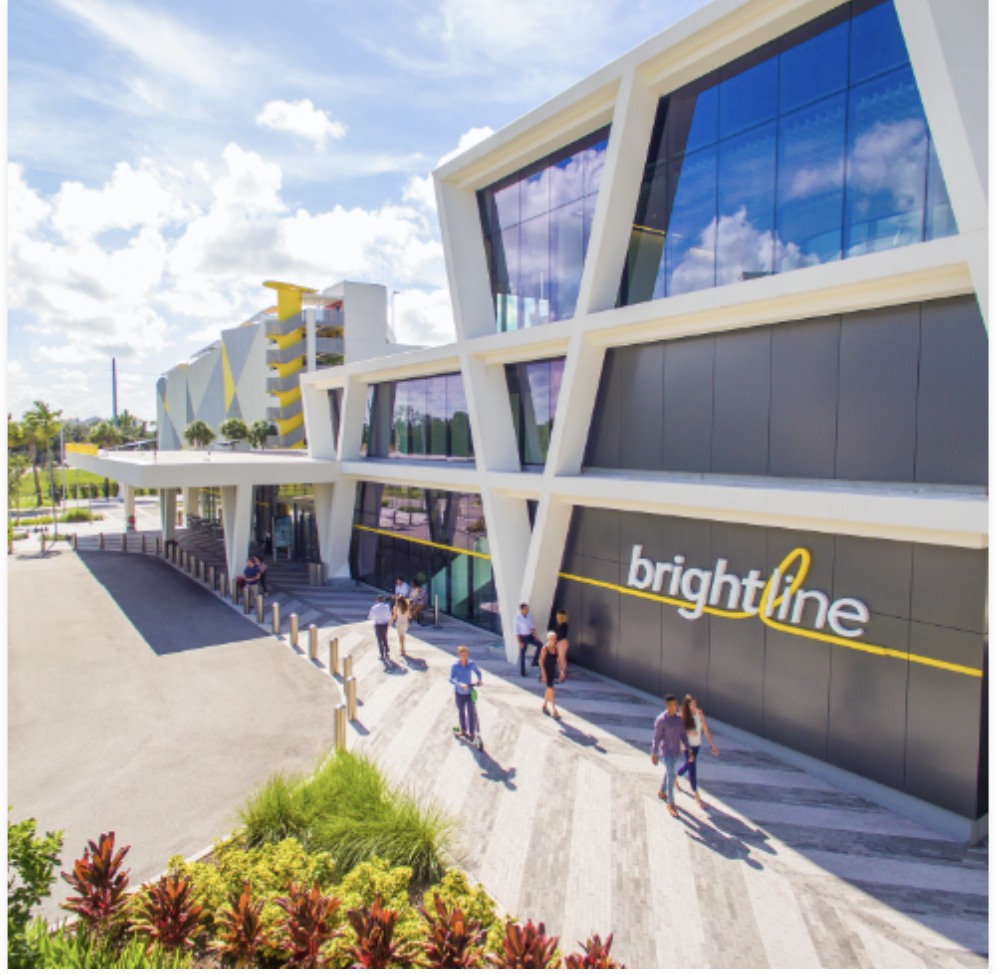
Along the highway near Orlando we noticed brand new railroad tracks under construction. You don’t see that every day, so we stopped to investigate. Turns out that there is a new high speed private rail line, Brightline, that will run from Orlando airport to Ft. Lauderdale, West Palm Beach, Miami and Boca Raton. We noticed that they are using concrete ties rather than wood ties and wondered what the environmental impact of this is considering that production of cement is not at all climate friendly. We did a little research and found numerous articles saying that if one looks 100 years down the road, concrete ties are much more durable and are more environmentally friendly to produce than wood.

Brightline is clearly appealing to people with money and is using the airline model of business class and first-class. If you choose “Premium” (first class) you will have your own station “lounge” and train cars so you never need to mingle with the common folk. I don’t think this pushes us toward a more just society. The good news is that they have EV shuttle buses and biodiesel-electric engines powered by FPL, clean biodiesel for lower emissions and reduced noise.

According to NPR reporting, former Florida Governor Rick Scott (and current U.S. Senator) has a financial interest in Brightline and killed a federally funded project to build a high speed rail in Florida. While new electric and biofuel high-spreed rail lines is to be encouraged, in my opinion this could be done in a much better way.

Birds and Sunshine

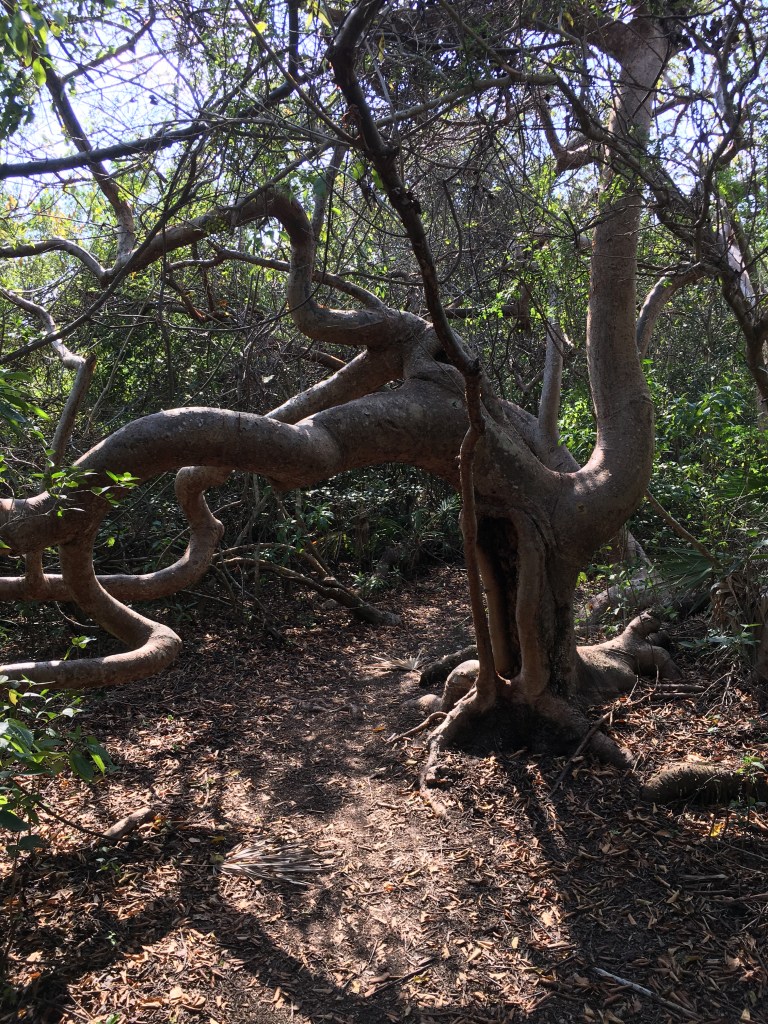
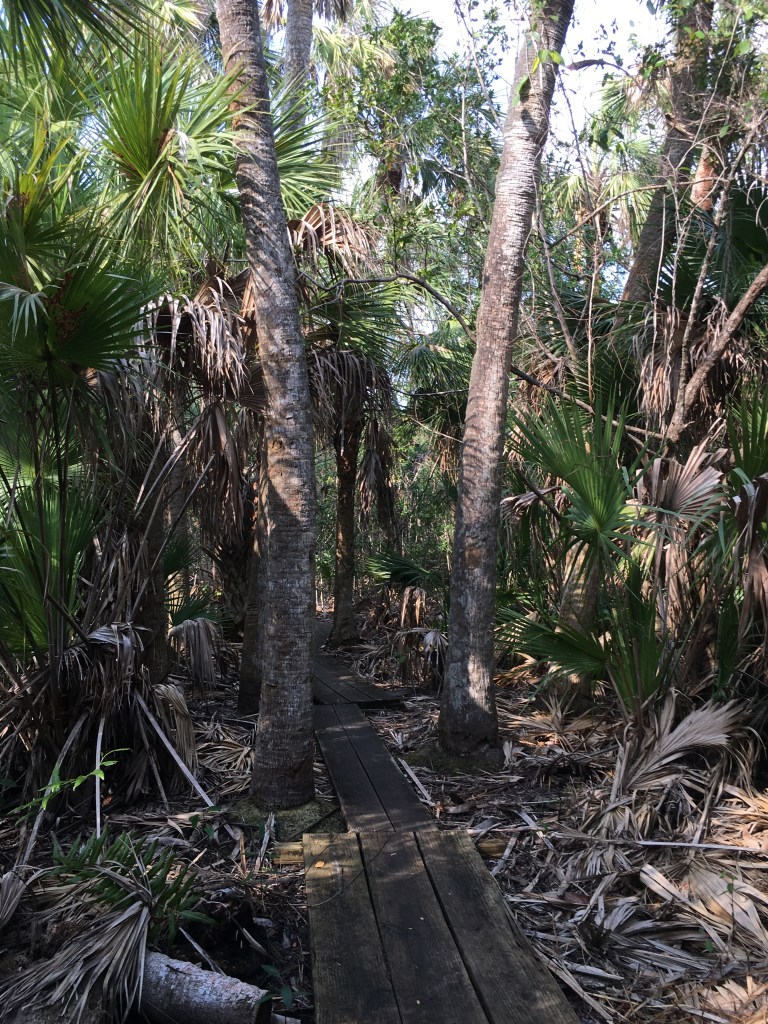
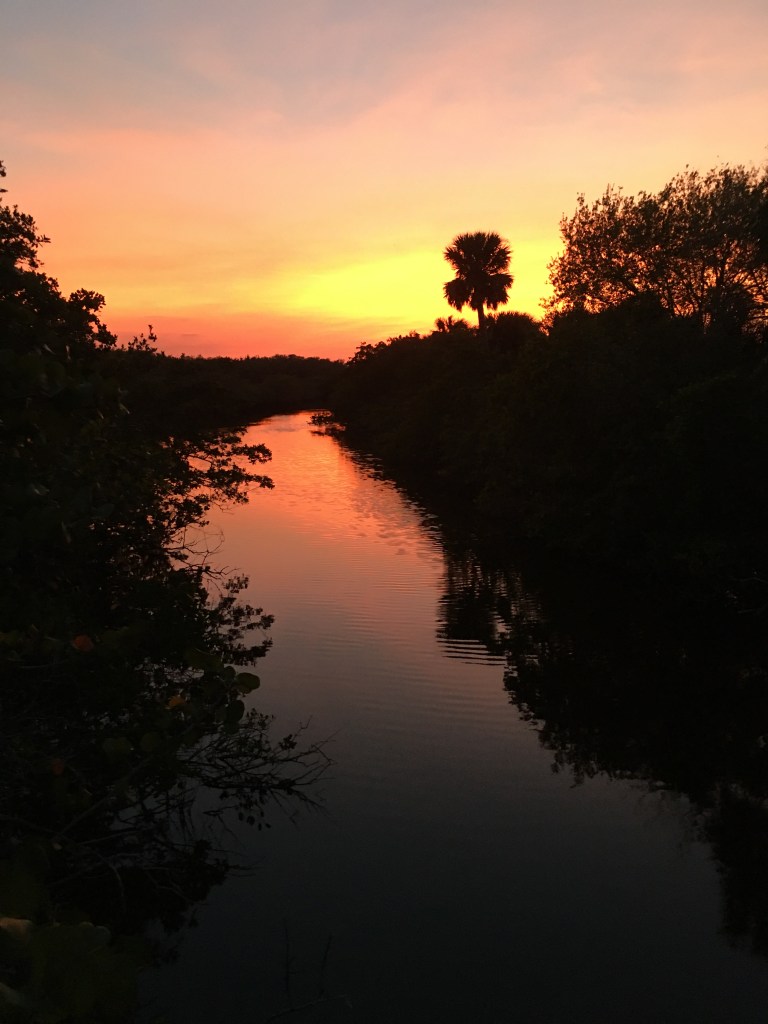
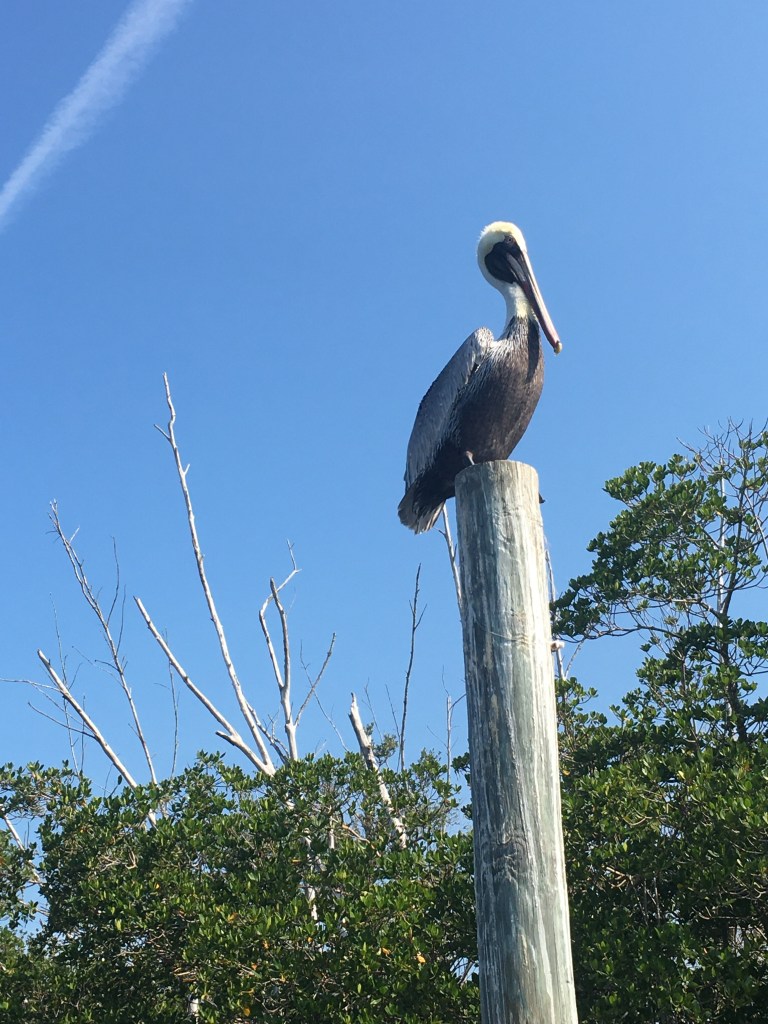
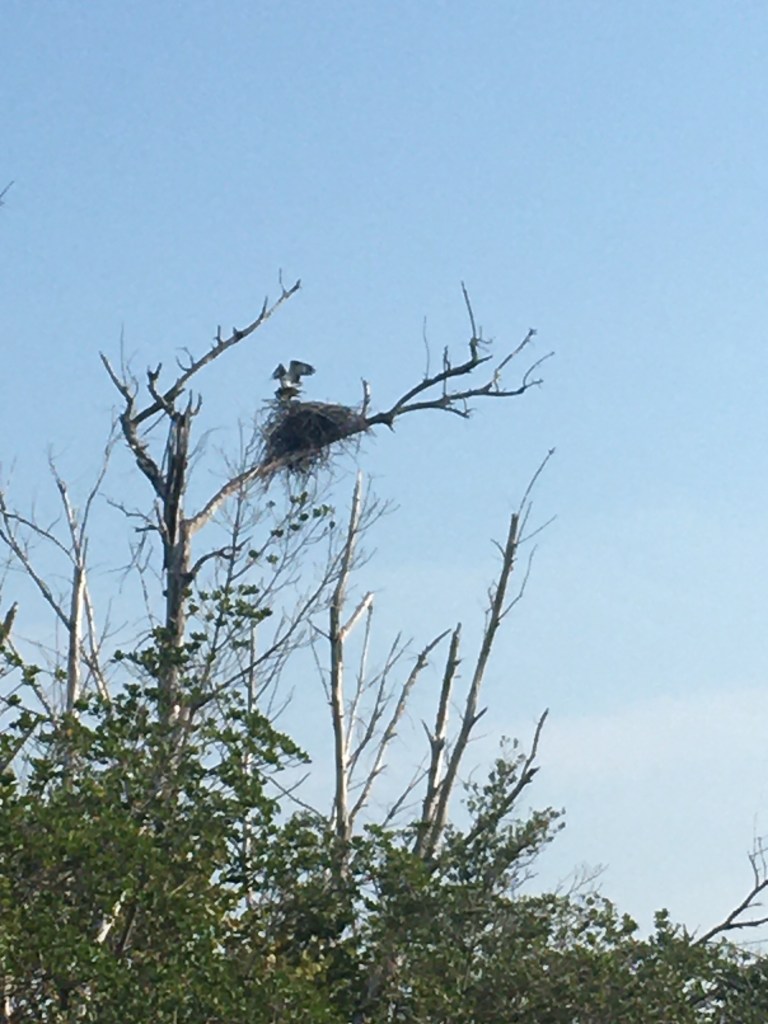
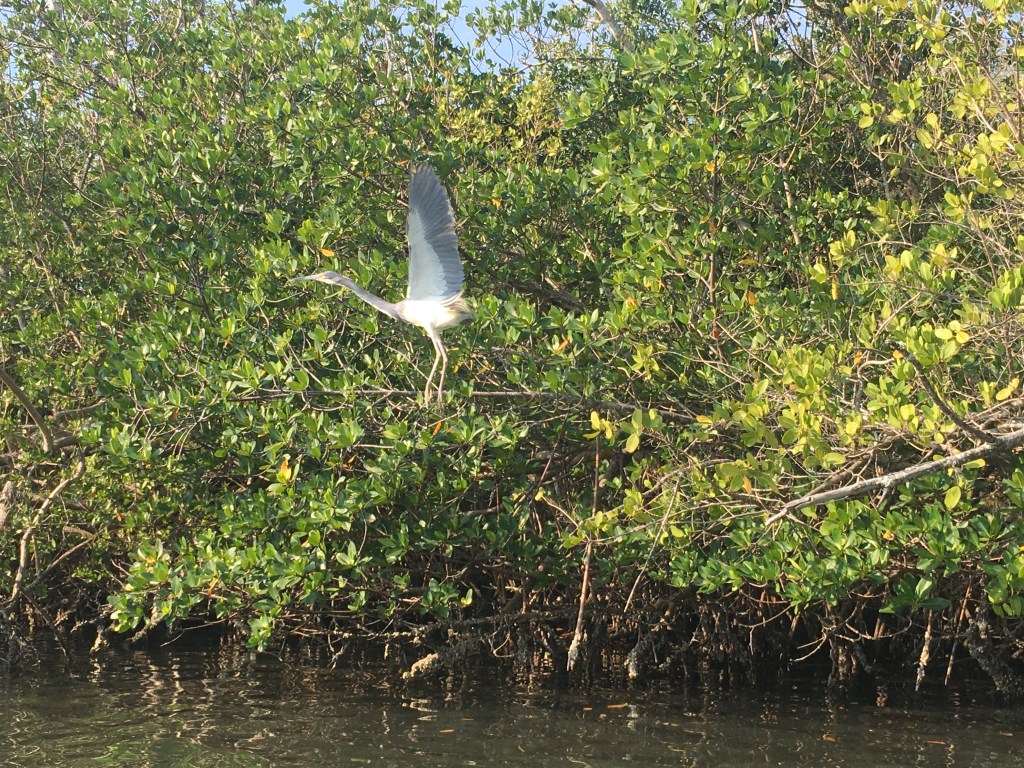
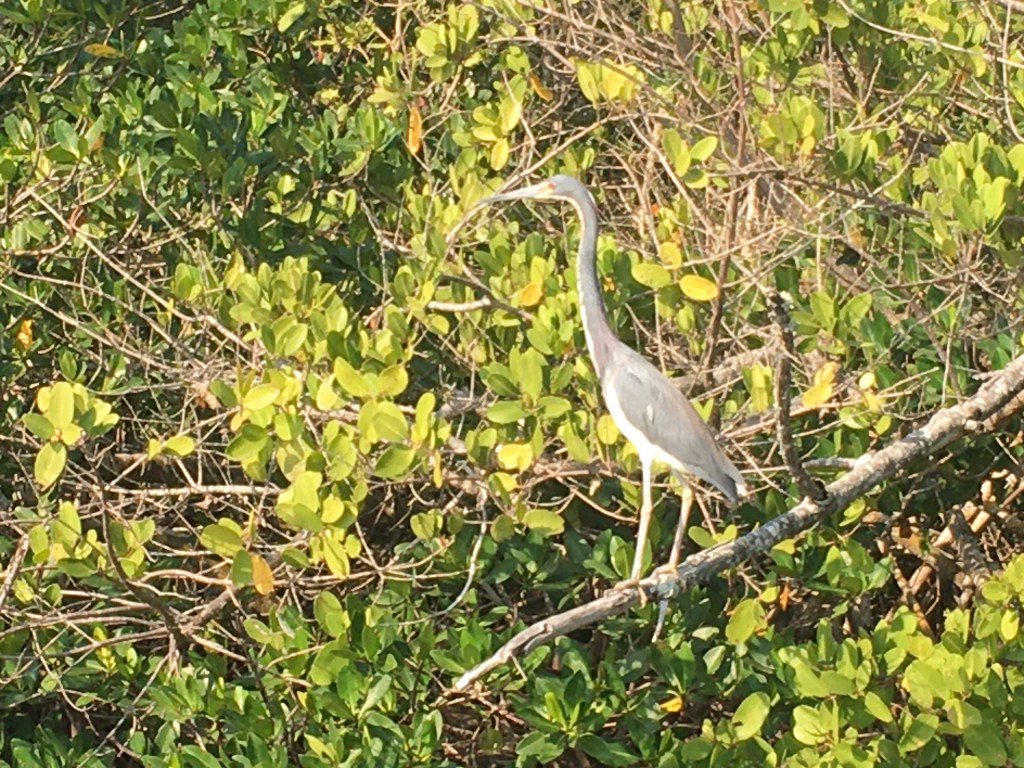
One of the real treats of time spent in Florida is the birds. It is the first place I became interested in bird watching in my youth. We have had beautiful weather- sunny every day and very warm. We are soaking it in!

Savannah, Georgia

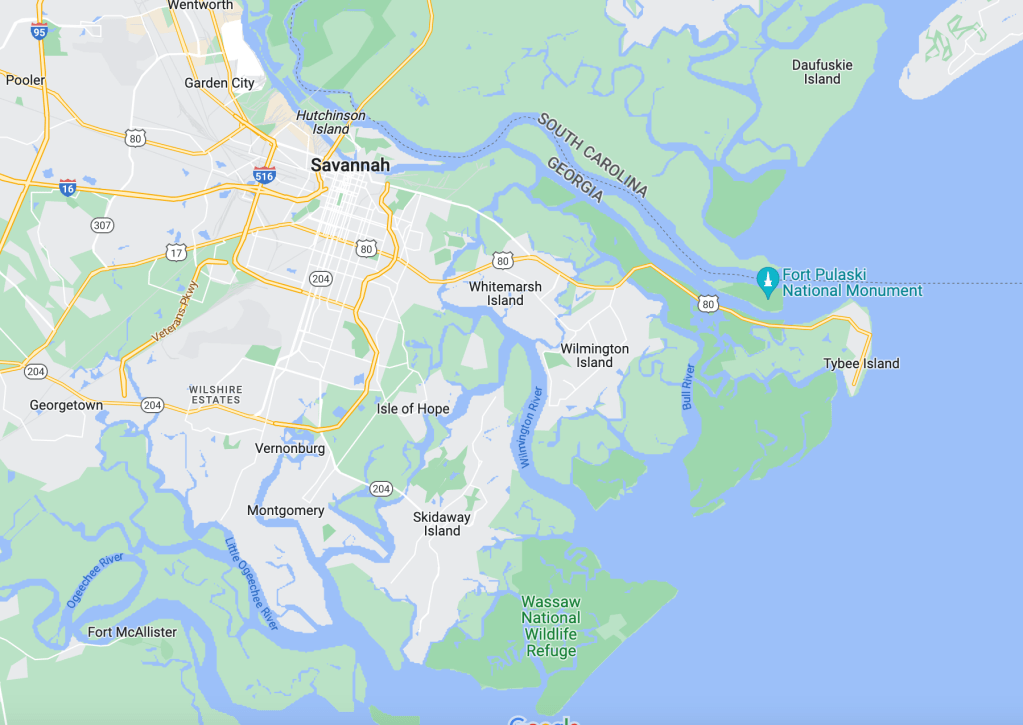
We stayed in  the historic downtown district Savannah, Georgia for one night. Did you know that Savannah is the third largest port in the U.S.? It was surprising to us to learn this because Savannah is on the Savannah River rather than directly on the coast. 

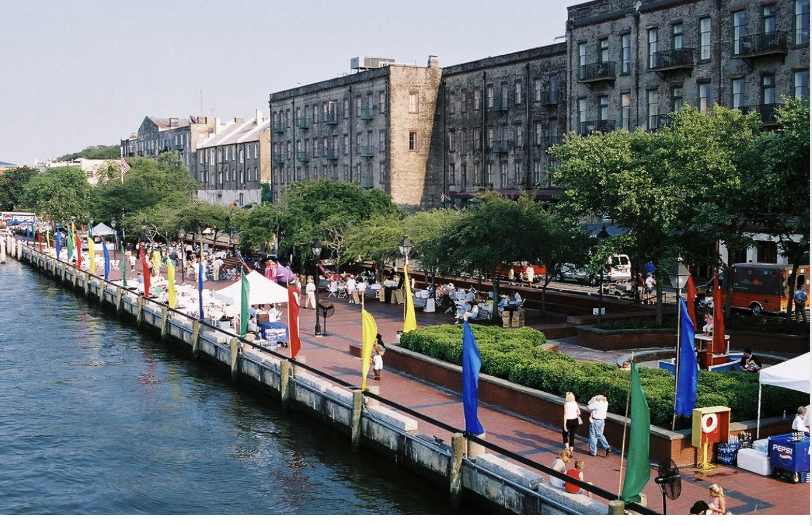
Savannah is a beautiful city, a tourist mecca with a river walk full of restaurants and shops, an outdoor walking mall called City Market, interesting architecture and a rich history to learn about. There is an ugly history of slavery to contend with and there is also some evidence that the city is moving forward with this. The Mayor and City Council unanimously voted to “unname” Calhoun Square, named after John C. Calhoun, a vice president to John Quincy Adams and Andrew Jackson, and staunch advocate of slavery, supporting expansion of slavery into what would become the American West. The square was also built over a cemetery for enslaved people.The Center for Jubilee, Reconciliation and Healing (an organization worth reading about) is pushing for the square to be renamed for Susie King Taylor , who was enslaved as a girl and became a civil war nurse and teacher.

Formerly named Calhoun Square in Savannah

We intend to stop in Savannah on our way home. So much to see and do!

Blog at WordPress.com.

Up ↑