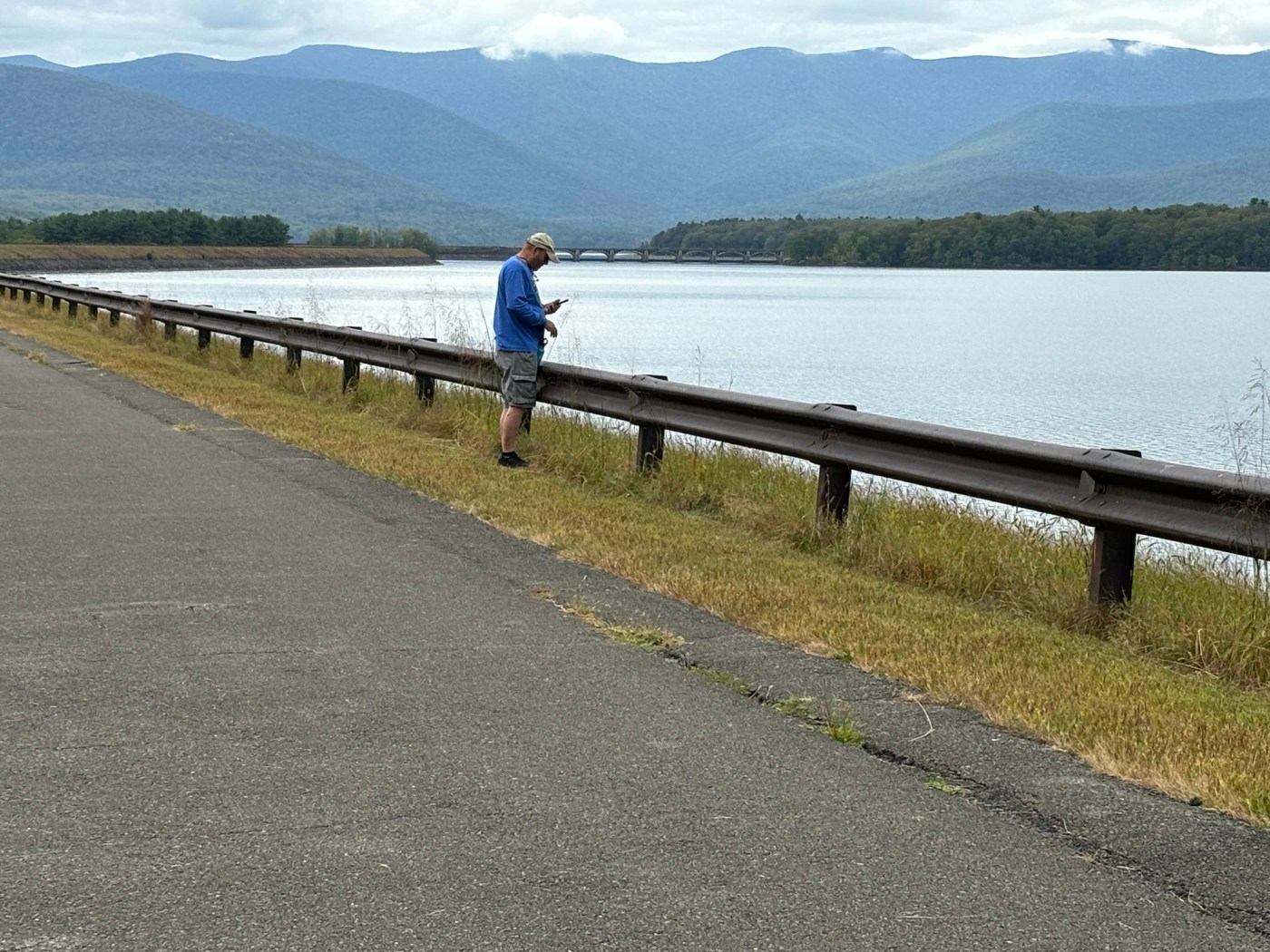
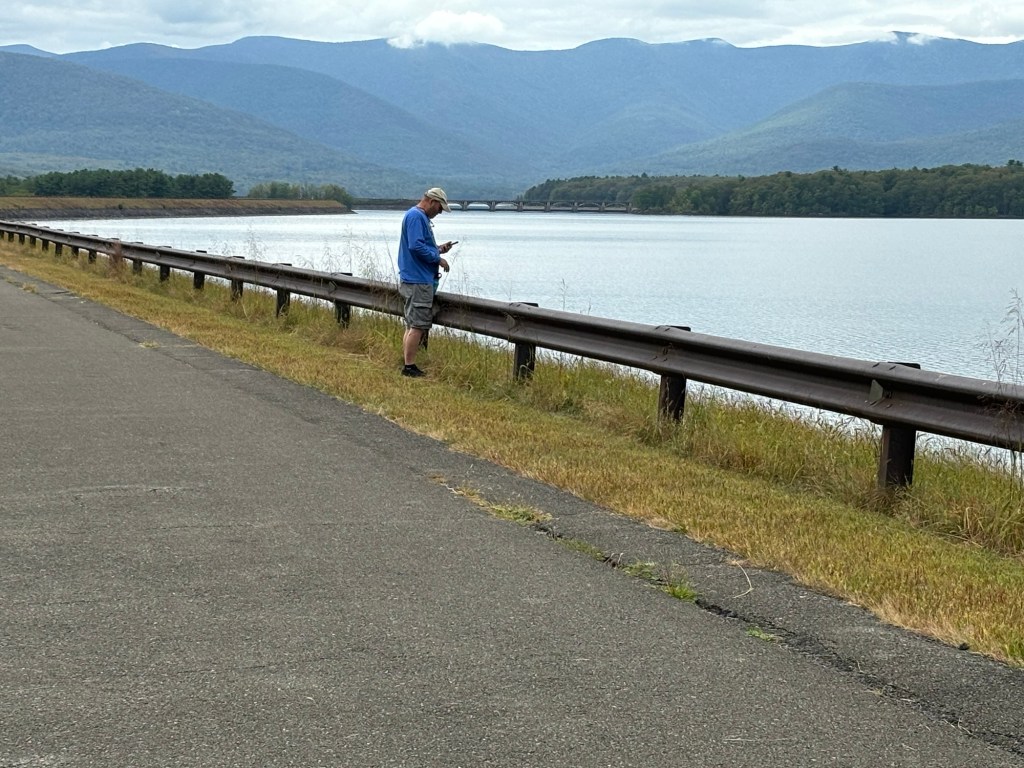
We stopped to take a walk on the Ashokan Reservoir Promenade, a walking and bicycle trail around the edge of this mammoth 8,300 acre reservoir that supplies 40 percent of New York City drinking water. This project finished in 1915 was an engineering marvel at the time. It consists of 5.5 miles of dams and dykes within the Esopus Creek drainage in the Catskill Mountains. The water travels under the Hudson river via the 92 mile Catskill Aqueduct to New York City by gravity alone. The water is so clean that it does not require filtration and only minimal treatment is needed.

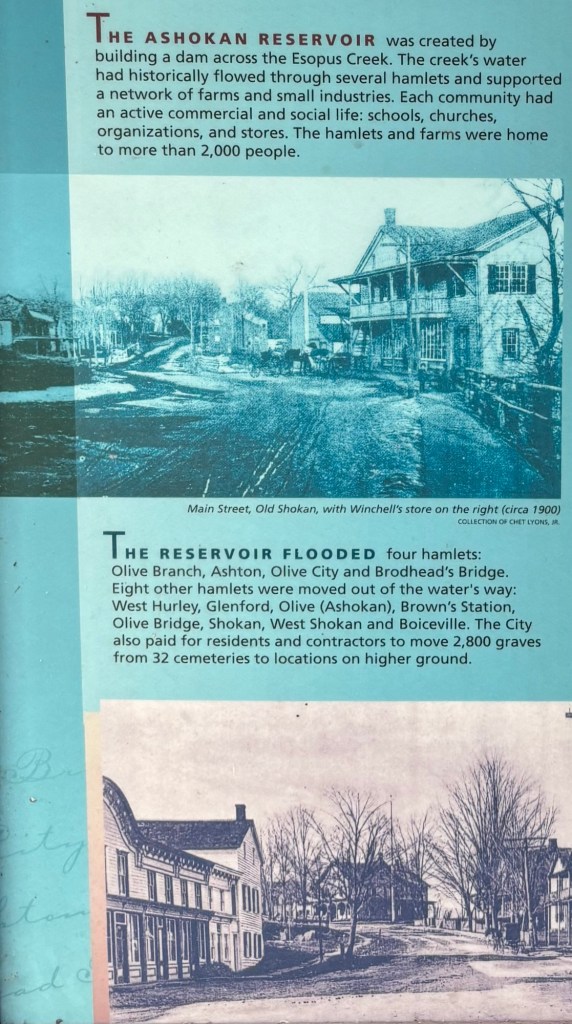
To build the Ashokan Reservoir, thousands of acres of farmland were submerged.[3] The impoundment covered 12 communities located in a valley where farming, logging, and quarrying prevailed. Approximately 2,000 residents[2] along with roads, homes, shops, farms, churches, and mills were either moved or abandoned, but most of them were torn down. The area that became the West Basin of the reservoir contained 504 dwellings, nine blacksmith shops, 35 stores, 10 churches, 10 schools, seven sawmills and a gristmill.[3] Several of these communities were re-established in nearby locations. Nearly twelve and a half miles (20.1 km) of a local railroad line (the Ulster and Delaware Railroad) was moved and cemeteries were relocated. (Wikipedia)
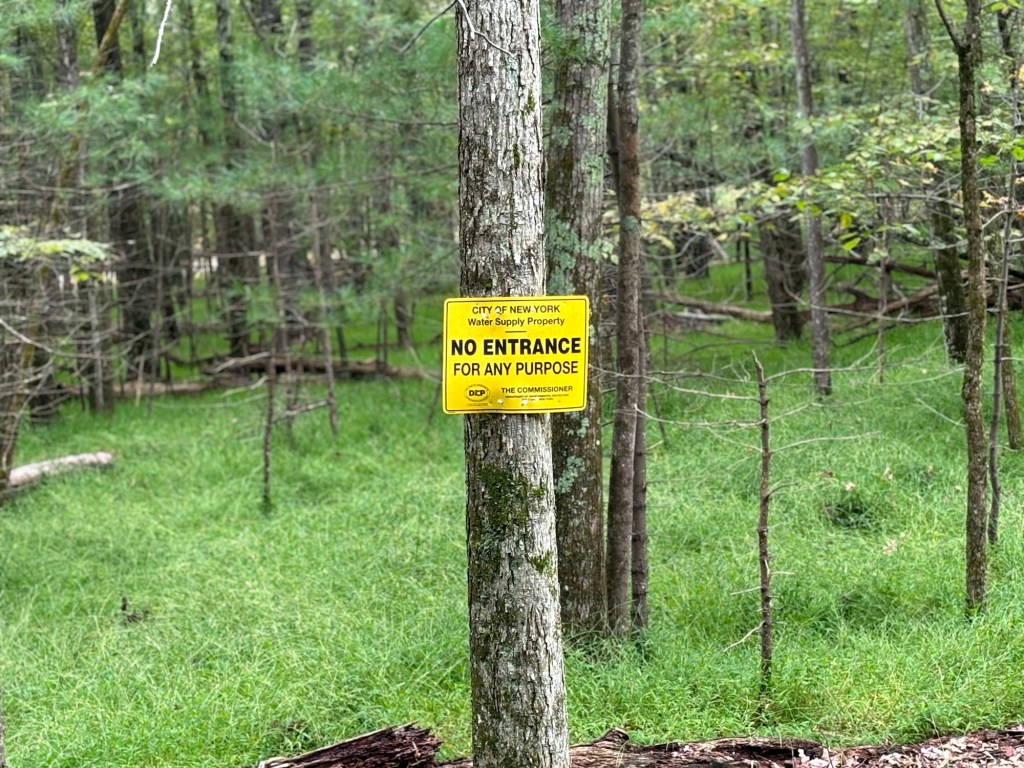
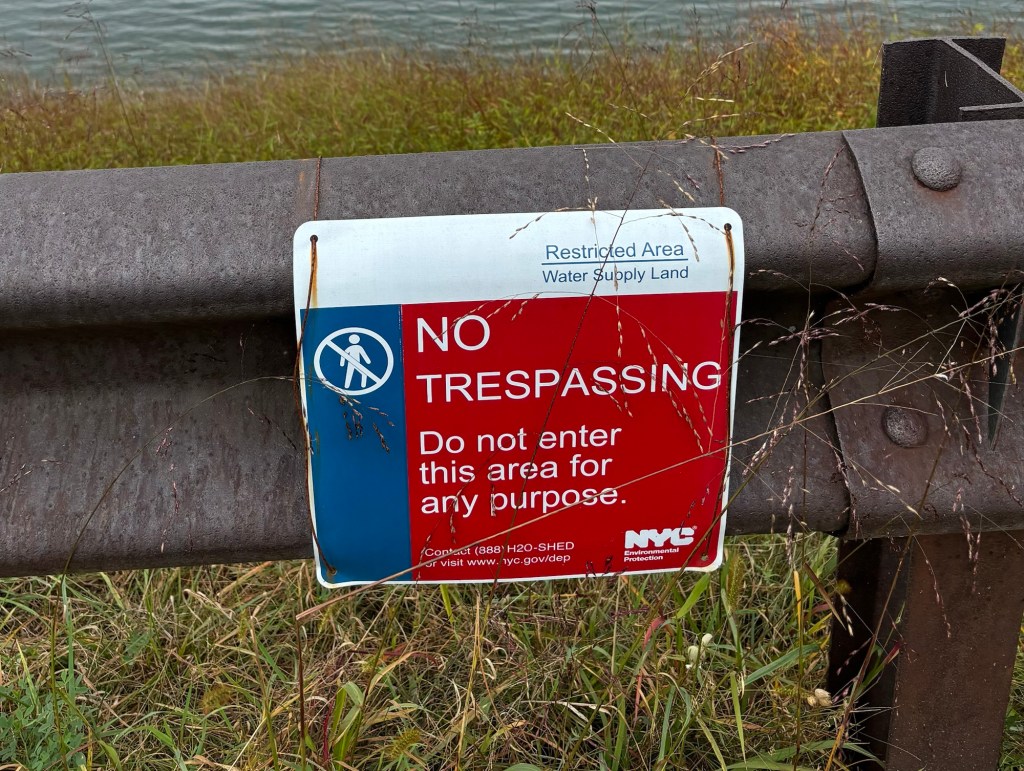
There are 1 million acres of land in the Catskill/Delaware Watershed, including villages, farms, homes and businesses. The watershed is both public and private. The state’s Catskill Park consists of 300,000 acres designated as a “forever wild” state forest preserve. To keep the water clean, an historic agreement was signed in 1997 between New York City, upstate towns, counties and villages and the U.S. Environmental Protection Agency. This agreement includes programs, paid for by New York City to replace septic systems, build new community wastewater treatment facilities, provide sand and salt storage buildings, fund educational projects and support appropriate economic development in the area. Other programs established under a 1994 partnership between New York City and the watershed agricultural community help farmers and forest owners protect water quality while preserving their way of life. These programs are administered by the non-profit Watershed Agricultural Council. Learning about these partnerships made me wonder why something similar is not in place to protect the Finger Lakes where we live?
 Perspectives on the Road
Leave a comment